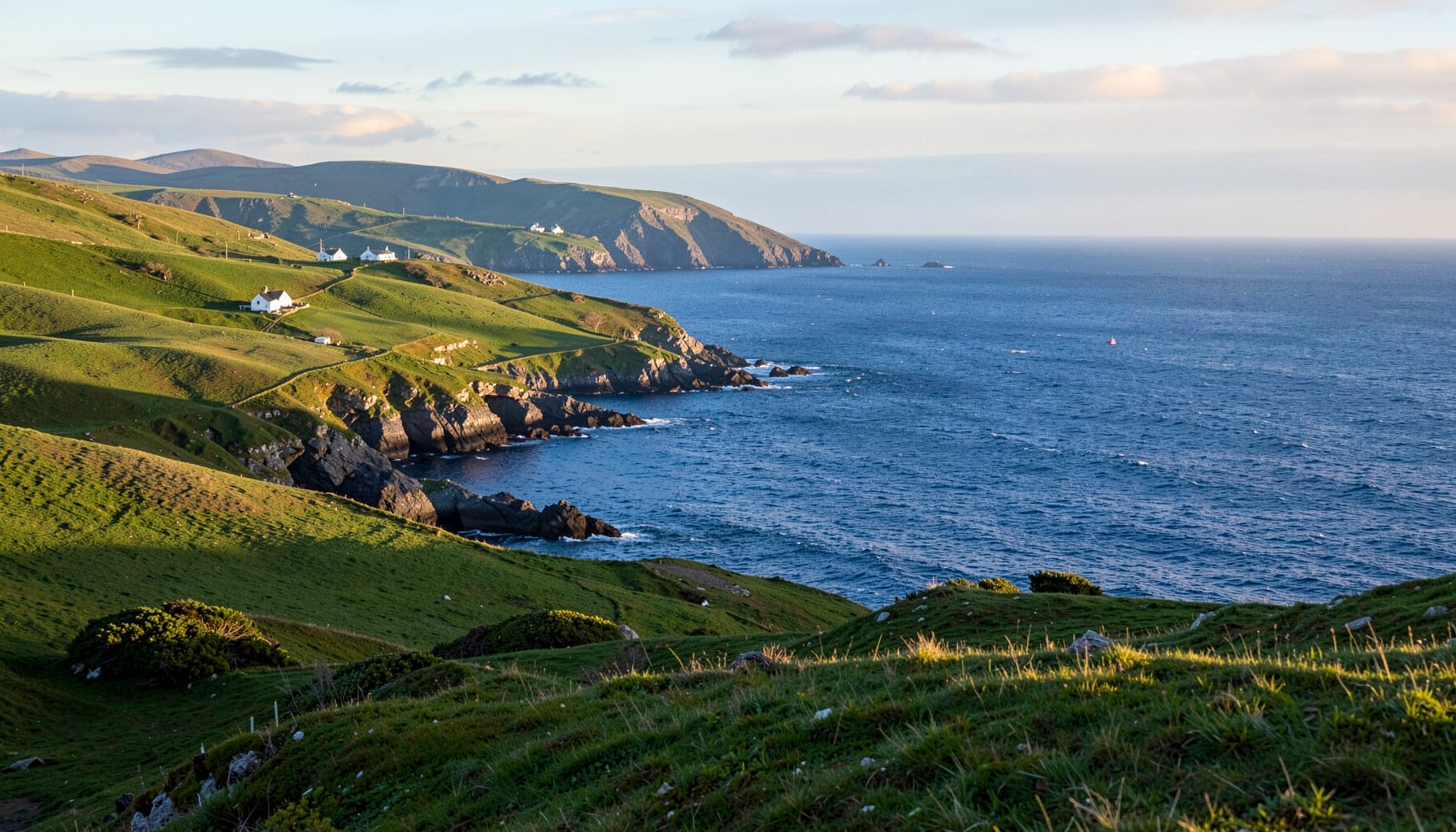
Life as a Bushcraft Instructor on the Skellig Coast
On the southern edge of the Iveragh Peninsula, where the Atlantic rolls in against cliffs carved by centuries of weather, a small circle of instructors spend their working lives teaching strangers how to survive in wild ground. The job blends outdoor guiding, adult education, risk management and a measure of storytelling rooted in the local Gaelic-speaking communities. Visitors who book a session often expect dramatic demonstrations of fire-lighting or shelter-building, but the real curriculum is far quieter, built around reading the land, listening to weather, and absorbing the kind of knowledge that older farmers carried as a matter of course.
A bushcraft and survival skills instructor here is part pedagogue, part custodian. They design courses for school groups, corporate retreats, and international visitors drawn by the same landscape that put Skellig Michael on the map. They are also small-business owners who must reconcile insurance premiums, equipment maintenance, and the rhythms of the tourist season. The result is a working life that is rarely glamorous, often muddy, and shaped by the same coastal forces that have shaped everyone in this part of Kerry for generations.
A typical day in the field
Mornings begin before the first ferry leaves Portmagee harbour. The instructor checks the forecast, drives to the site, marks out the teaching area, and lays out the kit that will be used during the day. Participants arrive between eight and nine, often still half-asleep after a long drive from Killarney or Cahersiveen. The first task is always a safety briefing, followed by a short walk to settle the group into the surrounding terrain.
By mid-morning, attention turns to fire-craft. Participants are shown three reliable methods, then asked to produce their own flame using natural tinder gathered within arm's reach of the demonstration circle. Afternoon brings shelter-building, water filtration, and a careful walk through the local lichens and barks. Evenings are reserved for debrief, equipment cleaning, and note-writing in a battered journal that has done the same job for ten seasons.
| Skill taught | Main use on the course | Difficulty for beginners | Typical time to first competence |
|---|---|---|---|
| Friction fire (bow drill) | Core survival technique | High | 3 to 6 hours of guided practice |
| Debris shelter build | Overnight emergency shelter | Medium | 2 to 3 hours |
| Water sourcing and filtration | Hydration and field hygiene | Low to medium | 1 to 2 hours |
| Natural navigation | Route-finding without a map | Medium | A full day of exercises |
| Wild plant identification | Foraging and hazard avoidance | Medium to high | Several short sessions |
The comparison above sets out the spine of most beginner courses offered along the Skellig Coast. Each skill reinforces the others, and a confident participant by the end of a weekend can usually make a sustainable fire, construct a shelter that will keep out a Kerry squall, and find drinkable water without needing a plastic bottle.
Core skills in the curriculum
Fire is treated as the centrepiece. The instructor explains the fire triangle, then shows how Irish woodland - hazel, birch, willow, scots pine - provides everything a person needs, from kindling to fatwood. Participants learn to read a flame, to coax it through difficult weather, and to extinguish it so thoroughly that not even an ember can revive itself.
Shelter comes next, and it is here that the Atlantic climate makes itself felt. A debris hut that would keep a hiker dry in a temperate forest can collapse under the gusts that funnel along the coast, so the local curriculum emphasises low profiles and windward berms. Navigation is taught alongside, using both compass work and landmark association, because fog can descend in minutes between the headlands and turn a confident walker into a hesitant one.
Skills that travel with the participant:
- Friction fire using locally gathered materials
- Construction of a weather-resistant debris shelter
- Natural navigation through fog, rain and dim light
- Safe foraging of coastal and woodland plants
Reading the Atlantic weather
Weather is the senior partner in any lesson on the Skellig Coast. The instructor will spend more time on a five-minute forecast than on a thirty-minute lecture about knots, because wind direction determines where a shelter can be safely pitched, and a sudden shift in pressure can signal the arrival of horizontal rain that no canvas will withstand.
Seasonal work follows a recognisable pattern. Spring brings school groups and the first tentative tourists. Summer is the busiest period, with longer daylight hours and warmer seas, but also the heaviest booking pressure. Autumn is when serious learners arrive - people who want multi-day immersion courses rather than a one-off experience. Winter is reserved for training, kit maintenance, and the occasional guided winter walk for hardy visitors who want to see the coastline under storm conditions.
Group coaching and adult learning
Much of the job is psychological. Participants arrive with a mix of enthusiasm and anxiety, often shaped by media images of extreme survival, and the instructor must reframe their expectations without dampening their excitement. The teaching is slow, deliberate, and aimed at building competence rather than adrenaline.
Group dynamics matter as much as the technical content. A confident adult can dominate a session if not gently drawn back, while a hesitant teenager can switch off entirely. Instructors learn to read posture, to pause at the right moment, and to design exercises that let quieter members of the group shine. The best of them are careful to keep their own egos in check, because the landscape does most of the teaching if it is allowed to.
Heritage of place and community
The Iveragh Peninsula carries a deep cultural memory. Place names, holy wells, ruined villages and abandoned cottages form part of the backdrop against which any outdoor lesson is set. A good instructor weaves these references into the day, pointing out a pre-famine field system while the kettle hangs over a small fire, or explaining the local names for winds as they sweep across a ridge.
There is a strong parallel with the artistic revival of Cill Rialaig, where a deserted settlement has been transformed into a creative retreat. Both projects treat loss as the starting point for new meaning: the village that was abandoned becomes a place of art, the wild landscape that was cleared and grazed becomes a place of teaching. The instructor's craft sits in that same lineage of people who look at a place and see both what it was and what it might yet become.
Skills that travel across hemispheres
The same principles taught along the Skellig Coast are finding an audience far away. Visitors from Melbourne, Brisbane and Perth regularly enrol in courses here, and instructors notice that Australian participants arrive with strong baseline competence in bushwalking, water carry and heat management, drawn from the long tradition of outdoor education in their own country. Their questions tend to focus on cold-weather wetness, navigation in fog, and the use of materials that differ from the eucalyptus and spinifex they know at home.
The exchange runs both ways. Australian bushcraft schools, from Tasmania to the Top End, have developed their own rigorous approaches to desert survival, snake awareness and water rationing. Several of those approaches overlap with Irish practice - the use of a billy can, the discipline of fire management in dry scrub, the careful reading of wind. Instructors who have trained in both hemispheres often say that the skills transfer surprisingly well, though the legal frameworks differ. In Australia, working with native flora in a teaching context requires attention to state-level environmental protection legislation, particularly in New South Wales and Victoria, while in Ireland the relevant rules concern turf cutting, fire setting and access to commonage land.
Practice shared between the two regions:
- Use of a single billy can for multiple cooking tasks
- Strict fire hygiene to prevent both wildfire and bushfire
- Reading wind as the first step in any outdoor plan
- Respect for protected flora and fauna in every lesson
Equipment, ethos and the long view
A working kit list is shorter than beginners expect. A hatchet, a fixed-blade knife, a ferro rod, a tarp, a water filter and a wool blanket will cover most courses. Everything else can be improvised, and the lesson is often that improvisation is the point. Instructors maintain their own kit with obsessive care, sharpening tools weekly and replacing cords or guy lines at the first sign of wear.
The longer arc of the profession is shifting. Demand for bushcraft courses has grown steadily since the early 2010s, partly driven by television series and partly by a broader cultural appetite for self-reliance. At the same time, the instructor's role is becoming more professional, with formal risk assessments, accredited first-aid certification, and tighter insurance requirements. Those who treat the work as a serious trade rather than as a hobby with paying customers are the ones who stay in it, and who keep turning up to the same headlands in every kind of weather to teach the same lessons their own teachers taught them.
If a session on the Skellig Coast has sparked an interest, the next step is to book directly with a local instructor and spend at least a full day in the landscape before deciding whether a longer course is right. Bring sturdy boots, a willingness to be uncomfortable, and the patience to learn from people who have chosen this coast as their classroom.