The Lost Village of Cill Rialaig and Its Artistic Revival
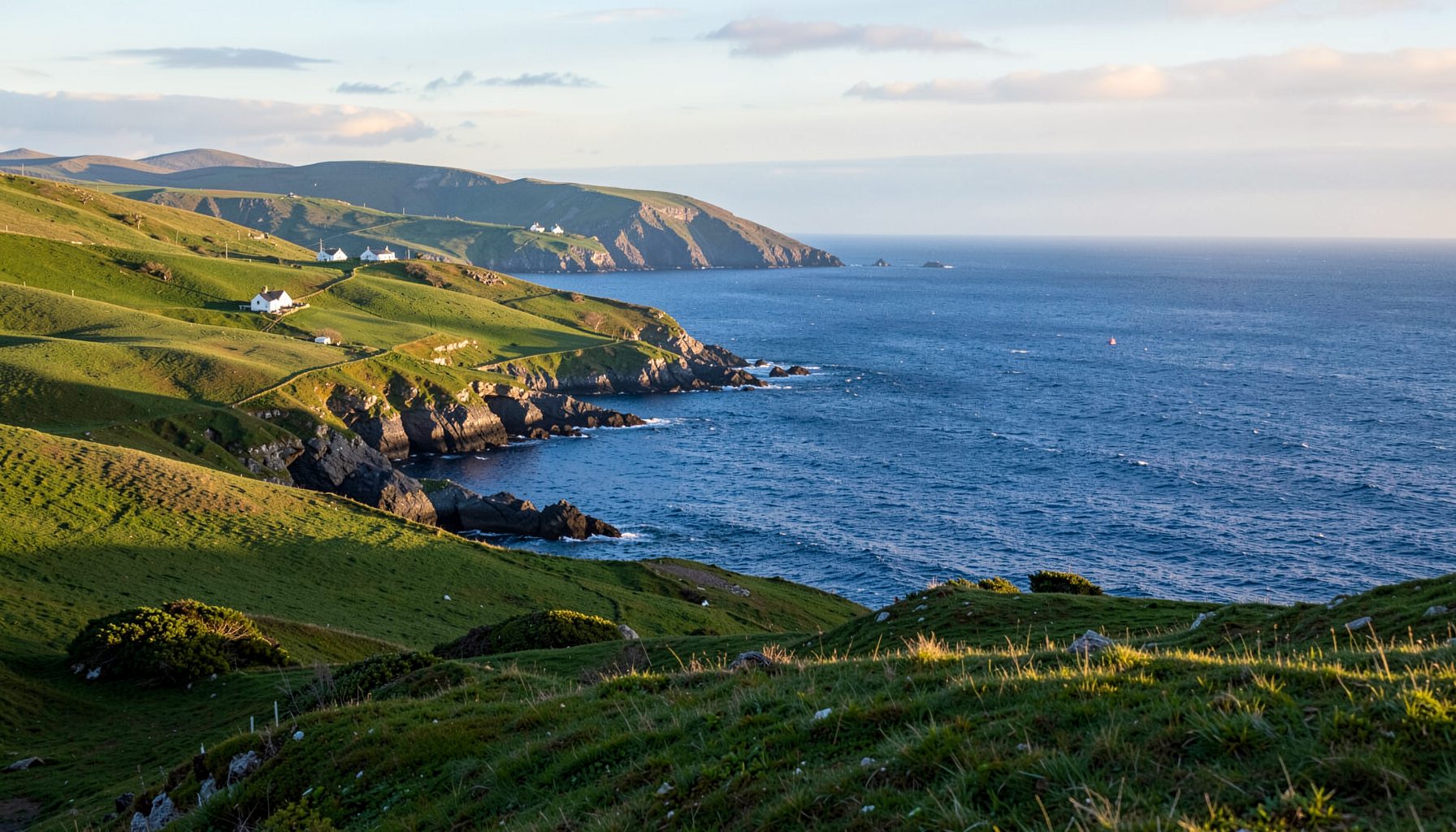
On the western edge of the Iveragh Peninsula, where narrow roads meet open Atlantic scenery, Cill Rialaig preserves the atmosphere of a vanished rural settlement. Its weathered stone cottages, fields and sea-facing landscape offer a glimpse into an older way of life on the Skellig Coast.
The village is often described as a famine village, although its story reaches beyond the Great Famine. Like many clachans in rural Ireland, Cill Rialaig was shaped by family farming, seasonal work, religious tradition and close dependence on the land. Over time, emigration and economic change emptied the settlement.
Its revival has given the place a second life. Rather than becoming a conventional heritage attraction, Cill Rialaig developed as an artists’ retreat, bringing painters, writers, musicians and other creative practitioners into a landscape already rich in memory. The result is an unusual meeting point between conservation, community heritage and contemporary culture.
A Village Shaped By Isolation
Cill Rialaig stands in a remote coastal setting near Ballinskelligs, within the wider Gaeltacht and cultural landscape of the Iveragh Peninsula. The settlement’s traditional stone buildings were modest homes, constructed for practical use rather than display. Thick walls, small openings and simple interiors reflected the materials and weather conditions of the Atlantic west.
The village belonged to a network of small agricultural communities that once extended across the peninsula. Families depended on limited plots, livestock, fishing and seasonal labour. Life was demanding, and the exposed landscape could make travel, trade and communication difficult, particularly during winter.
The settlement gradually lost its population during the nineteenth and twentieth centuries. Emigration removed many young people, while changing agricultural practices and improved opportunities elsewhere weakened the old pattern of village life. By the later twentieth century, Cill Rialaig had become largely abandoned, its buildings vulnerable to collapse and its story at risk of fading from local memory.
From Abandoned Cottages To A Creative Retreat
The restoration of Cill Rialaig began in the early 1990s through the work of artist Noelle Campbell Sharpe and the Cill Rialaig Project. The aim was to conserve the ruined village while finding a sustainable purpose for it. Restoring the cottages as artists’ studios and residences offered a practical way to keep the site occupied without turning it into a reconstructed museum.
The project carefully retained the character of the original buildings. Stone walls, traditional forms and the relationship between cottages and landscape remain central to the experience. The buildings are not presented as a theme park version of rural Ireland; they retain the sense of age, quiet and vulnerability that makes the place distinctive.
Artists in residence have used Cill Rialaig as a setting for concentrated work away from urban routines. The programme has welcomed people working across several disciplines, including visual art, literature, music and film. Their presence creates an evolving cultural record, with each resident responding differently to the coast, the ruined settlement and the wider heritage of Kerry.
The revival also extends beyond the hilltop village. The Cill Rialaig Arts Centre in nearby Dungeagan provides a public-facing space for exhibitions and cultural activity. It helps connect the private rhythm of residency with local audiences, visitors and the wider creative community.
What Makes The Place Significant
Cill Rialaig is valuable because several layers of heritage remain visible in one small site. The stone cottages speak of vernacular architecture and rural survival. The abandoned settlement reflects depopulation and emigration. The restored studios represent a modern approach to conservation, in which a historic place continues to support active cultural life.
Its location adds another dimension. The village sits within a region known for dramatic coastlines, archaeological sites, Irish-language traditions and long-established links between landscape and storytelling. Nearby attractions include Ballinskelligs Abbey, the beach and castle, the Skelligs and the broader heritage of the Ring of Kerry. Cill Rialaig belongs to this regional network without being reduced to a single scenic viewpoint.
| Feature | Earlier Village | Contemporary Cill Rialaig |
|---|---|---|
| Buildings | Small stone homes for local families | Restored cottages used as studios and residences |
| Economy | Smallholding, livestock, fishing and seasonal work | Arts residencies, exhibitions and cultural activity |
| Community role | A rural settlement shaped by shared labour | A heritage project linking local history with creativity |
| Landscape | Working fields and exposed coastal ground | A setting for reflection, conservation and artistic practice |
| Public connection | Part of everyday local life | Connected through the arts centre and regional heritage routes |
The artistic revival does not erase the hardships associated with the old settlement. Instead, it creates a way to consider them. A painting, poem or piece of music made in the cottages may respond to the landscape, but the landscape itself remains the primary historical document.
The Meaning Of An Artist Residency
An artist residency is more than a short stay in an attractive location. At Cill Rialaig, the residency model creates time for observation and sustained work. The distance from large towns, the limited pace of the surrounding area and the presence of the old village can encourage artists to work with greater attention.
Some residents may respond directly to local history, while others may use the setting as a starting point for ideas that are not specifically regional. This distinction matters. A successful cultural programme does not require every artist to produce an illustration of the place. It allows different forms of engagement, from close study of vernacular buildings to private reflection inspired by weather, light and silence.
The programme also broadens the meaning of rural heritage. Heritage is sometimes treated as something fixed, belonging only to the past. Cill Rialaig demonstrates that a historic site can remain useful and intellectually active while its physical character is protected.
That balance requires care. The cottages need conservation, artists need appropriate working conditions, and the surrounding landscape needs respect. The project’s strength lies in keeping these needs connected rather than treating art, architecture and environmental protection as separate concerns.
A Living Link To The Skellig Coast
Cill Rialaig helps explain why the Skellig Coast is more than a collection of famous viewpoints. The region’s identity is built from small places, local stories and long relationships with land and sea. Its heritage includes internationally recognised sites such as Skellig Michael, but also abandoned villages, community halls, schools, churches, townlands and cultural initiatives.
The village offers a quieter counterpoint to the better-known visitor routes. It encourages attention to the lives that made the landscape meaningful before tourism became a major part of the local economy. The surrounding coast is beautiful, but its importance does not depend solely on scenery. It carries evidence of settlement, work, belief and movement across generations.
Cill Rialaig also shows how a remote community can participate in international cultural exchange without losing its local character. Artists arrive from different backgrounds, yet they work within buildings and a landscape shaped by the people of Iveragh. Their presence adds new stories to an existing place rather than replacing its older ones.
For local schools, learning hubs and community groups, the project provides a useful example of creative heritage practice. It raises questions about who cares for historic buildings, how rural areas can support cultural work and how abandoned places can be given a thoughtful future.
Visiting With Respect And Curiosity
Access to Cill Rialaig may vary because the cottages function as working residences rather than a standard daily visitor attraction. Anyone planning to visit should check current information through the Cill Rialaig Project or the local arts centre before setting out. A nearby gallery event or exhibition may offer the most suitable public introduction.
The approach roads and surrounding terrain reflect the remoteness that shaped the village’s history. Visitors should allow extra time, avoid assuming that every building is open, and follow any guidance about parking, walking routes and photography. The site is a place of work and conservation as well as a place of interest.
A respectful visit can include time at related heritage sites in Ballinskelligs and the wider Skellig Coast. Local museums, cultural centres and community events can provide context that a brief stop at one ruined settlement cannot. Speaking with local organisations, where appropriate, also helps ensure that tourism supports the people who maintain the region’s cultural life.
Ways To Experience The Village Thoughtfully
- Check opening arrangements, exhibitions and access information before travelling.
- Treat restored cottages as working studios and private spaces unless clearly marked otherwise.
- Learn about Ballinskelligs, the Iveragh Peninsula and local Gaeltacht traditions alongside the village itself.
- Stay on appropriate paths, leave stonework and surrounding features undisturbed, and take all litter away.
- Look for public arts events connected with the Cill Rialaig Project or the Dungeagan arts centre.
Cill Rialaig’s story continues because restoration was paired with purpose. The cottages are reminders of a community that disappeared, yet they also host new acts of imagination. That combination makes the village significant: it protects the material traces of rural Ireland while allowing contemporary artists to respond to the same windswept coast.
Explore the Cill Rialaig Project, check local cultural listings and include Ballinskelligs and the surrounding heritage sites in a responsible Skellig Coast visit. Supporting exhibitions, community initiatives and conservation-led tourism helps ensure that this small lost village remains part of the region’s living story.