The Fenians and Political Unrest in Nineteenth-Century Iveragh
The history of Iveragh in the nineteenth century was shaped by poverty, land hunger, religious identity and an expanding sense of Irish nationalism. The peninsula’s villages and townlands were connected to events far beyond Kerry, yet local experience remained distinct. Mountain passes, Atlantic harbours and scattered farms influenced how political ideas travelled and how communities responded to pressure from the authorities.
The Fenian movement emerged during a period when many Irish people believed constitutional politics had failed to deliver self-government. Its supporters favoured an independent Irish republic and maintained links with Irish communities in Britain, North America and Australia. In Iveragh, the movement’s influence existed alongside older forms of resistance, including secret agrarian societies and opposition to landlords, evictions and excessive rents.
For communities around Cahersiveen, Valentia, Waterville, Sneem, Castlecove and Kells, politics was inseparable from daily survival. A poor harvest, an eviction notice or an arrest could have more immediate consequences than speeches in Dublin. The Great Famine intensified these pressures, leaving families displaced, estates altered and a large emigrant population carrying memories of Iveragh across the world.
Australian readers may recognise some of this pattern from the way local history is preserved around places such as Melbourne, Sydney and Hobart. A national movement can be remembered through monuments and official records, while its real meaning is often found in small communities, family stories and landscapes. Iveragh’s nineteenth-century unrest is best understood through both the political events and the people who lived with their consequences.
Iveragh Before The Fenian Rising
Before Fenianism took hold, Iveragh was a rural society dominated by small holdings, tenant farming and a powerful landlord system. Land was often divided into modest plots that could barely support a household. Potatoes, oats, cattle and seasonal labour formed part of the local economy, while fishing and coastal trade provided additional income in areas near Valentia Island, Portmagee and the Skellig coast.
The Great Famine from 1845 to 1852 transformed the peninsula. Starvation, disease, workhouse relief and emigration reduced the population dramatically. Many families left for the United States, Britain, Canada and Australia, while others moved to towns or entered the poor-law system. The memory of hunger and eviction helped create a political culture in which British rule was increasingly associated with insecurity and injustice.
Catholic emancipation had been achieved in 1829, but political equality did not remove economic inequality. The established Church of Ireland had already been a source of resentment, and the continued power of landlords remained a daily reminder that Catholic tenants had limited control over their homes and livelihoods. In this setting, nationalist ideas could be received as both a patriotic cause and a practical response to local hardship.
How Fenianism Reached The Peninsula
The Irish Republican Brotherhood was founded in 1858, with a corresponding organisation, the Fenian Brotherhood, developing among Irish people in North America. Fenian organisers relied on secrecy, personal trust and networks built through emigration. Iveragh’s links with overseas communities made it part of this wider world. Letters, returning emigrants and family connections could carry political news across the Atlantic, even when official newspapers offered only partial accounts.
The Fenian movement gained support from the belief that Ireland might achieve independence through a coordinated uprising. Its members included tradesmen, labourers, former soldiers and educated nationalists. Support was never universal, and many people who disliked British rule were unwilling to risk imprisonment, violence or the loss of their livelihood. The movement therefore existed in a complicated space between open political activism and concealed organisation.
The 1867 Fenian rising was poorly coordinated and quickly suppressed. There was no sustained battle for control of Iveragh, but the peninsula was affected by the wider atmosphere of suspicion. Local authorities watched suspected activists, communications were monitored and arrests could follow rumours as readily as evidence. For families with relatives in America or Britain, the movement also raised difficult questions about loyalty, money and the risks of returning home.
The Meaning Of Fenian Forays
The phrase “Fenian forays” is often associated with cross-border raids launched by Fenians from the United States into British North America during the 1860s. These incursions, particularly around Canada, were intended to pressure Britain and encourage Irish independence. They did not amount to an invasion of Iveragh, and it is important not to confuse overseas Fenian military activity with local unrest on the Kerry coast.
Their significance for Iveragh lay in the international character of Irish republicanism. News of raids, arrests and military preparations travelled through emigrant networks and newspapers. People in coastal communities understood that Irish politics was no longer confined to events on the island. A cousin in Boston or a former neighbour in Melbourne might be connected to the same political cause, but from a much safer distance.
This global dimension helps explain why Fenian history can resonate with Australian audiences. Irish migration shaped communities in cities such as Sydney and Melbourne, and Irish political debates formed part of the broader history of the Australian colonies. A family browsing a weekend farmers’ market in regional Victoria may still encounter surnames, church traditions and county associations reflecting nineteenth-century migration from places like Kerry.
Surveillance, Arrests And Coercion
After the 1867 rising, the British administration used emergency powers to suppress suspected Fenian activity. Habeas corpus was suspended in Ireland, allowing detention without the ordinary protections expected in peacetime. Police, magistrates and the military worked together to identify potential activists. In rural districts, surveillance could affect entire households, especially where a person had returned from abroad or was connected with a known nationalist.
The state’s response was not limited to dramatic arrests. Public meetings could be restricted, printed material watched and political organising treated as a threat to public order. Such measures deepened mistrust between local communities and officials. A tenant who already believed that the law favoured landlords could view police action against Fenians as further evidence that government protected property more readily than people.
The legal framework also shifted over time. Coercive measures were repeatedly introduced when governments believed that ordinary law could not contain agrarian or political unrest. This resembles a broader question familiar in Australia, where laws concerning protest, public assembly and national security have periodically expanded during moments of perceived crisis. The historical comparison is not exact, but it highlights how emergency legislation can reshape the relationship between communities and the state.
Land, Rent And The Land War
Fenianism was only one part of Iveragh’s political unrest. Agrarian secret societies had existed before the republican movement, often responding to rent increases, evictions, grazing rights and disputes over access to land. Their methods could include threatening letters, attacks on property and violence against landlords or agents. Some local people supported such actions; many others feared them, particularly when retaliation could bring military or police attention to a whole district.
The Land War of the late nineteenth century gave these grievances a more organised public expression. The Irish National Land League, founded in 1879, demanded fair rents, fixity of tenure and free sale. These principles addressed the practical insecurity experienced by tenants. In Iveragh, land agitation could unite people who did not share the Fenians’ commitment to armed rebellion.
The campaigns of the Land League eventually contributed to major changes in Irish landholding. A series of Land Acts enabled tenants to buy holdings, offered state-backed loans and weakened the old landlord system. Reform was gradual and uneven, but it changed the balance of power in rural Ireland. For an Australian audience, the closest everyday comparison might be the importance of secure tenure for farmers facing rising costs at a local market: political ideals become meaningful when they affect the stability of a household.
Memory In The Skellig Coast Landscape
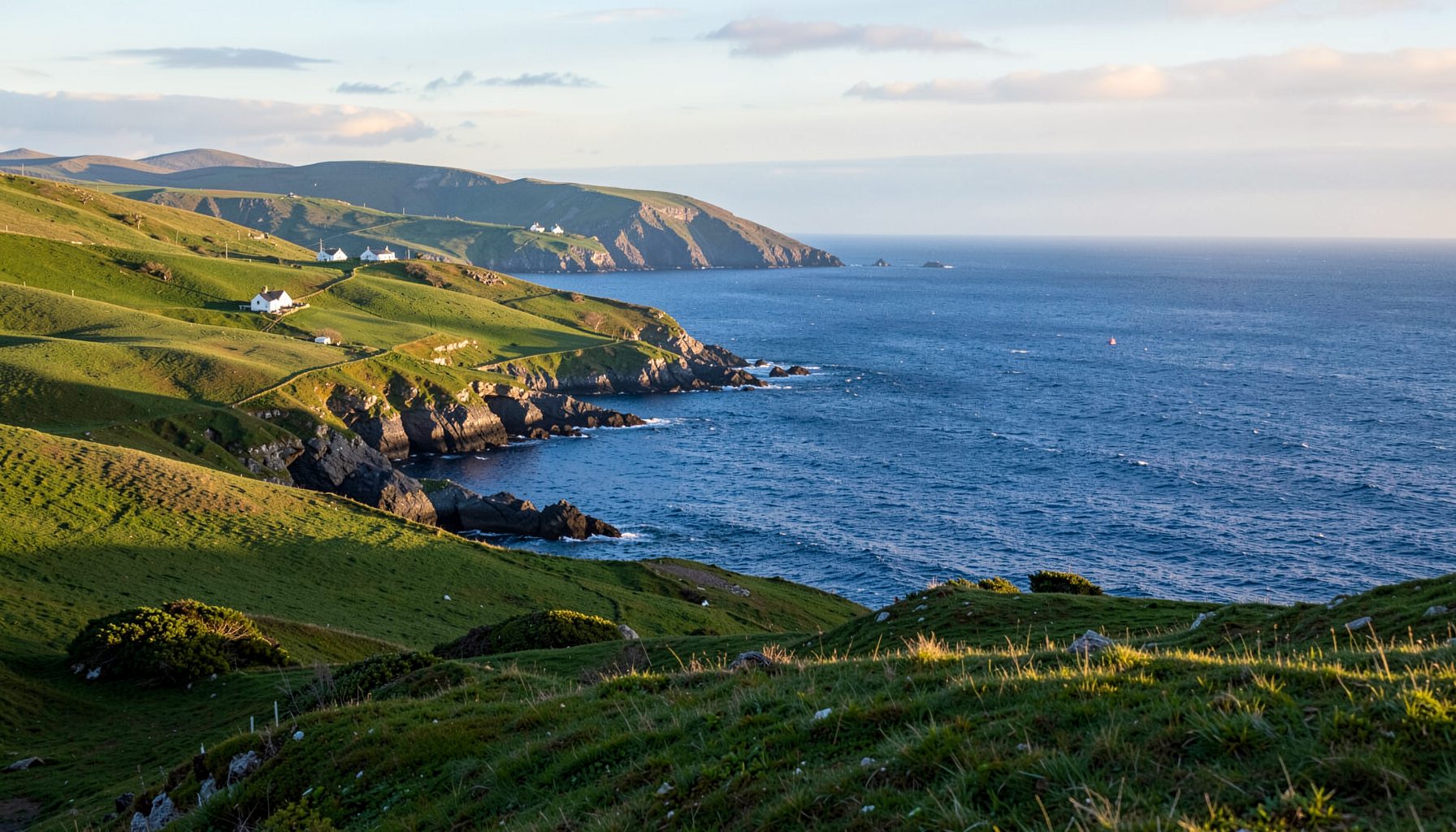
The landscape of Iveragh preserves the setting in which this history unfolded. Roads between villages were slower and more difficult to travel, while the sea connected the peninsula to distant ports as much as it separated communities. Valentia Island, Portmagee and the coast near Castlecove were part of a world where fishing, farming, emigration and political news overlapped. The hills and valleys that now attract walkers once influenced policing, travel and communication.
Religious sites and pilgrimage traditions also formed part of local identity. The Skelligs were associated with spiritual practice long before modern tourism, and the sea journey demanded careful planning. The annual Skellig pilgrimage reflects how movement through this landscape remains connected with community memory, devotion and inherited custom. It should not be presented as a Fenian event, but it helps convey the importance of place in the cultural history of the coast.
Today, interpretation of Iveragh’s past involves archives, archaeological sites, local museums, oral history and community projects. Heritage protection in Ireland operates through national monuments legislation and planning controls, while Australia uses instruments such as the Environment Protection and Biodiversity Conservation Act 1999 to recognise places of national significance. The legal systems differ, yet both countries face the challenge of protecting landscapes without removing them from living communities.
Remembering political unrest requires care. Fenian activity should neither be romanticised as a single heroic campaign nor reduced to a police report. The movement included genuine idealism, secret planning, international solidarity and serious risks to civilians. Land agitation likewise included legitimate demands, intimidation and conflict. A balanced account allows the people of Iveragh to appear as historical actors rather than passive victims of events decided elsewhere.
Explore the Skellig Coast’s villages, heritage stories and community traditions to place nineteenth-century political history within the living landscape of Iveragh. Local records, walking routes and cultural initiatives continue to reveal how migration, memory and place connect Kerry with Ireland and the wider world.