Walking the summer pilgrimage to Skellig Michael
The annual walking pilgrimage to Skellig Michael in the summer brings together landscape, faith, local memory and one of Ireland’s most extraordinary archaeological sites. It is not simply a hike to a famous viewpoint. The experience begins on the Iveragh Peninsula, continues across the sea, and reaches its most demanding stage on a steep stone stairway leading to the remains of an early medieval monastic settlement.
For generations, Skellig Michael has held spiritual significance far beyond its remote location. The island’s beehive huts, oratories and monastery are associated with monks who chose a life of prayer in a severe Atlantic environment. A modern pilgrimage follows that inherited sense of purpose while also taking account of conservation rules, maritime conditions and the practical limits of visiting a protected island.
Anyone planning to take part should treat the event as a community and heritage occasion rather than an ordinary excursion. Dates, boat arrangements and landing permissions can change, so local announcements matter. The Skellig Coast website provides a useful regional setting for understanding the villages, heritage sites and community activity connected with this part of Kerry.
A journey shaped by land and sea
A pilgrimage to Skellig Michael usually has two distinct walking elements. The first takes place on the mainland, where participants may gather in a village, church or coastal community before travelling towards the harbour. Depending on the route and the organising group, the mainland walk can include roads, lanes, uneven ground and exposed sections of the Iveragh landscape.
The second begins after the boat reaches Skellig Michael. There is no gentle path from the landing place to the monastery. Visitors climb hundreds of uneven steps cut into the rock, with sharp drops and little shelter from wind or sun. The ascent is slow by necessity, allowing people to concentrate on balance, breathing and the changing views across the Atlantic.
This combination gives the pilgrimage its particular character. The mainland walk creates a shared rhythm among participants, while the island ascent requires personal care and attention. The sea crossing separates ordinary routines from the remote sanctuary, and the final climb makes the destination feel earned rather than simply visited.
The spiritual meaning of Skellig Michael
The island’s monastery was established by Christian monks during Ireland’s early medieval period. Its stone cells and small church reflect an ascetic tradition in which remote places were chosen for prayer, discipline and withdrawal. The settlement’s survival is remarkable, especially given the Atlantic weather and the difficulty of bringing supplies to the island.
For modern pilgrims, the meaning of the site can be religious, cultural or deeply personal. Some may pray at the monastery, remember relatives, mark a life transition or renew a connection with local tradition. Others may come primarily through an interest in archaeology and landscape history. These different motivations can exist respectfully within the same gathering.
The significance of the place is also tied to its status as a UNESCO World Heritage Site. That designation recognises the exceptional value of the monastic settlement and its setting, but it also means that visitors have a responsibility to protect what they have come to see. A pilgrimage should leave no physical trace beyond careful footsteps on the designated route.
Reading the landscape along the route
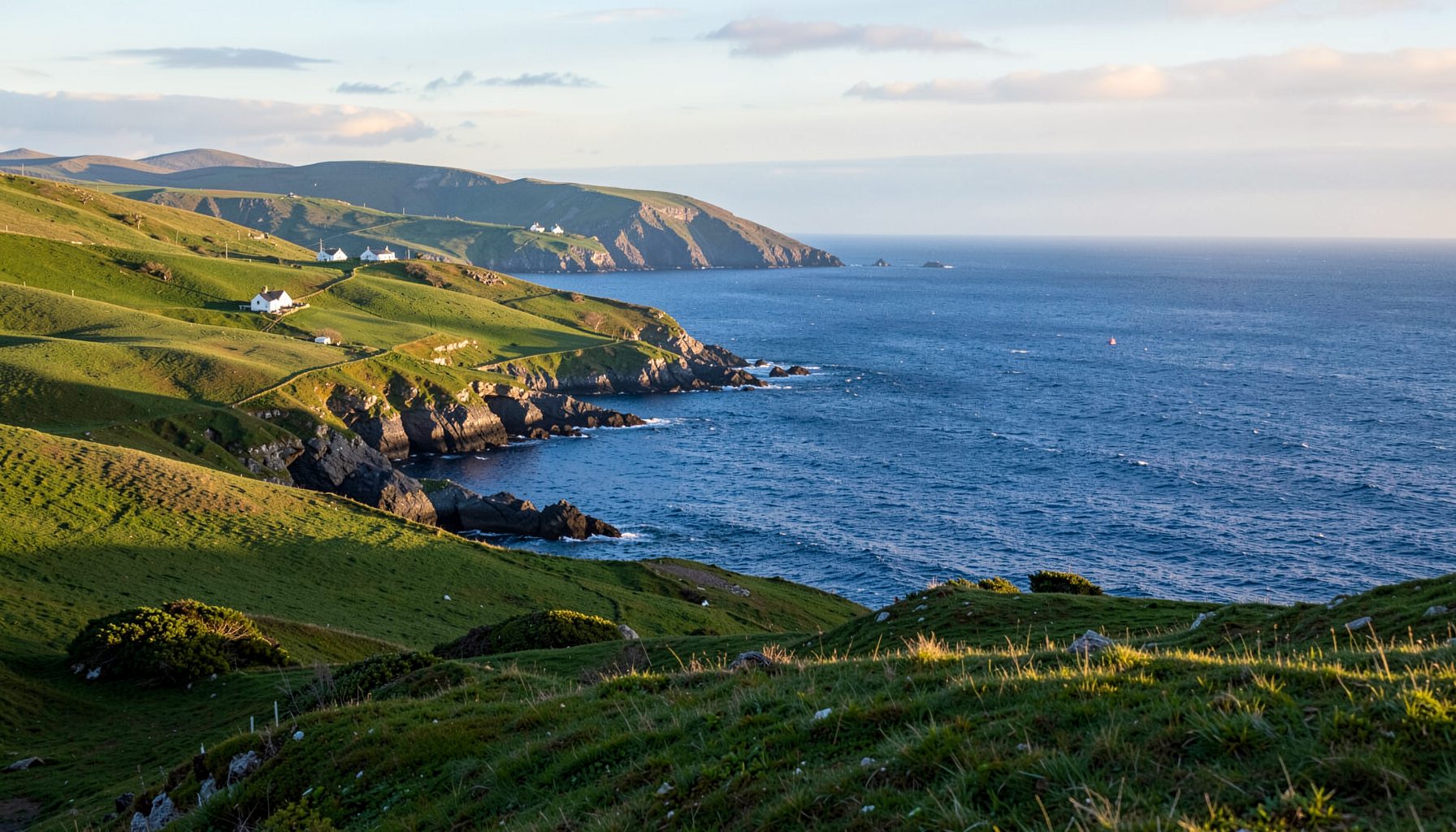
The approach to Skellig Michael reveals why the wider coast matters. From mainland viewpoints, the island appears as a dark, sharply rising presence beyond the water. The surrounding peninsula combines rocky headlands, sheltered coves, open farmland and small settlements where local history remains part of everyday life.
The walk can also be understood through the region’s older network of movement. People travelled between townlands, churches, wells, harbours and market centres long before modern tourism developed. A contemporary pilgrimage may use different roads and boats, yet it still follows the principle that a sacred destination is reached through a sequence of places rather than an isolated visit.
Weather changes the character of the landscape quickly. A clear morning may reveal the Blasket Islands, Valentia Island and distant headlands, while mist can reduce the horizon to rock, cloud and water. Wind, rain and swell are not inconveniences to be ignored; they are part of the setting and can determine whether the island can be reached safely.
What the island visit involves
Landing on Skellig Michael is controlled and weather-dependent. Boat operators must work with sea conditions, harbour arrangements and site regulations, and a planned pilgrimage date does not guarantee that a landing will take place. If the weather prevents a safe visit, the mainland gathering may still retain its spiritual and communal value.
The climb from the landing area is physically demanding. The steps vary in height and condition, and there are exposed edges in places. Visitors should move at their own pace, keep space between groups and avoid blocking narrow sections. Anyone with limited mobility, a fear of heights, serious balance difficulties or a condition affected by strenuous exertion should seek reliable guidance before making arrangements.
There are no ordinary visitor facilities on the island. Toilets, shops and shelter should not be expected, and mobile reception cannot be relied upon. Food, water and suitable clothing need to be organised before departure, while all rubbish must return to the mainland. Large bags make the climb more difficult and should be avoided.
| Part of the experience | What it may involve | Sensible preparation |
|---|---|---|
| Mainland gathering | Prayer, local history, a community walk or a harbour departure | Confirm the meeting place, route and timing |
| Sea crossing | An exposed boat journey affected by swell and wind | Follow the operator’s instructions and expect changes |
| Island landing | Uneven rocks, limited space and no standard facilities | Wear secure footwear and carry water |
| Monastery ascent | Hundreds of steep, irregular steps | Allow time, take breaks and keep clear of edges |
| Return journey | Descent, boat transfer and possible delays | Keep energy in reserve and avoid tight onward plans |
Protecting a fragile heritage site
Skellig Michael is both a living symbol and a vulnerable archaeological monument. The monastery’s stonework has endured for centuries, but that does not make it indestructible. Repeated contact, loose stones, erosion and careless movement can damage structures that cannot be replaced.
Visitors should stay on the established route, follow instructions from guides or site staff and avoid touching walls or entering restricted areas. Drones, amplified music and unauthorised ceremonies are inappropriate in such a sensitive environment. A quiet approach helps preserve the atmosphere for other pilgrims and protects nesting seabirds during the breeding season.
The island is also an important wildlife site. Gannets, puffins, razorbills and other seabirds use the cliffs and ledges around the island, while seals may be seen in the water near the landing area. Wildlife should be observed from a distance, without feeding, calling towards birds or attempting to approach animals for photographs.
Respect extends to the mainland communities. Pilgrims should park only where permitted, avoid blocking narrow roads, support local transport arrangements and remember that harbours and villages are working places. A well-run pilgrimage benefits from cooperation between organisers, residents, boat crews, conservation staff and participants.
Preparing for a respectful pilgrimage
Planning should begin with the organisers rather than with a generic sightseeing itinerary. Ask for the confirmed date, meeting point, walking distance, boat instructions, cancellation policy and any age or fitness requirements. Because conditions can change rapidly, keep the day flexible and do not arrange an important onward journey immediately after the expected return.
Useful preparation includes:
- Wear broken-in walking boots with strong grip, and bring waterproof layers, sun protection and warm clothing.
- Carry water, compact food, personal medication and a small amount of emergency equipment.
- Check sea and weather updates through the official organiser or boat operator before leaving the mainland.
- Tell a companion about any medical concern, and use walking poles only where they will not obstruct other people.
- Keep phones and cameras secure, but give greater attention to the steps, sea and people around you than to photography.
Food and drink should be sufficient for a long day, yet lightweight enough for the climb. A small rucksack is preferable to loose bags. Water-resistant packaging protects essential items from spray, while a fully charged phone can help with communication even though coverage is uncertain.
Clothing should suit several kinds of weather at once. The coast may be bright and calm at the harbour while the island is cold, wet or windy. Cotton clothing that stays damp can become uncomfortable, so layered garments and a waterproof outer shell are more practical. Gloves can help with cold weather, though they should not encourage visitors to grip fragile stonework.
Keeping the tradition connected to the community
The value of a summer pilgrimage does not end when the boat returns. It can create a meeting point for people with family connections to the coast, local historians, clergy, conservation workers, walkers and visitors who are discovering the area for the first time. Stories shared before or after the journey often add meaning that a guidebook cannot provide.
The surrounding communities also help interpret Skellig Michael as part of a wider cultural landscape. Villages from Kells towards Castlecove contain churches, graveyards, harbours, vernacular buildings and local memories that place the island within the history of the peninsula. Taking time to learn about these places can prevent the pilgrimage from becoming a narrow visit focused only on one monument.
A respectful participant listens as well as walks. That means accepting that the island may be inaccessible, that an event may be altered, and that conservation needs can take priority over personal plans. The journey remains worthwhile when its purpose is understood as connection: to faith, place, ancestry, landscape and the people who care for the coast throughout the year.
The annual walking pilgrimage to Skellig Michael in the summer offers a rare way to encounter Ireland’s Atlantic heritage through movement and reflection. Check the current local arrangements, prepare carefully for the sea and the steps, and approach the island with patience. When you travel to the Skellig Coast, support the communities that sustain its traditions and help ensure that this remarkable pilgrimage remains possible for those who walk it in years to come.