Medieval carvings from Kells to Castlecove on the Skellig Coast
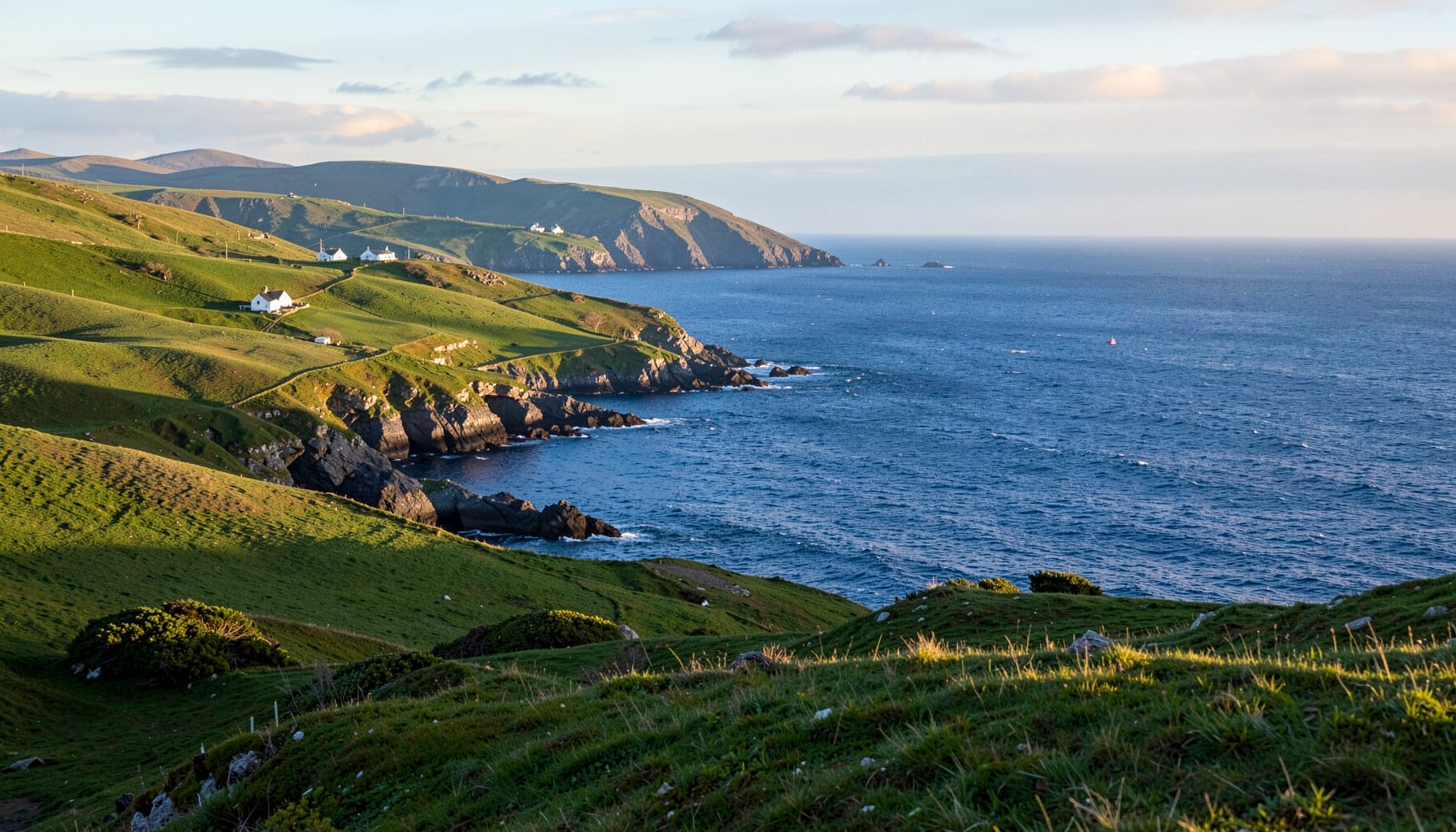
The Skellig Coast winds along the southwestern edge of Ireland's Iveragh Peninsula, and tucked between its windswept fields and rocky coves sits a remarkable chain of medieval churches and graveyards. The carved stones here are not museum pieces behind glass; they remain part of the working landscape, visited by pilgrims, hikers, and curious travellers who want to understand how the early medieval mind shaped the world in stone.
For Australians planning a longer trip to the Emerald Isle, the Iveragh coast can feel very far from home. Direct flights from Sydney or Melbourne to Dublin often route through Singapore, Doha, or Dubai, with carriers like Qantas, Emirates, and Singapore Airlines running year-round services. Once you land in Ireland, a short domestic hop or train ride brings you down to Kerry, where the wild Atlantic scenery begins to reveal itself around Waterville and Cahersiveen.
This guide follows the coastal road from Kells in the north to Castlecove in the south, tracing the medieval carved heritage village by village. It also nods toward Skellig Michael, the UNESCO monastery that gives the region its identity, and points to ways to explore responsibly without rushing past the quiet corners where the stones still speak.
The carved stone tradition of Iveragh
The stones scattered across the Skellig Coast belong to a tradition that stretches back more than a thousand years, well before the Norman castles and the Star Wars film crews transformed the peninsula's image. Early monastic communities, often connected to Skellig Michael itself, commissioned simple ogham stones, cross slabs, and holy wells that marked boundaries between sacred and secular space.
What sets Iveragh apart is the sheer concentration of weathered carvings within a short stretch of coastline. Within forty kilometres one can find cross slabs with interlacing patterns, bullaun stones used for ritual cures, and grave markers inscribed in a mix of Latin, Old Irish, and runic scripts. The local examples tend to be smaller than the sandstone churches of inland Munster, often leaning against a sea wall or set into a hillside graveyard where Atlantic storms have scoured them for centuries.
Many were carved by local masons working from pattern books brought from monastery scriptoria. The motifs echo the great high crosses of the Irish midlands, but the execution is rougher, as if the carver was racing the weather. That rawness is part of their charm and helps historians date the stones by comparing knotwork, human figures, and faint traces of polychrome paint.
From Kells southward: early Christian foundations
Kells, despite sharing its name with the famous Boyne Valley monastery associated with the Book of Kells, is a quiet Kerry village of stone cottages and a single curving bay. Just inland sits the ruin of a small church whose east window still holds fragments of carved tracery, a delicate example of medieval stonemasonry tucked away from the main road.
A short walk brings you to a clochán, the drystone beehive cell linked with early Irish monasticism. Nearby, a flat slab marked with a plain Latin cross marks what locals still call the priest's grave. The simplicity is striking when compared with the busier towns further south, and visitors from Sydney who are used to weaving between ferries at Circular Quay often find the silence here is the loudest thing they encounter.
The first graveyard slab worth pausing at is propped against the southern wall, where the initials of a sixteenth-century chieftain can still be made out. A small heritage committee maintains the site and welcomes contributions from passing walkers. In summer you may see a bog oak cross, a recent memorial, alongside the medieval originals.
Knightstown and the maritime edge
Knightstown on Valentia Island is reached by a short ferry crossing from Reenard Point, and the village feels more like a tidy coastal town than a remote outpost. Australia's own ferry heritage, from Sydney Harbour to the bays of Melbourne, makes the small Irish version feel oddly familiar. The graveyard above the village holds a collection of carved slabs that illustrate the cross-cultural reach of medieval Irish Christianity.
Some of the most striking pieces are simple rectangular grave markers with a tapering cross carved in low relief. Their plainness hides a sophisticated sense of proportion. Set against the Atlantic horizon they read like minimalist sculpture, the kind of restrained design that contemporary Australian stonemasons sometimes reference when teaching traditional skills at workshops in Fremantle or the Hunter Valley. A small ship in low relief, carved into one slab, reminds visitors that these communities were traders and travellers, not isolated hermits, and imported stone in some graves confirms that Knightstown was tied into wider Atlantic networks long before the lifeboat station made it famous in modern memory.
Sites worth lingering over
- The south wall of the old graveyard, with three decorated slabs in a single row
- An unusual zoomorphic slab above the boat-launch slipway
- A simple cross-inscribed headstone near the gate, often covered in moss
- A small ogham-styled stone whose notches run along a fractured edge
Valentia Island's ecclesiastical treasures
Beyond Knightstown, Valentia offers a quieter ecclesiastical trail. The old church at Glanleam is surrounded by a graveyard whose southern boundary is lined with stones carrying geometric and zoomorphic carvings. Some motifs appear in similar form on the western Scottish isles, evidence of the maritime monastic exchanges that ran from Iona down to Skellig.
Australia has its own quiet examples of medieval-inspired stone carving at university chapels in Melbourne and Brisbane, but the Valentia stones carry a weight of weather and devotion that synthetic stone cannot imitate. Heritage researchers from Australian universities sometimes visit Iveragh to compare local styles with the broader Insular tradition, contributing to a small but growing academic conversation between the two hemispheres.
The tetrapod cross base at one site is worth seeking out. Its four arms once supported a free-standing cross, and the underside carries interlace patterns softened by weather. A nearby stone, said locally to mark a clan gathering point, shows faint cup-and-ring marks that may predate Christianity altogether, blurring the line between sacred and prehistoric.
Portmagee and the road to the Skellig
Portmagee is a single street of painted houses that serves as the jumping-off point for boat trips to Skellig Michael. The village churchyard sits on a low rise with a fine view of the harbour, and the wall is studded with carved slabs brought in from surrounding fields in the nineteenth century.
A highlight for many visitors is the combination of bullaun, a shallow circular hollow used in folk-religious practice, with a later medieval cross slab. This pairing shows how belief adapted across centuries: the older ritual hollow, likely associated with curing or weather magic, was tolerated within a Christian cemetery, a flexibility that modern Australian readers may find surprising given the more formal separation of sacred sites under the National Heritage List framework.
Those planning a Skellig landing should know that boats are licensed by the Irish Department of Housing, Local Government and Heritage, and visitor numbers are strictly controlled, similar to permits required at sensitive sites such as Kakadu or Uluru. For those who cannot secure a landing permit, the Portmagee churchyard offers a tangible connection to the monastery that awaited the monks who sailed out across the swell. Anyone keen to read deeper can follow the story behind the Skellig Michael monastic settlement before they travel.
Reading the carved motifs
- Interlace knots often signal prayer for the dead and eternal life
- A carved serpent paired with a cross can mark a boundary between worlds
- Simple ringed crosses in low relief tend to date from the eleventh to thirteenth centuries
- Bullaun hollows, sometimes filled with rainwater, reflect older pre-Christian practice
St Finian's Bay, Ballinskelligs and inland treasures
South of Portmagee, the road dips and climbs past St Finian's Bay, where a ruined church sits in a sheltered hollow. Its graveyard is small, but the surrounding wall holds decorated cross slabs and an early grave-marker shaped like a miniature house, possibly a folk interpretation of the stone-roofed clocháns on Skellig.
Ballinskelligs has a longer ecclesiastical footprint. The remains of a fifteenth-century friary lie close to the shore, and the burial ground is dotted with stones that show clear links to the broader Cork and Kerry carving schools. A pleasant inland detour leads to the ruins of an early church in the hills above, where a single decorated lintel carries a carved serpent and cross, a motif that connects the site to a wider Atlantic tradition of symbolic dualism.
Australian travellers with a taste for walking will recognise the rhythm of coastal-to-inland exploration that mirrors trips from Sydney to the Blue Mountains or from Adelaide into the Adelaide Hills. The same logic applies here: do not stay glued to the main road. The medieval masons worked inland as much as on the coast, and the cliff-top tracks reward the curious.
Caring for carved stone in a changing climate
The carvings along this stretch of coast face pressures familiar to heritage managers worldwide. Salt-laden Atlantic winds drive moisture into porous sandstone, and milder, wetter winters accelerate surface erosion. Ireland's national heritage body works alongside local community groups to monitor and stabilise the most exposed slabs.
Visitors have a role to play too. Touching the carvings transfers oils and accelerates wear, so looking but not leaning is the rule. Australian readers may already be familiar with similar guidance from sites like the Sydney Opera House precinct or Port Arthur in Tasmania, where interpretation signs encourage visitors to treat the stone with care.
Funding for conservation depends on a mixture of state grants, EU cultural heritage support, and small local fundraising. Local craftspeople, heritage guides, and small guesthouses across the peninsula often promote themselves through business directory listings, helping visitors find authentic places to stay, eat, and learn about the carved stones.
Plan your route so that you spend at least two nights in the Iveragh region rather than treating it as a day-trip from Killarney. Walk the lanes at dawn or in the late afternoon, when the low light picks out the carving on each slab and the wind off the Atlantic is gentle enough to enjoy. Bring a small torch, sturdy boots, and a notebook for sketching the motifs you find, and remember that every stone was placed by a community that understood sea, soil, and faith as parts of the same long conversation.