How Skellig Michael Became a Monastic Landmark
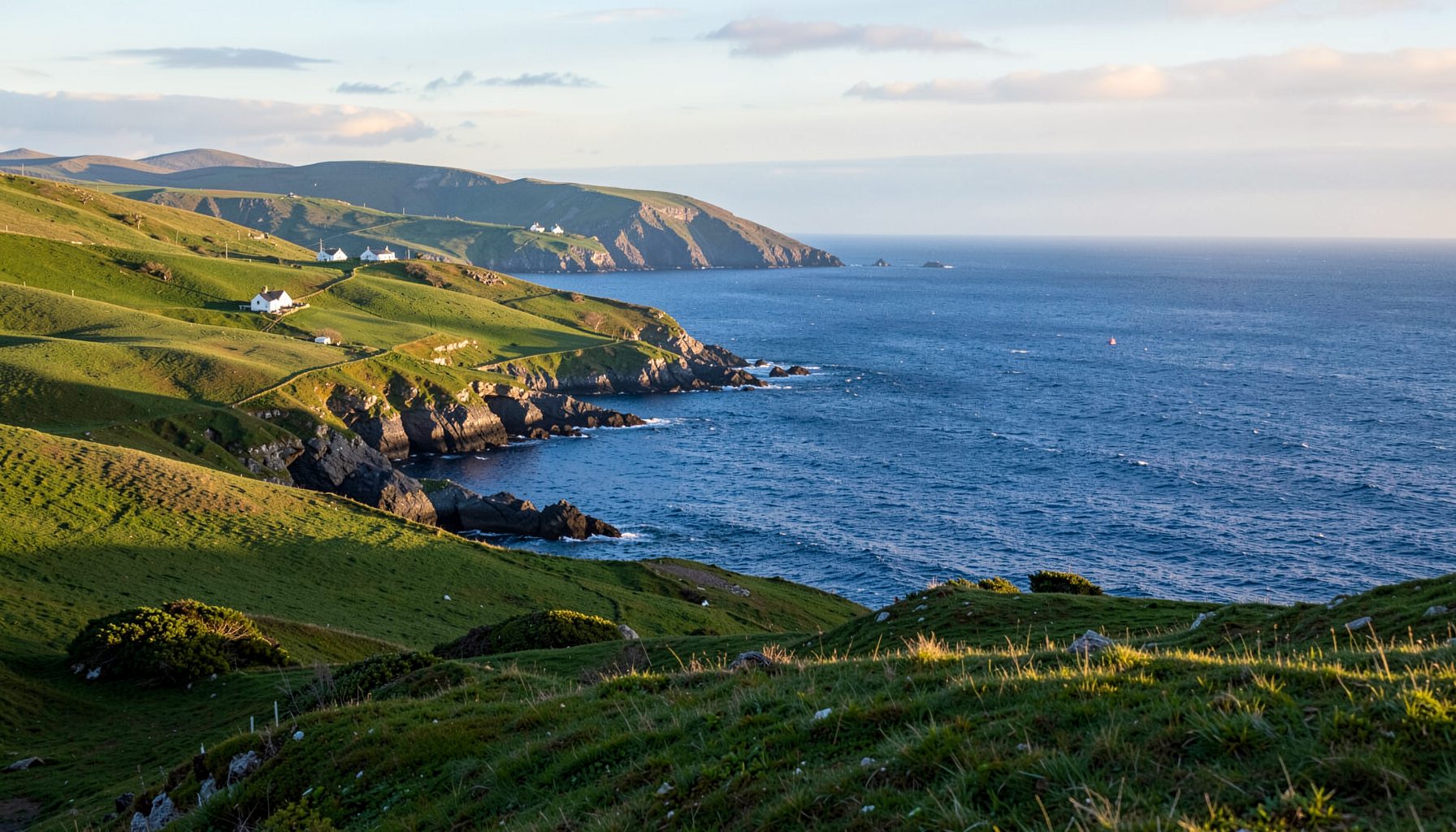
The story behind the Skellig Michael monastic settlement begins with a severe Atlantic landscape. Rising from the sea about 11 kilometres west of the Iveragh Peninsula, Great Skellig is a steep pyramid of sandstone and slate, shaped by wind, rain and waves. Its isolation made ordinary life difficult, yet that same remoteness offered early Christian monks a place for prayer, discipline and separation from the distractions of the wider world.
The island’s monastery is one of Ireland’s most remarkable early medieval sites. Its dry-stone buildings, narrow terraces, stone steps and beehive-shaped cells appear to grow from the mountain itself. The settlement was created without mortar, cranes or level ground, relying on careful engineering and an intimate understanding of local stone.
Today, Skellig Michael is recognised as a UNESCO World Heritage Site and is known around the world through its appearance in the Star Wars films. Film fame has brought new attention, but the island’s deeper importance lies in the religious community that occupied this exposed Atlantic outpost for centuries.
A Rocky Setting For Sacred Life
Great Skellig, also called Skellig Michael, is the larger of the two Skellig Islands. Its summit reaches approximately 218 metres above the sea, while cliffs fall sharply towards the water on almost every side. Landing has always depended on conditions, and access remains closely controlled because the island is vulnerable to storms, erosion and heavy footfall.
For early monks, the location had religious as well as practical meaning. Christian communities in Ireland often valued remote places where individuals could pursue prayer and ascetic practice. An island surrounded by open ocean could be understood as a natural boundary between ordinary society and a more demanding spiritual life.
The Skelligs also formed part of a wider seascape connected with the communities of the Iveragh Peninsula. The mainland settlements around Ballinskelligs, Portmagee, Valentia and the broader Skellig Coast story help place the island within the region’s living history rather than treating it as an isolated monument.
When The Monks Arrived
The exact foundation date is uncertain. Archaeological evidence and historical interpretation generally place the establishment of the monastic community between the sixth and eighth centuries, with many accounts favouring the early medieval period. Tradition associates the foundation with Saint Fionán, an important figure in the religious history of the region, although surviving evidence cannot provide a complete biography of the first settlers.
The monks who came to Great Skellig were likely part of Ireland’s wider tradition of ascetic Christianity. They sought a life structured around prayer, manual work and limited contact with the outside world. The community may never have been large, but its small size suited the island’s limited resources and the physical demands of the site.
Life there required constant preparation. Fresh water had to be collected in rock-cut cisterns, food and tools had to arrive by boat or be produced in small quantities, and every movement around the steep slopes carried danger. The settlement’s survival depended on cooperation, practical skill and an organised daily routine.
Building A Monastery Without Mortar
The most recognisable structures are the beehive cells, known in Irish as clocháin. Each cell was built from carefully laid stones that curve inward until they meet near the top. The technique creates a strong, weather-resistant shelter without mortar. Water runs over the angled exterior, while the thick walls offer some protection from the Atlantic climate.
The monastic complex also contains an oratory, altar, crosses, burial grounds, retaining walls and terraces. The monks cut and shaped steps into the rock, creating routes between the landing area, living quarters and places of worship. These paths were essential to the settlement’s function, but they also reveal the scale of labour required to make the mountain habitable.
The monastery was not a single building designed at one time. It developed over generations as walls were repaired, terraces expanded and practical needs changed. Its apparent simplicity hides an advanced understanding of weight, drainage and stability. The builders used the island’s natural contours instead of trying to overcome them.
Daily Life In The Island Community
The community’s routine would have centred on worship. Monks followed a pattern of prayer, reading, work and rest shaped by the religious customs of early medieval Ireland. The oratory provided a communal setting, while the individual cells allowed residents to withdraw for private devotion.
Food was probably plain and carefully managed. The island could support limited cultivation, especially on its constructed terraces, but supplies from the mainland were important. Fish, seabirds, eggs and stored provisions may have contributed to the diet, although the exact balance is difficult to reconstruct. The monks also needed wool, timber, tools, writing materials and other goods that could not be produced locally.
The settlement should not be imagined as completely cut off from the world. Boats connected it with mainland religious houses and coastal communities, even if journeys were hazardous. Visitors, pilgrims, church officials and people seeking spiritual guidance may have reached the island at different periods. Isolation reduced contact, but it never removed the Skellig monastery from the cultural network of medieval Ireland.
| Feature | What It Reveals |
|---|---|
| Beehive cells | Skilled dry-stone construction and individual monastic living |
| Stone oratory | Shared worship and the community’s religious purpose |
| Terraced ground | Efforts to grow food and create usable space |
| Rock-cut cisterns | Careful collection and storage of fresh water |
| Long stairways | Movement between the landing, monastery and summit |
| Burial areas | Continuity of religious practice and remembrance |
From Monastic Home To Pilgrimage Site
By the later medieval period, the community’s main base appears to have shifted towards the mainland. The reasons are not fully documented, but changing church structures, difficult living conditions and the practical advantages of a mainland location may all have played a part. Ballinskelligs became an important centre in the region, and the island monastery gradually lost its role as a permanent home.
The departure of resident monks did not erase the island’s religious significance. Skellig Michael continued to attract pilgrims and visitors who valued its association with early Irish Christianity. The journey itself could be understood as an act of devotion: a demanding voyage followed by a steep ascent to a place associated with prayer and sacrifice.
Later centuries brought further changes. The island became associated with lighthouse construction and maritime navigation, reflecting the dangers of the surrounding waters. Lighthouse workers and their families used parts of the island, while the monastic remains continued to stand above the landing place as evidence of a much older way of life.
Why Preservation Matters Today
Skellig Michael’s international status brings opportunities and responsibilities. Its UNESCO designation recognises the site’s outstanding cultural value, but it does not make the stonework immune to natural decay. Freeze-thaw conditions, rainfall, salt air, falling rocks and plant growth all affect the buildings and pathways.
Visitor management is therefore part of heritage protection. Numbers are restricted, landing depends on weather, and access to certain areas may change when conservation work or safety concerns require it. These limits can feel demanding, but they help protect fragile walls and reduce pressure on a site that was never designed for modern tourism.
The island’s meaning also extends beyond its physical remains. It represents the creativity of early medieval builders, the endurance of religious communities and the long relationship between the people of the Iveragh coast and the Atlantic. Responsible interpretation should give space to archaeology, local memory, pilgrimage, maritime history and contemporary conservation.
Ways To Experience Its History Responsibly
A visit to the Skellig Michael area can begin on the mainland. Museums, heritage centres, local guides and community events around the Skellig Coast provide context before anyone reaches the island. Learning about the geography and history first makes the exposed settlement easier to understand as a working religious community rather than simply a dramatic viewpoint.
For those who secure a permitted boat trip, the landing and climb demand patience. Conditions can change quickly, and the stone steps are uneven, steep and exposed. Visitors should follow every instruction, remain within permitted routes and avoid touching walls or disturbing stones.
Useful ways to engage with the site include:
- Read about early Irish monasticism before travelling to the coast.
- Treat the landing, climb and weather restrictions as part of the heritage experience.
- Keep to marked paths and never remove stones, artefacts or natural materials.
- Explore mainland heritage in Ballinskelligs, Portmagee and nearby communities.
- Support local interpretation and conservation initiatives through respectful visits.
The island’s story is strongest when it is connected to the people and places around it. The monks may have chosen Great Skellig for its distance from society, but the monument has always depended on the wider coast for supplies, stories, navigation and care.
Walk through the mainland heritage sites of the Iveragh Peninsula, learn how the monastic settlement was shaped by faith and landscape, and follow current access guidance before planning a visit. Supporting informed, careful engagement helps ensure that Skellig Michael remains a place of discovery for future generations.