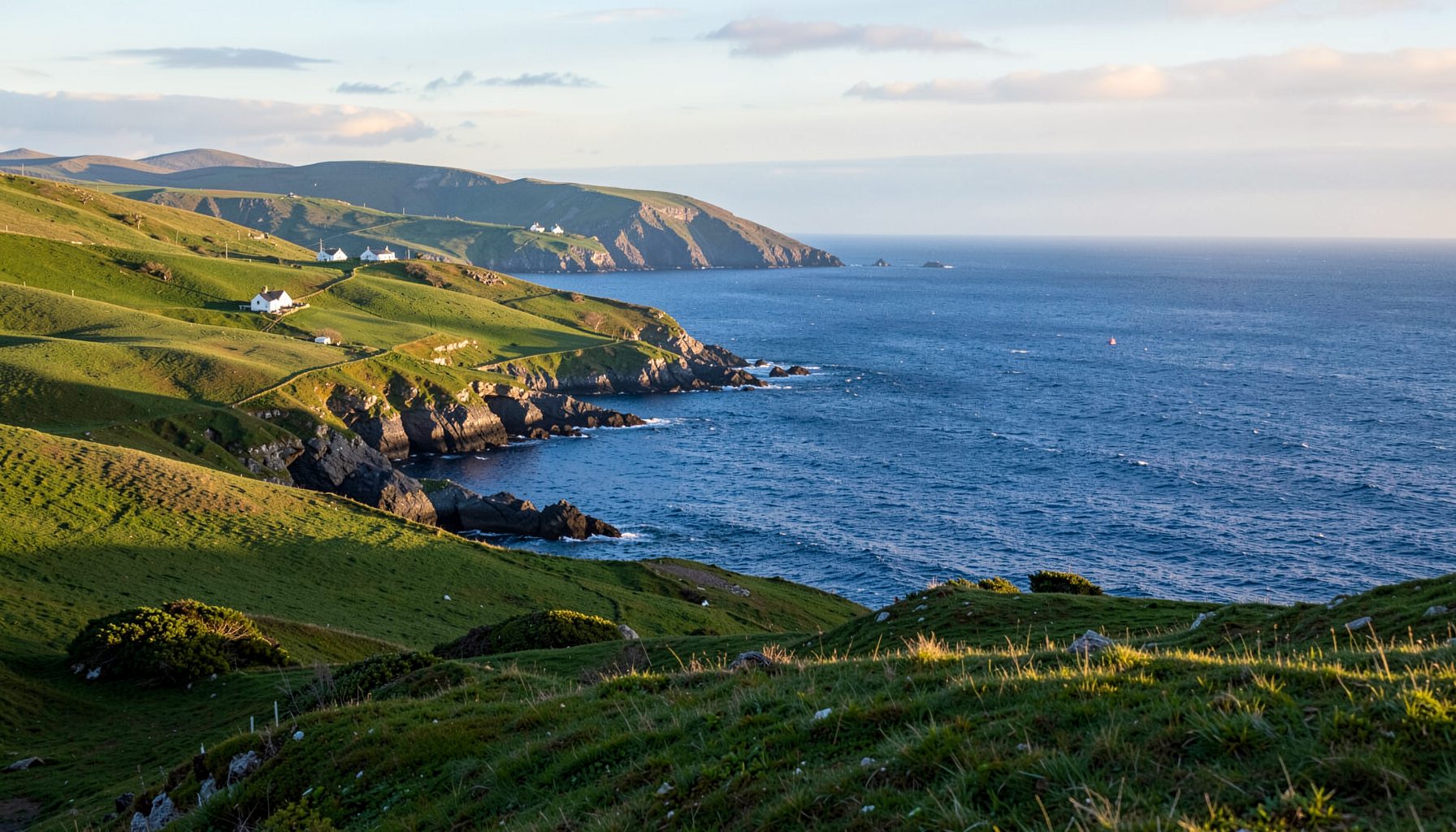
The Story of White Strand And Its Dune System
On the southern edge of the Iveragh Peninsula, White Strand is shaped by the meeting of Atlantic water, wind-borne sand and a coastline that has been used by people for generations. Its pale beach can look simple at first glance, yet the land behind it contains a complex dune system that changes with every season.
The strand belongs to the wider Skellig Coast, a landscape stretching from Kells to Castlecove and linking villages, heritage sites, working farms and remarkable marine environments. Understanding the beach means looking beyond the shoreline to the grasses, hollows, wildlife and local knowledge that allow this fragile coastal ground to endure.
Origins In Sand And Sea
White Strand was formed through the gradual accumulation of sand carried by waves and wind. Offshore currents move sediment along the coast, while the beach itself acts as a temporary store. During calmer weather, sand can settle in broad bands above the high-water mark. Strong Atlantic storms may then remove part of that material, exposing stones or reshaping the upper shore.
This movement is a natural part of a beach-dune environment. A dune is not a fixed hill but a living landform, built when dry sand is trapped by vegetation, shells, driftwood and small changes in the surface. The visible shape of White Strand therefore records both long-term coastal processes and recent weather.
The geology of the Iveragh Peninsula adds another layer to the story. Headlands, rocky inlets and sheltered bays interrupt the movement of sand, creating small pockets where beach material can gather. The result is a coastal system with its own local character rather than a uniform strip of sand.
A Living Dune Landscape
Behind the open strand, low ridges and hollows help the dune system absorb wind and water. The seaward edge is usually the most exposed, while areas farther inland can support a greater variety of plants. Some sections may remain sparsely covered, especially where storms have cut into the dune face. Other parts become greener as roots bind the surface and organic matter accumulates.
Dune slacks are among the most valuable features in this type of landscape. These shallow depressions can hold moisture after rain and may support plants that cannot survive on dry, shifting sand. Their condition depends on rainfall, groundwater, grazing patterns and the balance between natural change and human pressure.
A healthy dune system creates protection without behaving like a solid wall. Its ridges take the force of wind and waves, then slowly release sand back towards the beach. When paths, vehicles or repeated foot traffic break that pattern, wind can scour exposed areas and form blowouts. Such damage may spread well beyond the original track.
Plants That Hold The Shore
Marram grass is one of the best-known dune plants because its long roots and underground stems help stabilise loose sand. It is adapted to burial and can continue growing when fresh sand accumulates around it. The plant’s presence does not mean the dunes are permanent; it shows how vegetation and moving sediment work together.
Other coastal species occupy different parts of the system. Salt-tolerant plants cope with sea spray near the strand, while herbs and grasses suited to less exposed conditions grow farther inland. Mosses, lichens and small flowering plants can appear in sheltered spaces, adding colour and structure that are easy to miss when the beach is busy.
This vegetation has practical value as well as ecological importance. Plant cover reduces erosion, gives insects and small animals shelter, and helps retain moisture. Even a narrow informal path can remove years of growth if it becomes heavily used. For that reason, staying on established access routes is one of the simplest ways to protect White Strand.
Wildlife Through The Seasons
The beach and dunes provide feeding and resting areas for birds, particularly outside the busiest summer period. Waders may search the waterline for invertebrates, while gulls and other coastal birds use the shore and nearby fields. The mix of beach, dune, pasture and rocky coastline gives wildlife several habitats within a short distance.
Seasonal observation can reveal changes that a summer visit might miss. Winter brings fewer people and stronger weather, but it can also bring interesting bird activity across the peninsula. The wider pattern is explored in winter birding hotspots, which places White Strand within the connected coastal habitats between Kells and Castlecove.
In warmer months, insects use flowering dune plants, and young birds may depend on quiet areas near the shore. Dogs running through vegetation, people crossing nesting areas or visitors collecting shells and driftwood can disturb this seasonal cycle. Small choices made by beach users can therefore influence wildlife well beyond a single afternoon.
People, Memory And Access
White Strand is part of a lived landscape, not an isolated scenic backdrop. Local residents have long understood the beach through weather, tides, farming, fishing, walking routes and community use. Names attached to fields, lanes and coastal features often preserve practical knowledge about water, shelter, boundaries or past activity.
That local perspective matters when interpreting the dunes. A sandy ridge may look natural while also reflecting generations of grazing, path-making and maintenance. Equally, an apparently empty hollow may be important for drainage or habitat. Stories of the coast are often held in ordinary details rather than in a single monument.
Visitors from Australia may recognise the beach culture of open air, swimming and family outings, but the conditions are different from those at Bondi, St Kilda or Perth’s Cottesloe Beach. White Strand is not a metropolitan, patrolled beach with the same facilities or warning systems. Irish Atlantic weather can turn quickly, and tides, cold water and uneven access require more attention than a familiar urban beach routine.
The Australian custom of “slip, slop, slap” remains useful on bright days, even under cooler Irish skies, while sturdy footwear is often more helpful than bare feet on dune paths. Travellers from Brisbane, Melbourne or Adelaide may also find that the most rewarding visit is shaped by local weather rather than a fixed beach timetable.
Caring For A Fragile Shore
Responsible access protects the physical dune system and the experience of people who live nearby. Avoiding shortcuts, keeping dogs under control where requested and carrying rubbish away all reduce pressure. Visitors should also leave shells, plants and driftwood in place, since natural materials help maintain the beach and provide shelter for small creatures.
For the Australian visitor market, White Strand offers a quieter kind of coastal experience than a heavily developed resort. It suits travellers interested in regional culture, walking, landscape photography and natural history. That appeal depends on keeping the setting low-impact, supporting nearby businesses and respecting community notices rather than treating the beach as an empty resource.
Useful habits for exploring the strand include:
- Use marked paths and access points instead of crossing the most vegetated dunes.
- Check tide, wind and weather conditions before walking along the shoreline.
- Keep dogs close and follow seasonal notices about wildlife or restricted areas.
- Take all rubbish with you, including food scraps and biodegradable items.
- Observe the dunes from a distance and avoid climbing unstable faces.
The best way to read White Strand is slowly. Notice where the sand changes from damp to dry, where marram grass begins, and where wind has formed a small ridge behind the beach. Look for the line between active movement and stable growth. These details explain how the coast protects itself and why even modest-looking dunes deserve care.
The strand also connects naturally with other Skellig Coast experiences. A visit can be combined with village heritage, local learning initiatives, nearby walking routes or a wider exploration of the Iveragh Peninsula. In this setting, the beach is part of a regional story that includes Skellig Michael, traditional communities and a coastline shaped by both natural forces and human attention.
White Strand’s dune system is still changing, as it must. Its future will depend on ordinary decisions repeated over time: where people walk, how access is managed, whether vegetation is respected and whether visitors understand the difference between a durable-looking landscape and a resilient one. Explore the Skellig Coast with care, share its stories accurately and help keep this remarkable beach and its living dunes part of the region’s heritage.