Winter birding along the Skellig Coast
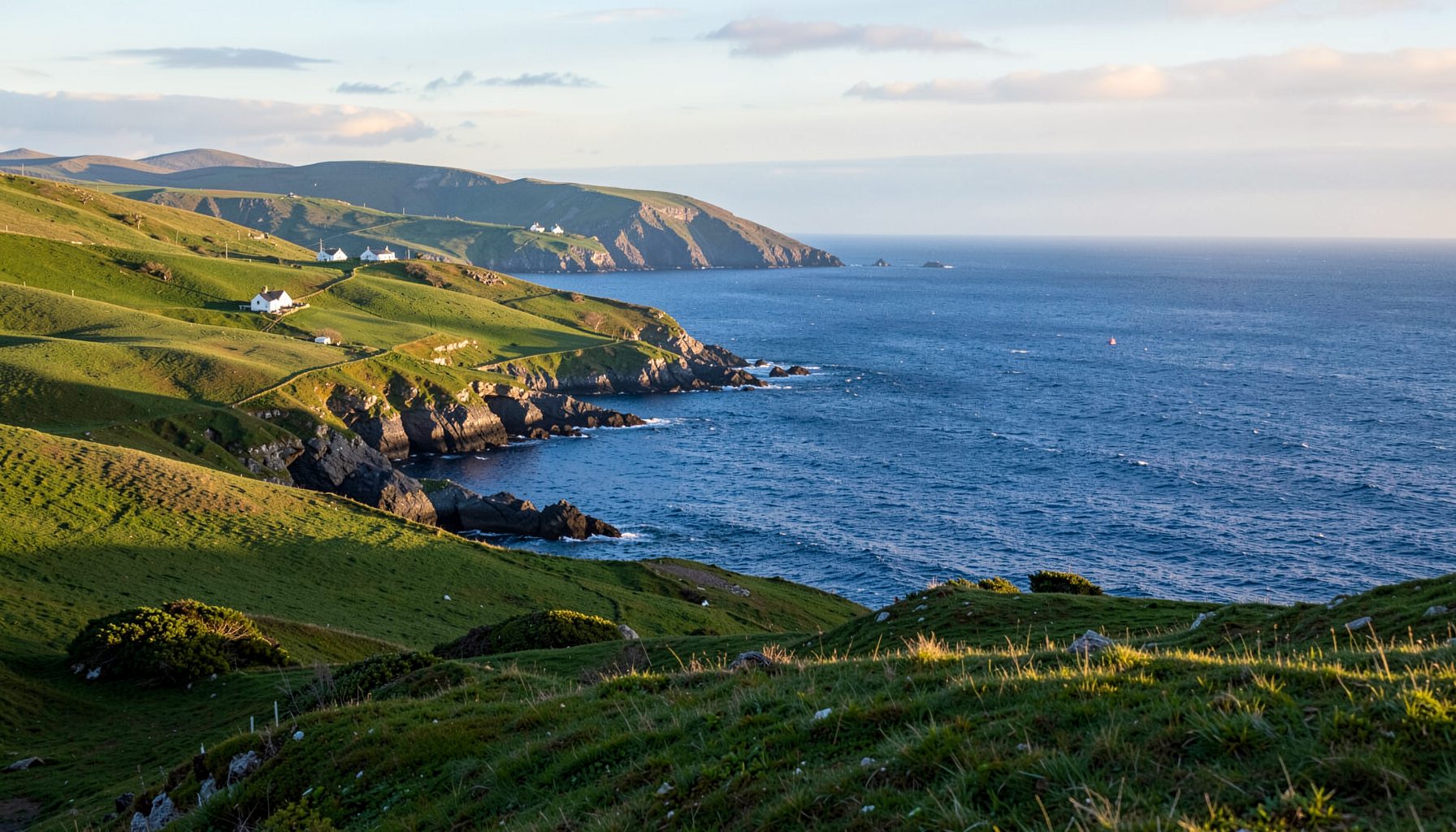
From Kells to Castlecove, the Iveragh Peninsula offers a varied winter landscape for observing wild birds. Sheltered bays, rocky headlands, estuaries, pasture, upland slopes and wooded valleys create habitats for both resident species and visitors from northern Europe. The shorter days and changeable weather can make the coast feel quiet, yet winter often brings some of the best opportunities for seeing birds at close range.
The coastal road passes through Kells, Glenbeigh, Cahersiveen, Valentia Island, Portmagee, Waterville, Caherdaniel and Castlecove, with many places to stop safely and scan the water. Some locations are better suited to patient sea watching, while others reward a walk with binoculars along a beach, river mouth or woodland edge.
Winter birding here is less about collecting a long list of species than understanding how birds use the landscape. A sheltered inlet may hold waders during a high tide, while a nearby headland reveals gannets, fulmars or auks moving along the Atlantic coast. Careful observation also helps protect the habitats that make the region important to wildlife.
Kells Bay and the northern approach
Kells Bay is a useful starting point for exploring the coast from the north. Its mixture of shoreline, small streams, pasture and wooded areas can attract wagtails, thrushes, finches and other farmland birds. At the water’s edge, look for oystercatchers and gulls, with waders more likely where mud, shingle or damp ground is exposed.
The bay and nearby coastal bends can be productive after unsettled weather. Strong winds may push seabirds closer to land, while calmer conditions make it easier to watch movement across the bay. Scan slowly rather than following every bird immediately; dark-backed gulls, cormorants and diving birds can be separated by shape, flight style and feeding behaviour.
Winter light is often soft in the morning, making it easier to identify birds against the water. A telescope is helpful for distant rocks and sandbanks, but binoculars are sufficient for most roadside observations. Always use designated parking areas and avoid stopping where visibility is limited.
Cahersiveen and the River Fertha
Cahersiveen provides a combination of river, estuary, town-edge and open coastal habitats. The River Fertha and its tidal margins are worth checking around changing tides, particularly when exposed mud or shallow water offers feeding opportunities. Curlew, redshank, lapwing and oystercatcher may be present, although numbers and species vary with weather and tide height.
Look for waders standing still before assuming that an area is empty. Their camouflage is effective against wet sand, stones and winter grass. A flock lifting suddenly can reveal birds that were difficult to see at rest. When observing an estuary, keep the sun behind you where possible and use the tide chart to plan a period when feeding areas are visible.
The town’s hedges and gardens can add common woodland and garden species to a coastal list. Dunnock, robin, blackbird, wren and blue tit are likely in sheltered places, while occasional finches may gather where seed-bearing plants remain. The mixture of habitats makes Cahersiveen a practical stop when Atlantic conditions are too rough for exposed headlands.
Valentia Island and Portmagee
Valentia Island and Portmagee face open water and offer some of the most atmospheric sea-watching on this stretch of the coast. Headlands, harbour walls and elevated viewpoints provide different angles across the channels and towards the Skelligs. Winter observers may see gannets, fulmars, shags, cormorants and gulls, with shearwaters, skuas or auks possible during strong passage conditions.
Sea watching requires patience and realistic expectations. A quiet spell may last for half an hour before a small group of birds appears close to shore. Watch the line where waves break, then extend the scan towards the horizon. Birds flying with the wind can move rapidly, so note the direction and speed of travel before trying to identify them.
Portmagee’s sheltered waters can hold birds that avoid the most exposed coastline. Check rocky edges, mooring areas and small beaches without approaching resting birds. The surrounding islands are important breeding and marine habitats, and the Skelligs should be viewed from a respectful distance. Winter access to Skellig Michael is generally limited, so land-based observation is the appropriate option during the colder months.
| Area | Habitats to check | Winter possibilities | Best conditions |
|---|---|---|---|
| Kells Bay | Bay shore, pasture, woodland and streams | Waders, gulls, wagtails, thrushes and finches | Morning light and moderate wind |
| Cahersiveen | River margins, estuary and town-edge hedges | Curlew, redshank, lapwing, oystercatcher and garden birds | Around suitable falling or rising tides |
| Valentia Island | Headlands, harbour and rocky shoreline | Gannets, fulmars, shags, cormorants, gulls and occasional passage seabirds | Windy weather with clear visibility |
| Portmagee | Sheltered water, harbour edges and nearby viewpoints | Gulls, cormorants, waders and coastal passerines | Calm periods between Atlantic fronts |
| Waterville | Beach, lagoon, river mouth and open headland | Waders, divers, grebes, gulls and raptors over rough ground | Early morning or a changing tide |
| Caherdaniel and Derrynane | Sand, dunes, rocky shore and woodland | Oystercatcher, curlew, linnet, stonechat and mixed coastal birds | Low disturbance and good visibility |
| Castlecove | Small coves, cliffs, hedges and coastal pasture | Gulls, cormorants, waders, thrushes and raptors | Clear weather after rain |
Waterville and the waters of Ballinskelligs Bay
Waterville is especially valuable because several habitats meet within a relatively short distance. The beach and river mouth can attract waders, while the bay may produce sightings of divers and grebes during calm winter periods. Scan the water for birds sitting low, diving briefly and resurfacing farther away. Their behaviour is often more useful than colour when viewed at distance.
The open shore is also a good place to watch gulls and cormorants, while rough grassland and rocky ground may hold stonechats. Kestrels or buzzards can appear over fields and slopes, particularly when wind lifts them along the coast. A careful scan of fence posts, rocky outcrops and isolated trees can reveal a hunting or resting raptor.
Weather changes quickly around Ballinskelligs Bay. Clear intervals after rain can produce excellent visibility, but spray and low cloud may make identification impossible. If conditions deteriorate, move to a sheltered river or village walk rather than continuing along an exposed cliff edge.
Caherdaniel, Derrynane and sheltered coves
The coastline around Caherdaniel and Derrynane includes beaches, dunes, rocky inlets, woodland and low coastal pasture. Derrynane Beach is useful for checking the strandline and shallow water, where oystercatchers and other waders may feed. Curlew can be easier to hear than see, especially when they are moving between beach and nearby fields.
Dunes and scrub offer cover for small birds. Stonechats often use prominent stems or fence lines, while linnets and other finches may gather around seed-rich vegetation. In woodland and gardens, listen for tits, wrens and robins before searching the branches. Winter flocks can move quickly through cover, so repeated short scans are more effective than one long look.
These locations are also important for enjoying birds without disturbing them. Keep dogs under close control, stay away from roosting flocks and avoid walking between birds and the sea. A group that repeatedly takes flight is being put under unnecessary energy stress during a season when food can be scarce.
Castlecove and the southern end of the route
Castlecove marks a varied southern section of the route, with small beaches, cliffs, hedgerows and open fields close together. The coves can shelter gulls and cormorants in rough weather, while the headlands give wider views of the Atlantic. Look for birds using the margins between rock and water, where seaweed and small pools provide feeding areas.
Hedgerows and pasture deserve equal attention. Winter thrushes may move through fields and berry-bearing shrubs, and a buzzard can be found perched on a post or circling above the valley. Ravens and hooded crows are regular coastal characters, often using the wind around cliffs and ridges.
Because Castlecove is close to exposed shore and narrow roads, safe access matters. Choose established viewpoints and walking routes, keep clear of private land and never park in passing places. A short, focused visit can be more rewarding than trying to cover every cove in poor weather.
A practical rhythm for winter observations
Tides, wind direction and light should shape a birding day along the Skellig Coast. Estuaries and beaches are often most interesting when falling water exposes feeding ground, while a rising tide can push waders towards safer upper-shore areas. Sea watching tends to improve when wind carries birds towards land, though very strong weather can make both observation and travel unsafe.
Carry binoculars, waterproof clothing, sturdy footwear and a notebook or phone for recording sightings. A field guide or bird identification app can help, but photographs should be taken without approaching birds or using flash. Check local access information before setting out, as seasonal restrictions, conservation work and weather may affect paths or viewpoints.
- Check tide times, wind direction and daylight before choosing a route.
- Begin with sheltered habitats if rain or Atlantic swell is forecast.
- Scan estuaries, beaches and rocky edges slowly, then revisit them later.
- Keep dogs close, avoid roosts and leave feeding birds an unobstructed route to the water.
- Record unusual sightings with location, time and weather details, and share them through a recognised bird recording scheme.
Winter birding from Kells to Castlecove rewards attention to place as much as identification. Each bay, river mouth and headland has its own pattern, shaped by tide, wind and shelter. Use the route at a measured pace, support local communities during your visit and help keep these coastal habitats welcoming for birds and people throughout the year.