St Brendan’s Well And The Living Heritage Of The Skellig Coast
Across the Skellig Coast, water is closely connected with memory, belief and place. Springs rise from rocky ground, streams cross old paths, and coastal communities have long attached stories to particular wells. Some were valued for drinking water, while others became associated with healing, prayer, seasonal customs and the names of saints.
St Brendan’s Well belongs to this wider tradition of sacred wells on the Iveragh Peninsula. Its story is shaped by the region’s landscape as much as by written history: the Atlantic edge, remote bóithríns, early Christian foundations and generations of local knowledge all form part of how the site is understood.
The name also connects the well with St Brendan the Navigator, one of Ireland’s best-known early medieval saints. Whether every detail of the tradition can be verified is less important than the way the story has endured. The well remains a useful starting point for understanding how faith, folklore and community identity developed along the Skellig Coast.
A Well Rooted In The Iveragh Landscape
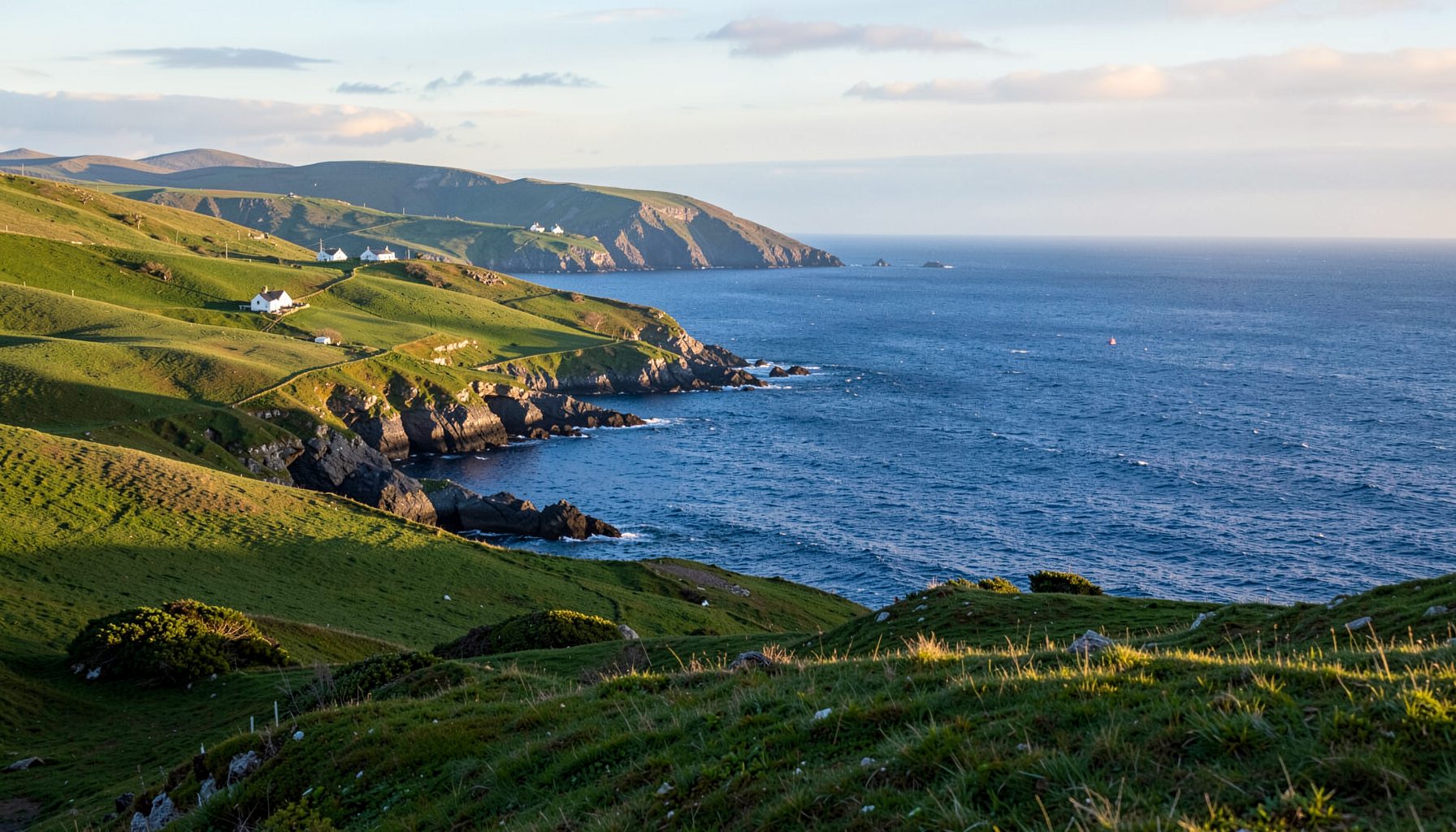
The Skellig Coast is a landscape of dramatic contrasts. Mountain slopes descend towards coves, fields are divided by stone walls, and narrow roads follow routes that were established long before modern tourism. A well in this setting was part of an everyday network of water sources, paths and meeting places.
St Brendan’s Well should therefore be viewed within its local surroundings rather than as an isolated monument. The character of a holy well often depends on its relationship with a townland, a church site, a headland or an older route. The spring’s position, the names used for nearby places and the memories preserved by residents can reveal as much as a formal inscription.
The well’s association with Brendan reflects the strength of his presence in Irish maritime tradition. Stories of his voyage across the western ocean made him an especially fitting patron for coastal communities. On the Iveragh Peninsula, where the sea has always influenced work, travel and imagination, a Brendan dedication carries a natural local resonance.
Saints, Springs And Seasonal Custom
Holy wells in Ireland were rarely understood only as religious buildings. They were places where practical needs and spiritual hopes met. People visited for water, blessing, protection, cures or quiet reflection. A spring could also be a landmark used to describe a route or identify a particular part of a townland.
Customs varied from one well to another. Visitors might circle the site, say prayers, leave a small offering or take water home. In some communities, visits were associated with a saint’s pattern day or with a particular local feast. Such practices were often passed through families rather than recorded in official documents, which means that oral history is essential when reconstructing the well’s past.
The tradition surrounding St Brendan’s Well belongs to this broad pattern of devotion. It does not need to be presented as a single fixed legend. Like many sacred sites, it may have gathered several layers of meaning over time, combining Christian remembrance with older ideas about the special qualities of springs and wells.
Stories from nearby places show how readily geography and legend overlap on the coast. The traditions associated with St Finian’s Bay demonstrate how a shoreline can carry memories of saints, miracles, danger and unusual events all at once.
Brendan The Navigator In Local Memory
St Brendan is traditionally associated with Clonfert in County Galway, where he is said to have founded a monastery in the sixth century. Medieval accounts describe his famous sea voyage, usually known as the Navigatio Sancti Brendani Abbatis. The narrative blends spiritual adventure, ocean travel and encounters with extraordinary islands and creatures.
Historians do not treat the voyage account as a straightforward logbook. It is a religious and literary text, and its details cannot be used as direct proof that Brendan reached every place later linked with him. Even so, the story had a lasting influence on how people imagined Ireland’s Atlantic world.
That influence helps explain why wells, churches and coastal landmarks were dedicated to Brendan in different parts of Ireland. A Brendan well could express a community’s connection to the sea, pilgrimage and the wider Christian world. It could also preserve a local claim to belonging within a much older story of Irish travel and faith.
For the Skellig Coast, this association is especially meaningful. The region’s early Christian heritage is visible in places such as Skellig Michael, while the surrounding mainland retains its own network of chapels, graveyards, wells and oral traditions. St Brendan’s Well forms part of that larger cultural landscape.
| Feature | What it can reveal |
|---|---|
| The spring or water source | How residents used the site in daily life and whether the water remained reliable |
| The saint’s name | Local devotion, family memory and links with wider Irish Christian tradition |
| Nearby paths and townlands | Older movement through the landscape before modern roads |
| Stories of healing or protection | The beliefs and hopes associated with the well |
| Pattern-day customs | The seasonal rhythm of prayer, gathering and community observance |
| Current condition | How well the site has been maintained, remembered or affected by change |
Reading The Evidence With Care
The history of St Brendan’s Well is likely to be found across several kinds of evidence rather than in one definitive record. Ordnance Survey maps, estate papers, parish sources, antiquarian writing and local interviews may each preserve a different part of the story. A name on a map can confirm that a place was recognised, but it cannot explain every tradition associated with it.
Oral history is particularly important. Older residents may remember how the well was approached, who visited it, whether water was collected for particular purposes or how the site appeared before roads and land use changed. These memories should be recorded respectfully, with attention to differences between accounts rather than an attempt to force them into one version.
Place names can offer further clues. Irish names may preserve references to water, saints, churches or natural features that have become less obvious in English. Translating a name is useful, but its pronunciation and local usage can matter just as much. A name may have shifted over time while still retaining an older association.
The absence of a written record does not make a tradition worthless. It does mean that the story should be described carefully. Phrases such as “local tradition holds” or “the well is remembered as” distinguish community memory from claims that have been independently documented.
Visiting A Sacred Site Respectfully
A well connected with a saint is a heritage place, not simply a scenic stop. Visitors should treat the surrounding land as a living part of the community. Access may cross private ground or narrow lanes, and conditions can change with weather, farming activity and conservation work.
The well itself may be fragile. Stonework, vegetation and surrounding paths can be damaged by climbing, collecting objects or widening informal tracks. Water should not be assumed to be safe for drinking, and visitors should avoid disturbing offerings, stones or other features that may have meaning for local people.
A thoughtful visit is usually quiet and observant. Notice the setting, read available local information and leave the site as it was found. Photography can be appropriate, but people, private property and devotional objects deserve consideration.
These simple practices help connect tourism with responsible heritage care. They also reflect the original character of many holy wells, which were valued for their atmosphere, continuity and relationship with the surrounding community.
Keeping The Story Alive
The future of St Brendan’s Well depends on more than physical preservation. A spring can survive while its story disappears, or a written account can remain while the site itself becomes inaccessible. Community groups, schools, local historians and heritage organisations all have a role in keeping the connection between place and memory active.
Good interpretation should present several layers together: the saint’s traditional biography, the history of the local landscape, the evidence available about the well and the stories told by residents. This approach avoids turning a complex tradition into a simple attraction while still making it accessible to visitors.
Useful ways to support the well’s heritage include:
- Recording local memories with permission and preserving different versions of the story.
- Checking maps, parish records and historical sources before publishing new claims.
- Marking access routes clearly without encouraging trespass or unnecessary footfall.
- Protecting the spring, stonework and surrounding habitat from litter and damage.
- Connecting the well with wider programmes about Iveragh’s saints, landscapes and maritime history.
Schools and learning hubs can make the well especially relevant to younger generations. Students might explore the meaning of pilgrimage, compare Brendan traditions with stories from other coastal communities or map historic water sources in their own area. Such work turns a small site into an entry point for local history, geography, language and environmental awareness.
The well also offers a different way to understand the Skellig Coast beyond its most famous attractions. Skellig Michael draws international attention because of its monastic remains and UNESCO status, but smaller places such as holy wells show how heritage continues in ordinary landscapes. They reveal the intimate scale of local belief: a spring known by name, reached by a familiar path and remembered within families.
The story of St Brendan’s Well is still developing. Each careful recording of a place name, memory or landscape detail adds to the region’s understanding of itself. Visitors and residents can help by approaching the well with patience, respect and an interest in the many histories held within the Iveragh Peninsula. Explore the Skellig Coast’s communities and heritage stories to discover how sacred places, sea traditions and local voices continue to shape this remarkable corner of Ireland.