The History And Legends Of St Finian’s Bay
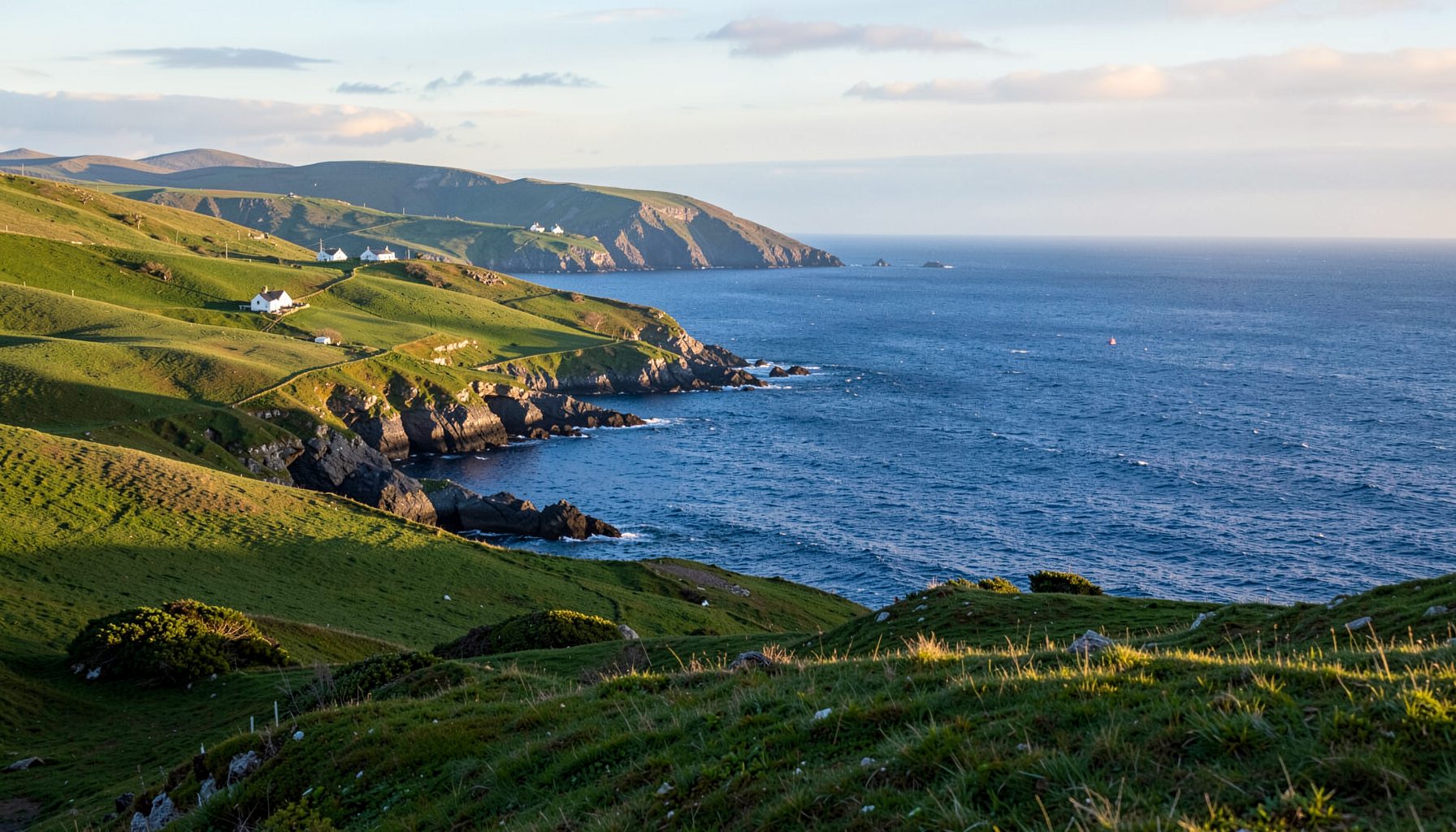
On the western edge of the Iveragh Peninsula, St Finian’s Bay opens towards the Atlantic between Ballinskelligs and the Skellig Islands. Its sandy shore, rocky headlands and exposed hills form a landscape that feels both welcoming and remote. The bay is part of the wider Skellig Coast, a region where Christian heritage, seafaring traditions and living community memory remain closely connected.
The place is best understood as more than a scenic beach. Its name recalls an early saint, while nearby islands and headlands preserve traces of settlement, worship and seasonal work. Stories associated with the bay have changed through generations, blending recorded history with local legend and the imaginative language of the sea.
The surviving evidence is uneven. Some details come from archaeology and written sources, while other accounts belong to oral tradition. Reading them together gives a richer picture of how people have understood this coast, from the arrival of early Christian communities to the modern interest in heritage, walking and conservation.
The Saint Behind The Name
St Finian’s Bay is traditionally associated with St Finian, or St Finan, an early Irish Christian figure whose name appears in several forms across Ireland. This variation reflects the complexity of medieval Irish names and the presence of more than one saint called Finian or Finan. Local tradition commonly connects the bay with St Finian the Leper, remembered as a holy man who lived during the early Christian period.
The word “leper” in this context comes from an old devotional tradition and should not automatically be read as a modern medical diagnosis. Medieval saints’ lives often used illness, solitude and healing as symbols of spiritual devotion. The title helped distinguish this Finian from other saints with similar names and contributed to the reverence attached to places linked with him.
According to local belief, St Finian spent time in the Skellig region or established a religious presence nearby. The exact historical relationship between the saint and the bay is difficult to prove, yet the name itself demonstrates the importance of the association. Place names can preserve memories long after buildings have disappeared, especially in areas where families, fishermen and farmers carried stories through generations.
Early Christian Shorelines
The coast around St Finian’s Bay belongs to a wider early Christian landscape. Skellig Michael, rising from the Atlantic several kilometres offshore, is the most famous expression of that tradition. Its stone monastic settlement, beehive-shaped cells, terraces and oratory show how monks created a disciplined community in an extraordinarily demanding environment. The island is now a UNESCO World Heritage Site and is also recognised internationally as a Star Wars filming location.
The mainland was essential to such island communities. Monks and visitors needed landing places, food, fresh water, tools and contact with the wider population. Bays such as St Finian’s offered shelter in comparison with the open ocean, although Atlantic weather could quickly make any landing hazardous. The relationship between mainland shore and offshore monastery was therefore practical as well as spiritual.
Small ecclesiastical sites, holy wells, burial grounds and old paths across Iveragh are reminders that early Christianity was not confined to one dramatic monument. Much of the evidence survives as fragments: a field name, a ruined wall, a carved stone or a local custom. These modest traces help place St Finian’s Bay within a network of religious sites rather than treating it as an isolated legend.
The surrounding landscape also reveals how people lived with limited resources. Stone walls, rough grazing, sheltered plots and narrow routes to the shore reflect centuries of adaptation. Religious memory developed alongside farming, fishing and travel, making the bay a cultural landscape shaped by everyday work.
From Medieval Memory To Local Tradition
During the medieval period, the Skellig Coast formed part of a region connected by small settlements, monastic foundations and maritime routes. The sea was a routeway as much as a boundary. Boats carried people and goods between the mainland, offshore islands and neighbouring inlets, though voyages were subject to tides, reefs and sudden storms.
Written records do not provide a continuous history of St Finian’s Bay. Medieval documents tend to focus on larger estates, churches or political events, leaving ordinary coastal places under-recorded. This gap explains why oral history remains important. A story repeated by families may preserve an old association even when its original setting is no longer visible.
| Feature | Historical significance | Place in local memory |
|---|---|---|
| St Finian’s name | Connects the bay with early Irish Christian tradition | A reminder of the saint’s supposed presence |
| Skellig Michael | Preserves a major early medieval monastic settlement | Island of monks, prayer and dangerous travel |
| Atlantic landing places | Supported movement between shore and island | Settings for journeys, storms and survival stories |
| Stone walls and paths | Record farming, grazing and access across the coast | Evidence of generations of ordinary labour |
| Sea cliffs and headlands | Shaped navigation and settlement patterns | Landmarks in tales of spirits, saints and sailors |
Later generations continued to interpret the landscape through Christian stories. A rock might become a place where a saint rested, a spring could be remembered as healing, and a difficult crossing might acquire a moral meaning. Such accounts should not be dismissed simply because they cannot be verified in an archive. They reveal what communities valued: courage, hospitality, faith and respect for forces beyond human control.
Legends Of Saints And The Sea
One strand of tradition presents St Finian as a solitary holy man moving through a wild coastal landscape. In these stories, the saint’s presence explains the name of the bay and gives spiritual meaning to its isolation. He may be imagined praying beside the shore, travelling towards the Skelligs or blessing the waters used by local people.
Another recurring theme is the sea as a test. Atlantic waters can appear calm from the beach and become dangerous beyond the headland. Tales of monks, fishermen or travellers reaching safety after a storm may have helped communities express their dependence on weather and navigation. The saint becomes a protector figure, while the bay serves as a threshold between secure land and uncertain ocean.
The Skellig Islands have also encouraged stories of miraculous journeys. Medieval monks who chose such a remote place were often portrayed as exceptionally devoted, and later listeners could easily imagine supernatural guidance helping them cross the water. In popular retellings, seabirds, sudden lights or calm passages may signal divine protection. These motifs belong to the imaginative history of the coast, even when they cannot be treated as factual records.
Legends may also contain practical knowledge. A story about a hidden landing place, a dangerous rock or an unusual current could help listeners remember local hazards. In this way, folklore entertained, instructed and preserved a relationship with the landscape.
A Living Heritage Landscape
St Finian’s Bay is part of a region where heritage remains connected to education and community activity. Local knowledge is carried through schools, guided walks, cultural groups, historical research and conversations between generations. Regional learning hubs provide useful ways to connect local history with wider programmes in culture, skills and community development.
This living dimension matters because heritage is not limited to ruins. The pronunciation of a place name, the route of an old path, a seasonal tradition or a family account can all contribute to an understanding of the bay. Community interpretation adds detail that may not appear on a formal monument record.
The coast’s modern identity also includes environmental awareness. Dunes, shorebirds, marine life and fragile cliff habitats need care, particularly as interest in the Skellig Coast grows. Visitors who come for the beach or the views encounter a place shaped by centuries of human activity and by natural processes that remain active today.
The continuing appeal of St Finian’s Bay rests on this combination of beauty and uncertainty. The beach is visible and tangible, while the saint’s story belongs partly to memory. Together they invite careful attention rather than a single definitive explanation.
Reading The Bay Through Its Landmarks
The bay can be approached as a sequence of connected landmarks. The shore provides the clearest sense of the Atlantic setting, while the surrounding hills show how narrow strips of cultivable land were protected from wind and weather. Looking offshore helps explain why the Skelligs could be spiritually compelling and practically demanding at the same time.
Nearby heritage sites add context. Ballinskelligs, with its ecclesiastical and defensive associations, illustrates the long settlement history of the peninsula. Portmagee reflects the continuing importance of maritime connections and access to the Skellig Islands. Roads, piers and modern visitor routes now make movement easier, but they follow a coastline whose earlier inhabitants relied on footpaths, small boats and local knowledge.
A historical visit should allow room for uncertainty. The claim that a saint stood at a particular rock may be impossible to establish, while the broader tradition linking the bay to early Christianity may remain culturally significant. The most responsible interpretation distinguishes archaeological evidence, documented history and oral legend without stripping the place of its imagination.
Ways To Respect The Bay
- Keep to established paths and avoid walking across fragile dunes or nesting areas.
- Treat ruined walls, stones, graves and possible archaeological features as protected heritage.
- Take local stories seriously as community knowledge, while distinguishing legend from documented fact.
- Leave no litter and avoid removing shells, stones or other natural and cultural material.
- Support local museums, community projects and heritage initiatives that help preserve the coast’s memory.
St Finian’s Bay is best remembered as a meeting place of land, sea, faith and storytelling. Its history reaches back towards the early Christian world of the Skelligs, yet its meaning has continued to develop through farming families, seafarers, local historians and visitors. The saint’s name offers a starting point, not a complete answer.
Spend time with the shoreline, learn the stories attached to the surrounding places and explore the wider Skellig Coast with care. By engaging with its communities and heritage, every visitor can help keep the history and legends of St Finian’s Bay part of the living landscape.