The Story Of The Local Puck Fair In Killorglin’s Shadow
Every August, Killorglin becomes the centre of an unusually vivid tradition. A wild goat is crowned King Puck, crowds gather around the Fair Green, and the town fills with music, stalls, parades and late-summer energy. The celebration is one of Kerry’s best-known community festivals, yet its meaning reaches beyond the three days printed on a calendar.
The fair belongs to the wider landscape of the Iveragh Peninsula. Roads from Glenbeigh, Cahersiveen, Sneem, Castlecove and the villages around the coast have long carried people, animals, goods and stories towards Killorglin. Visitors may arrive to see an old custom, while local families recognise something more personal: a yearly meeting place shaped by memory, work, humour and belonging.
That is why the story of the local Puck Fair in Killorglin’s shadow deserves a closer look. Its strongest character is not found in a single ceremony or legend. It lives in the relationship between a busy town, its surrounding communities and a tradition that continues to change while retaining its distinctive identity.
A Fair Shaped By Place
Killorglin stands at an important crossing point between the coast, the mountain roads and the interior of County Kerry. Its position helped the fair develop as a place where farming communities, traders, entertainers and families could meet. Before modern tourism transformed the region, a fair was a practical institution as much as a celebration.
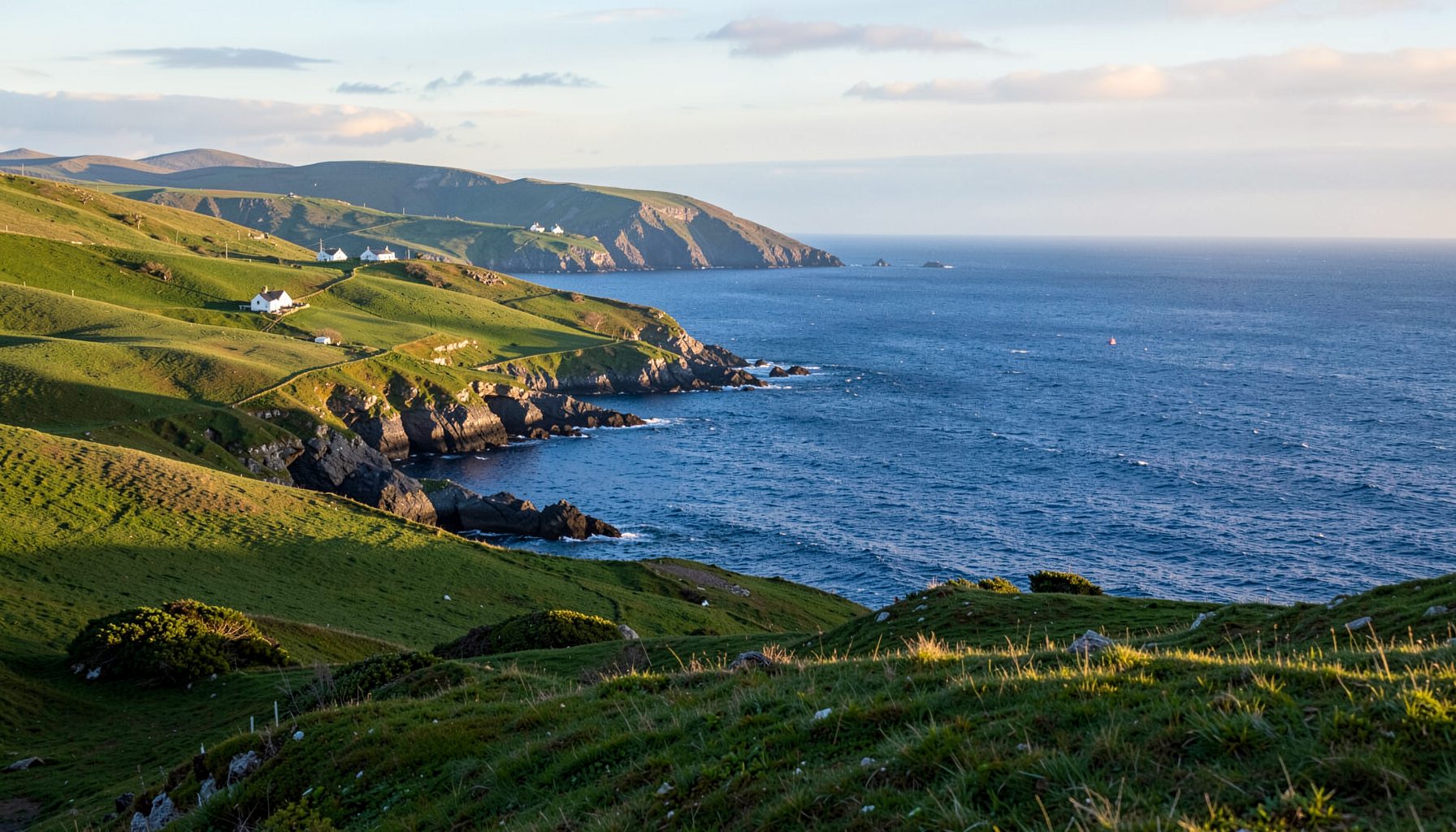
The landscape gives the event much of its visual power. Mountains, pasture and the River Laune provide a setting that makes the arrival of the goat feel connected to the countryside rather than staged apart from it. Puck Fair is urban enough to have a town centre and organised programme, but rural enough to preserve an unmistakable link with livestock and seasonal movement.
The phrase “King Puck” refers to the goat itself, not a human festival king. In Irish folklore, the puck may appear as a mischievous spirit or shape-shifting creature, and goats have often carried associations with wildness, fertility and the untamed landscape. These meanings have helped the fair gather layers of interpretation over time.
Origins Between Record And Legend
The origins of the festival are debated. Some accounts connect it with pre-Christian seasonal gatherings, while others point to medieval or early modern fairs and the importance of livestock trading. A charter granted to Killorglin in the seventeenth century is frequently mentioned in histories of the event, but the precise line between documented history and later storytelling is difficult to draw.
That uncertainty is part of the fair’s appeal. Local traditions often survive through repeated practice rather than a single founding document. A ceremony may be altered, renamed or reinterpreted, yet still remain recognisable to the people who return each year. Puck Fair demonstrates how folklore can operate as a living form of local history.
The goat’s elevation on the first day, the continuation of festivities through the following days and the final lowering of the crown form a simple dramatic structure. It creates a beginning, a period of celebration and a closing moment. Around that structure, generations have added music, performance, commerce, family gatherings and personal memories.
Three Days With Their Own Rhythm
Puck Fair is traditionally associated with three days known as the Gathering, the Fair Day and the Scattering. These names describe more than a programme. They suggest the movement of people into the town, the high point of the celebration and the gradual return to ordinary life.
The first day establishes the festival’s central image. A goat is brought into Killorglin and crowned, becoming King Puck for the duration of the fair. The ceremony is striking because it combines ceremony with irreverence. It has the language of monarchy, but its king is an animal from the mountains and fields.
The second day tends to carry the greatest concentration of activity, with entertainment, street life, family visits and commercial stalls. The final day brings a different mood. The goat is released from its ceremonial role, and the town begins to empty. For regular attendees, that rhythm can feel as important as the headline events: anticipation, intensity and farewell.
| Feature | What It Represents | Community Connection |
|---|---|---|
| The crowned goat | Rural life, folklore and playful ceremony | A shared symbol recognised across generations |
| The Fair Green | Gathering, performance and public celebration | A meeting place for residents and visitors |
| Music and stalls | Entertainment, trade and social exchange | Support for local activity and small businesses |
| The three-day cycle | Arrival, celebration and departure | A familiar seasonal rhythm |
| Stories of the fair | Memory, debate and local identity | A way to pass heritage between generations |
The Communities Beyond The Fair Green
The festival’s reputation can sometimes make Killorglin appear to be the whole story. In reality, its audience and influence extend across the peninsula. People from neighbouring villages have their own connections with the fair, whether through family traditions, work, music, farming, transport or simply the annual habit of meeting friends in town.
This wider network matters because the Ring of Kerry is not a collection of isolated attractions. Its heritage is built through relationships between places. A local event in Killorglin can be understood alongside the fishing, farming, storytelling, religious history and craft traditions found elsewhere from Kells to Castlecove.
Stories from nearby communities show how cultural memory travels along roads and coastlines. The Sneem Hotel story, for example, opens a window onto the people and movements associated with another important place on the Iveragh Peninsula. Read beside the history of Puck Fair, it reinforces the value of looking beyond a single famous attraction and listening to the region’s connected stories.
A Festival Viewed Through A Modern Lens
For contemporary visitors, the fair may be encountered as a colourful heritage event, a photographic opportunity or an unusual part of a Ring of Kerry itinerary. Those perspectives are valid, but they do not fully explain why the festival matters locally. Its endurance depends on participation, preparation and the work of people who return year after year.
The presence of the goat also invites discussion about animal welfare, changing public expectations and the responsibilities attached to inherited customs. Traditions are not frozen objects. Communities review them, defend them, adapt them and sometimes challenge them. The fact that Puck Fair remains part of public conversation is evidence of its continuing relevance.
The fair also sits within a broader movement to value intangible heritage. Songs, rituals, local sayings, annual gatherings and shared routes can be difficult to preserve in a museum. They survive when people practise them and explain them. Puck Fair’s lasting significance comes from the combination of visible ceremony and the less visible relationships that sustain it.
Remembering The Fair Through Local Voices
A visitor might remember the crowned goat, the crowds or the music. A resident may remember meeting a relative after years apart, working a stall, hearing a particular band or walking home through a town that felt transformed. These memories are equally important because they reveal the social history beneath the public spectacle.
Local storytelling can also correct the simplified versions of the fair that circulate beyond Kerry. The festival is sometimes presented as either an ancient pagan survival or a quirky tourist attraction. Neither description is sufficient by itself. Its history includes folklore, official records, rural commerce, entertainment, local pride and modern cultural debate.
That mixture makes Puck Fair a useful lens through which to view Killorglin and the surrounding coast. It shows how a community can welcome visitors without surrendering ownership of its story. It also demonstrates why heritage work should include ordinary voices, not only monuments, famous names or dramatic historical episodes.
Ways To Experience Its Heritage Respectfully
A thoughtful visit begins with attention to the town rather than a rush towards one photograph. The fair is a public celebration, but it is also part of local life. Visitors can help protect that character by approaching the event with patience, courtesy and awareness of the people who live and work there.
Useful ways to engage with the tradition include:
- Learn the basic history of the festival before arriving, including the three-day structure and the debate around its origins.
- Spend time with local shops, cafés, musicians, community displays and cultural projects rather than treating the fair as a single ceremony.
- Follow event guidance around the goat, crowds, photography and public spaces.
- Explore nearby villages and heritage sites to understand the wider Iveragh setting that gives the fair its meaning.
- Record family memories or local stories with permission, especially when sharing them online or in community projects.
These habits create a richer experience for everyone. They also support the principle that regional heritage belongs to the communities who maintain it, even when visitors from far beyond Kerry come to witness it.
Keeping The Story In The Community
The local Puck Fair in Killorglin’s shadow is ultimately a story about scale. The festival is large enough to attract national attention, yet its emotional centre remains close to home. It belongs to the roads leading into town, the families who organise their year around it, the performers and traders who return, and the surrounding communities that help give the event its setting.
Its future will depend on the same qualities that carried it through the past: adaptability, local involvement and a willingness to tell a complicated story honestly. Whether approached as folklore, social history, rural heritage or a lively public gathering, Puck Fair offers a vivid way into the character of the Skellig Coast and the wider Ring of Kerry.
Explore the local histories, community initiatives and heritage stories of the Iveragh Peninsula through Skellig Coast, and follow the connections between its villages, landscapes and living traditions.