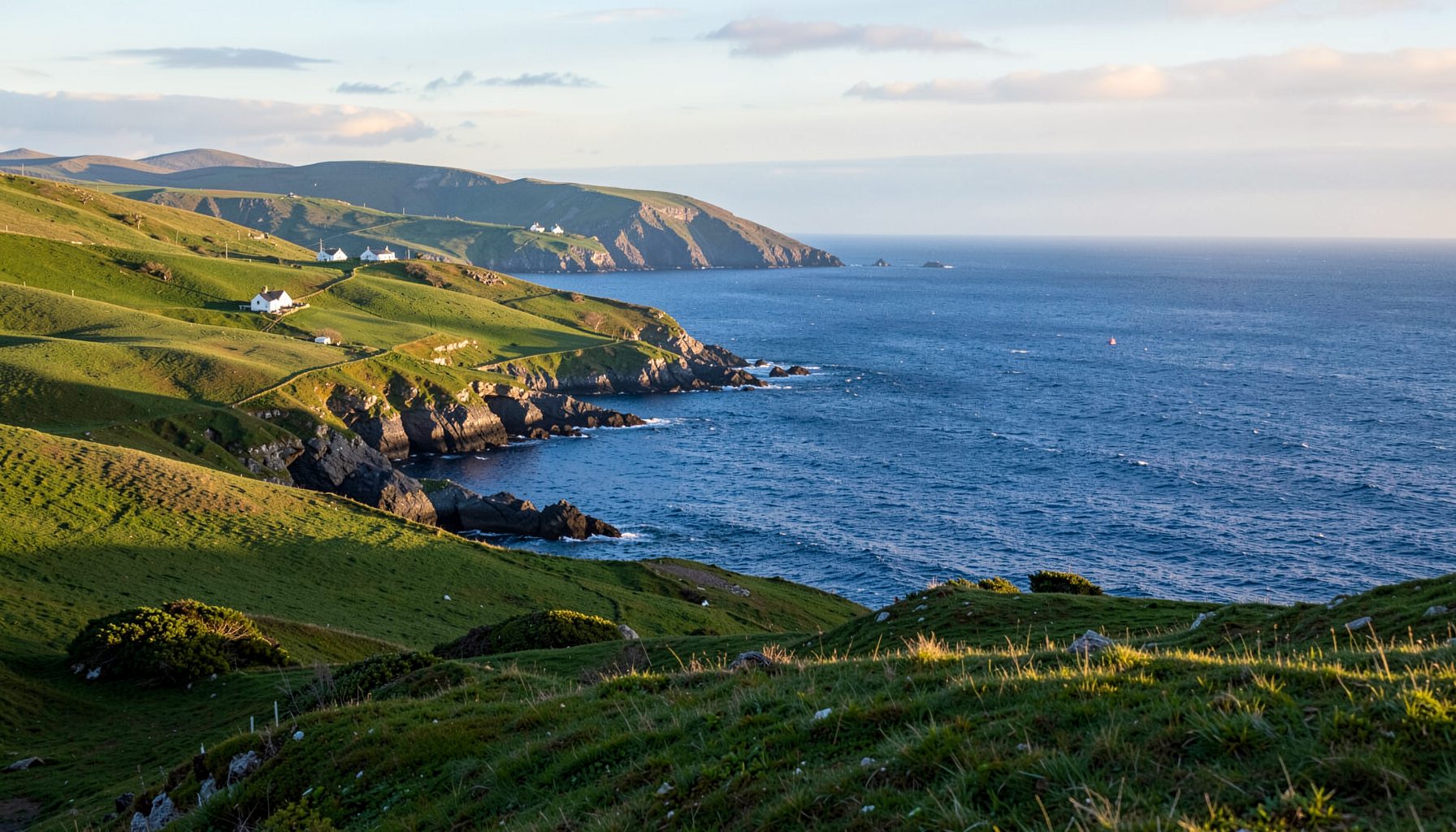
The story of Gleninchaquin Park and its waterfalls
On the northern side of the Iveragh Peninsula, Gleninchaquin Park opens into a quiet mountain valley where streams, cliffs, meadows and stone walls form a landscape shaped by both nature and people. The park lies within the wider Ring of Kerry region, yet it feels far removed from the coach routes and busy viewpoints associated with the peninsula.
Its waterfalls are the most visible attraction, but the real story is broader. Gleninchaquin is a working cultural landscape, carrying traces of farming, glacial movement, local memory and changing ideas about outdoor recreation. For visitors from Australia, it offers a distinctly Irish walking experience: intimate, weather-sensitive and full of small details that reward a slower pace.
A valley shaped by ice and water
Gleninchaquin’s dramatic form began with the movement of glaciers during the last Ice Age. Ice carved the valley into a broad U-shaped corridor, leaving steep mountain sides, exposed rock and high ground that gathers rain. Today, that rainfall feeds the streams that descend through the park and create its celebrated cascades.
The valley’s water is constantly changing. After a dry spell, the falls may appear as delicate silver ribbons; following Atlantic rain, they become louder and more powerful. This makes Gleninchaquin different on every visit. The same path, viewed under sunshine, mist or low cloud, can feel like three separate landscapes.
The surrounding mountains also explain the park’s sense of enclosure. Rather than looking across a flat open plain, walkers move through a sequence of natural rooms: woodland edges, open pasture, rocky slopes and waterfall viewpoints. The changing scale gives the landscape much of its character.
From farm valley to heritage attraction
Gleninchaquin has long been connected with rural life. The valley’s fields, walls and tracks reflect generations of farming in difficult terrain, where livestock, weather and seasonal work shaped daily routines. The landscape was not designed as a garden in the conventional sense; its beauty grew from practical use and careful adaptation.
Local heritage is visible in features that can easily be missed. Dry-stone walls divide grazing areas, old routes follow contours rather than straight lines, and streams determine where paths and crossings can safely be made. These details place the waterfalls within a living history instead of presenting them as isolated scenic objects.
The park also sits within a region rich in architecture and religious heritage. Travellers exploring nearby villages can add context through the architecture of Sneem churches, where stone, craft and local worship tell another part of the Iveragh story.
Following the waterfalls
Several walking routes allow visitors to experience Gleninchaquin at different levels of effort. Shorter walks provide access to streams and waterfall views without requiring a full day on the hills. Longer circuits climb higher, revealing wider perspectives over the valley and the Kerry mountains.
The main waterfall is especially striking because it drops through the landscape rather than appearing as a single, isolated plunge. Water threads over ledges, gathers in dark pools and continues downhill through smaller channels. In wet weather, every fold of the hillside seems to carry a trickle or rush.
Walking here requires attention to ground conditions. The paths can be muddy, uneven and slippery, with sections where roots, stone and exposed rock demand a steady pace. Good footwear matters more than speed, and waterproof layers are useful even when the morning begins bright.
A landscape watched over by weather
The Atlantic climate is central to Gleninchaquin’s identity. Rain is not simply an inconvenience; it sustains the moss, ferns, grasses and waterfalls that give the valley its colour and movement. A damp day can bring out intense greens and make the air feel freshly washed.
Weather can change quickly on the Iveragh Peninsula, particularly near upland areas. Low cloud may obscure a summit and then lift within minutes. Wind can make an exposed viewpoint uncomfortable, while the valley floor may remain sheltered. Checking conditions before setting out is a sensible part of the visit.
This weather awareness will feel familiar to Australians who enjoy bushwalking in places such as the Dandenong Ranges or the Blue Mountains. The setting is different, but the principle is similar: carry a layer for sudden changes, allow more time than the map suggests and treat wet surfaces with respect.
A place for quiet observation
Gleninchaquin is appealing because it does not depend on a single grand viewpoint. Its pleasure comes from accumulation: the sound of falling water, the texture of stone walls, the movement of sheep, a sudden glimpse of a distant ridge and the changing light on the grass.
The park is also a useful reminder that scenic places can be working environments. Gates may need to remain closed, livestock may be nearby and paths must be shared carefully. Visitors help protect the valley by staying on marked routes, taking rubbish away and avoiding damage to walls, vegetation and fragile stream edges.
For families, photographers and walkers, the site offers different ways to engage with the same landscape. Children may focus on bridges and cascades, while experienced hikers may be drawn towards the higher routes. Photographers often find that overcast conditions reveal more detail than harsh midday sun.
Planning a visit from Australia
Travellers from Sydney, Melbourne, Brisbane or Perth will usually reach Kerry through a larger European gateway before continuing towards County Kerry. Gleninchaquin is a rural destination, so a hire car is generally the most flexible option. Distances that look modest on a map can take time because roads are narrow, winding and shared with farm traffic.
Australians should also account for the difference between familiar national-park infrastructure and the Irish countryside. This is not a sealed-path attraction with frequent facilities. Bring water, snacks, a charged phone and suitable walking clothing, and do not assume that mobile coverage will be consistent throughout the valley.
For the Australian travel market, timing can make a practical difference. Ireland’s long summer evenings are useful for walking, while Australian school-holiday travel often coincides with busier European periods and higher airfares. Spring and early autumn can provide a quieter experience, although rainfall remains part of the setting in every season.
Useful habits before leaving the local area include:
- Check opening information, route conditions and the day’s weather.
- Wear waterproof walking shoes with firm grip.
- Carry an Australian debit or credit card, plus a small amount of euro.
- Allow extra driving time on rural Kerry roads.
Once at the park, a considerate visit is straightforward:
- Keep dogs under control and follow any local restrictions.
- Close gates securely after passing through.
- Stay clear of waterfall edges and fast-moving water.
- Take photographs without blocking paths or disturbing other walkers.
Gleninchaquin beside other Kerry landscapes
The park can be combined with a wider exploration of the Iveragh Peninsula, but it has a different mood from several better-known attractions. Skellig Michael is defined by its offshore isolation and monastic remains, while Killarney’s landscapes are associated with lakes, woodlands and major visitor routes. Gleninchaquin is quieter and more grounded in a single mountain valley.
Its waterfalls are also different from coastal scenery around Waterville, Caherdaniel and Castlecove. The coast offers cliffs, beaches and sea views; Gleninchaquin turns inland towards rain-fed streams and upland pasture. Together, these places show why the Skellig Coast is best understood as a connected region rather than a list of separate stops.
| Place | Main character | Best suited to | What makes it distinct |
|---|---|---|---|
| Gleninchaquin Park | Waterfalls, valley walks and farm heritage | Walkers, families and photographers | A secluded inland landscape shaped by streams |
| Skellig Michael | Monastic ruins and offshore rock | History enthusiasts and experienced visitors | UNESCO-listed heritage in the Atlantic |
| Waterville | Coastal scenery, village life and sea air | Short stops and coastal explorers | Open views across the Atlantic |
| Killarney National Park | Lakes, woodland and established routes | First-time visitors and varied itineraries | Larger-scale parkland with broad facilities |
| Caherdaniel and Derrynane | Beaches, coastal walking and history | Relaxed day trips and families | A gentler meeting point of shore and heritage |
Gleninchaquin’s importance lies in the way its natural features and human history remain connected. The waterfalls draw attention, but the valley’s meaning comes from the whole setting: geology, weather, farming, walking traditions and the communities that continue to care for the surrounding landscape.
Make Gleninchaquin part of a wider Skellig Coast journey, allowing time for the road, the weather and the quiet details along the way. Explore local villages, learn about the region’s heritage and support nearby community businesses as you travel through Iveragh.