The Architecture of Churches in Sneem and Waterville
Along the southern edge of the Iveragh Peninsula, churches are woven into village streets, graveyards, fields and coastal roads. In Sneem and Waterville, religious buildings are modest in scale, yet they reveal much about nineteenth-century Ireland: changing parish structures, improving roads, local craftsmanship and the importance of a visible landmark in a dispersed rural community.
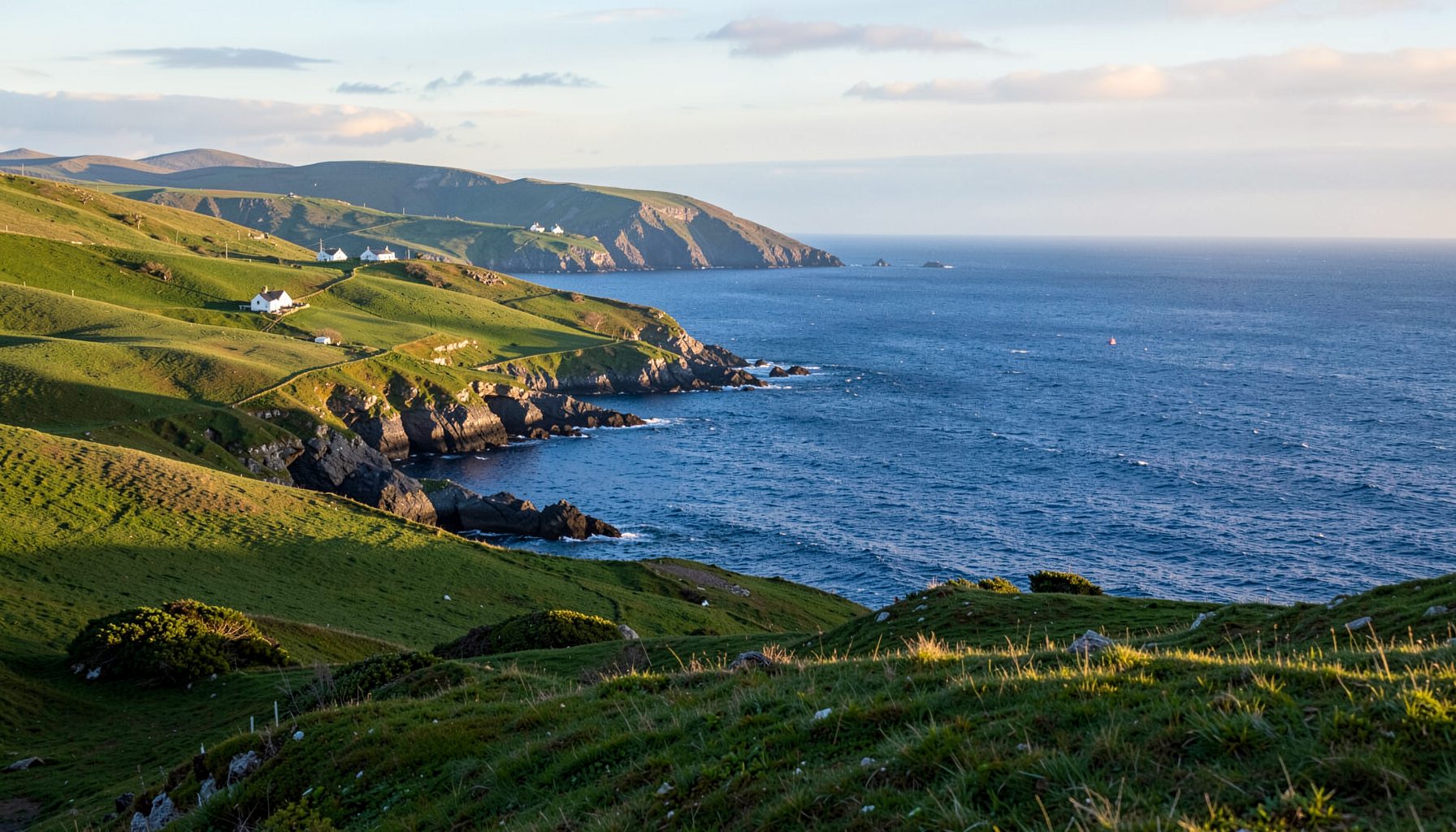
The churches of these villages should be read as part of their surroundings rather than as isolated monuments. Sneem’s buildings belong to a compact settlement shaped by the Sneem River and the surrounding mountains, while Waterville’s churches reflect a linear coastal town between Lough Currane and Ballinskelligs Bay. Their architecture responds to different landscapes, but both places use stone, openings, towers and entrances to create a strong sense of identity.
A close look also shows how religious architecture contributes to the wider heritage of the Skellig Coast. The same relationship between local materials, community memory and changing patterns of settlement can be seen in secular buildings, including the history of the Royal Hotel, where architecture records the growth of travel and public life in the region.
A Landscape Shaped By Parish And Coast
Sneem is surrounded by some of Kerry’s most dramatic scenery, including the mountains and wooded valleys that frame the village. Its churches are therefore experienced against a powerful natural backdrop. The contrast between pale or weathered walls and the darker greens of the landscape gives even a simple building a memorable presence.
Waterville has a different visual character. The town stretches along the N70 and the shoreline, with long views towards the Atlantic and the bay. Church buildings here form part of a more open coastal streetscape. Their roofs, gables and towers can be picked out from the road, helping residents and visitors understand the structure of the town.
This setting matters because rural churches were designed for more than worship. They marked a parish centre, offered a gathering point and provided a fixed reference in a landscape where homes and farms could be widely scattered. The location of a church near a village road or burial ground often tells as much about local history as its decorative details.
The Character Of Sneem’s Churches
Sneem’s principal Catholic church, St Michael’s, belongs to the tradition of nineteenth-century parish church building that spread throughout Ireland. Its design is restrained rather than monumental, with a clear emphasis on the nave, the entrance and the liturgical interior. The building’s scale suits the village, while its vertical elements give it sufficient dignity to stand out among domestic and commercial structures.
Like many rural churches of the period, it uses a simple plan that is easy to understand from outside. A pitched roof, regular wall openings and a defined entrance create an ordered elevation. The pointed or vertically proportioned windows associated with Gothic Revival architecture lend the building a sense of aspiration without requiring elaborate ornament.
The church’s visual effect depends heavily on proportion. Narrow openings draw the eye upwards, while the roofline establishes a strong silhouette against the hills. Local stone and rendered surfaces, where present, connect the building with the materials and construction practices of south Kerry. Later repairs, changes to glazing and practical additions should be understood as part of the building’s continuing life rather than as interruptions to an untouched original design.
Waterville’s Coastal Architectural Language
Waterville’s church architecture is shaped by the same broad nineteenth-century Gothic Revival taste, but the coastal setting gives it a distinct character. St Finan’s Church is a notable landmark in the town, with a form that combines practical parish requirements with the pointed arches, vertical emphasis and ordered elevations associated with the period.
The church is best appreciated from several viewpoints. From nearby streets, the entrance and windows establish a formal public face. From further along the town, the roof and upper sections become part of the coastal skyline. This changing experience is typical of village churches: architectural meaning is created through movement past the building as much as through a single frontal view.
Waterville also demonstrates how religious buildings can share a townscape with hotels, shops, houses and civic spaces. The church is not separate from the town’s history of fishing, farming, transport and tourism. Its position reflects the development of Waterville as a settled community and later as an important stopping place on the Ring of Kerry.
Stone, Openings And Craftsmanship
The most immediate architectural comparison between Sneem and Waterville lies in their use of familiar materials and forms. Masonry walls provide durability in a wet and exposed climate, while slate roofs are suited to the heavy rainfall of the Iveragh Peninsula. Even where walls have been plastered or altered, the underlying construction remains part of the local architectural story.
Windows are especially important. Lancet openings and pointed-arch windows are associated with Gothic Revival churches because they create a strong vertical rhythm and allow light to enter in controlled bands. Their arrangement can indicate the internal division between nave, chancel and side spaces. Doorways, too, are carefully positioned: the entrance is both a practical threshold and a public announcement of the building’s purpose.
Interior details should be considered alongside the exterior. Timber roof structures, plasterwork, altars, memorials, stained glass and devotional objects may belong to different dates. A church can therefore contain several layers of design, reflecting changes in taste, worship and parish resources. The architecture is not confined to the original construction date; it includes the adjustments made by generations of local people.
| Feature | Sneem | Waterville | What It Reveals |
|---|---|---|---|
| Village setting | Compact settlement framed by river and mountains | Linear coastal town beside the bay and main road | Churches respond to different patterns of movement and visibility |
| Architectural impression | Quiet, parish-scaled and closely tied to the village | More prominent within an open coastal streetscape | Landmark value depends on surrounding landscape |
| Common materials | Masonry, plastered surfaces and slate roofing | Local stonework, rendered elements and slate roofing | Practical construction suited to Kerry’s climate |
| Window language | Vertical openings that draw the eye towards the roofline | Gothic Revival proportions that reinforce the coastal skyline | Light and height create a sense of sacred space |
| Heritage value | Closely connected with village memory and parish life | Connected with town growth, travel and maritime surroundings | Religious buildings record social as well as architectural history |
Comparing Scale And Presence
The churches in Sneem and Waterville are not competing monuments. Their importance comes from how well they fit their communities. Sneem’s church architecture feels closely integrated with the village, where buildings, bridges, riverbanks and surrounding hills create a relatively enclosed setting. Its presence is discovered through proximity and local orientation.
Waterville’s church architecture is more exposed to long views and passing traffic. The coastal road brings a steady sequence of perspectives, allowing the building to function as a visual marker. This does not make it grander in any absolute sense; it gives the building a different civic role within the townscape.
Both examples show that architectural significance is not measured only by size, age or ornament. A small parish church may hold considerable heritage value because it preserves the memory of baptisms, funerals, festivals, community gatherings and ordinary weekly life. The building’s relationship with its graveyard, approach road and neighbouring properties is part of that significance.
Faith, Memory And Community Heritage
Churches remain active places, and this affects how they should be interpreted. Their interiors may be maintained according to current religious needs, while older features survive in the fabric, memorials or surrounding burial ground. Respectful observation is essential, particularly during services or private ceremonies.
Local knowledge can add dimensions that architectural descriptions cannot provide. Stories about building work, bell ringing, storms, fundraising, school events or changes to the road may explain why a doorway, wall or boundary has particular meaning. Community archives, parish publications and oral history can help connect physical features with remembered experience.
This approach is especially valuable on the Skellig Coast, where heritage is distributed across villages rather than concentrated in a single historic centre. Churches in Sneem and Waterville belong alongside piers, bridges, houses, graveyards, schools and former commercial buildings. Together they form a cultural landscape shaped by belief, work, migration and tourism.
Visiting With Care And Curiosity
Visitors exploring these buildings should begin with the surrounding streetscape. Notice how the church aligns with the road, whether its tower or gable is visible from a distance, and how the landscape changes the building’s appearance. In Sneem, the river and mountains are essential to the experience; in Waterville, the bay, road and open horizon provide a different frame.
A few simple practices make architectural visits more rewarding:
- Look for changes in masonry, render, roof material and window design that may indicate later repairs.
- Compare the church’s scale with nearby houses, shops, schools and public buildings.
- Read graveyard inscriptions where access is permitted, remembering that they represent family and community histories.
- Check parish or local heritage information before entering, and observe any restrictions on photography.
- Allow time for views from the approach roads, since a church’s landmark role is often clearest from a distance.
The churches of Sneem and Waterville reward slow observation. Their pointed windows, slate roofs and masonry walls may appear familiar across rural Ireland, yet each building has been shaped by its own landscape and community. Together they offer a grounded way to explore the architectural heritage of the Iveragh Peninsula, linking sacred spaces with the broader history of villages along the Ring of Kerry.
Explore Sneem and Waterville with attention to their churches, streets and surrounding landscapes, and add these living heritage sites to your understanding of the Skellig Coast.