The girls' school on Valentia and the island's education story
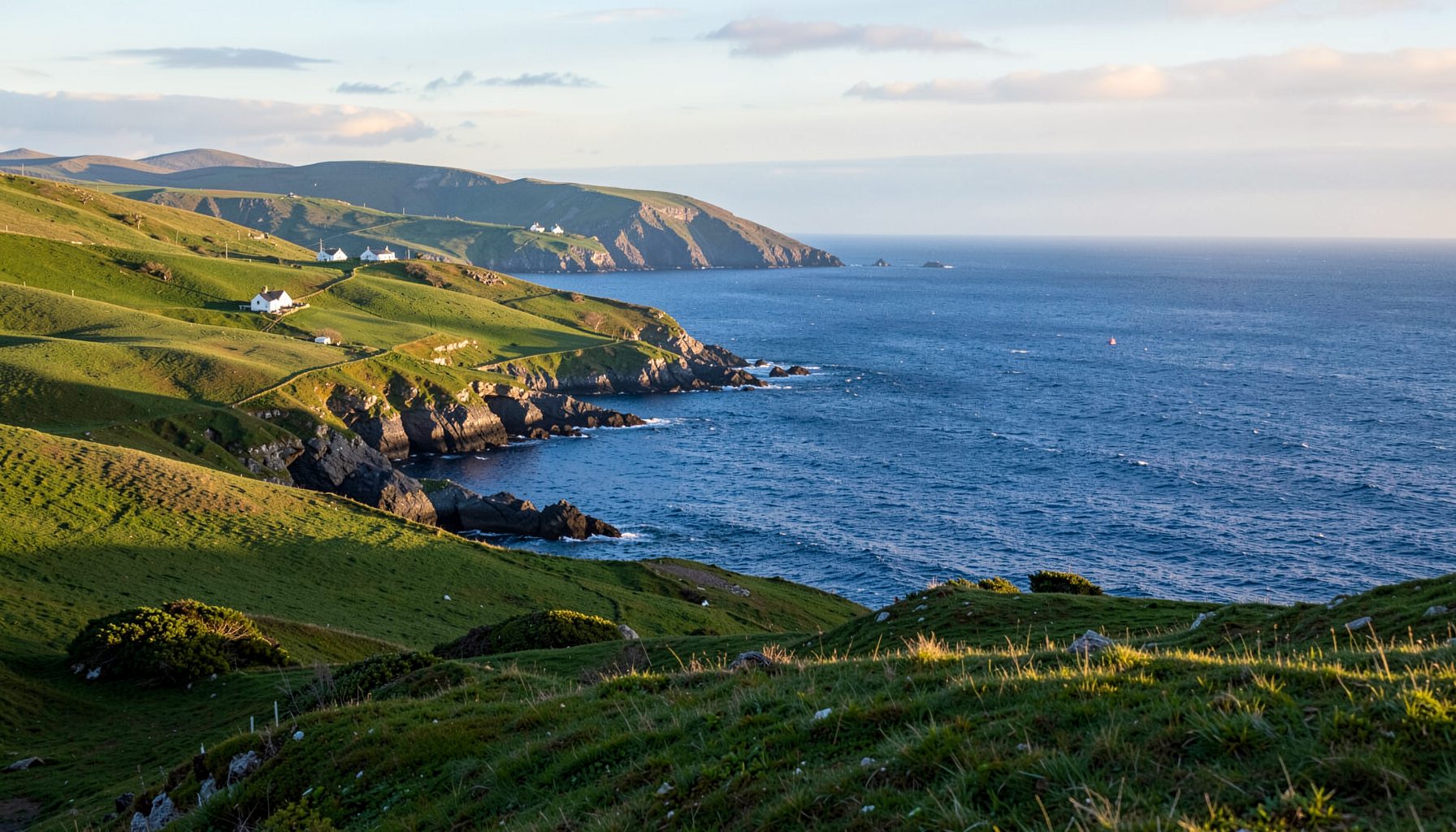
On the western fringe of Europe, where the Atlantic meets the cliffs of the Iveragh Peninsula, Valentia Island holds a quieter story than its famous neighbours. Beyond the transatlantic cable station and the slate quarry, the island nurtured something enduring: a commitment to learning that shaped generations of islanders. Close to the slate pier and Chapel Island, the Valentia Girls' School became a focal point for female education throughout the nineteenth century, serving quarrymen's daughters and farmer's children alike.
For Australian readers tracing family lines or planning a heritage journey, the island's classroom story carries familiar echoes. Plenty of Australians can claim Kerry ancestry; in towns from Perth to Brisbane, families speak of great-grandparents who left the south-west of Ireland during the Famine. Hearing about a small island classroom, where daughters of quarrymen and farmers learned to read by oil lamp, brings that history into sharper focus. It is the kind of detail that touches the heart of anyone who has stood in a country schoolhouse museum in Tasmania or the Mallee.
The classroom sits within a wider landscape worth slowing down for. Travellers who arrive after a long-haul flight from Sydney or Melbourne, with a stopover in Singapore or Dubai, often find that the real reward of the Skellig Coast comes in its golden evenings. A thoughtful piece about watching sunsets along the Ring of Kerry captures the gentler side of the region, perfect for unwinding after a day spent exploring island heritage.
Learning on Valentia before the girls' school
Before any purpose-built schoolhouse stood on Valentia, education came through informal channels typical of rural Kerry in the early 1800s. Hedge schools operated in scattered farmhouses and outbuildings, with travelling masters teaching reading, writing, arithmetic and a working knowledge of Irish. Children often walked several miles over boggy ground to attend, carrying a sod of turf to contribute to the fire.
The Penal Laws had made Catholic schooling illegal in theory, though enforcement on remote peninslas was patchy at best. By the time the British administration began to relax restrictions, Valentia had developed its own patchwork of learning, supported by families who valued literacy as a route out of poverty. Visitors familiar with the one-teacher schools of the Australian outback, or the historic classrooms preserved around Hobart and Launceston, will recognise the same small-scale, family-driven model.
Records held in the local heritage collection show that by the 1830s, several families were petitioning for a dedicated school for girls on the island. The existing boys' school was oversubscribed, and many parents wanted their daughters to gain at least the basics of reading, writing and arithmetic before they entered domestic service or married young.
The founding of the girls' school
In 1847, supported by the Knight of Kerry and a grant from the National Board of Education, a modest stone schoolhouse opened its doors to girls aged five and upwards. The building sat on a rise overlooking the harbour, its thick walls and small windows designed to withstand Atlantic gales. A purpose-built residence for the schoolmistress stood alongside, recognising that recruiting a qualified teacher to such a remote posting required proper accommodation.
| Year | Pupil numbers | Headmistress | Curriculum note |
|---|---|---|---|
| 1847 | 40 | Miss Downing | Reading, writing, arithmetic |
| 1860 | 62 | Miss O'Sullivan | Needlework and domestic economy added |
| 1880 | 35 | Miss Fitzgerald | Geography and bookkeeping introduced |
| 1892 | 18 | Miss Quill | Letter-writing and basic science |
The early roll books, still held in the island's heritage centre, list around forty pupils in the first year. Most came from quarrying and fishing families, with a small number of boarders from the broader Iveragh Peninsula. The first schoolmistress, a Miss Downing from Cork, brought with her a monitorial system that had become popular across Britain and Ireland, where older pupils helped instruct the younger ones.
Funding came from a mix of government grants, local subscriptions and small fees paid by parents. The Ladies' Committee in Dublin also contributed books and slates, recognising Valentia as part of a wider network of female schools the committee supported. Australians who have read about the governess-driven schools of colonial New South Wales, or who have visited heritage classrooms at Ebenezer or Port Arthur, will spot similarities in how rural communities pooled resources to keep learning alive.
Inside the classroom
A typical day at the Valentia Girls' School began at nine in the morning, with prayers, scripture lessons and the singing of a hymn. The curriculum centred on reading, writing and arithmetic, with needlework, domestic economy and geography added as pupils progressed. Older girls learned bookkeeping and letter-writing, skills that proved vital for those who later managed small shops or corresponded with relatives who had emigrated.
Discipline was firm but rarely harsh. A bell in the porch marked the transitions between lessons, and a slate on the wall listed the day's tasks. Mistresses were encouraged to keep a school journal, and several surviving entries mention the weather, the attendance figures and any visits from the local inspector. One inspector's report from 1858 praised the orderly conduct and neat appearance of the pupils, while noting that the schoolroom was small but well ventilated.
Outside school hours, the building doubled as a meeting place for the local sewing society and a venue for evening lectures during the winter months. Travellers from the suburbs of Melbourne or Adelaide might be reminded of the mechanics' institutes and school halls that served similar community functions in nineteenth-century Australia, where a single building often hosted lessons, lectures and dances in equal measure.
Decline, closure and what remains
By the late 1870s, enrolment had begun to fall. Families had started to migrate to Boston and New York in greater numbers, drawn by reports of work in the cable stations and on the railways. The introduction of compulsory schooling for all children in 1892 also changed how the school operated, eventually merging the girls' and boys' classrooms into a single national institution.
The girls' school as a separate entity closed its roll book for the last time in 1893. The building continued in use as an infant classroom for several more decades, before falling silent in the 1930s. Today, only the outline of the foundation and a fragment of the eastern gable remain, though the site is marked on heritage maps and forms part of the Valentia Heritage Trail.
Community memory keeps the story alive. Older islanders recall their grandmothers speaking of walking to school in clogs, of learning the alphabet from a printed cloth hung above the fireplace, and of the strict but kindly mistresses who stayed for years at a time. For Australian visitors whose own grandparents attended small schools in places like King Island or Flinders Island, the stories will sound strikingly familiar.
Parallels with Australian small-island and rural education
Reading about the Valentia Girls' School alongside Australian history reveals a striking number of parallels. King Island, sitting in the stormy waters of Bass Strait between Victoria and Tasmania, ran a one-teacher school from the 1860s that served children of tin miners and lighthouse keepers. Flinders Island, further east, hosted a school that ran under equally isolated circumstances, serving the children of settlers and sealers along a sparse eastern shore.
The famous School of the Air programs that link remote Outback homesteads to teachers in capital cities are a twentieth-century echo of the monitorial system once used on Valentia. Both rely on older pupils or distant mentors to fill gaps left by thin populations. Both speak to a deeply Australian and Irish belief that no child should miss out on learning simply because of where they live.
There's another shared thread, too. Many of the families who passed through Valentia's classroom in the 1840s and 1850s had relatives who later sailed for Sydney, Melbourne or Adelaide. The Kerry diaspora helped build towns from Subiaco to Sandgate, and the same reverence for learning that supported the Valentia Girls' School travelled with them in their luggage. To walk the island's lanes today is to trace a piece of a story still unfolding across the Irish Sea and the Pacific alike.
Wander the lanes of Valentia, stand where the schoolhouse once stood, and let the Atlantic wind carry the echo of lessons learned long ago. Pick up a heritage trail map at the cable station visitor centre, follow the path down to the slate pier, and pause for a moment at the marked site of the old girls' school. The Skellig Coast rewards those who travel slowly, and a quiet hour on Valentia will stay with you long after the flight home.