The Best Places to Watch Sunsets Along the Ring of Kerry
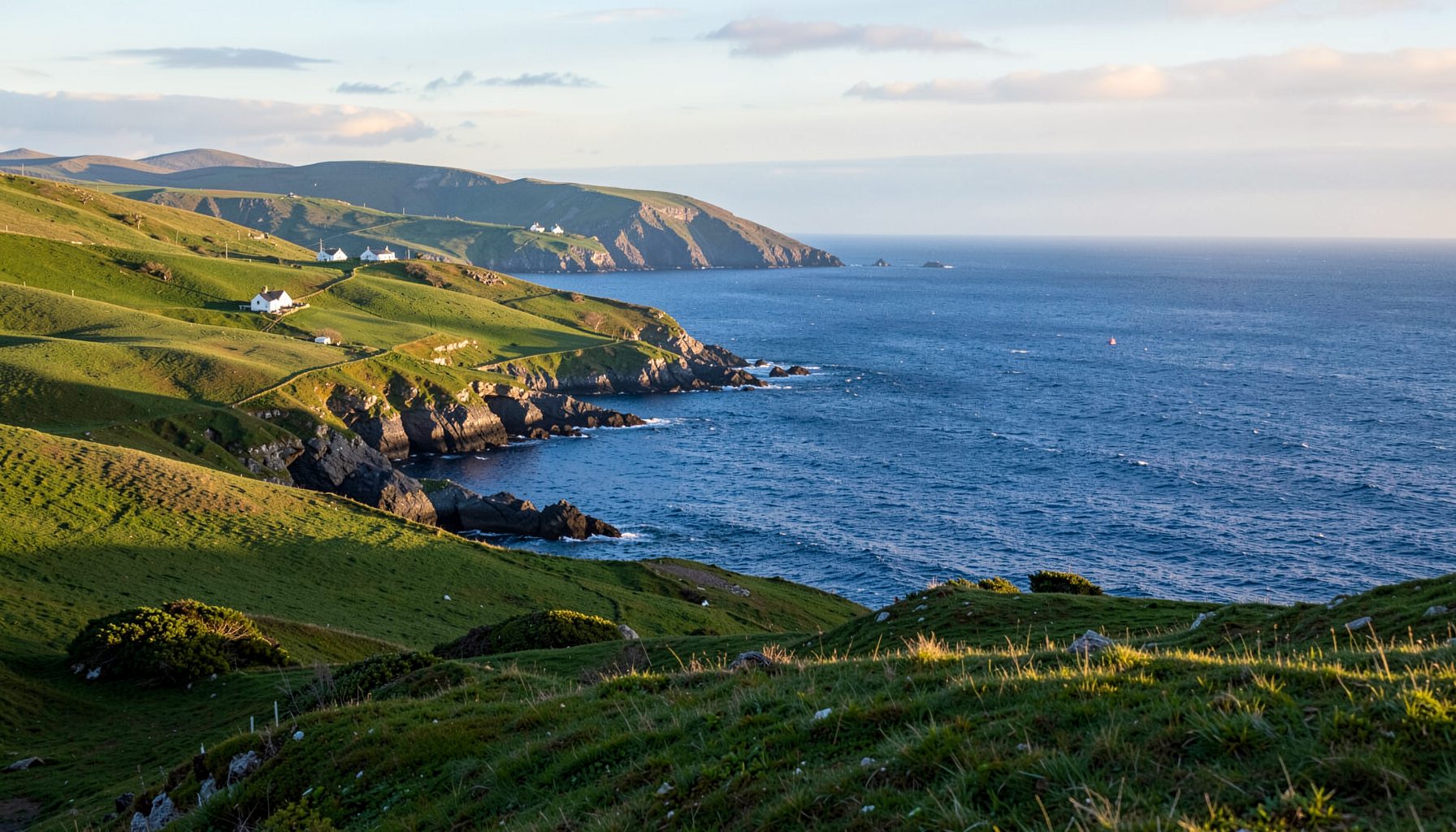
The Ring of Kerry is famous for its mountain passes, Atlantic scenery and historic villages, yet the landscape takes on a different character in the final hour of daylight. The sun sinks over open water, illuminating the Skellig Islands, headlands and offshore rocks in shades of copper, rose and deep blue.
The finest sunset viewpoints are generally found along the western and southern coast of the Iveragh Peninsula. Places such as Waterville, Derrynane, Ballinskelligs and Valentia Island offer broad horizons, while quieter beaches and roadside lookouts provide space to enjoy the changing light without a crowded itinerary.
Sunset times vary considerably throughout the year. In summer, twilight can continue well after the sun has disappeared, making it possible to combine an evening walk with photography or a visit to a nearby village. In autumn and winter, the light fades quickly, so arrive early, check the weather and allow time to park safely.
Waterville Promenade And Seafront
Waterville is one of the easiest places on the Ring of Kerry to enjoy an Atlantic sunset. The promenade faces west across Ballinskelligs Bay, with views towards the Skellig Islands on a clear evening. The broad seafront is close to cafés, restaurants and public facilities, making it a practical choice for visitors who want scenery without a remote walk.
The sea wall and nearby shoreline offer several perspectives as the sun lowers behind the horizon. Reflections on the wet sand can add depth to photographs, while the promenade gives a steady, accessible viewpoint when the wind is strong. A short walk towards the quieter end of the village can provide a more open outlook, but stay clear of slippery rocks and exposed edges.
Waterville is also associated with Charlie Chaplin, whose visits are remembered through a statue and local heritage. An evening here can therefore combine coastal scenery with a sense of the village’s cultural identity. In high season, arrive before sunset to secure parking and choose a place away from passing traffic.
Derrynane Beach And Abbey Island
Derrynane Beach is among the most atmospheric places to watch the sun go down in County Kerry. Its sheltered curve looks across Derrynane Harbour towards low islands and distant headlands, while the surrounding dunes soften the sound of the Atlantic. At low tide, the wide strand creates expansive views and attractive reflections.
The beach is close to Derrynane House, the former home of Daniel O’Connell, and the historic ruins on Abbey Island. Access to Abbey Island depends on tides and conditions, so it should never be treated as a sunset route without checking the return crossing. The beach itself provides a safer and more straightforward viewpoint, especially as evening light begins to fade.
Derrynane can feel remote outside the summer season. Bring a torch for the walk back to the car park, wear footwear suitable for sand and uneven paths, and avoid walking close to the waterline when the tide is rising. The combination of heritage, sheltered coastline and open western views makes this one of the most memorable sunset locations on the peninsula.
Ballinskelligs Beach And The Abbey Ruins
Ballinskelligs Beach faces west towards the Atlantic and the Skellig Islands, creating a dramatic setting for late-day light. The long strand is backed by dunes, while McCarthy’s Castle stands on a rocky outcrop at the northern end. When conditions are calm, the beach reflects the sky and creates a strong foreground for landscape photography.
The ruins of Ballinskelligs Abbey add historical character to the scene. Their weathered stone walls catch warm light just before sunset, although visitors should keep to safe ground and respect barriers around unstable masonry. The beach is also an excellent place for a quiet walk during the extended twilight that follows the sunset.
Ballinskelligs is part of a wider cultural landscape shaped by monastic settlement, Gaelic traditions and strong links with the sea. For a deeper understanding of local attractions and visitor experiences, the Skellig Experience Visitor Centre offers useful context about the islands and their heritage. Check opening arrangements separately, since visitor facilities may operate on seasonal hours.
Valentia Island And The Western Shore
Valentia Island offers several excellent places to follow the sun towards the horizon. The western side, particularly around Bray Head and nearby coastal roads, provides uninterrupted Atlantic views. On clear evenings, the Skelligs may appear as dark silhouettes beneath a glowing sky, while changing cloud can create more dramatic conditions than a completely clear forecast.
Bray Head is best suited to visitors who have enough daylight for a proper walk. The cliff path is exposed and uneven, and the return journey should begin well before darkness. For a less demanding evening, choose a safe roadside viewpoint or a coastal area near Knightstown, where the changing light can be enjoyed without committing to a long hike.
Valentia’s geological and communications heritage gives an evening visit added interest. The island was connected with the first transatlantic telegraph cable, and its landscape contains evidence of both natural forces and human ingenuity. Plan the sunset as part of a wider island visit, leaving enough time to drive slowly on narrow roads and allow livestock or oncoming traffic to pass.
| Location | Best feature | Access character | Evening consideration |
|---|---|---|---|
| Waterville | Promenade and bay views | Easy village access | Convenient facilities and parking |
| Derrynane | Beach, harbour and historic setting | Short walks on sand and paths | Check tides near Abbey Island |
| Ballinskelligs | Open strand and abbey ruins | Easy beach access | Exposed to wind and Atlantic swell |
| Valentia Island | Wide western horizons | Mix of roadside stops and walks | Allow time for narrow island roads |
| St Finan’s Bay | Remote beach and Skellig views | Rural, less developed access | Bring a torch and check road conditions |
| Portmagee | Harbour and bridge perspectives | Village-based viewpoint | Better for changing dusk light than a broad beach sunset |
St Finan’s Bay And The Skellig Coast
St Finan’s Bay lies between Ballinskelligs and Portmagee and is one of the more secluded places for sunset watching. The beach looks towards the Skelligs, with a rugged coastal backdrop that feels especially powerful when the last light catches the cliffs. Its rural setting means there are fewer artificial lights, which can make the transition from sunset to dusk particularly beautiful.
This remoteness requires careful planning. Roads are narrow, mobile coverage can vary and parking should be limited to suitable areas without blocking entrances or passing traffic. Do not assume that a beach visible from the road is safe to reach after dark; check the route in daylight and carry warm layers, a torch and footwear with good grip.
St Finan’s Bay is also a place where weather can change within minutes. Low cloud may conceal the islands while producing vivid colour overhead, so a cloudy forecast does not always mean a disappointing evening. The best approach is to allow flexibility and treat the surrounding coast, rather than a single fixed viewpoint, as part of the experience.
Portmagee And The Approach To The Skelligs
Portmagee is a lively coastal village and a useful base for exploring the western end of the Ring of Kerry. The bridge towards Valentia Island, the harbour and nearby shoreline offer several places to watch the sky darken over the water. The outlook is more enclosed than at Ballinskelligs or St Finan’s Bay, but boats, islands and harbour lights add detail during the blue hour.
A sunset in Portmagee works well after a day exploring the Skellig Coast. The village has strong connections with boat trips, fishing and the maritime history of the region. Visitors should remember that access to Skellig Michael is controlled, weather-dependent and generally arranged during daylight hours; the island is not a casual evening viewpoint.
The approach roads can be busy during summer evenings, particularly when visitors return from coastal attractions. Park legally and avoid stopping on bends, bridge approaches or narrow sections of road. If the horizon is obscured from the village, a carefully chosen nearby viewpoint may provide a wider outlook, provided it is publicly accessible and safe to use.
Choosing The Right Viewpoint
The best sunset location depends on the kind of evening you want. Waterville and Portmagee suit visitors who value nearby food, parking and village facilities. Derrynane and Ballinskelligs offer stronger beach perspectives, while Valentia and St Finan’s Bay are better for expansive, wilder coastal scenery.
A memorable view does not require perfect weather. Broken cloud can produce rays of light, layers of colour and reflections that are more striking than a cloudless sky. Give yourself at least thirty minutes before the predicted sunset, because the landscape often becomes most photogenic while the sun is still above the horizon.
Practical Choices For A Safe Evening
- Check the official sunset time, tide times and local weather before setting out.
- Arrive in daylight when visiting unfamiliar beaches, cliff paths or rural viewpoints.
- Bring warm, waterproof clothing, a torch and footwear suited to uneven ground.
- Park only in designated or clearly safe areas, keeping gateways and narrow roads clear.
- Leave no litter and avoid climbing walls, entering restricted ruins or disturbing wildlife.
Making The Most Of Golden Hour
Golden hour begins before sunset, when low sunlight warms the faces of cliffs, stone buildings and dunes. On the Skellig Coast, this period can be more rewarding than the exact moment the sun disappears. Walk slowly, look inland as well as seaward and notice how the light changes across the mountains of the Iveragh Peninsula.
Photography is often easiest when the camera is put away for a few minutes. Salt spray, wind and uneven ground can make coastal conditions demanding, so protect equipment and keep a secure footing. A tripod can be useful on calm evenings, but it should never obstruct a path or encourage you to move too close to an exposed edge.
After sunset, remain for the gradual shift into blue hour. The first stars may become visible above the Atlantic, while village lights appear along the bays. If you are driving afterwards, allow your eyes to adjust, use dipped headlights and take extra care on bends, steep descents and roads shared with cyclists or pedestrians.
Plan an evening that supports local communities by using village cafés, restaurants, heritage sites and cultural initiatives where available. Choose one or two viewpoints rather than rushing between several, and give the coast time to reveal its changing colours. Set out with respect for the landscape, then let the western horizon provide the final scene.