What to Expect at the Skellig Experience Visitor Centre
The Skellig Experience Visitor Centre sits on Valentia Island, close to the bridge and ferry connections at Portmagee. It offers an accessible way to learn about Skellig Michael, the smaller Skelligs, and the remarkable natural and cultural landscape of the Iveragh Peninsula before travelling farther along the Skellig Coast.
The centre is designed as an interpretation and learning space rather than a departure point for boat trips. Its exhibitions explain the island’s monastic history, wildlife, geology, archaeology, and place in popular culture. A visit can therefore be valuable whether or not sea conditions allow a landing on Skellig Michael.
Expect a compact attraction with visual displays, film, models, and information suited to different ages. It works well as part of a wider day exploring Valentia Island, Portmagee, Knightstown, and the coastal villages between Kells and Castlecove.
Arriving On Valentia Island
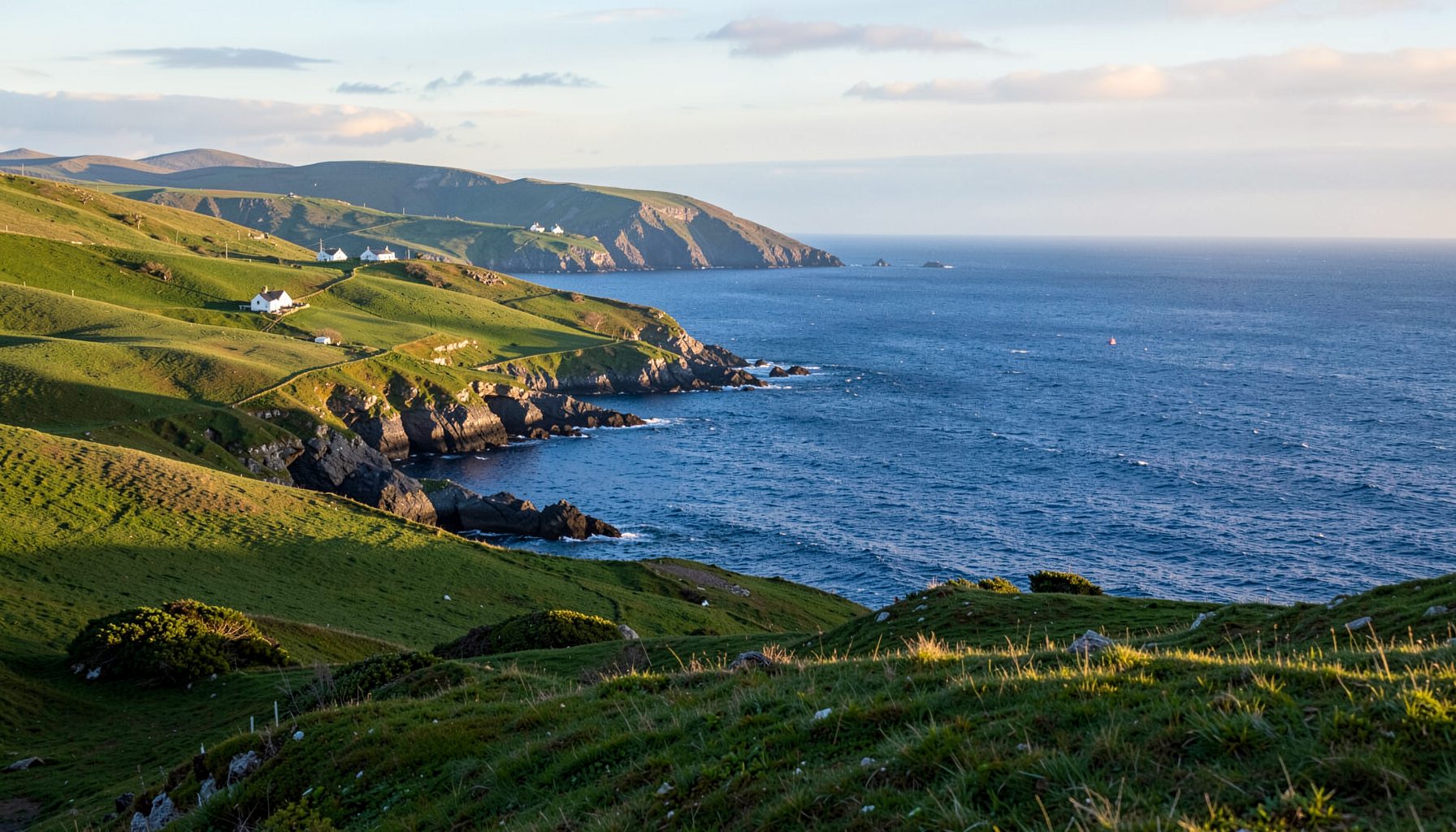
The visitor centre is located at the western end of the bridge from Portmagee, making it a natural first stop for people approaching the Skellig Coast from the mainland. Its position also places it within easy reach of Valentia Island’s other heritage sites, scenic roads, and coastal viewpoints.
Driving is the most practical way to reach the centre, particularly for visitors combining several attractions in one day. The approach across the bridge gives an immediate sense of the maritime setting, with islands, headlands, and changing Atlantic weather shaping the landscape around you.
Allow time to arrive without rushing through the displays. The centre is more rewarding when treated as part of the experience of the region rather than as a quick information stop before a boat trip. It provides context that can make the surrounding scenery and archaeological sites easier to understand.
Exploring The Exhibitions
The displays introduce Skellig Michael as a place shaped by isolation, faith, labour, and the sea. Visitors learn about the early Christian monks who established a monastery on the island, the stone beehive huts they built, and the difficult relationship between a small religious community and the exposed Atlantic environment.
Models and interpretive material help explain the island’s unusual architecture. The monastery’s dry-stone structures were carefully constructed without mortar, and their survival is closely connected to skilled building methods and the shelter offered by the rock itself. The centre gives useful background before anyone encounters photographs or views of the real site.
The exhibitions also cover the wider Skellig Islands, including seabirds and marine life. Gannets, puffins, storm petrels, seals, and other wildlife are part of the ecosystem around the islands, although sightings in the wild can never be guaranteed. The interpretation helps visitors appreciate the islands as a protected natural habitat rather than treating them only as historic monuments.
| Experience | What It Provides | What It Does Not Provide |
|---|---|---|
| Visitor centre exhibitions | Background on monastic life, wildlife, geology, archaeology, and local heritage | A landing on Skellig Michael |
| Audio-visual presentation | A sense of the island’s scale, atmosphere, and difficult sea approach | A substitute for safe conditions at sea |
| Skellig Michael boat excursion | Views of the island and, on approved trips, access to the monastic site | Guaranteed departure or landing in poor weather |
| Valentia Island heritage sites | Additional context about local geology, communications, and settlement | A single attraction covering every part of the peninsula |
| Portmagee and coastal viewpoints | Harbour scenery, seascapes, and connections with the wider Skellig Coast | Controlled access to the protected island environment |
Understanding The Island’s History
Skellig Michael has an unusually layered story. Its best-known chapter is the monastic settlement founded during the early medieval period, but the island’s significance also comes from its location, construction techniques, later use as a navigational landmark, and continuing role in local maritime culture.
The visitor centre helps place the monastery within the history of the Iveragh Peninsula. The mainland communities around Portmagee and Valentia have long depended on fishing, farming, seafaring, and movement between islands and harbours. These connections are important because Skellig Michael was never an isolated image detached from human life; it was part of a demanding coastal world.
Its UNESCO World Heritage status reflects the importance of the monastic remains and the exceptional setting in which they survive. The centre provides an opportunity to consider preservation as well as discovery. Access to the island is carefully managed because steep steps, exposed cliffs, nesting birds, and changing Atlantic conditions all affect how people can visit.
The Star Wars Connection
For many modern visitors, the Skellig Islands first became familiar through Star Wars. Skellig Michael was used as a filming location in scenes associated with Luke Skywalker and the remote island refuge shown in the later films. The dramatic rock, rough sea, and ancient stone structures offered a setting that already looked extraordinary before appearing on screen.
The visitor centre acknowledges this connection while keeping it within the broader story of the place. Film locations can bring new attention to heritage sites, but they do not replace the religious, archaeological, and environmental importance of Skellig Michael. The centre is useful for understanding why the island attracted filmmakers in the first place.
Visitors should also remember that the film setting and the real island are different experiences. There are no themed rides or studio-style reconstructions. The atmosphere comes from the actual landscape, the surviving monastery, and the immense effort required to reach and protect it.
What Families And First-Time Visitors Can Expect
The centre suits visitors who want a clear overview without committing to a demanding boat journey. Children often respond well to the models, moving images, wildlife information, and stories of monks living on a remote rock. Adults may appreciate the archaeological detail and the explanation of how the site is managed today.
The material can also help families decide whether a landing on Skellig Michael would be suitable. The island involves a boat crossing, a steep climb, uneven surfaces, and exposure to wind and sun. Seeing the centre first allows visitors to set realistic expectations rather than relying only on dramatic photographs.
People with limited mobility may find the visitor centre considerably easier to enjoy than the island itself. Access arrangements, seating, facilities, and exhibition details can vary, so checking current information directly with the centre before travelling is sensible. The visitor centre and the offshore archaeological site should be treated as separate experiences with different physical demands.
Planning Around Weather And Boat Trips
A visit to the centre does not guarantee access to Skellig Michael. Boat landings are controlled and depend on sea conditions, wind, visibility, conservation requirements, and operator permissions. Even when a trip leaves the harbour, landing conditions can change, so flexibility is essential.
The centre is particularly valuable on days when the sea is too rough for an excursion. Instead of losing the entire Skellig part of a holiday, visitors can explore the interpretation displays and then continue to other attractions on Valentia Island or the mainland. A boat tour around the islands, where available, is also different from landing on Skellig Michael and should be booked and understood accordingly.
Opening dates and times may change with the season. Check the centre’s official information before setting out, especially outside the main summer period. It is also worth confirming boat arrangements separately, allowing extra time for parking, bridge traffic, meals, and the possibility of an altered itinerary.
Useful Details To Check Before You Go
- Confirm seasonal opening hours, admission arrangements, and any timed-entry requirements
- Check whether your boat operator offers a landing, a cruise around the islands, or both
- Review sea-weather forecasts and prepare for changes to the day’s schedule
- Wear comfortable clothing and footwear suitable for coastal conditions
- Allow time for Valentia Island heritage sites, Portmagee, and nearby viewpoints
The Skellig Experience Visitor Centre is at its best when it gives shape to everything seen afterwards. Once visitors understand the monastic settlement, the wildlife colonies, and the forces that formed the islands, a distant view from the coast can feel meaningful rather than merely scenic.
Use the centre as a starting point for a wider Skellig Coast visit. Explore Valentia Island’s villages and geological heritage, spend time in Portmagee, and follow the route towards the villages and headlands between Kells and Castlecove. Check current local information before travelling, then make the visitor centre your first step into the history, nature, and living communities of this Atlantic region.