Inside the working life of a Skellig Coast painter
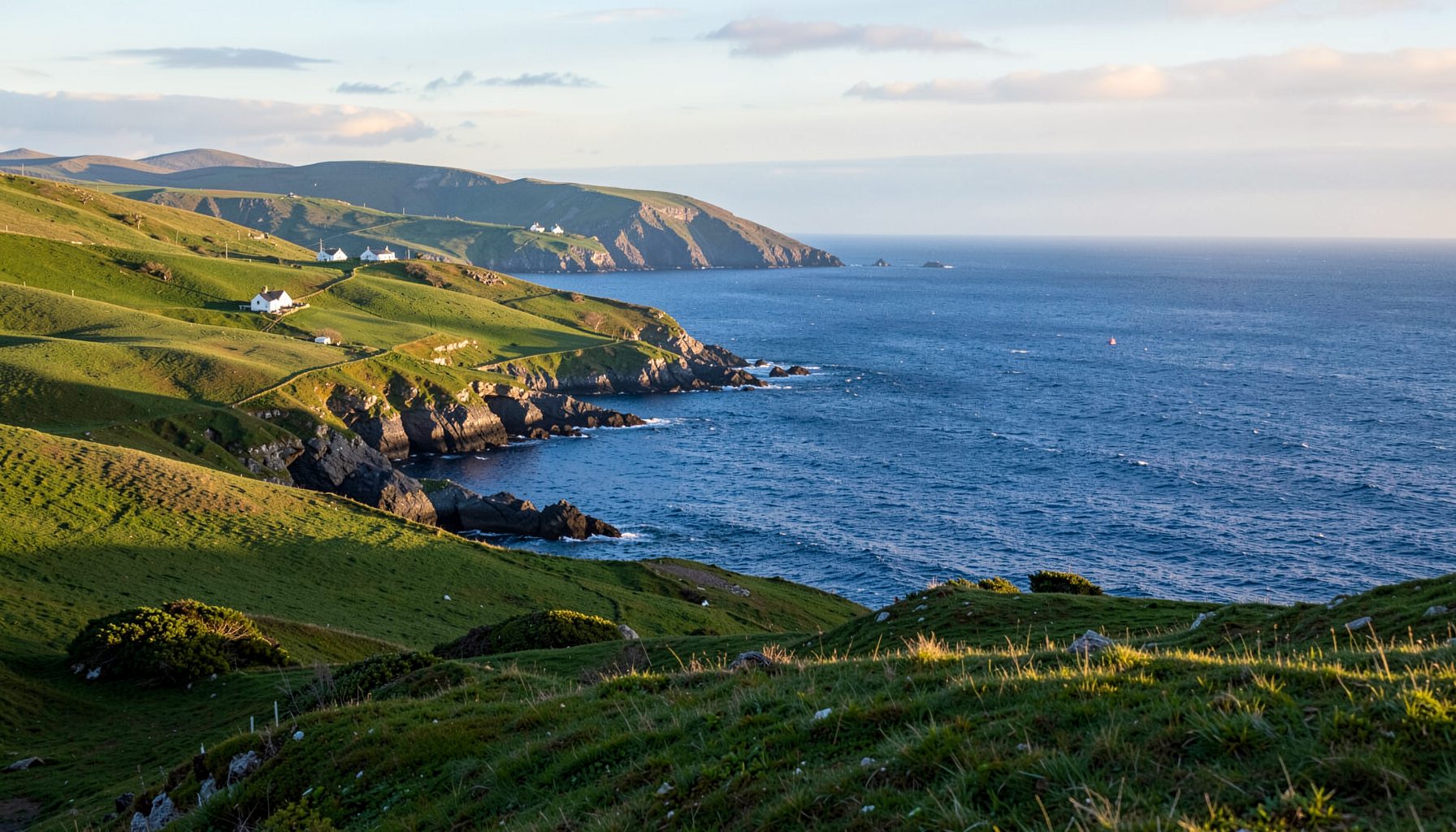
The Atlantic wind off the Iveragh Peninsula scrapes the skin raw within minutes, and the light shifts as though the sky cannot decide what mood to wear. For one painter who has settled along the Skellig Coast, this restless weather is not an obstacle but the very pulse of a working life built around colour, weather and the patient observation of stone.
Long before tourists arrive each summer to photograph Skellig Michael, the painter is already outside with brush and board, listening for the gull cry that signals a coming squall. The community of Kells, the scattered cottages near Cahersiveen, and the long curve of St Finian's Bay all serve as both studio and subject, and the slow rhythm of village life gives each canvas its peculiar warmth.
From Dublin to the cliffs of Kerry
Born and trained in Dublin during the late 1980s, the painter spent nearly a decade in city studios, painting still lifes and portraits in rented rooms above Georgian shops. A scholarship took the work briefly to Florence, where Renaissance technique was taught with strict discipline, but it was a holiday visit to Valentia Island that first cracked open the sense of place that would later dominate the practice.
Back in Ireland, a small inheritance allowed a move south in 2004, and the painter rented a whitewashed cottage overlooking the sea near Portmagee. The decision to stay grew without ceremony. Commissions arrived slowly through word of mouth, a local gallery took a few oils on consignment, and the painting of harbours and headlands became a kind of daily diary.
Light, weather and the long Atlantic mornings
A working morning often begins before sunrise, with a walk down a boreen to check the colour of the horizon. The painter keeps a notebook of weather marks: the precise grey that arrives an hour before rain, the bruised purple that settles behind Skellig Michael at dusk, the sudden shafts of gold that break through in October.
These notes feed directly into finished canvases painted later in the studio, where oils are layered over a chalk ground in the manner taught by old Kerry sign painters. By recording the day's atmosphere honestly, the painter has built a private archive that stretches across two decades, one that has begun to interest climate researchers in Galway and visiting curators from Sydney who travel the Ring of Kerry each spring.
A studio built from driftwood and quiet
The studio itself is a converted outbuilding with a corrugated roof that sings in storms. Brushes hang from nails hammered into salvaged beams, and the floor is scattered with rags stained ochre, viridian and Payne's grey. There is no central heating, only a small stove fed with driftwood collected after winter tides.
Visitors who knock are offered tea and a slice of brack, then left to wander the unfinished works leaning against the wall. The painter rarely sells directly from the studio; instead, pieces are sent to a cooperative gallery in Kenmare and to a small representative in Hobart who places work with private Australian collectors hunting for genuine Irish landscape.
Heritage stitched into every brushstroke
The painter's relationship with the older history of the peninsula runs deeper than scenery. Skellig Michael, with its beehive huts clinging to the rock, and the quieter ruin at Ballinskelligs sit at the centre of how local time is understood. A recent visit to Ballinskelligs Priory sharpened the painter's sense of how light once fell on the cloister walls, and how that same light still falls on the courtyard today.
This thread of continuity shapes several larger works commissioned for the parish hall in Ballinskelligs, where scenes of monks, pilgrims and fishermen are layered with the same granite palette used for the cliffs. The community raised the funds through a céilí night, and the finished panels now hang where children practise tin whistle on Tuesday evenings.
Showing across hemispheres
Twice the work has travelled south of the equator, with a small retrospective touring regional galleries in Brisbane and Adelaide during the Australian winter. Australian audiences, accustomed to the spare light of the Outback, responded strongly to the Atlantic greys and the wet shine of the rocks, and a piece from the Valentia series was acquired by the Art Gallery of South Australia for its colonial and Irish collection.
Such sales are governed by Australia's Resale Royalty Scheme, which means the painter receives a small percentage each time a work is resold on the secondary market. It is one of the few legal protections that makes long-term collecting feel fair, and it has encouraged several Sydney-based buyers to hold rather than flip pieces from the Kerry studio.
Travel between hemispheres has also introduced a new audience of Australian painters, some of whom share studio space in Adelaide during their northern summer and have begun to swap plein air sketches through the post. The exchange is informal, slow and entirely free of the rush that drives the international art market.
Materials, method and the slow look
Almost every canvas begins with a plein air watercolour sketch, often no bigger than a postcard, finished within the hour before the weather changes. Larger oils are then built up across weeks, with underpainting in raw umber and final glazes of cadmium orange worked in during the last sessions.
The painter refuses to photograph reference material, preferring instead to rely on memory and the written notes kept in a leather ledger. This approach is unfashionable in an age of instant images, but it has produced a body of work that feels notably personal, and that has drawn comparisons to the Australian tonalists working around the Adelaide Hills.
A practice that keeps giving back
Beyond the canvases, the painter runs a modest summer school in a disused national school near Castlecove, teaching teenagers to mix greens from local earth pigments. The classes are free, supported by a small arts council grant equivalent to Australia's Regional Arts Fund, and they have already produced two young painters now studying at the National College of Art and Design.
A new cycle of work is planned for the coming year, focusing on the lesser-known coves between Waterville and Sneem, and a book of essays pairing the paintings with old place names is in early production with a small Cork publisher.
Comparing the working conditions across the seasons
| Season | Typical light | Studio rhythm | Dominant palette | Common subjects |
|---|---|---|---|---|
| Spring | Long pale gold, frequent showers | Quick plein air sketches | Sap green, raw sienna | Lambs, early gorse, calm sea |
| Summer | Bright white, late dusks | Larger oils, longer sessions | Cobalt blue, cadmium yellow | Tourist boats, Skellig Michael, festivals |
| Autumn | Sharp shadows, low sun | Mixed media, bookwork | Burnt umber, Naples yellow | Harvest, migrating birds, returning fishermen |
| Winter | Brief silver light, storms | Studio reconstruction, varnish | Payne's grey, ivory black | Wild swells, bare cliffs, empty piers |
For visitors who love this stretch of coast
- Bring a folding stool and a small sketchbook rather than a large camera; the painter's preferred way to learn the headlands is to sit and draw for an hour.
- Walk the Valentia Island cliff loop early in the morning when the light is kinder and the puffins are still visible offshore.
- Stop at the cooperative gallery in Kenmare to see what oils are currently on display, as the available pieces change every few weeks.
- Ask locally about the summer school sessions; spaces are limited and word travels through the parish newsletter rather than online.
- Treat the monastic sites with quiet respect, including the priory at Ballinskelligs, where foundations and cloister walls are fragile.
- Pack layers regardless of the season, because the Atlantic can switch from sunshine to hail within twenty minutes along the Ring of Kerry.
- Consider buying directly from a working artist rather than a print shop, as a single purchase can fund a teenager's place in the next summer class.
To follow in the painter's footsteps and see the wider heritage that shapes these canvases, plan a slow drive from Kells to Castlecove along the Skellig Coast, where the landscape, the studio and the parish hall all open their doors to visitors who arrive with patient curiosity.