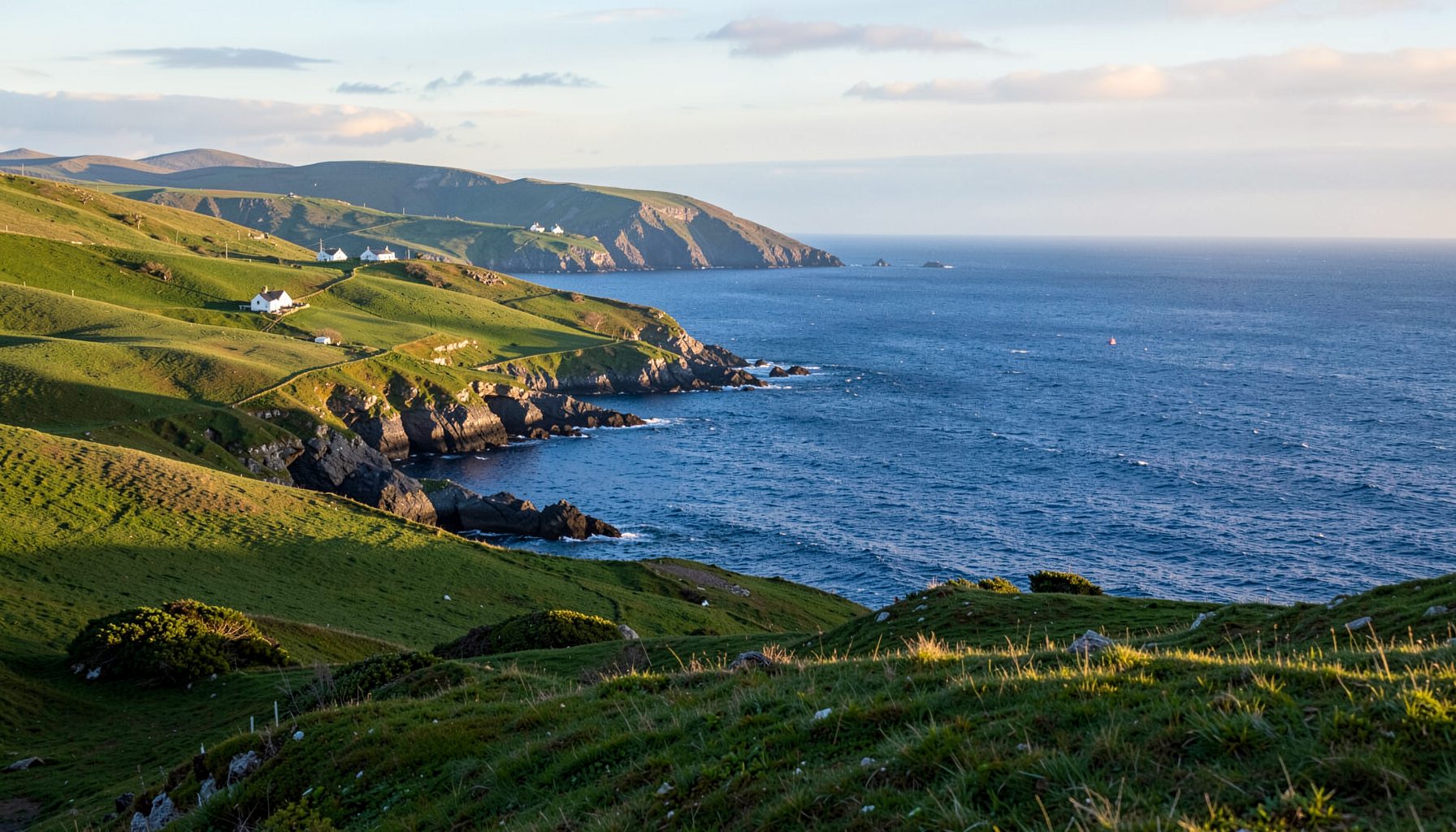
The life of a hill farmer on the Iveragh Peninsula
Across the Iveragh Peninsula, farming is shaped by steep ground, Atlantic weather and a landscape that has been worked for generations. From the hills above Caherdaniel and Castlecove to the valleys near Glenbeigh, families manage land that can be beautiful, exposed and demanding in equal measure.
Hill farming here is closely associated with sheep, commonage grazing and small family holdings. The work follows the seasons rather than a fixed timetable, with daily decisions influenced by lambing, rainfall, grass growth, market prices and the condition of the hills.
A farmer’s life is also connected to the wider community. Local marts, agricultural contractors, vets, schools, neighbours and rural organisations all help sustain a way of life that contributes to the character and biodiversity of the Ring of Kerry.
Land shaped by weather and terrain
Much of the upland around the Iveragh Peninsula is unsuitable for intensive cultivation. Rocky slopes, thin soils, bogland and exposed ridges make the land better suited to hardy livestock than to large-scale tillage. Fields near the farmyard may provide better grazing or hay, while sheep range across rougher ground further up the hills.
The Atlantic climate brings mild winters but frequent rain, strong winds and sudden changes in visibility. A dry spell can improve grazing conditions, yet a wet spring may leave fields waterlogged and make lambing more difficult. Farmers must read the ground carefully, choosing when animals can move, when grass should be rested and where shelter is available.
Stone walls, banks and old tracks divide many holdings. These boundaries are practical features, but they also record the history of settlement and land use. Maintaining gates, fences, drains and access lanes is a continual part of farm work, especially after storms or periods of heavy rain.
A working year on the hills
The farming calendar begins its busiest phase around lambing. Ewes may need close observation, assistance during difficult births and protection from cold or wet conditions. Newborn lambs are checked, marked and matched with their mothers, while weak animals may be brought indoors or given extra feed.
As spring develops, attention turns to turnout, grass management and flock health. Shearing usually takes place in warmer months, when the removal of heavy fleeces is safer and more comfortable for sheep. Farmers may also gather animals for dipping, dosing, foot care and other routine handling.
Autumn brings sales, breeding decisions and preparations for winter. Some lambs go to market, while selected animals are retained to maintain the flock. Ewes are assessed for condition before mating, and winter feed is secured for periods when grass growth slows. On exposed upland farms, these preparations can determine how well both livestock and people get through the coldest months.
Winter does not mean the farm is quiet. Fences are repaired, sheds are cleaned, machinery is serviced and animals are checked every day. In remote areas, a quad bike, trailer or working dog may be as important as a tractor, while local knowledge remains essential when snow, flooding or fallen trees restrict access.
Livestock, skills and daily decisions
Sheep are well suited to the peninsula’s rough grazing, but keeping them healthy requires close attention. A farmer learns to notice small changes in an animal’s movement, appetite or behaviour. Early treatment can prevent a minor problem from becoming a serious loss, particularly when livestock are spread over large or difficult ground.
Working dogs are valuable partners in gathering and moving sheep. Their training takes patience, and experienced farmers often develop a quiet system of signals, whistles and positioning. A successful gather depends on understanding how sheep will respond to slopes, streams, walls and pressure from both people and dogs.
Modern equipment has changed the work, yet it has not removed its physical demands. Mobile phones, cameras, electronic tags and weather forecasts can support decision-making, but they do not replace walking the land. The farmer still needs to inspect a broken fence, find a missing ewe or judge whether a hillside is safe to cross.
The work can be solitary, especially on scattered upland farms, but it is rarely entirely separate from others. Neighbours exchange help during lambing and shearing, share machinery, offer advice and respond when animals stray. Such informal cooperation is a practical form of rural resilience.
Farming and the living landscape
Hill farms are part of a wider ecological system that includes blanket bog, heath, wet grassland, streams and coastal habitats. Grazing can help maintain open areas and prevent scrub from spreading, while careful management protects sensitive ground from excessive pressure. The balance varies from field to field and depends on stocking levels, soil conditions and rainfall.
Farmers also encounter wildlife as part of their everyday routine. Foxes, badgers, hares, birds of prey, bats and nocturnal mammals move through farmland, often unseen. Anyone interested in the species active after dark can explore this guide to nocturnal wildlife, which places the peninsula’s farms within a larger web of habitats.
Conservation work may involve protecting waterways, leaving buffer areas beside streams, managing rushes or restoring traditional boundaries. Some holdings participate in agri-environment schemes that reward actions supporting habitats and landscape quality. These measures work best when they reflect local conditions rather than applying the same approach everywhere.
The relationship between farming and nature is sometimes presented too simply. A productive farm can support biodiversity, but poorly timed grazing or damaged wet ground can cause harm. Hill farmers therefore make practical compromises every season, weighing the needs of livestock, the land and the regulations governing agricultural support.
A household and community livelihood
For many families, farming income is combined with other work. A household may include someone employed in construction, tourism, education, fishing or a local service. This mixed economy helps families remain on the land when agricultural returns are uncertain, while farming continues to shape their daily routines and identity.
The cost of feed, fuel, fencing, veterinary care and machinery places pressure on small farms. Weather-related losses and fluctuating livestock prices add further uncertainty. Access to suitable contractors and transport can also be difficult in remote parts of the peninsula, where distances are longer and services are less frequent.
Farm buildings and fields may pass through several generations, but continuity is never guaranteed. Younger people need realistic opportunities, training and access to land if hill farming is to remain viable. Some return after education or employment elsewhere, bringing new skills in business management, technology, renewable energy or environmental monitoring.
Community events, marts and local agricultural shows keep rural connections visible. They provide places to exchange knowledge and celebrate livestock, craft, music and food. These occasions also help visitors understand that the landscape around the Skellig Coast is lived in and managed, rather than being scenery detached from local people.
What visitors should understand
People walking through upland areas should remember that farmland is a workplace. Gates should be left as they are found, dogs kept under control and livestock given plenty of space. During lambing, a dog near sheep can cause panic or injury even when it appears friendly and well behaved.
Marked paths may cross private land under access agreements, so walkers should stay on the route where requested and avoid climbing walls or disturbing farm equipment. Vehicles should use designated parking areas and never block a gateway, lane or turning place needed by tractors, livestock trailers or emergency services.
The table below shows how everyday farm activity often connects with wider landscape values:
| Farm activity | Practical purpose | Wider benefit |
|---|---|---|
| Rotational grazing | Gives pasture time to recover | Maintains varied grassland and heath |
| Stone wall repair | Keeps livestock within boundaries | Preserves historic landscape features |
| Streamside protection | Reduces trampling and runoff | Supports cleaner water and wildlife |
| Native livestock breeding | Maintains hardy animals suited to local ground | Protects regional farming heritage |
| Regular hill checks | Finds missing animals and damaged fences | Helps monitor changing land conditions |
Respectful access benefits both visitors and farmers. A quiet walker who follows local guidance may see curlews, wheatears, mountain ponies or distant sheep without interrupting work. The most rewarding experience often comes from recognising that the hills have an active agricultural life throughout the year.
Practical ways to support upland communities
The future of hill farming depends on decisions made by farmers, policymakers, residents and visitors. Support does not always require a large gesture; small choices can strengthen local businesses and show respect for the work involved in maintaining the landscape.
- Buy local food and wool products where their origin is clear.
- Follow access guidance and keep dogs securely controlled around livestock.
- Attend community events, agricultural shows and local heritage programmes.
- Learn about agri-environment projects and the pressures facing small farms.
- Share accurate information about rural access rather than treating working land as unrestricted open space.
Education also has an important role. Farm visits, school projects and local history initiatives can explain how food production, biodiversity and settlement patterns overlap. Younger residents who understand the value of the land may be more likely to see a future for themselves in farming or in related rural work.
For visitors, a deeper appreciation of the peninsula comes from looking beyond famous viewpoints. The stone walls, grazed slopes, working yards and narrow lanes all tell part of the regional story. They reveal a landscape sustained through ordinary tasks repeated with care, often in weather that tests both equipment and endurance.
The life of a hill farmer on the Iveragh Peninsula is defined by responsibility: to animals, to family, to neighbours and to the ground itself. It is a demanding livelihood, but it also preserves knowledge and landscapes that give the Skellig Coast its distinctive character. Explore the region’s communities, heritage and natural places with that living connection in mind, and support the local people who keep its hills working.