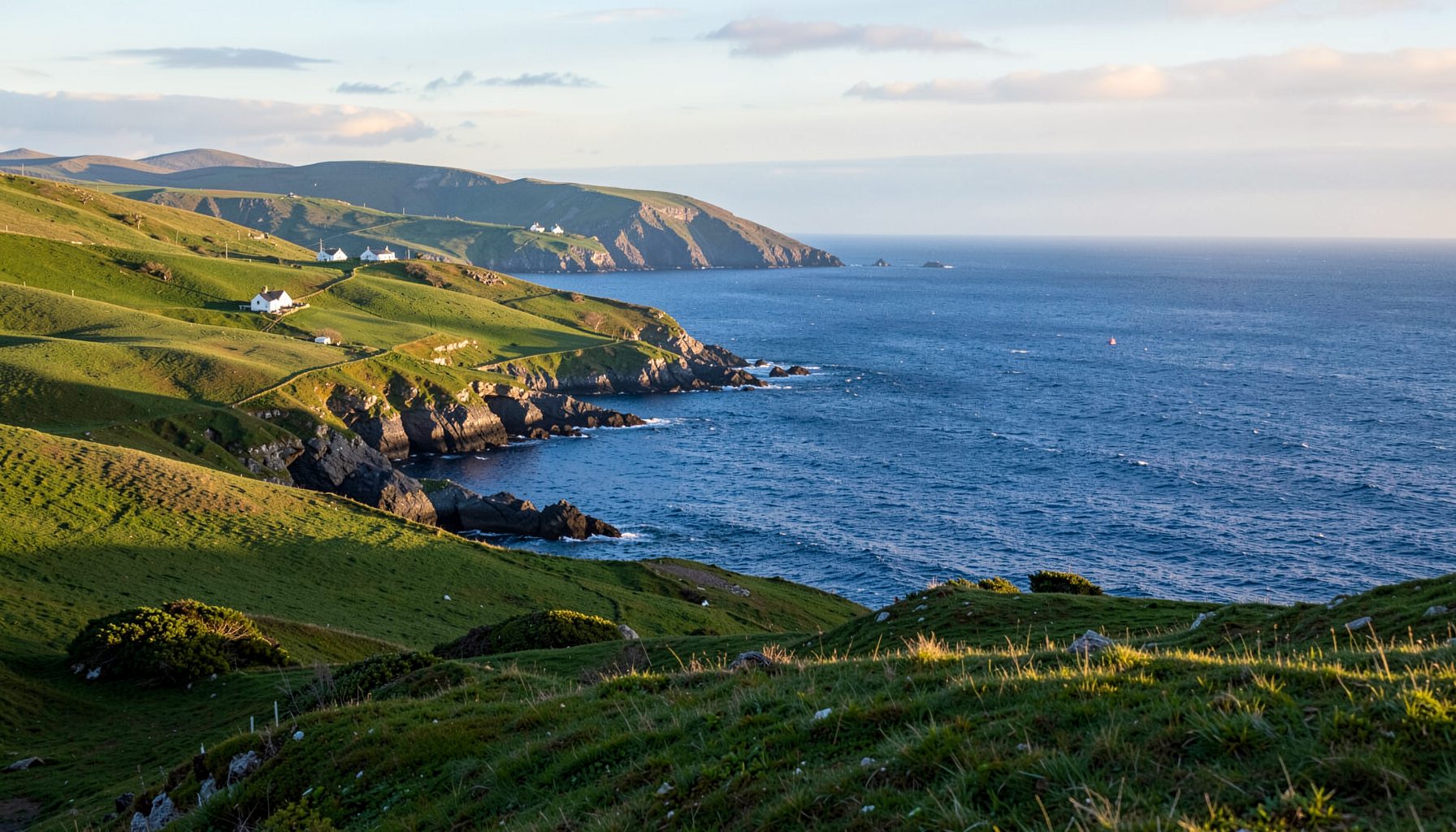
A Guide to the Nocturnal Wildlife of the Iveragh Peninsula
When daylight fades across the Iveragh Peninsula, another natural world becomes active. Foxes move along field boundaries, bats patrol woodland edges, owls hunt over rough grassland, and moths gather around flowering plants. Along the coast, seals, seabirds and marine creatures continue their lives beneath a changing sky.
The area from Kells to Castlecove includes a rich mixture of habitats: bogs, rivers, pasture, native woodland, rocky shorelines and offshore islands. This variety supports wildlife that is rarely seen during a daytime visit. Much of it is easier to detect through sound, tracks, silhouettes and movement than through direct sightings.
Iveragh is also known for its exceptionally dark skies. Away from the brightest settlements and roads, the limited artificial light creates excellent conditions for stargazing and for observing nocturnal behaviour without the glow that disrupts many species. A quiet, carefully planned walk can reveal far more than a torch-lit search.
Why Night Matters On The Iveragh Peninsula
Night is not simply a quieter version of daytime. Many animals use darkness to avoid predators, find food or travel safely between habitats. Bats rely on dark flight paths, while owls use their hearing and low-light vision to locate small mammals. Foxes and badgers often emerge when fields and lanes are calmer.
The peninsula’s long coastline adds another layer to its after-dark ecology. Tide pools, estuaries and rocky coves can attract feeding birds and marine mammals. Some seabirds return to nesting areas after sunset, when they are less exposed to predators. Offshore, porpoises and seals may pass close to shore, although they can be difficult to distinguish from waves.
Weather strongly influences what can be seen. A still, mild evening is often best for bats and moths, while a bright moon may make it easier to spot mammals crossing open ground. Wind and rain reduce insect activity and can make animal calls harder to hear. Check conditions before setting out, but remember that wildlife is never guaranteed on a particular night.
Mammals That Move After Dark
The red fox is one of the peninsula’s most adaptable night-time mammals. It may appear on the edge of a village, beside a quiet boreen or across open farmland. Its pointed silhouette, low purposeful walk and occasional bark are distinctive, though foxes usually disappear quickly when approached. Watching from a distance is more rewarding than trying to follow one.
Badgers are more secretive. They favour woodland margins, hedgerows and banks with suitable soil for setts. Their presence may be revealed by broad footprints, freshly disturbed earth or paths leading beneath fences. Pine martens can also occur in wooded areas, but they are elusive and mainly active at night. A glimpse of a long-bodied animal moving along a wall or branch should be recorded cautiously rather than identified too quickly.
Otters are active at different times depending on tides and food availability. Rivers, loughs and sheltered coastal inlets may all provide habitat. Look for tracks in soft mud, slides into the water, spraints on prominent stones and a sleek head appearing briefly in the current. These signs are often more reliable than a fleeting sighting.
Hedgehogs may be found in gardens, village greens and areas of rough vegetation, particularly during warmer months. They need connected cover and benefit from gaps beneath garden boundaries. If one is seen near a road, do not handle it unless it is clearly injured or in immediate danger; instead, keep dogs away and allow it to move undisturbed.
Owls, Bats And Other Night Flyers
Barn owls are among the most recognisable nocturnal birds on the peninsula. Their pale wings and silent flight can be striking when they pass over a field, but their numbers depend on suitable rough grassland, old buildings and prey-rich margins. Tawny owls are more likely to be heard than seen, with their calls carrying through woodland and settled areas.
Short-eared owls are occasional visitors to open moorland and coastal grassland, especially outside the breeding season. They hunt low over the ground and may remain active around dusk rather than deep into the night. Avoid assuming that every pale bird is a barn owl: size, flight pattern, habitat and call all help with identification.
Several bat species may be encountered around rivers, lakes, woodland edges and sheltered gardens. Common pipistrelles often fly rapidly around trees and buildings, while Daubenton’s bats can skim close to calm water. Bats are protected wildlife, so observation should never involve handling, blocking a roost entrance or shining a powerful beam at flying animals.
| Night-time wildlife | Useful signs | Habitats to watch | Most likely period |
|---|---|---|---|
| Red fox | Bark, tracks, moving silhouette | Fields, lanes, village edges | Dusk and night |
| Badger | Broad prints, sett entrances, soil disturbance | Hedgerows, banks, woodland margins | After dark |
| Otter | Spraints, slides, ripples, footprints | Rivers, loughs, rocky inlets | Dusk, night and dawn |
| Barn owl | Pale flight, screech, pellets | Rough grassland, farm buildings | Dusk and night |
| Pipistrelle bat | Fast flight, repeated circuits | Gardens, woodland edges, buildings | Mild evenings |
| Moths and other insects | Activity around flowers or vegetation | Heath, gardens, bog and grassland | Late spring to early autumn |
Moths deserve particular attention. The Iveragh landscape supports a wide range of night-flying species, from small geometrid moths to larger hawk moths. They pollinate plants, feed bats and birds, and form an important part of the food web. Rather than bringing bright lights into sensitive areas, observe around naturally lit vegetation and learn to identify moths by pattern, shape and season.
Coastal Wildlife Under A Dark Sky
The Atlantic coast changes character after sunset. At low tide, movement in rock pools may include small crustaceans and other invertebrates, while shorebirds can feed along exposed mud and shingle. At high tide, waves may conceal marine animals, but a calm viewpoint can sometimes reveal the back or blow of a passing cetacean.
Harbour porpoises are small and fast, usually producing a low, brief surfacing rather than a dramatic blow. Dolphins may travel in groups and show more energetic movement, although sightings close to shore are unpredictable. Common and grey seals may haul out on rocks or rest in sheltered coves. Never approach a seal pup or attempt to return one to the water; a lone pup may be resting while its mother feeds offshore.
Offshore islands and sea cliffs support birds that have evolved around darkness and the open ocean. Shearwaters and storm petrels may be active at sea after sunset, while nesting birds can be vulnerable to disturbance near colonies. The Skellig islands are globally important heritage and wildlife locations, so visitors should follow access rules and avoid using lights or drones near nesting areas.
The Kerry International Dark Sky Reserve gives residents and visitors a valuable chance to experience a naturally dark landscape. Dark skies improve visibility for people, but they also protect nocturnal animals from disrupted feeding, navigation and breeding patterns. Keeping outdoor lighting shielded, warm-toned and limited in duration benefits both wildlife and the night-time character of the coast.
Listening And Looking Without Disturbance
Night observation works best when it is slow. Stop regularly, allow your eyes to adjust and listen before walking on. A red-filtered light can help with navigation, but it should be used sparingly and never directed at an animal’s face, a roost entrance or a nesting site. Binoculars are useful at dusk, while a notebook or voice memo can preserve details that might otherwise be forgotten.
Sound is often the first clue. Tawny owl calls may come from woodland, an otter may create a soft splash in a river, and a fox may bark from a distant field. Insects produce a continuous background hum on warm evenings. Learn the difference between a definite identification and a possibility, especially when darkness makes colour and size difficult to judge.
Keep to public paths and observe access notices around farms, beaches, cliffs and heritage sites. Close gates, avoid walking through crops or bog vegetation, and keep dogs under close control. Do not use playback recordings to attract owls or other birds, since repeated calls can cause stress and draw animals away from feeding or sheltering areas.
The people who live and work across the peninsula often hold detailed knowledge of seasonal changes, wildlife corridors and local habitats. Listening to local people can add valuable context, particularly when that knowledge is shared through schools, community groups, conservation projects and cultural initiatives.
Plan A Quiet Night Visit
A responsible wildlife outing needs little specialist equipment, but preparation makes it safer and more productive. Choose a familiar public route, tell someone where you are going and allow extra time for dark roads, changing weather and uneven ground. Coastal paths, cliffs and bogland can become hazardous quickly after sunset.
Use the following principles when exploring:
- Check sunset, tide, weather and local access information before leaving.
- Wear warm, quiet clothing and sturdy footwear suitable for wet ground.
- Carry a dim torch, charged phone, map and a small first-aid kit.
- Keep well back from cliffs, seals, nesting birds, farm animals and unknown buildings.
- Record sightings with dates and locations, without sharing sensitive roost or nesting details publicly.
A simple wildlife log can become a useful record of the peninsula’s changing seasons. Note the habitat, approximate time, weather, number of animals and identifying features. Photographs should be taken only when they can be made without approaching, lighting or cornering the subject. In many cases, a written description is less disruptive and more informative.
Supporting Iveragh’s Night-Time Nature
Nocturnal wildlife depends on connected habitats rather than isolated attractions. Hedgerows, streams, scrub, old stone walls and small woodland patches allow animals to move between feeding and resting places. Gardeners can help by leaving part of a boundary untidy, planting night-scented flowers and avoiding pesticides that reduce insect populations.
Artificial light deserves equal attention. Motion sensors, downward-facing fittings and shorter operating times can reduce unnecessary illumination around homes, businesses and community facilities. Lighting that spills into hedges, tree lines and waterways may affect bats, moths and other wildlife even when the source seems modest.
Community recording can help build a clearer picture of species across the Iveragh Peninsula. Local observations, school projects and guided nature events can reveal where habitats are thriving and where wildlife corridors need protection. Responsible records are especially useful when they include careful identification and avoid exposing vulnerable locations.
The best night-time encounter is one in which the animal continues its behaviour as though no person were present. Set out quietly, protect the darkness that makes these encounters possible, and share your observations in ways that strengthen local understanding of Iveragh’s living heritage.