The history of the Skellig Experience Visitor Centre
On the western edge of Valentia Island, facing the narrow channel towards Portmagee, the Skellig Experience Visitor Centre offers a carefully shaped introduction to one of Ireland’s most extraordinary heritage sites. Its subject is Skellig Michael, the Atlantic island known for its early monastic settlement, dramatic cliffs, lighthouse history, seabird colonies and modern role as a film location.
The centre exists because the Skelligs are difficult, fragile and highly exposed places. A boat journey is dependent on weather, access to the island is seasonal, and the archaeological remains require careful protection. The visitor centre allows people to understand the islands before making the crossing, or to experience their history when a landing is not possible.
Its story is therefore connected to the wider development of tourism and community life along the Iveragh Peninsula. The attraction reflects local efforts to interpret the Skelligs from the mainland while keeping the character of Valentia, Portmagee and the surrounding coast at the heart of the experience.
A gateway shaped by the Skellig coast
The Skellig Experience was developed on Valentia Island in the early 1990s as a purpose-built interpretation centre. It was created at a time when interest in Skellig Michael was growing, yet there were few places where visitors could gain a full picture of the island’s past. Boat trips could provide a memorable view, but the meaning of the ruins, the dangers of the Atlantic setting and the lives of the monks needed more detailed explanation.
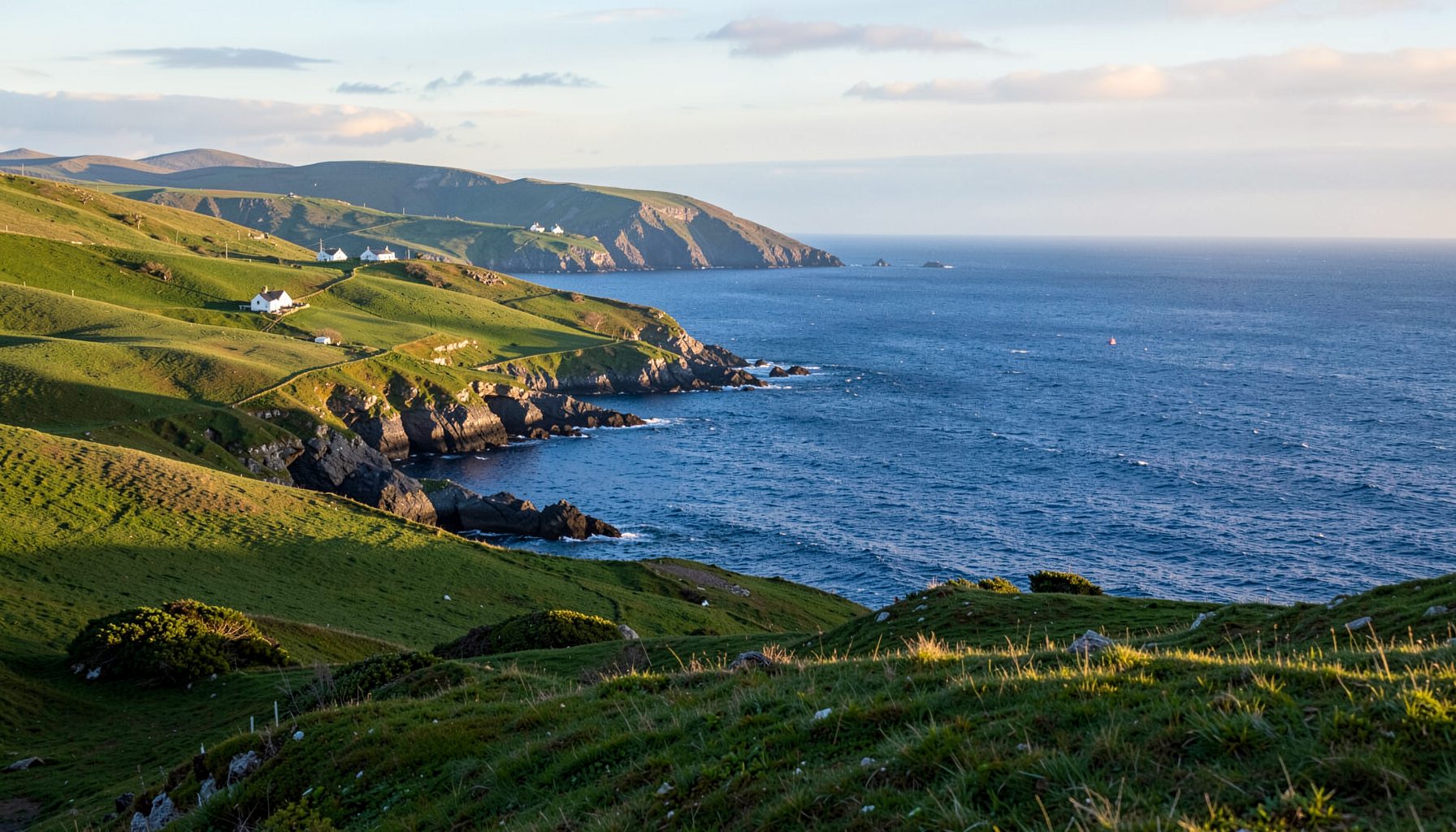
The choice of location was important. Valentia has long been associated with seafaring, communications, geology and exploration, while Portmagee serves as one of the principal mainland departure points for Skellig trips. From the centre, the island is part of a living landscape rather than an isolated museum subject. The waters, headlands and changing weather help visitors understand why the Skelligs demanded such resilience from the people who lived and worked there.
The building was conceived as a modern visitor attraction rather than a reconstruction of an early monastic site. Its role is to interpret evidence, stories and landscapes through displays, models, film and sound. That approach gives the centre a distinct place within the heritage network of the Ring of Kerry.
Why a mainland interpretation centre was needed
Skellig Michael is a challenging heritage site. Its monastic settlement stands high above the sea, reached by steep stone steps and exposed paths. The island’s remoteness helped preserve its beehive-shaped cells, oratories and terraces, but it also limits the number of people who can visit safely. Sea conditions can change quickly, and not every visitor can make the ascent.
A mainland centre provides access to the site’s history without placing additional pressure on the monument. Visitors can see how the monks adapted to an isolated rock, how food and water may have been managed, and how the community maintained contact with the mainland. The displays also explain that the island was never simply a picturesque ruin: it was a demanding place of religious practice, labour and survival.
This educational purpose is especially valuable for younger visitors and for people exploring the region beyond a single boat trip. The centre links archaeology with ecology, geology, maritime history and local memory. It also helps place Skellig Michael within the wider cultural landscape of the Iveragh Peninsula, where churches, holy wells, old roads and coastal settlements reveal different chapters of Irish history. A look at church architecture in nearby communities adds useful context to the religious traditions associated with the peninsula.
From monastic island to national heritage
The early medieval monastery is the most famous chapter in the history of Skellig Michael. Monks established a small community on the rock, building dry-stone structures whose unusual shape and construction continue to attract archaeological interest. Their settlement reflects the wider tradition of ascetic communities founded on remote islands and difficult coastal sites.
The island’s religious community eventually declined, and Skellig Michael later became associated with maritime navigation. Lighthouses and related infrastructure transformed the character of the island, bringing new forms of work and technology to a place already shaped by extreme isolation. The Skellig Experience presents these layers together, showing how the same landscape could be a sacred retreat, a navigational landmark and a protected heritage site.
Recognition at national and international level strengthened the importance of interpretation. Skellig Michael became a UNESCO World Heritage Site in 1996, acknowledging the exceptional survival of its monastic remains and their value as evidence of early medieval Christian life. The centre helps visitors appreciate why protection matters, particularly when weather, footfall and natural erosion can affect fragile archaeological features.
| Period | Key development | Meaning for the visitor centre |
|---|---|---|
| Early medieval period | A monastic community established its settlement on Skellig Michael | Explains the beehive cells, oratory and terraces |
| Later centuries | Religious use declined as the island remained part of Atlantic maritime life | Connects spirituality with changing coastal activity |
| Nineteenth century | Lighthouse development brought new navigation technology and workers | Shows the island as a working maritime site |
| 1990s | The Skellig Experience opened on Valentia Island | Created a mainland setting for education and interpretation |
| 1996 onward | Skellig Michael gained UNESCO World Heritage recognition | Increased public awareness and the need for careful access |
| Twenty-first century | Tourism, conservation and popular culture brought new attention | Encourages responsible engagement with the island |
How the visitor experience developed
From its beginning, the centre has used interpretation to make the Skelligs understandable through several senses. Scale models help visitors visualise the island’s steep profile and clustered monastic buildings. Audio-visual presentations recreate the atmosphere of the Atlantic environment, while displays introduce the people who occupied, serviced and studied the islands.
The centre’s exhibits are valuable because they do not depend on reaching the summit of Skellig Michael. A visitor can learn about the structure of a monastic cell, the purpose of the island’s terraces and the role of the lighthouse before seeing the real remains. For those unable to travel by boat, the experience provides an important alternative rather than a lesser version of the story.
Interpretation has also had to respond to changing public interest. Skellig Michael became globally recognisable after appearing in the Star Wars films, bringing new audiences to the region. The films introduced spectacular scenery to viewers around the world, but the centre places that modern association alongside the much older archaeological and maritime history. Popular culture becomes one layer in the story rather than the whole story.
A community asset on Valentia Island
The visitor centre is part of a regional economy that includes boat operators, guides, cafés, craft businesses, museums, accommodation providers and community organisations. Its presence encourages visitors to spend time on Valentia Island and in nearby villages instead of treating the Skelligs as a brief excursion from elsewhere.
That local connection is central to the centre’s identity. The Skellig story is presented by a community that lives with the sea, the weather and the practical realities of island access. The centre’s existence demonstrates how heritage interpretation can support local development while giving residents a place to share knowledge about their surroundings.
Its value extends beyond peak tourist months. Schools, local groups and lifelong learners can use the centre as a starting point for discussions about archaeology, conservation, marine ecology and regional history. It also complements other attractions on Valentia Island, including geological sites, coastal walks and places associated with the island’s scientific and communications heritage.
What to notice during a visit
A visit becomes more rewarding when the centre is approached as preparation for understanding the landscape, rather than as a substitute for a boat trip alone. Take time to study the models and maps, listen to the accounts of life on Skellig Michael and notice how the displays connect the island to Valentia and Portmagee.
The following points can help visitors get more from the experience:
- Look closely at the construction of the beehive cells and the skill required to build without mortar.
- Pay attention to the relationship between the monastic settlement, the sea and the island’s limited natural resources.
- Compare the early religious history with the later lighthouse and maritime story.
- Treat the Star Wars connection as a recent chapter within a much longer human history.
- Use the centre to understand why conservation rules and weather-related access limits are necessary.
The surrounding coast adds another dimension. From Valentia and the Portmagee area, the Skelligs can appear close enough to touch or disappear into mist within minutes. That changing view reinforces the centre’s central message: the islands are beautiful, but they are also remote, powerful and physically demanding places.
Keeping the story alive
The history of the Skellig Experience Visitor Centre is tied to the continuing work of making heritage accessible without reducing it to a simple attraction. Its displays translate archaeology and local history for a broad audience, while its location keeps the interpretation grounded in the communities that have long faced the Atlantic.
As interest in Skellig Michael continues, the centre remains an important first stop for anyone exploring the Skellig Coast. Visit the Skellig Experience on Valentia Island, allow time for its exhibitions and films, and then carry that deeper understanding into the wider landscape of the Iveragh Peninsula.