The Coastguard Stations And Lifeboats Of The Skellig Coast
Along the Iveragh Peninsula, the sea has always been both a source of livelihood and a serious danger. Fishing boats, trading vessels, mail services and sailing ships moved through waters shaped by reefs, headlands, islands and sudden Atlantic weather. Communities from Kells to Castlecove developed practical systems of watchfulness long before modern rescue equipment became available.
The local coastguard stations and lifeboats formed part of that story. Their work connected official maritime services with the knowledge of boatmen, farmers, lighthouse keepers and coastal families. A rescue depended on communication, courage and local familiarity: knowing which cove offered shelter, where a vessel might drift, and how quickly a winter sea could change.
Many buildings and landing places have changed purpose, while some have disappeared from the shore altogether. Yet the history remains visible in place names, surviving station houses, oral memories, newspaper reports and the continuing respect given to those who went out in dangerous conditions to help others.
A Coast Shaped By Maritime Risk
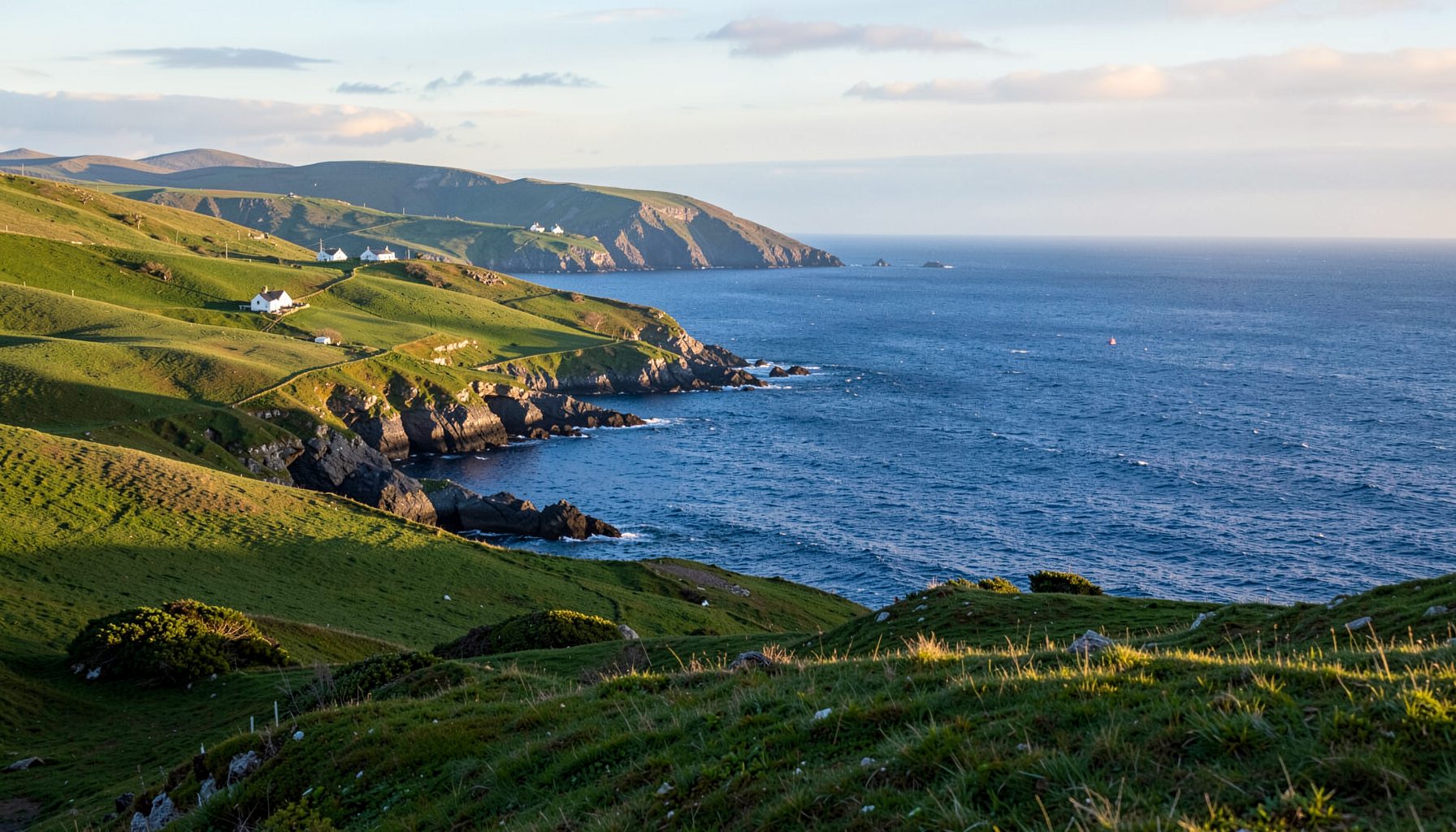
The Skellig Coast faces the Atlantic at the western edge of Europe. Valentia Island, Beginish, the Skellig Islands and the headlands around Ballinskelligs Bay create a varied but demanding seascape. Strong tides run through channels, submerged rocks lie close to shore, and exposed beaches offer little protection during a heavy swell.
Before radio, satellite navigation and reliable motor rescue boats, crews depended on visual signals and local observation. A person stationed on a headland could spot a sail in difficulty, smoke from a vessel, or unusual activity offshore. Villages also developed informal networks in which news travelled quickly from harbour to farmhouse and from churchyard to quay.
Shipwrecks were a recurring reality along the wider Kerry coast. Wreckage could be carried ashore from distant waters, bringing both grief and urgent work. Coastal residents might launch small boats, search beaches, provide shelter to survivors or recover bodies. These acts often took place before an official service could reach the scene.
The Growth Of The Coastguard Service
The modern coastguard system developed in Britain and Ireland through the gradual organisation of earlier revenue, customs and maritime patrol duties. Coastguard personnel monitored smuggling, watched shipping movements and responded to vessels in distress. Their stations were placed where the coastline could be observed, often near bays, harbours and prominent headlands.
On the Skellig Coast, a station was more than a building with a lookout. It was part of a communications chain. Staff used flags, lamps, rockets and later telephones to send warnings or summon assistance. In an emergency, the coastguard could alert local boatmen, guide a vessel towards safer water and coordinate with naval, harbour or lifeboat authorities.
The station families also became part of local society. Coastguards were frequently transferred, so their relationships with residents formed across generations rather than through one permanent household. Station buildings, watch posts and paths to the shore became familiar features of the coastal landscape, even when their official functions later changed.
Valentia And The Lifeboat Tradition
The Royal National Lifeboat Institution established Valentia Lifeboat Station in the nineteenth century, reflecting the island’s strategic position beside busy Atlantic routes. Knightstown provided an important base, with access to Valentia Harbour and the surrounding channels. From there, lifeboat crews could be called to incidents around the peninsula and offshore waters.
A lifeboat station required a carefully organised community. Volunteers needed to be ready at short notice, often leaving work, family meals or sleep when the alarm sounded. Boat crews included people who understood local tides and weather, while shore helpers prepared launching equipment, handled lines and supported survivors once they reached land.
The character of the service changed as technology developed. Oars and sail gradually gave way to powered lifeboats, and improved engines allowed crews to travel farther and return more quickly. Better weather forecasts, radio communication, navigation equipment and protective clothing reduced some risks, but the essential commitment remained the same: going to sea when another vessel could not safely do so.
Stations, Signals And Everyday Readiness
Coastguard work was not limited to dramatic rescues. Regular watches, maintenance and communication formed the ordinary routine behind an emergency response. Equipment had to be checked, lookout points kept accessible and signals understood. A rocket apparatus team, for example, required training and physical coordination to establish a line to a stranded vessel.
The distinction between a coastguard station and a lifeboat station is important. Coastguards acted as watchers, communicators and maritime authorities, while lifeboat crews carried out rescue launches. In practice, the two services worked closely with local residents, harbour workers and other agencies. A successful operation could involve many people whose names never appeared in official reports.
Memories of this work are often embedded in the landscape rather than displayed in a single museum. A former station may look like an ordinary house, while a slipway may appear to be a simple piece of shoreline infrastructure. Local archives, family collections and community history projects can help connect these quiet remains with the events that once gave them meaning.
| Maritime service | Main responsibility | Local contribution | Change over time |
|---|---|---|---|
| Coastguard watch station | Keeping watch, reporting shipping and raising alarms | Lookouts, local information and shore assistance | Signals and telephones developed into radio and digital communications |
| Lifeboat station | Launching crews to vessels and people in danger | Volunteer crews, launch teams and fundraisers | Oared or sailing boats were replaced by powered craft |
| Harbour and fishing communities | Providing boats, shelter and practical knowledge | Crews, guides, equipment and care for survivors | Traditional knowledge now supports modern safety practice |
| Lighthouse and navigation services | Marking hazards and guiding shipping | Maintenance, observations and local reporting | Fixed lights are supported by electronic navigation systems |
Rescue, Memory And The Human Cost
The records of maritime rescue include moments of remarkable success, but they also reveal the cost of Atlantic work. Lifeboat crews faced darkness, breaking surf, freezing water and vessels that could break apart without warning. Coastguards and local volunteers could be injured or lost while trying to help others.
For families, a rescue was never simply a public event. It could mean hours of uncertainty while a boat remained offshore, followed by relief, mourning or the long process of rebuilding a livelihood. Newspaper accounts often describe launches and bravery, but local memory preserves other details: who supplied food, who kept watch on the shore, and who recognised a distant light.
The heritage of these services should therefore be approached with care. It belongs to the official history of maritime safety, but also to the social history of villages such as Knightstown, Portmagee, Caherdaniel, Waterville and Ballinskelligs. The same coastal communities that supported rescue work also maintained traditions, religious sites and seasonal observances. Accounts of winter solstice sites help show how deeply people have read and respected this landscape across many centuries.
From Local Stations To Modern Safety
Today’s maritime rescue network is more coordinated and technologically advanced than the system known to earlier generations. Emergency calls can be passed quickly between services, while lifeboats use powerful engines, radar, GPS, thermal clothing and sophisticated communications. Coastguard coordination centres can draw on information from several agencies rather than relying only on a nearby lookout.
That progress does not make local knowledge irrelevant. Tides, landing places, sea conditions and access routes still matter, especially around a rugged coast with narrow roads and exposed beaches. Volunteers, fishermen, outdoor instructors and residents continue to contribute to safety by understanding the places where formal charts cannot tell the whole story.
Modern visitors encounter this heritage through harbours, old station buildings, memorials, local exhibitions and stories shared by communities. The history also offers a practical lesson: the coast is beautiful because it is powerful, changeable and alive. Respect for weather, tides and distance remains as important now as it was when a shore watcher first raised an alarm.
Ways To Explore This Maritime Heritage
A thoughtful exploration of the coast can connect historical research with the places where events occurred. Local libraries, heritage centres, parish records, newspaper archives and community websites may hold photographs or accounts not found in national collections. Oral history is particularly valuable for understanding the daily life of station families and volunteer crews.
When visiting former maritime sites, keep the following principles in mind:
- Look for public viewpoints, marked paths and accessible heritage displays rather than entering derelict buildings.
- Treat slipways, piers, cliffs and beaches as working or hazardous environments, especially during high winds and swell.
- Record place names and local stories accurately, giving credit to community archives and family historians.
- Compare lifeboat and coastguard records with maps, weather reports and newspaper accounts to build a fuller picture.
- Support local museums, heritage groups and community initiatives that preserve maritime memories.
The most meaningful interpretation combines a rescue story with its setting. A station’s position, a harbour’s shape and the distance to open water can explain why a particular response succeeded or failed. Walking carefully along the shore can also make clear how much physical effort earlier crews invested before an engine, radio or modern launch system was available.
The history of the local coastguard stations and lifeboats is therefore a history of shared responsibility. It includes government services and voluntary organisations, but it also belongs to the people who watched the sea, launched boats, opened homes and carried news through their communities. On the Skellig Coast, that tradition remains part of the living relationship between place, memory and the Atlantic. Explore the region’s local stories and heritage resources through Skellig Coast to discover more of the people and places that have shaped this remarkable shoreline.