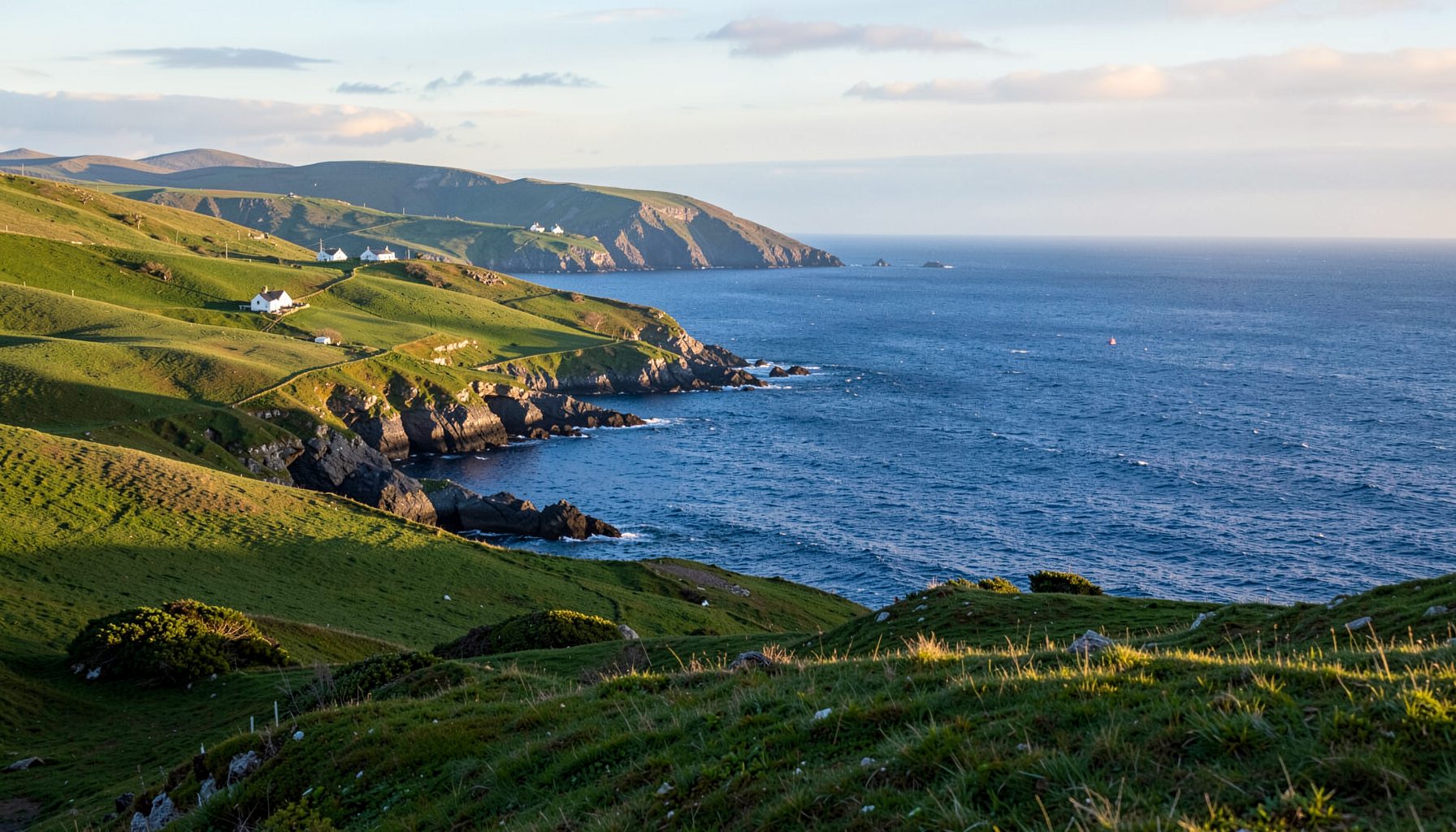
The winter solstice at the ancient sites of the Ring of Kerry
As the year reaches its darkest point, the Iveragh Peninsula offers a powerful setting for thinking about time, landscape and the people who lived here thousands of years ago. The winter solstice, usually occurring on 21 or 22 December, marks the shortest day and the longest night in the Northern Hemisphere. Around the Ring of Kerry, ancient monuments connect this seasonal turning point with hills, shorelines, valleys and the movement of the sun.
The archaeological record of the Skellig Coast and wider Kerry region includes stone circles, standing stones, burial monuments, fortified settlements and early Christian sites. Some were built with careful attention to direction and the horizon, while others may have served social, ceremonial or practical purposes that are no longer fully understood. It is important to distinguish evidence from attractive modern interpretation, especially when discussing possible solar alignments.
A midwinter visit is therefore less about recreating an ancient ceremony and more about observing the relationship between monument and landscape. Low light, bare vegetation and quiet roads can make familiar places appear in a different way, while the short daylight hours demand careful planning and respect for local communities.
Why the solstice mattered in ancient Ireland
The solstice is an astronomical event caused by the tilt of the Earth, but ancient communities experienced it through changing light, weather, food supplies and working patterns. The midwinter sun rises low in the southeast and sets low in the southwest, creating long shadows and making the shape of a horizon especially noticeable. Marking the sun’s annual cycle may have helped people organise agricultural and ritual life.
Ireland’s prehistoric monuments show that earlier communities paid close attention to the sky. Newgrange is the best-known example, with sunlight entering its passage and chamber at midwinter sunrise. Kerry’s monuments are generally smaller and more varied, so their relationship with the solstice is often less certain. A stone row, circle or isolated standing stone may face a significant point on the horizon, but direction alone does not prove a specific astronomical purpose.
The surrounding topography matters as much as the stones. A mountain notch, distant ridge or sea horizon can alter the point at which the sun appears to rise or disappear. This makes the Ring of Kerry particularly interesting: its ancient monuments sit within a landscape of peninsulas, glens, lakes and high ground, where the visible horizon changes from one valley to the next.
Ancient places across the Skellig Coast
Eightercua, near Waterville, is one of the most striking prehistoric monuments in the region. Its four large standing stones form a carefully arranged group beside the road, and the monument is traditionally interpreted as a Bronze Age stone row or related burial feature. Its alignment and setting invite solar readings, but visitors should treat claims about a precise solstice connection as interpretation rather than established fact.
The stone circle at Uragh, near Tuosist, provides another strong example of how monument and landscape work together. Its stones stand in a quiet valley framed by mountains, with a smaller boulder burial nearby. The arrangement is usually dated to the Bronze Age, although exact dates and functions remain subjects for archaeological study. In winter, the low sun picks out the stones against the darker slopes and emphasises the enclosed character of the site.
Bonane Heritage Park, close to Kenmare, brings several prehistoric and early medieval features together in an accessible setting. A stone circle, standing stones, rock art and other remains show how a particular area continued to be used and reinterpreted over long periods. Some local accounts associate its monuments with seasonal solar events. The site is valuable even without accepting every alignment theory, because it demonstrates the density and variety of Kerry’s archaeological heritage.
Further west, the area around Cahersiveen contains impressive later prehistoric and early medieval remains. Cahergall Stone Fort and nearby Leacanabuaile are dry-stone settlements rather than solstice monuments, yet they help place the region’s earlier communities in context. Their circular forms, construction techniques and elevated positions reveal how people shaped both domestic and defensive spaces on the peninsula.
Places to consider in winter
| Site | Heritage character | Winter and solstice interest | Practical note |
|---|---|---|---|
| Eightercua | Four-stone prehistoric monument | Strong visual relationship with the low southern horizon; precise purpose remains uncertain | Roadside setting; take care near traffic and private land |
| Uragh Stone Circle | Bronze Age stone circle and nearby burial feature | Mountain setting and low winter light create a powerful landscape experience | Access may involve uneven ground and narrow roads |
| Bonane Heritage Park | Stone circle, rock art and early medieval remains | Multiple monuments encourage comparison between sky, land and community use | Check opening arrangements and follow site guidance |
| Cahergall Stone Fort | Well-preserved dry-stone fort | Useful context for later prehistoric settlement rather than a confirmed solstice alignment | Uneven surfaces; avoid climbing the walls |
| Leacanabuaile | Early medieval stone settlement | Shows how the wider landscape was inhabited beyond ceremonial monuments | Respect boundaries and conservation measures |
| Skellig Michael | Early Christian monastic site and UNESCO World Heritage Site | Dramatic winter light and seasonal reflection, though not a public solstice observatory | Island access is seasonal and weather-dependent |
Reading the landscape rather than chasing an alignment
A solstice sunrise or sunset can be visually compelling, but the experience depends on cloud, mist, hills and the exact position of the observer. A monument that appears aligned from one angle may look different from another. Modern roads, trees, fences and buildings can also obscure the original horizon. For this reason, responsible heritage interpretation uses phrases such as “possible alignment” unless archaeological evidence is stronger.
The best approach is to observe several elements together. Notice the monument’s orientation, the shape of the surrounding land, the position of the sun, and whether the site would have been visible from nearby settlements or routes. Consider the materials used, the effort required to move the stones and the ways later generations may have reused the area.
Winter darkness adds another dimension. The lack of artificial light in rural Kerry can reveal a deep night sky, but ancient people would have experienced darkness without modern navigation, torches or emergency services. A site that feels peaceful in daylight may become hazardous after sunset. Solstice appreciation should remain a daylight activity unless an organised event has explicit permission, lighting and safety arrangements.
Seasonal traditions and living heritage
The winter solstice sits within a wider calendar of Irish seasonal customs. Midwinter has long been associated with fire, gathering, storytelling and hopes for returning light. Later Christian traditions shaped the meaning of the season, while local communities continued to carry regional customs through music, language, family gatherings and celebrations.
On the Skellig Coast, heritage is not confined to isolated monuments. It includes townlands, local knowledge, churchyards, working landscapes, place names and community memory. The meaning of a stone circle today comes partly from archaeology and partly from the people who care for the surrounding landscape. Listening to local interpretation is more respectful than treating a monument as a backdrop for an invented ritual.
Skellig Michael offers a different form of seasonal heritage. The island’s monastic remains date from the early medieval period and reflect a Christian community living in an exceptionally exposed Atlantic environment. It is also a UNESCO World Heritage Site and a filming location associated with Star Wars. These layers of significance should not be confused with prehistoric solstice worship, but they show how one place can acquire new meanings across centuries.
Planning a responsible midwinter visit
Daylight is limited around the December solstice, and weather can change quickly on the Iveragh Peninsula. Rain, wind, mist and saturated ground affect both visibility and access. Check local conditions before setting out, allow extra time on narrow roads and avoid relying on a dramatic sunrise or sunset for the success of the visit.
Ancient monuments are fragile. Stone circles, forts and standing stones can be damaged by climbing, leaning bicycles against walls, moving rocks or walking repeatedly over sensitive ground. Keep dogs under control, close gates, remain on permitted paths and take all litter away. Some sites lie beside private land, so public access should never be assumed from an online photograph or map pin.
- Visit in daylight and carry a charged phone, map, warm layers and weatherproof footwear.
- Check opening times, parking arrangements and access conditions before travelling.
- Keep a respectful distance from standing stones, walls, carvings and burial features.
- Support local heritage centres, cafés, guides and community initiatives where available.
- Share photographs and observations without revealing sensitive access routes or trespassing locations.
What the stones can still tell us
The ancient sites of Kerry do not provide a single, complete explanation of how prehistoric people understood the solstice. They offer evidence, questions and carefully positioned fragments of a much larger story. The combination of monument, horizon and seasonal light can suggest intention, but interpretation must remain open to new research.
That uncertainty is part of the value. Standing near Eightercua, Uragh or Bonane in the low light of December encourages attention to scale and duration. The stones have outlasted changing communities, languages, beliefs and land uses. Their survival depends on current visitors treating them as archaeological places rather than props for private ceremonies or dramatic images.
The winter solstice can therefore become a meaningful regional experience without requiring a formal event. A slow walk, a visit to a heritage centre, a conversation with a local guide or a few quiet minutes beside a monument may be enough to connect the present landscape with its deep past.
Use Skellig Coast to explore the communities, heritage projects, learning hubs and outdoor programmes of the Iveragh Peninsula before travelling. Discover the stories behind Kerry’s ancient sites, plan a considerate winter visit and help keep the cultural landscape of the Skellig Coast valued for the generations that follow.