A Garden Guide to Derrynane House and Park
Derrynane House and Park brings together history, coastal scenery and an unusually rich garden landscape on Ireland’s Iveragh Peninsula. The estate was the home of Daniel O’Connell, the nineteenth-century political leader known as “The Liberator”, and its grounds extend towards Derrynane Bay, woodland paths, historic ruins and a broad Atlantic shoreline.
For visitors from Australia, the park offers a gentler alternative to a day spent chasing viewpoints by car. It is a place to slow down, explore at walking pace and notice the details: stone walls softened by moss, exotic planting sheltered from the wind, woodland birds and glimpses of the sea beyond the trees. A little planning will help you make the most of the gardens, particularly if you are travelling during Ireland’s cooler or wetter months.
Finding your way around the estate
Derrynane House sits near Caherdaniel, a village on the N70 Ring of Kerry route. The entrance is signposted from the road, with parking close to the house and parkland. If you are coming from Waterville or Cahersiveen, allow extra time for the winding roads, narrow sections and scenic pull-ins. Distances can look modest on a map, but driving around the peninsula is rarely a quick, straight-line journey.
The estate is best explored as a series of connected experiences rather than a single formal garden. Begin near the house, then follow the paths into the landscaped grounds and woodland before continuing towards Derrynane Abbey and the shore. Some routes are easy and level, while others can be uneven, muddy or steep in places. Sturdy walking shoes are a sensible choice, much as you would wear for a national park track around the Dandenong Ranges or the Blue Mountains.
The house and its historic setting
Derrynane House was the O’Connell family home and contains displays relating to Daniel O’Connell, his family and his public life. The building gives the gardens their context: this was a lived-in estate shaped by generations of planting, maintenance and changing views of the coastline. Check current opening arrangements before travelling, as the house and visitor facilities may operate on a more limited seasonal schedule than the wider grounds.
Near the estate are the remains of Derrynane Abbey, a historic church site associated with the O’Connell family. The ruins add a strong sense of time to the walk, particularly when viewed alongside the mature trees and old boundary walls. Rather than treating the gardens as a decorative backdrop, look for how architecture, paths, woodland and shoreline fit together. The result is a landscape where natural beauty and local history are closely linked.
What to look for in the gardens
The planting at Derrynane benefits from the mild, damp influence of the Atlantic. Sheltered areas support lush vegetation, including ferns, mosses, rhododendrons and other shrubs that thrive in a cool maritime climate. Mature trees create a green canopy over parts of the estate, while clearings open the view towards the bay. In spring, flowering plants provide colour; later in the year, foliage, seed heads and changing light become the main attraction.
The grounds have a softer, more informal character than a highly engineered urban botanic garden. Paths pass through woodland and planted areas, with the atmosphere changing as you move from the house towards the coast. Australians may find the palette quite different from gardens in Sydney, Melbourne or Brisbane, where heat-loving plants and sharper seasonal contrasts often dominate. At Derrynane, the garden feels shaped by rain, shelter and Atlantic air.
Allow time to pause rather than rushing from one feature to the next. Listen for small birds in the trees, inspect the textures of lichen-covered stone and watch how the light moves across the leaves. Keen birdwatchers can also place the estate within a wider wildlife itinerary by exploring these birdwatching spots across the Iveragh Peninsula.
Woodland walks and coastal views
The woodland paths are among the most rewarding parts of the visit. They provide shade on brighter days and shelter when the Atlantic weather changes quickly. In wet conditions, roots and packed earth can become slippery, so take the same practical approach you would on a damp bush track in Tasmania or the Otways. A waterproof jacket is more useful than relying on a weather forecast that may change by lunchtime.
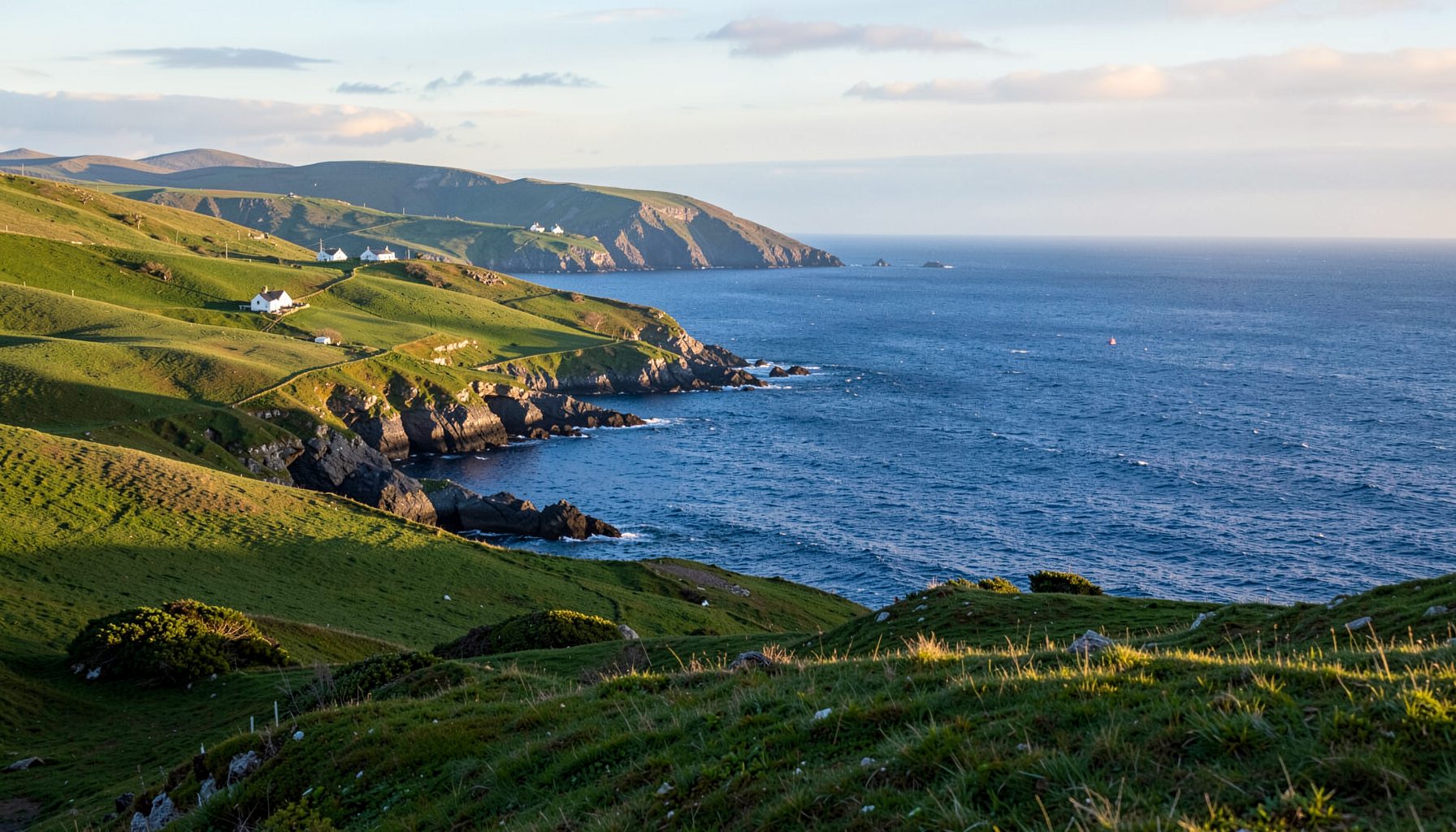
As the trees thin, views open towards Derrynane Bay and the surrounding coast. The combination of woodland, pasture, rocky shoreline and distant hills gives the park its distinctive sense of place. The sea may appear calm in sunshine, but wind can be strong near exposed sections. Keep children close to adults around uneven ground, walls and coastal edges, and follow any local signs or temporary closures.
Derrynane Beach is close to the house and park and can be included in the same outing. It is tempting to plan a quick swim because the sand and clear water look inviting, but Irish Atlantic conditions are very different from a supervised Queensland beach. Water temperatures are cold for much of the year, tides and currents matter, and there may not be lifeguard cover. Treat the beach as a coastal walk and scenic stop unless you have checked conditions carefully.
Planning a comfortable visit from Australia
The best months for garden colour are generally from late spring through summer, roughly May to August, although each year varies. June, July and August are Ireland’s warmer season, which can feel counterintuitive to Australians visiting during their winter. Pack layers, waterproof outerwear and footwear with good grip rather than assuming that summer means dry weather. An “arvo” outing can become chilly quickly when cloud rolls in from the Atlantic.
For visitors following a Ring of Kerry itinerary, Derrynane works well as a half-day stop, especially when combined with Caherdaniel, the nearby beach and other coastal viewpoints. If you are travelling in a campervan, remember that roads on the peninsula can be tight and parking areas may fill during busy periods. Driving on the left will feel familiar to Australians, but the narrow lanes, stone walls and bends require patience. Give oncoming traffic room and avoid stopping where you block a passing place.
Bring water and a small snack, particularly outside the main visitor season, when cafés and shops may have reduced hours. Local businesses operate on a distinctly seasonal market: summer brings the largest visitor numbers, while shoulder-season services can be quieter and more limited. A reusable rain jacket, a fully charged phone and offline directions are practical additions to your day bag.
Respecting the landscape and local heritage
Derrynane is both a visitor attraction and a valued local landscape. Stay on marked paths where possible, avoid climbing historic walls and do not pick flowers or remove stones, plants or shells. Dogs should be managed according to current park rules, especially near wildlife, livestock and other walkers. Leave gates as you find them and take rubbish with you if bins are not available.
The grounds are also a useful place to understand how conservation works in a historic estate. Garden areas, woodland, archaeological remains and coastal habitats need different kinds of care. Some paths may be closed for maintenance, storm damage or protection of sensitive ground. These changes are part of keeping the park accessible for future visitors, not an interruption to the experience.
Take photographs thoughtfully, without letting the camera replace observation. A wide image may capture the house, trees and bay, but smaller details often stay with you longer: a fern unfurling beside a wall, birds moving through the canopy or sea light shining between branches. The park rewards an unhurried visit and a willingness to follow its quieter paths.
Derrynane House and Park is a memorable stop for anyone interested in Irish history, gardens, wildlife and coastal walking. Set aside several hours, check seasonal opening information, dress for changeable weather and allow the landscape to unfold beyond the house itself. Add it to a Ring of Kerry route, pair it with Caherdaniel and Derrynane Beach, and spend enough time outdoors to experience the estate as a living part of the Skellig Coast.