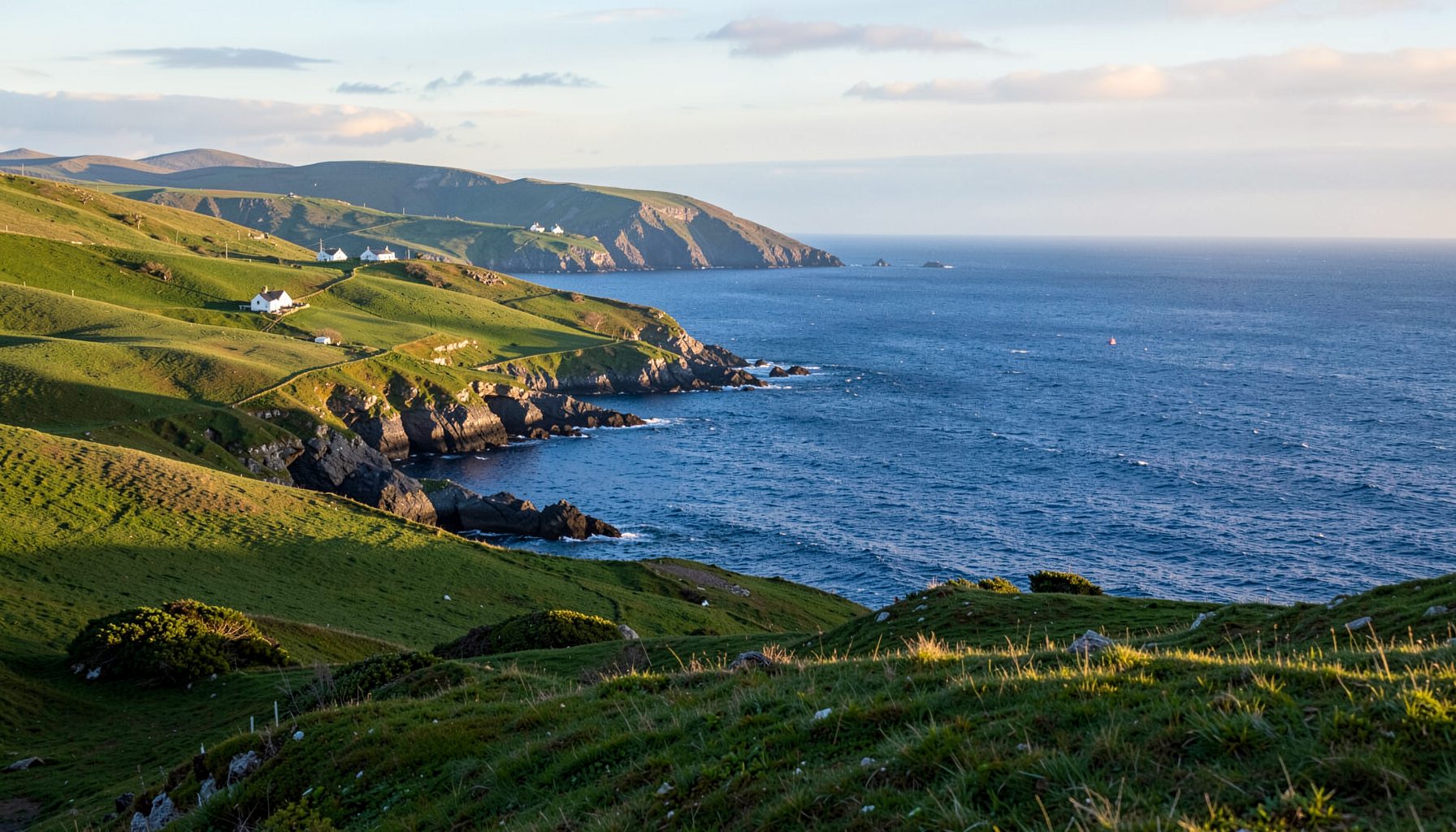
Seeing The Skelligs From The Sea Without Going Ashore
The Skellig Islands rise sharply from the Atlantic west of County Kerry, where dark rock, white water and changing light create one of Ireland’s most memorable coastal scenes. A boat trip without landing offers a close view of both Skellig Michael and Little Skellig, while keeping the visit focused on the sea, cliffs, birds and historic setting.
This option suits visitors who cannot secure a landing place, prefer a shorter outing, or would rather avoid climbing the steep steps of Skellig Michael. It is also a useful choice for families, older travellers and anyone who wants to experience the islands at a more relaxed pace.
For Australians, the setting can feel both familiar and completely different. The exposed coast may recall a rough day near the Great Ocean Road, but the Atlantic is colder, the weather can change quickly, and the journey is shaped by Irish tides and swell. Planning well makes the difference between a brilliant morning on the water and a very wet arvo.
What A No-Landing Cruise Includes
A sightseeing cruise generally leaves from Portmagee, with some departures linked to nearby coastal communities depending on the operator and season. The boat travels west through the mouth of Valentia Harbour and towards the islands, giving passengers views of the Kerry coastline before the Skelligs appear on the horizon.
Once near the islands, the skipper usually circles Skellig Michael and Little Skellig at a safe distance. The route may include several passes, allowing passengers on both sides of the boat to see the cliffs, stone structures and nesting colonies. The skipper or guide often explains the monastic history of Skellig Michael, its UNESCO World Heritage status and its role as a filming location for Star Wars.
A no-landing trip does not mean a distant glimpse from the mainland. Boats can often approach closely enough for passengers to see the island’s rock-cut steps, beehive cells and lighthouse buildings, although the exact distance depends on sea conditions, wildlife protection requirements and the vessel being used. There is no opportunity to walk ashore, climb the summit or enter the monastic enclosure.
Choosing A Departure And Route
Portmagee is the best-known gateway, and its location makes it a practical base for a Skelligs boat tour. The village is close to Valentia Island and the bridge, with cafés, pubs and places to gather before departure. Travellers staying around Cahersiveen, Waterville, Ballinskelligs or the wider Ring of Kerry should allow extra time for narrow roads, coach traffic and a slower coastal drive.
The season normally runs through the warmer and more settled months, but each operator sets its own schedule. Trips can be cancelled when wind, swell or visibility make the crossing unsafe. This is especially important for visitors travelling on a tight itinerary from Dublin, Cork or Killarney. Leave a spare day if the Skelligs are a major priority rather than booking the boat on the final morning of a regional road trip.
The islands are part of a wider marine environment, and the journey may include sightings of gannets, puffins, guillemots, dolphins or whales. Bird movements vary through the year, and the seasonal bird movement along the coast helps explain why wildlife encounters cannot be guaranteed on any particular crossing.
How The Boat Experience Compares
Several types of sea outing may be described as a Skelligs cruise, but they offer different experiences. A fast RIB can feel energetic and may spend more time close to the islands, while a larger passenger boat usually provides a steadier ride and more room to move around. Some services focus almost entirely on the islands; others combine the Skelligs with sea caves, the Blasket Islands or sections of the Iveragh coast.
The following guide shows the usual differences. Exact timings, boat sizes and prices change from year to year, so check the current details directly with the operator before paying a deposit.
| Experience | Typical duration | What you see | Best suited to |
|---|---|---|---|
| Skelligs sightseeing cruise | About 2–3 hours | Skellig Michael, Little Skellig and coastal wildlife | First-time visitors and families |
| Fast RIB tour | About 2–3 hours | Close offshore views and a more active crossing | Travellers comfortable with speed and spray |
| Extended wildlife cruise | About 3–5 hours | Skelligs plus seabirds, dolphins and wider coastline | Wildlife enthusiasts and photographers |
| Combined coastal trip | About 4–6 hours | Skelligs with caves, islands or nearby headlands | Visitors wanting a fuller day on the water |
| Landing trip | Longer, with shore time | Island steps and monastic settlement | Travellers holding an authorised landing place |
A landing trip and a sightseeing cruise should not be treated as interchangeable. Landing places are limited, regulated and dependent on sea conditions, while a no-landing boat ride is generally easier to book. The latter can be a more comfortable introduction to the islands, especially for those who are happy to appreciate Skellig Michael from the water.
Practical Choices For A Comfortable Trip
The Atlantic crossing is the main factor to prepare for. Even in summer, the air can be cool and the spray persistent. Wear warm layers, trousers and shoes with a secure grip rather than thongs or smooth-soled trainers. A waterproof jacket is more useful than relying on a sunny forecast, and a dry bag protects phones, passports and camera equipment.
Australians accustomed to strong sun should pack sunscreen, sunglasses and a hat, but avoid loose items that can blow overboard. Seasickness medication should be taken according to medical advice before departure, not after the boat begins to roll. If you are unsure how you will handle the water, a larger vessel may feel more forgiving than a small RIB.
Allow time for parking, check-in and the safety briefing. Irish coastal roads are often narrower and slower than Australian motorways, so a drive that looks short on a map may take much longer. Visitors flying from Sydney, Melbourne, Brisbane or Perth will also be adjusting to long-haul travel and time zones; an early boat after an overnight connection is rarely the most comfortable arrangement.
Useful choices before boarding include:
- Book an early-season or midweek sailing if your dates are flexible, while accepting that weather cancellations remain possible.
- Choose a larger boat if stability, shelter and room to move matter more than a fast, adventurous ride.
- Bring a warm fleece, waterproof outer layer, non-slip footwear, sunscreen and a sealed bag for valuables.
- Keep the day after the cruise flexible when the Skelligs are a central part of your itinerary.
- Check whether the fare includes commentary, parking information, refreshments and cancellation arrangements.
Prices are usually quoted in euro, so Australian visitors should allow for exchange-rate changes and card fees. During Irish school holidays and the busy European summer, popular sailings may fill quickly. Booking online can help secure a place, but the most important detail is the operator’s weather policy rather than simply finding the cheapest fare.
Wildlife, Heritage And Responsible Viewing
Little Skellig is famous for its enormous gannet colony, which can make the island look white from a distance. The birds occupy ledges and slopes above the water, while other seabirds use the cliffs during the breeding season. Boats must keep to appropriate distances and follow instructions from the crew, particularly when wildlife is concentrated near the route.
Skellig Michael’s human story is equally significant. Monks established a remote settlement on the island many centuries ago, building stone beehive huts and terraces in an extraordinarily exposed location. Later, the island became a lighthouse station and a symbol of Ireland’s Atlantic heritage. Seeing it from the sea reveals how isolated the community once was and how difficult regular access would have been.
The Star Wars connection has brought a new audience to the islands, but filming references should sit alongside the older heritage. The rock, monastery and seabird colonies are not a theme-park attraction. Passengers should avoid loud behaviour, follow crew instructions and never throw food or objects into the water. The boat crew’s local knowledge helps protect the place while making the journey more meaningful.
A sea-level view can also be valuable for photographers. The island’s shape changes with the angle of the boat, and morning or late-afternoon light may pick out the stone terraces and sharp ridges. Keep expectations realistic: mist, cloud and spray are part of the Atlantic character, not signs that the trip has failed.
For travellers from Australia, a boat trip around the Skelligs is a chance to see a very different kind of island landscape without committing to a demanding landing. Reserve the outing with enough flexibility for Irish weather, arrive prepared for cold water and changing conditions, and take time to listen to the local stories. Check current departure information for the Skellig Coast and build this remarkable offshore experience into your Ring of Kerry plans.