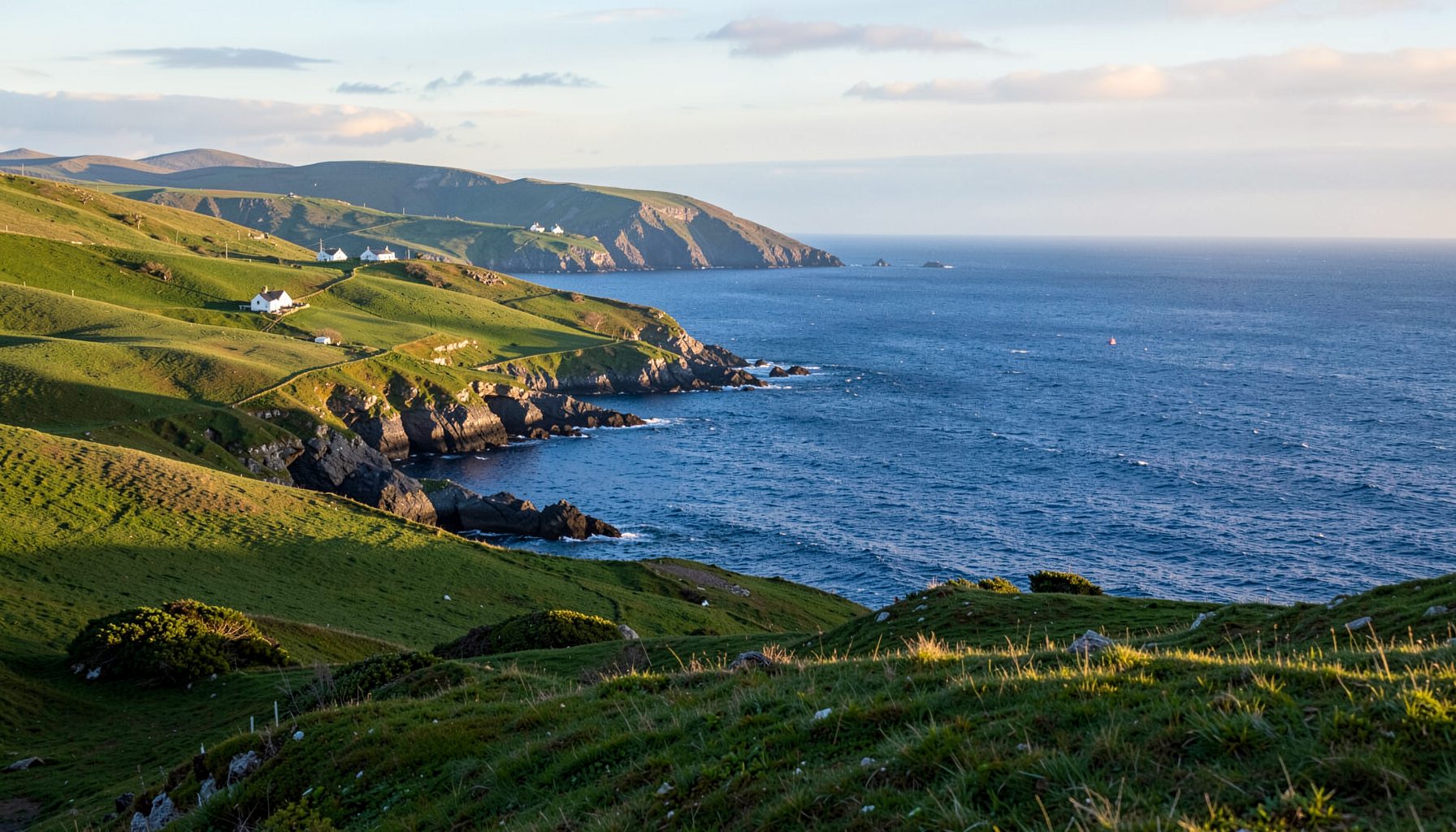
Following Barnacle Geese Along Ireland’s Skellig Coast
Each autumn, wild geese leave the high Arctic and travel south towards milder wintering grounds. Among them is the Barnacle Goose, a small, dark-backed goose with a pale face and a distinctive black breast. Its journey connects Greenland’s coastal tundra with wetlands, bays and estuaries across Ireland.
The seasonal migration of the Barnacle Goose on the coast is shaped by weather, daylight, food and tide. The birds do not arrive in every coastal district in equal numbers, and the Skellig Coast is not among Ireland’s largest or most predictable goose-counting locations. Even so, the species forms part of the wider winter wildlife story of the Iveragh Peninsula.
For communities from Kells to Castlecove, watching for visiting geese can add another layer to an understanding of the coastline. Rocky headlands, saltmarshes, sheltered inlets and nearby uplands create a varied setting where resident birds and seasonal migrants may pass through or pause.
A Journey From The High Arctic
Most Barnacle Geese seen in Ireland belong to the Greenland population. They breed during the short Arctic summer on tundra islands and coastal areas, where nesting begins as soon as snow retreats. The breeding season is brief, so adults and young birds must make the most of the available daylight and food.
By late summer, family groups gather before moving south. The first stage of the journey takes them through Iceland, an important stopping point for many birds crossing the North Atlantic. From there, they continue towards Ireland, arriving from September onwards, with numbers generally building during October and November.
The migration is a demanding Atlantic passage. Strong winds can alter the timing of arrival, while storms may force birds to land earlier than expected. Young geese travel with adults and learn the route through repeated seasonal movement, linking breeding grounds and wintering areas across generations.
What Brings Them To The Coast
In winter, Barnacle Geese depend on nutritious grassland, saltmarsh and low-lying coastal fields. They graze on grasses, rushes and other vegetation, sometimes feeding on seaweeds or plants around tidal margins. Their choice of site is influenced by disturbance, flooding, food quality and the availability of safe roosting areas.
The birds often feed on open ground during daylight and gather at traditional roosts around dusk. A sheltered bay, sandbar or offshore island can provide a secure resting place, particularly when high tide covers feeding areas. Their social behaviour is easy to notice: family groups stay close, and a larger flock may rise together when disturbed.
The Skellig Coast is dominated by cliffs, beaches, rocky shores and small bays rather than extensive estuarine pasture. This means sightings can be localised and irregular. A goose seen near a coastal field may be stopping briefly, while another flock could remain in a sheltered area for several days if food and quiet conditions are suitable.
Reading The Winter Calendar
The timing below describes a general pattern rather than a fixed schedule. Individual birds may arrive early or late, and local weather can change the number seen along the shore.
| Period | Likely movement or behaviour | Places and conditions to watch |
|---|---|---|
| August to September | Adults and young leave Arctic breeding areas and move through Iceland | Migratory routes, offshore waters and broad coastal landscapes |
| October to November | Main arrival period in Ireland; family groups settle into wintering areas | Saltmarsh, coastal fields, estuaries and quiet bays |
| December to February | Regular winter feeding and roosting; flocks respond to tide and weather | Open pasture, tidal margins and sheltered roost sites |
| March to April | Birds gather and begin their northward journey | Feeding fields and coastal viewpoints during clear weather |
| Late April to May | Departure for Iceland and Greenland breeding grounds | Passing flocks, changing calls and fewer lingering birds |
Winter is the most useful season for observation, especially from late October through February. Cold spells may encourage birds to move between sites, while calm days can reveal them feeding at a distance. On the Skellig Coast, patience matters because a quiet bay may hold birds that are difficult to see from the road or a busy viewpoint.
Spring migration can be particularly rewarding. Flocks may appear restless, calling more frequently as they prepare to leave. Birds often build energy reserves before beginning the northward flight, and a group that has been settled for weeks can suddenly vanish within a day or two.
Recognising A Barnacle Goose
The Barnacle Goose is smaller and more compact than a Greylag Goose. It has a black head and neck, a white face, a grey back with fine pale barring and a mostly black breast. In flight, the pale underside and dark wing pattern create a striking contrast.
Distance and changing light can make identification difficult. A flock resting on a field may look like a collection of dark shapes, while birds in flight show their pattern more clearly. Their calls are high, rapid and nasal, often carrying across open water or pasture before the birds come into view.
Several other geese may be encountered in Ireland during the winter. Brent Geese are generally smaller and darker, with a shorter neck, and are closely associated with intertidal vegetation. Greylag Geese are larger, paler and heavier-looking. White-fronted Geese can be recognised by the pale forehead and dark belly markings, although subspecies and distance complicate identification.
A pair of binoculars and a field guide are useful, but observers should avoid relying on a single feature. Size, face pattern, body colour, call and habitat all help build a reliable identification. Photographs taken from a respectful distance can be checked later with local bird recording groups.
The Iveragh Setting
The coastline between Kells and Castlecove includes a mix of habitats that support many winter birds. Kenmare Bay reaches inland through a network of shores and inlets, while streams, fields and small wetlands create feeding opportunities beyond the immediate sea edge. Valentia Island, the mainland coast and the approaches to the Skellig Islands each offer different views and weather conditions.
Barnacle Geese are more likely to use open, quiet areas than exposed cliff faces. They may be seen on coastal farmland, near wet grassland or around sheltered tidal ground. A rocky shoreline can still be important as part of a wider landscape, providing a viewpoint over feeding areas or a roosting bay.
Skellig Michael itself is famous for its monastic settlement and UNESCO World Heritage status, as well as its place in film history. It is not a dependable Barnacle Goose viewing site. The island’s steep cliffs and exposed position make it very different from the low-lying coastal habitats where geese usually feed. The wider coast, bays and fields are more relevant to winter birdwatching.
Local observations are valuable because migratory birds can use small sites that are overlooked in national surveys. A sighting with a date, location, flock size and description can help build a clearer picture of how geese use the peninsula.
Observing Without Disturbance
Geese need energy for survival and migration. Repeated flushing wastes that energy, especially in cold weather when birds must feed more often to maintain body heat. Observers should keep well back, remain quiet and avoid approaching a flock across open ground.
Public roads, marked paths and established viewpoints provide safer ways to watch. Where birds are on private farmland, they should be viewed from outside the property unless access has been clearly granted. Dogs should be kept under close control, since even a playful chase can drive birds away from a feeding or roosting site.
Tides can offer useful clues. A high tide may push birds from mudflats or shorelines towards fields, while a falling tide can draw them back towards exposed feeding areas. Checking the forecast, tide times and daylight before setting out improves the chance of a calm observation.
Responsible Ways To Record A Sighting
- Note the date, time, exact general location and estimated number of birds.
- Record whether the geese were feeding, resting, flying or calling.
- Use binoculars or a long lens instead of moving closer.
- Photograph habitat and flock behaviour without entering restricted land.
- Share unusual or well-documented sightings with a local bird recording group.
Why Community Records Matter
Seasonal wildlife records help reveal changes that a single visit cannot show. When observations are collected over several years, they can indicate arrival dates, departure periods, flock sizes and preferred habitats. This information supports broader understanding of migration along the south-west coast.
Barnacle Goose numbers and distribution may change with weather, agricultural practices, habitat condition and climate patterns. A mild winter could alter where birds feed, while storms may produce temporary concentrations in sheltered places. Careful local records can show whether a location is a regular stopover, an occasional refuge or simply part of a passing route.
Schools, community groups and visitors can all contribute. A short walk beside a bay, field or wetland can become a practical lesson in geography, ecology and local heritage. Linking the birds’ Arctic breeding grounds with the landscapes of Iveragh also demonstrates how coastal communities are connected to distant ecosystems.
The story belongs alongside other seasonal changes on the peninsula: seabirds returning to nesting cliffs, waders gathering on tidal ground and winter visitors appearing in fields and hedgerows. Each record adds detail to the living character of the Skellig Coast.
During the next autumn and winter season, take time to scan quiet coastal fields and sheltered bays from a suitable public viewpoint. Record what you see responsibly and share reliable sightings through local wildlife networks and community information channels, helping build a clearer picture of the Barnacle Goose’s place along Ireland’s south-west coast.