Derrynane House And The Making Of Daniel O’Connell
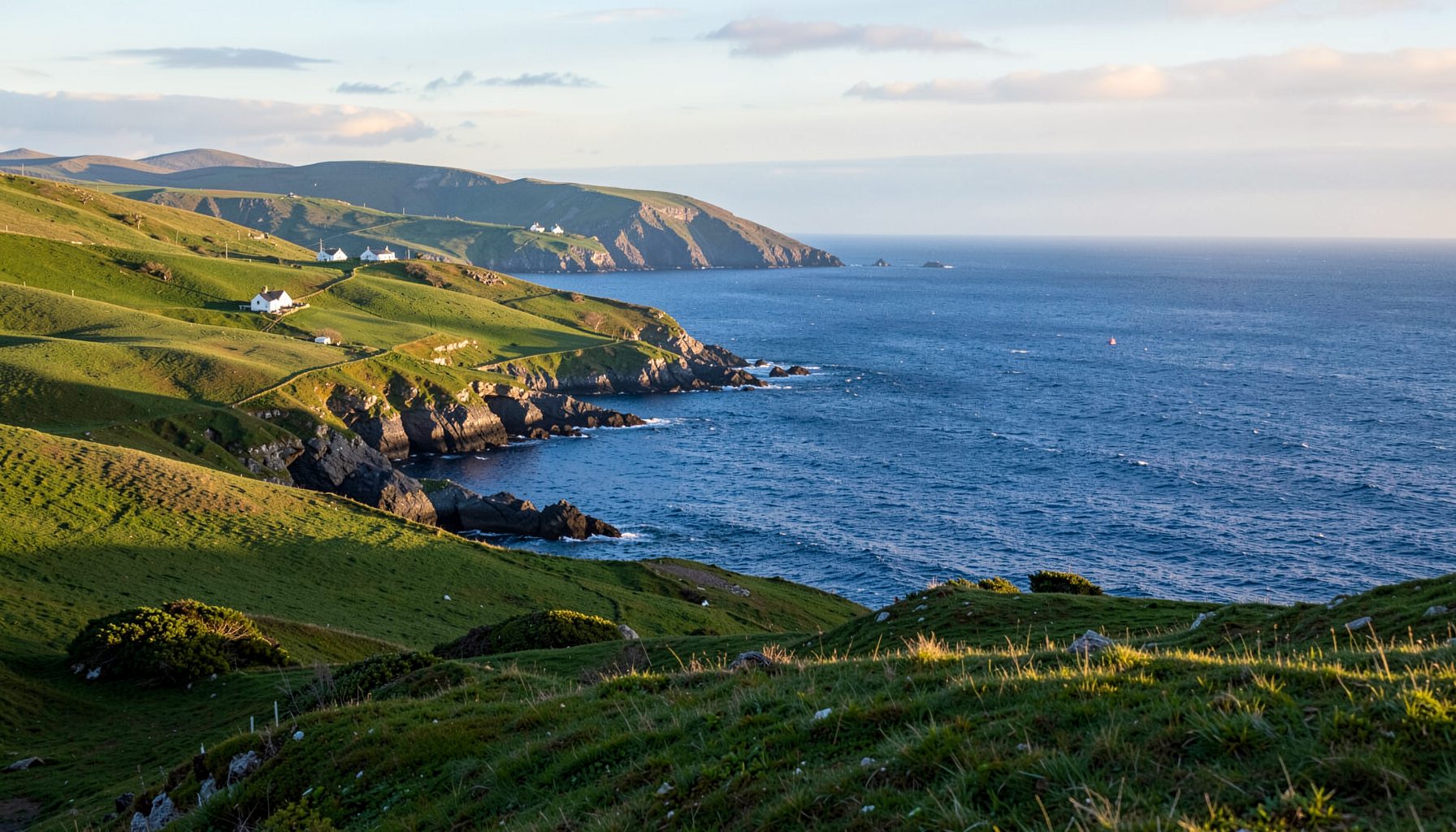
On the southern edge of the Iveragh Peninsula, Derrynane House stands within a landscape of beaches, rocky headlands, pasture and Atlantic views. The house is closely associated with Daniel O’Connell, the nineteenth-century Irish politician and campaigner whose work changed the position of Catholics within the United Kingdom. His story is rooted in this remote corner of Kerry, but its influence reached far beyond the county.
Derrynane was more than a family residence. It was a place of memory, conversation and political purpose, where O’Connell returned between public campaigns and where visitors encountered the private world behind the public figure. Today, the house and surrounding estate form part of Derrynane National Historic Park, allowing visitors to connect the Liberator’s life with the community and landscape that shaped him.
The story also belongs to the wider heritage of the Skellig Coast. Roads, townlands, churches, burial grounds and historic houses all help explain how people lived and remembered the past on the Iveragh Peninsula. Exploring the peninsula’s burial grounds adds another dimension to the history surrounding Derrynane and the O’Connell family.
A family home on the Atlantic coast
Derrynane House was the ancestral home of the O’Connell family and became Daniel O’Connell’s principal place of retreat. The property developed over generations, with the main house occupying a sheltered position near Derrynane Bay. Its setting offered privacy, productive land and access to the sea, while remaining connected to the villages and estates of south Kerry.
Daniel O’Connell was born in 1775 at nearby Carhan House, outside Cahersiveen, and was raised within a landed Catholic family. His uncle Maurice O’Connell, known as Hunting Cap, played an important role in his upbringing and later made Derrynane central to Daniel’s family life. The young O’Connell was educated abroad before studying law, experiences that exposed him to European ideas and strengthened his understanding of politics, religion and civic rights.
The house retained the character of a working estate rather than an isolated monument. Domestic rooms, family papers, portraits and objects associated with O’Connell’s career reveal the connection between public action and everyday life. The surrounding grounds are equally important: views towards the Skelligs and Valentia Island place the family story within the geography of the peninsula.
Daniel O’Connell and the campaign for equality
O’Connell trained as a barrister and entered public life during a period when Irish Catholics faced serious legal and political restrictions. The Penal Laws had been relaxed in stages, but Catholics remained excluded from Parliament and faced limits on public office. O’Connell believed that organised, constitutional pressure could achieve change without a violent uprising.
His most important achievement was Catholic Emancipation. Through the Catholic Association, mass meetings and an extensive network of supporters, he helped build a movement capable of influencing British politics. The election of O’Connell as a member of Parliament for Clare in 1828 created a constitutional crisis because, as a Catholic, he could not take his seat under the existing law. The pressure contributed to the Catholic Relief Act of 1829, which allowed Catholics to sit in Parliament and hold many public offices.
This victory earned O’Connell the title “the Liberator”, though his political work did not end there. He campaigned for the repeal of the Act of Union, which had joined the Irish and British Parliaments in 1801. O’Connell favoured political reform, religious liberty and greater Irish self-government, using public meetings and parliamentary debate as his principal tools.
His approach depended on popular mobilisation. The great repeal meeting planned for Clontarf in 1843 was cancelled by the authorities, and O’Connell was later tried and imprisoned. The episode demonstrated both the strength of his support and the limits placed on constitutional nationalism. Derrynane remained a personal refuge during these demanding years, linking the national campaigner with the home landscape that sustained him.
What the house reveals about his life
A visit to Derrynane House can make O’Connell’s political history more tangible. The rooms associated with the family provide a sense of the social world in which he lived: formal entertaining, correspondence, religious practice, estate management and the constant movement of political visitors. The house helps replace the distant image of a famous statesman with a more complete portrait of a son, husband, father and landowner.
O’Connell married his cousin Mary O’Connell in 1802. They had a large family, and Mary managed much of the household and family life while Daniel travelled, attended Parliament and led campaigns. Her role is essential to understanding how the public career represented at Derrynane was supported by private responsibilities and long periods of absence.
The collection also reflects O’Connell’s Catholic identity. His faith was not a minor detail in his politics; it shaped the campaign for emancipation and his understanding of civil rights. Religious objects, family traditions and the relationship between the house and nearby places of worship help explain why Catholic freedom was such a powerful issue in nineteenth-century Ireland.
The estate’s position beside the sea adds another layer. Derrynane was connected to local farming, fishing, transport and coastal trade, while the surrounding mountains and islands shaped movement and communication. O’Connell’s political world was national and international, yet his sense of home remained strongly associated with this particular coastline.
Derrynane, memory and the wider landscape
Derrynane House is best understood as part of a cultural landscape rather than as a building standing alone. The coast contains evidence of settlement and belief across many centuries, from prehistoric monuments and early Christian sites to ruined churches, estate walls and nineteenth-century homes. These places show how families, communities and institutions shaped the peninsula over time.
The O’Connell family burial places and memorial traditions form part of that wider pattern of remembrance. Across Iveragh, cemeteries preserve names, relationships and local histories that may not appear in national political accounts. Reading the landscape in this way helps place Daniel O’Connell alongside the neighbours, tenants, clergy, workers and supporters who made his world possible.
Derrynane National Historic Park also protects natural habitats and public access to a remarkably scenic part of the coast. The estate includes woodland, shorelines and paths, while Derrynane Beach is one of the area’s most recognisable natural attractions. Heritage and environment are closely connected here: the setting explains why the house was built where it was and why it continues to draw visitors.
| Aspect | What it shows | Why it matters |
|---|---|---|
| Derrynane House | The O’Connell family’s domestic and social world | It connects a national political figure with everyday family life |
| Derrynane estate | Farming, residence and coastal landscape | It shows how the household depended on a living local environment |
| Catholic Emancipation | O’Connell’s campaign for legal and political equality | It marks a major change in modern Irish and British political history |
| Repeal movement | His attempt to restore an Irish legislature | It reveals the limits and ambitions of constitutional nationalism |
| Derrynane National Historic Park | The preservation of house, grounds and coastline | It protects heritage as part of a wider cultural and natural setting |
| Local memorial places | Cemeteries, churches and community landmarks | They broaden the story beyond one prominent family |
From historic home to public heritage site
After O’Connell’s death in 1847, the history of Derrynane continued through the family and the changing fortunes of the estate. His reputation grew into a powerful national symbol, with monuments, institutions and political movements drawing on his memory. Yet the house offers a more nuanced view than a simple heroic narrative, showing the personal, regional and social context behind the public legend.
The property later came under state care and was developed as a historic attraction. Conservation has allowed visitors to encounter rooms, objects and grounds associated with O’Connell while also experiencing the coastal setting. Interpretation at the site places his achievements within the political realities of the period, including divisions over methods, class, religion and the future constitutional relationship between Ireland and Britain.
The house is especially valuable for local history because it shows how international events could be connected to a Kerry estate. News, letters, visitors and political organisation moved through the house, while local people experienced the consequences of laws debated in London and Dublin. Derrynane therefore links national history to the daily life of the Iveragh Peninsula.
For schools, community groups and heritage visitors, the site offers several ways into the past. It can be approached through architecture, family history, political reform, Catholic identity, landscape studies or the development of tourism and conservation. Each perspective reveals something different without separating the house from its setting.
Visiting with a sense of place
A meaningful visit begins inside the house, where the rooms and collections provide the central story. Allow time to look at portraits, furnishings and displays rather than treating the building as a quick stop before the beach. The house rewards attention to small details because they reveal the contrast between O’Connell’s public prominence and his private routines.
The grounds extend the experience. Paths, woodland and coastal viewpoints show why Derrynane remained important to the family and why the location has such enduring appeal. Depending on conditions and access arrangements, visitors may combine the historic house with the beach and wider parkland, while respecting conservation notices and the natural environment.
Derrynane can also be connected with other places associated with O’Connell and the Skellig Coast. Cahersiveen, Carhan and nearby villages provide additional context for his family background and the communities of south-west Kerry. Local museums, libraries and cultural initiatives may offer oral histories, exhibitions or educational resources that complement the visit.
Helpful ways to explore the site include:
- Read the house displays alongside a map of the Iveragh Peninsula.
- Look for connections between O’Connell’s political campaigns and local Catholic communities.
- Walk through the grounds to understand the relationship between the house, estate and Atlantic coast.
- Visit nearby heritage sites respectfully, especially churches, monuments and burial grounds.
- Check current opening information before travelling, as access and seasonal arrangements can change.
Why the story still matters
Daniel O’Connell’s career remains significant because it demonstrated the power of organised, peaceful political action in an age of unrest. Catholic Emancipation did not resolve every inequality, and O’Connell’s vision of Ireland was contested, but his methods influenced later campaigns for representation, civil rights and national self-government.
Derrynane adds depth to that history. It reminds visitors that political change is connected to homes, families, landscapes and local communities. The Liberator’s speeches and parliamentary victories are important, yet they become more understandable when seen alongside the house where he rested, corresponded, welcomed guests and maintained ties with Kerry.
The site also raises questions about how history is preserved. A country house can represent privilege, while also holding the story of a reformer who challenged a system of religious exclusion. The surrounding park, coast and community heritage widen the frame, making it possible to explore both the achievements and the complexities of the past.
Derrynane House is therefore more than a monument to one celebrated man. It is a gateway into the political history of nineteenth-century Ireland, the lived experience of a Catholic family, and the enduring relationship between people and place on the Skellig Coast. Explore the house, grounds and nearby heritage sites to encounter O’Connell’s story where its personal and public dimensions meet.