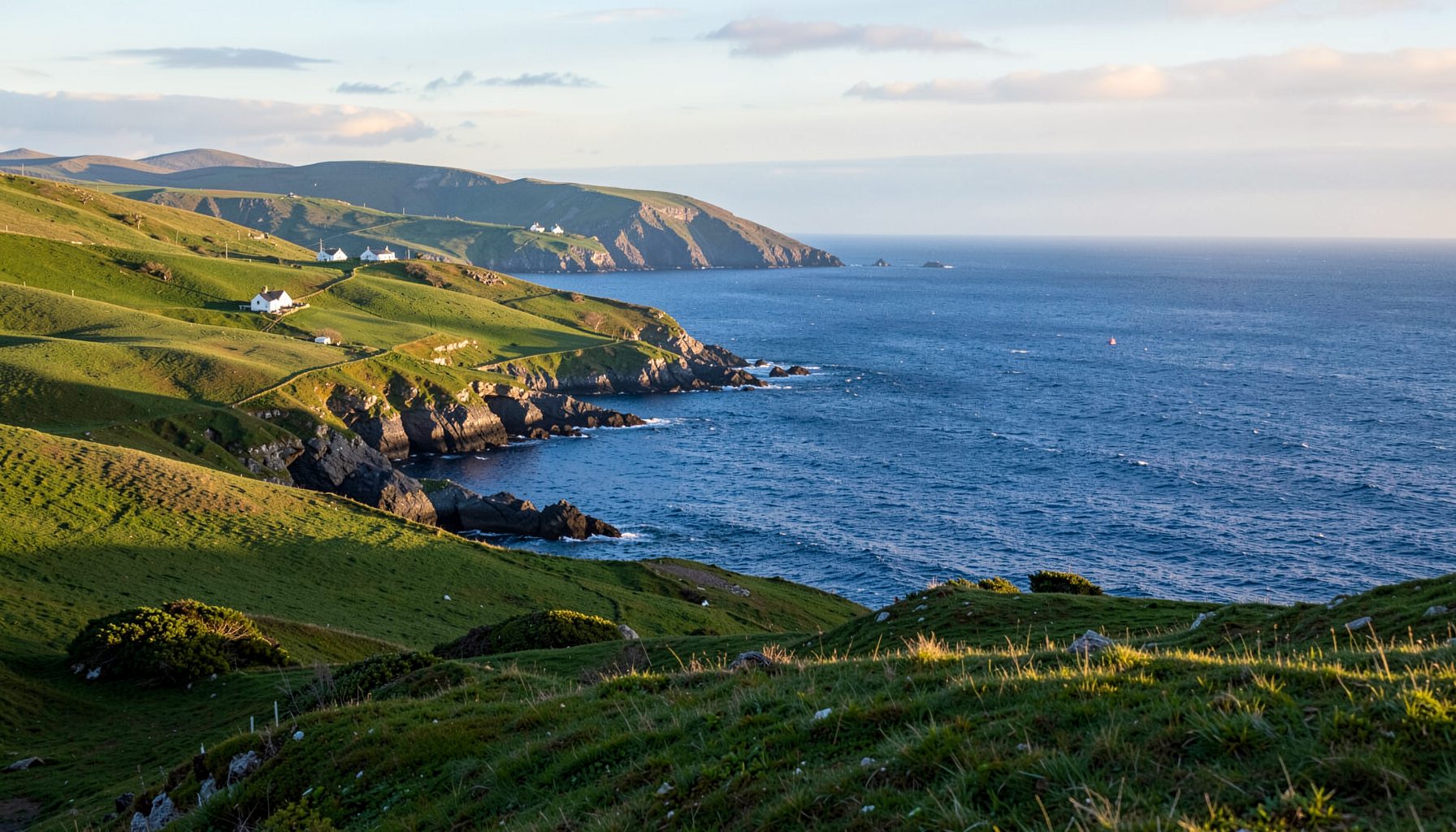
Ancient Burial Grounds Across The Iveragh Peninsula
The Iveragh Peninsula is often associated with dramatic coastlines, mountain passes and the offshore monastery of Skellig Michael. Yet its cultural landscape is also shaped by quieter places: stone-walled graveyards, ruined chapels, isolated burial plots and prehistoric monuments set among fields and hills. Together, these sites preserve evidence of changing beliefs, settlement patterns and community life over thousands of years.
Ancient burial grounds and cemeteries appear throughout the peninsula, from Kells and Glenbeigh towards Waterville, Ballinskelligs, Caherdaniel and Castlecove. Some are prominent heritage attractions, while others remain locally known places visited by families maintaining ancestral graves. Their value lies in the connections between archaeology, genealogy, folklore, architecture and the living communities around them.
Exploring these places requires care. Graveyards are sacred spaces, archaeological monuments may be fragile, and some sites stand on private land or have uneven access. The wider Skellig Coast story offers useful context for understanding the villages, heritage initiatives and local landscapes that surround these memorial places.
A Landscape Shaped By Burial Traditions
The earliest evidence of burial on Iveragh belongs to prehistoric communities who lived here long before written records. Megalithic tombs, stone-lined cists and other funerary monuments reflect beliefs about ancestry, territory and the continuing relationship between the living and the dead. Their builders selected prominent ridges, sheltered slopes and places with broad views across valleys or the sea.
A burial monument was rarely an isolated feature. It formed part of a wider landscape containing settlements, grazing grounds, ritual sites and routes through the peninsula. In a region where mountains and coast create natural boundaries, an ancient tomb could also act as a marker of belonging. The survival of these monuments is especially significant because many were built from local stone and blend easily into the surrounding terrain.
Later Christian communities often established churches and burial grounds near earlier places of importance. This does not mean that every medieval cemetery replaced a prehistoric monument, but the repeated use of elevated or respected locations shows how memory accumulated in the landscape. A single townland may therefore preserve several layers of history, from prehistoric burial to medieval worship and modern family commemoration.
Early Christian And Medieval Sites
Skellig Michael is the best-known early medieval religious site associated with the peninsula. Its monastic settlement, perched on a remote Atlantic island, includes stone beehive cells, an oratory and burial features connected with the monks who lived there. The site’s isolation is central to its meaning: the community chose a place that demanded physical effort and offered an extraordinary setting for prayer and contemplation.
The island is a UNESCO World Heritage Site and is also recognised by visitors familiar with its appearance in the Star Wars films. Its international reputation can sometimes overshadow the wider network of early ecclesiastical sites on the mainland and nearby islands. Small churches, holy wells, cross slabs and local burial grounds reveal that religious life in Iveragh was distributed across many communities rather than concentrated in one famous monument.
Ballinskelligs Abbey is another important example. The remains of the Augustinian priory stand beside a graveyard where carved stones, later headstones and the ruins of the church form a layered historical setting. The site helps illustrate how medieval religious foundations continued to influence burial practices after the buildings themselves fell into disuse.
Graveyards Along The Coastal Parishes
Historic cemeteries around the coastal parishes often combine the remains of medieval churches with burials from the eighteenth, nineteenth and twentieth centuries. Their headstones can record family names, occupations, places of origin and relationships between townlands. Even a modest graveyard can therefore serve as a valuable source for local history and genealogy.
In areas such as Waterville, Caherdaniel and Ballinskelligs, the Atlantic environment adds a distinctive character to burial places. Salt air, wind and rain weather inscriptions quickly, while vegetation can obscure low walls and older grave markers. The condition of a stone may also reveal its age, material and exposure, but interpretation should be cautious because reused stones and repaired monuments can complicate the story.
Church ruins and cemeteries should be read together. The orientation of a ruined nave, the position of a bullaun stone, the shape of a grave enclosure or the presence of a cross-inscribed fragment can reveal how a site developed. Local knowledge is equally important, particularly where oral traditions preserve names and associations that are absent from formal records.
| Site or Landscape | Historical Character | Features To Notice | Appropriate Approach |
|---|---|---|---|
| Skellig Michael | Early medieval monastic settlement | Beehive cells, oratory and island burial features | Visit only through authorised access and follow conservation rules |
| Ballinskelligs Abbey | Medieval religious foundation and later cemetery | Ruined church, grave markers and coastal setting | Walk respectfully and avoid touching fragile masonry |
| Parish graveyards | Post-medieval and modern community burial places | Family names, memorial symbols and enclosure walls | Read inscriptions carefully and leave graves undisturbed |
| Cilliní | Unconsecrated burial places for infants and others excluded from churchyards | Small plots, field boundaries and local place names | Treat as sensitive heritage sites, often with limited public access |
| Prehistoric monuments | Neolithic, Bronze Age or later funerary landscapes | Stone chambers, cists, kerbs and elevated settings | Do not climb, move stones or cross boundaries without permission |
Cilliní And Unmarked Burial Places
One of the most poignant aspects of Ireland’s burial heritage is the presence of cilliní, or children’s burial grounds. These small sites were traditionally used for the burial of infants and young children who, under older religious customs, might not have been buried in consecrated ground. In some places, cilliní also became burial places for people whose circumstances placed them outside the accepted norms of parish cemeteries.
Across rural Iveragh, such sites may be marked by a field name, a cluster of stones, a slight rise in the ground or the memory of older residents. Many have no formal monument or legible inscription. Their lack of visible architecture should not be mistaken for a lack of importance. These are deeply sensitive places associated with grief, family memory and changing attitudes to childhood death.
Research into cilliní often depends on parish registers, estate maps, folklore collections, archaeological surveys and interviews with local people. Documentary sources can be incomplete, and traditions may differ between neighbouring townlands. Recording the location and story of a site should always be done with respect for families and landowners.
Reading Headstones And Memorial Details
Headstones provide a direct connection between named individuals and the places where they lived. Dates can reveal periods of high mortality, migration or population change, while repeated surnames may point to long-standing local families. Symbols such as crosses, angels, anchors, clasped hands and ivy carry meanings that vary according to period, faith and individual choice.
The wording on a memorial can also show how people understood identity. Some inscriptions name a townland rather than a village; others mention a spouse, occupation, military service or a death overseas. In coastal communities, references to fishing, seafaring and emigration may appear alongside more familiar religious language. These details place personal loss within the social history of the peninsula.
Visitors should avoid making rubbings of old stones, leaning against grave markers or clearing moss without permission. Photography can assist research, but images should be taken discreetly, especially when recent graves are present. A notebook recording the cemetery name, townland, visible dates and stone condition is often more useful than attempting to interpret every inscription immediately.
Caring For Sacred And Archaeological Places
The survival of Iveragh’s burial grounds depends on practical conservation and community stewardship. Boundary walls need maintenance, vegetation requires careful management and historic headstones may need specialist attention. Work that appears simple, such as resetting a leaning stone or removing lichen, can cause permanent damage if carried out without appropriate advice.
Many cemeteries are still active, so heritage value and present-day use overlap. A graveyard may be an archaeological site, a place of worship, a family memorial ground and part of an everyday walking route at the same time. This mixture of functions calls for considerate behaviour rather than treating the location as an open-air museum.
Those documenting local cemeteries can support preservation by consulting county heritage officers, parish representatives, local historical groups and established archaeological records. Accurate place names, photographs of inscriptions and carefully sourced family information can help future researchers. Personal data connected with recent burials should be handled sensitively and shared only where appropriate.
Exploring Iveragh’s Memorial Landscapes
A thoughtful visit begins with preparation. Maps, heritage inventories and local information can identify public access, while weather forecasts matter on exposed coastal roads and upland paths. Some burial grounds are beside public roads; others are reached through narrow lanes, rough ground or land where permission is required.
- Choose sturdy footwear and allow time to move carefully around uneven ground.
- Keep dogs under control and follow signs, gates and local access guidance.
- Do not remove stones, plants, artefacts or fragments from any site.
- Record inscriptions respectfully, avoiding intrusive photography of recent graves.
- Share discoveries with a local heritage group or archive when the information can benefit the community.
The most rewarding visits often connect several places rather than focusing on one monument. A ruined medieval church, a nearby village cemetery, a prehistoric stone monument and a coastal landscape can together show how ideas about place, faith and remembrance changed over time. This approach turns a list of sites into a connected history of Iveragh.
Ancient burial grounds and cemeteries remain part of the peninsula’s living heritage. They preserve the names of families, the traces of religious communities and the physical evidence of people who shaped the landscape long before modern tourism arrived. Exploring them with patience and respect helps keep those layers of memory visible for residents, researchers and visitors.
Use the Skellig Coast’s community and heritage resources to discover the stories attached to local places, and share reliable family or historical information with the groups working to protect Iveragh’s cemeteries and archaeological monuments.