The Life and Legacy of Daniel O’Connell in Derrynane
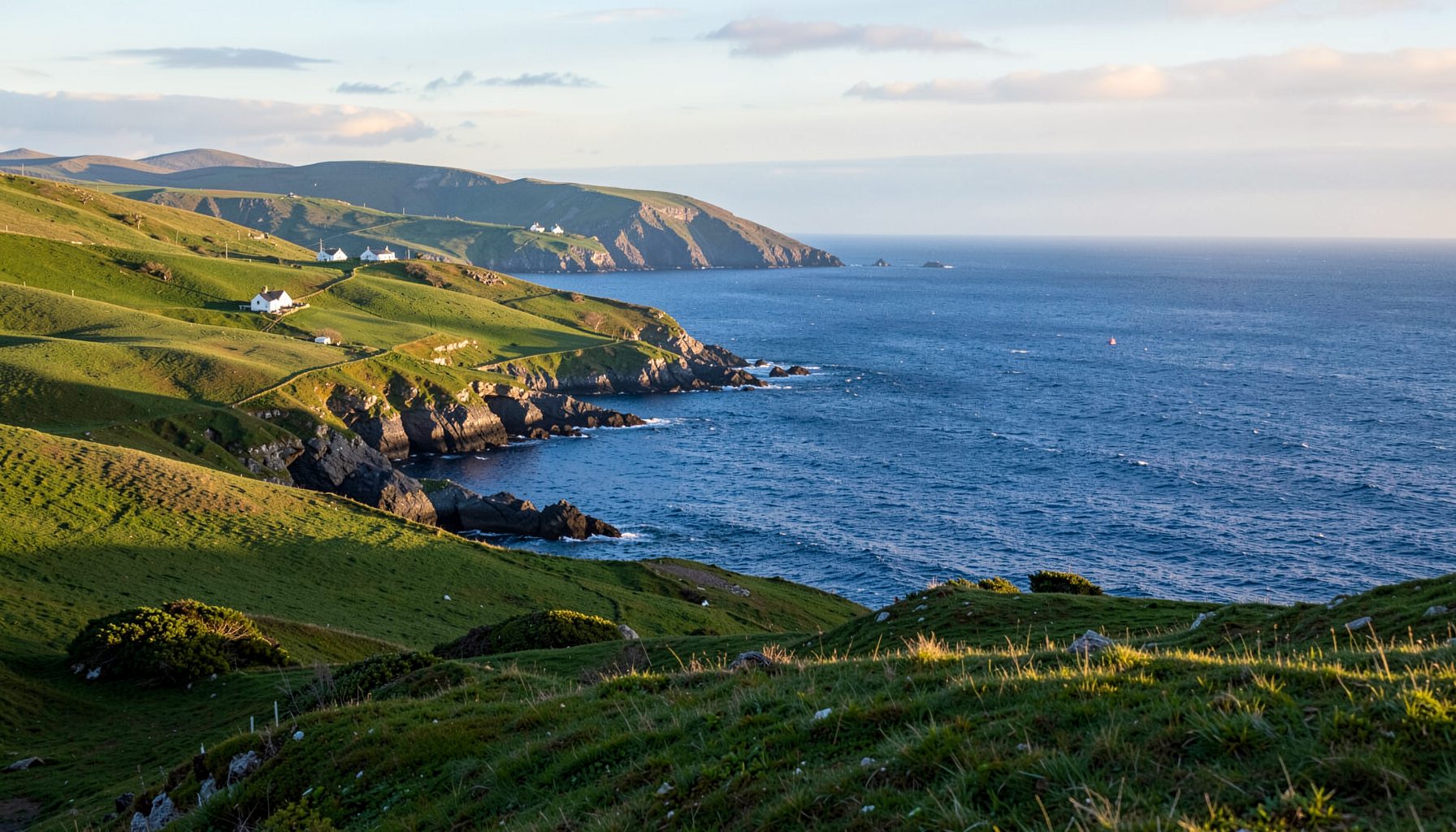
Derrynane is inseparable from the story of Daniel O’Connell, the nineteenth-century politician, barrister and campaigner remembered as “The Liberator.” On the southern edge of the Iveragh Peninsula, this coastal townland preserves the places, landscapes and family connections that shaped his understanding of Ireland. The sea, mountains and Catholic farming communities around Derrynane formed the setting for a public life that reached far beyond Kerry.
O’Connell’s legacy is often told through major political achievements, especially Catholic Emancipation in 1829. Yet Derrynane adds a more personal dimension. It reveals the family estate where he spent much of his youth, the house associated with his adult life, and the local world that remained central to him even while he addressed enormous crowds across Ireland.
Today, Derrynane House and the surrounding national historic park offer an opportunity to connect national history with the everyday geography of the Skellig Coast. The story includes politics, religion, education, family inheritance, landscape and memory.
Childhood Among The O’Connells
Daniel O’Connell was born in 1775 at Carhan, near Cahersiveen, into a prosperous Catholic family. His parents were Morgan O’Connell and Catherine O’Mullane, while his uncle Maurice O’Connell, known as “Hunting Cap,” became an important influence during his early years. Because of the penal laws and the limited educational opportunities available to Catholics in Ireland, Daniel’s upbringing was shaped by both privilege and restriction.
Derrynane was the family’s principal estate, and the young O’Connell spent significant periods there. He grew up within a Gaelic and Catholic community that maintained its identity through family networks, local custom and religious practice. The Kerry landscape was not a distant backdrop to his later career; it was part of the social world that taught him how authority, land and community affected ordinary lives.
His education took him beyond the peninsula. He attended school in France, where he encountered European political thought and witnessed the upheaval of the French Revolution. The experience influenced his political principles. O’Connell opposed violent revolution and placed his faith in legal organisation, mass participation and constitutional change.
Building A Legal And Political Career
After studying law, O’Connell returned to Ireland and developed a successful career at the bar. His legal training gave him a command of argument, procedure and public persuasion. It also exposed him to the barriers facing Catholics, who had gained some rights by the late eighteenth century but remained excluded from important offices and parliamentary representation.
O’Connell understood that Catholic grievances could not be treated as isolated legal cases. In 1823, he helped establish the Catholic Association, an organisation that transformed political campaigning in Ireland. For a small subscription known as the “Catholic rent,” ordinary people could support a national movement. This structure connected villages, parishes and rural communities to a coordinated political cause.
The association’s strength lay in its scale. It drew support from clergy, tenants, tradespeople and landholders, creating a disciplined public campaign for Catholic Emancipation. O’Connell’s methods helped establish a model of popular politics in which meetings, subscriptions, newspapers and local committees could influence Westminster.
Clare And The Victory For Emancipation
The decisive moment came in the County Clare by-election of 1828. William Vesey Fitzgerald, a Protestant landowner and government minister, was standing for re-election. O’Connell contested the seat even though, as a Catholic, he could not legally take his place in the House of Commons if elected.
His campaign gathered extraordinary support. Clergy mobilised voters, tenants travelled long distances and the Catholic Association demonstrated that a well-organised electorate could challenge the established political order. O’Connell won the election, creating a constitutional crisis for the British government. Refusing to take the required anti-Catholic oath would have prevented him from sitting, while excluding the successful candidate risked further unrest.
The result was the Catholic Emancipation Act of 1829. O’Connell eventually entered Parliament after taking a modified oath, and Catholics gained access to parliamentary representation and many public offices. The act did not resolve every injustice in Ireland, and its accompanying increase in the property qualification for voters excluded many poorer electors. Still, the victory marked a major change in British and Irish political life.
Derrynane House And The Liberator
Derrynane House was the home of the O’Connell family and the centre of Daniel’s private life. The house stands within a coastal estate where gardens, woodland, shoreline and archaeological remains create a strong sense of place. The building is often associated with the name Derrynane Abbey, although the surviving house itself is a later residence connected with the O’Connell family.
The state now manages Derrynane House as a museum, preserving furniture, portraits, personal objects and documents linked to O’Connell and his relatives. Rooms associated with his family allow visitors to see the contrast between the public figure who addressed immense political gatherings and the private man who returned to Kerry.
| Place or feature | What it reveals | Why it matters |
|---|---|---|
| Derrynane House | Family life, possessions and political memory | Connects the national leader with his home |
| O’Connell Memorial Church | Catholic devotion and family commemoration | Reflects religion’s importance in his identity |
| Derrynane beach and coast | The physical setting of his estate | Shows the landscape that shaped his sense of belonging |
| Derrynane National Historic Park | Gardens, woodland and coastal heritage | Protects the wider cultural landscape |
| Local monuments and memorials | Community remembrance of O’Connell | Demonstrates the endurance of his reputation |
The surrounding park is equally important. O’Connell’s political work was rooted in communities, and the paths through the grounds make that connection visible. The estate’s relationship with the Atlantic also places Derrynane within the wider history of the Iveragh Peninsula, where communication, migration and maritime links continued to shape local life long after O’Connell’s death. The region’s later role in global communications is explored in this regional cable history.
Repeal, Religion And Public Leadership
After Catholic Emancipation, O’Connell turned much of his energy towards repealing the Act of Union, which had united the Irish and British parliaments in 1801. He argued that Ireland should have its own parliament while remaining connected to Britain through the Crown. The campaign relied on mass meetings, many of them held outdoors and attended by tens of thousands of people.
O’Connell was a gifted speaker, but his influence came from more than personal charisma. He worked through an extensive network of organisers, priests, newspapers and local activists. His Catholic faith was central to his politics, yet he generally presented repeal as a constitutional and national demand rather than a call for religious rule. His commitment to peaceful mobilisation distinguished him from revolutionary movements elsewhere in Europe.
The government eventually prohibited a planned repeal meeting at Clontarf in 1843. O’Connell cancelled the gathering to avoid bloodshed, a decision that disappointed some supporters but reflected his belief in moral and legal pressure. He was later imprisoned, and the repeal campaign lost momentum. The Great Famine, which began in 1845, further transformed Ireland’s political and social landscape.
A Legacy Rooted In Place
Daniel O’Connell died in Genoa in 1847 while travelling to Rome. His body was returned to Ireland and buried in Glasnevin Cemetery, Dublin. His heart was taken to Rome in accordance with his wishes. Although his final years were marked by illness, political disappointment and the catastrophe of famine, his earlier achievements had permanently changed the constitutional position of Catholics.
In Derrynane, his legacy is less abstract than a statue or a line in a textbook. It can be encountered through family rooms, estate walls, church connections, coastal views and local traditions. The landscape helps explain why O’Connell’s public language so often connected political rights with the dignity of communities and the security of family life.
His name also remains part of the wider cultural identity of Kerry. Roads, schools, monuments and heritage programmes preserve memories of the Liberator, while local history projects continue to place his career alongside the stories of fishermen, farmers, tenants, clergy and craftspeople. The result is a fuller account of O’Connell: a national politician whose ideas grew from a specific Atlantic place.
Ways To Explore His Heritage
A visit to Derrynane can be approached as both a historical journey and a walk through a distinctive coastal landscape. The house provides the clearest account of O’Connell’s personal and political life, while the grounds show how closely the family’s identity was tied to the peninsula. Allowing time for both makes the experience more meaningful than treating the museum as an isolated attraction.
Local interpretation can add further context. Community organisations, heritage groups and educational initiatives across the Skellig Coast frequently connect Derrynane with broader themes such as Catholic history, the Irish language, maritime travel and the development of rural communities.
- Visit Derrynane House to see the rooms, objects and portraits associated with O’Connell and his family.
- Walk through Derrynane National Historic Park and consider the relationship between the estate, the shore and the surrounding mountains.
- Learn about the Catholic Association and the Clare election before visiting, so the local setting is connected to the national campaign.
- Include nearby Cahersiveen and Carhan when tracing O’Connell’s early life on the Iveragh Peninsula.
- Check current opening arrangements and local heritage information before travelling.
Keep Derrynane’s Story In View
Daniel O’Connell’s life demonstrates how a local landscape can produce a national story. Derrynane was his family home, a place of memory and a source of identity, but it also became a symbol of organised political action and the pursuit of equal civic rights.
Explore Derrynane House, walk the historic grounds and connect the O’Connell story with the living communities of the Skellig Coast. Bring the history beyond the museum by sharing what you learn and supporting the local heritage work that keeps this remarkable legacy visible.