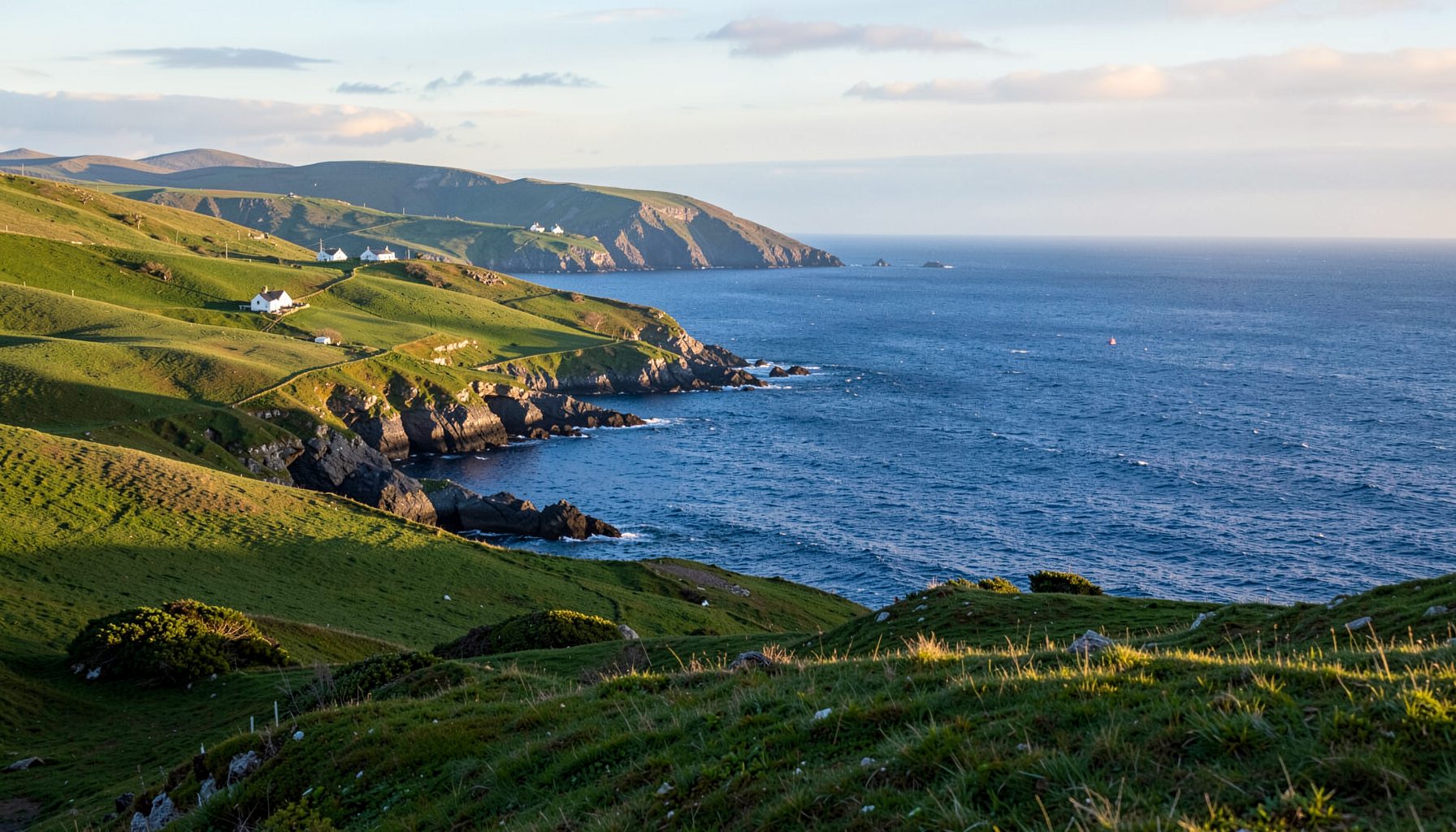
Catching and Preparing Mackerel on the Skellig Coast
Mackerel are among the most rewarding fish to catch from the Skellig Coast. They travel close to rocky headlands, harbour walls, beaches and offshore reefs, often arriving in fast-moving shoals that can turn an ordinary evening into a memorable local experience. Their firm, oily flesh is excellent grilled, smoked, baked or preserved.
From Kells and Caherdaniel to Waterville, Valentia Island, Portmagee and Castlecove, fishing conditions change quickly. Atlantic swell, wind direction, tidal movement and water clarity all affect where mackerel feed. A successful outing depends as much on reading the coast and respecting the sea as it does on choosing the right lure.
A little preparation also helps protect the coastline. Use established access points, keep clear of working harbours, take all line and packaging home, and treat every catch as a valuable food resource. The Skellig Coast is a living community as well as a beautiful fishing destination, so local knowledge and considerate behaviour matter.
Choosing A Safe And Productive Fishing Spot
Mackerel often gather where moving water brings small baitfish within reach. Headlands, rocky points, harbour entrances, reef edges and the mouths of bays can all be productive. On the Skellig Coast, places exposed to the open Atlantic may fish well when the sea is settled, while sheltered coves can offer safer conditions during a changeable spell.
Shore anglers should look for deep water that can be reached without casting a great distance. A steep rock ledge may seem promising, but it is unsuitable if waves wash across the platform or if there is no secure route back to land. Wear footwear with good grip, avoid fishing alone in unfamiliar places, and never turn your back on the sea.
The best time is frequently the last couple of hours of the flooding tide or the first part of the ebb, although local conditions vary. Dawn and dusk can bring active feeding, while overcast weather often makes fish less wary. Ask at a local tackle shop, angling club or community information point about current conditions rather than relying on an old report.
A boat trip can reach shoals that never come close to shore, but it requires additional planning. Check the marine forecast, carry suitable flotation equipment and use a qualified skipper when hiring a boat or joining a guided outing. The waters around Valentia, Portmagee and the larger headlands can become hazardous quickly when wind and swell rise.
Tackle And Bait For Atlantic Mackerel
A medium-light spinning rod of roughly 8 to 10 feet is versatile for shore fishing. Pair it with a fixed-spool reel and braided or monofilament line of suitable strength. A wire trace is generally unnecessary for mackerel, but a short fluorocarbon or clear monofilament leader can reduce visibility in calm, clear water.
Small metal jigs, casting spoons and mackerel feathers are widely used because they imitate the small fish on which mackerel feed. Silver, blue and green finishes are useful starting points, while darker or more reflective lures may work better as light levels change. Use hooks that are sharp and strong, and check knots before casting.
From a boat, a string of feathers or small luminous jigs can locate a shoal quickly. Lower the rig to different depths, then retrieve with a steady or slightly erratic motion. Once fish are found, avoid lifting a heavy string of fish aboard with a light rod. Bring them in one at a time when possible and use a landing net near the boat.
Natural bait can work, particularly strips of oily fish, but it creates more mess and may attract unwanted species. Whatever method you choose, pack spare traces, pliers, a knife, a measuring device and a small bucket or cool box. A damp cloth is useful for handling fish without allowing them to thrash across sharp rocks.
Reading The Water And Handling The Catch
Look for signs of baitfish, diving seabirds, surface ripples and sudden flashes beneath the water. Mackerel may be feeding below the surface even when no fish are visible. Cast beyond the activity, allow the lure to sink for a few seconds, and vary the retrieve until you find the depth at which the shoal is moving.
When a fish takes, keep the rod tip high and maintain steady pressure. Mackerel are energetic fighters, but their mouths can tear if the drag is locked tightly or the angler tries to haul them in too quickly. Use a controlled lift onto a safe, flat surface rather than swinging a fish onto wet rocks.
Dispatch the fish promptly and humanely, then place it in a cool box or insulated bag. Rinse off any grit and avoid leaving the catch in direct sun. Mackerel deteriorate quickly because of their rich oils, so chilling them immediately makes a noticeable difference to flavour and texture.
Rules governing recreational fishing, permitted methods, seasonal restrictions and catch limits can change. Before setting out, check current Irish regulations and any local harbour or land-access requirements. Release undersized or unwanted fish carefully, using wet hands and removing hooks with pliers where possible.
| Fishing Situation | Useful Approach | Main Advantage | Important Consideration |
|---|---|---|---|
| Rocky shore in calm weather | Spinning rod with metal lure | Flexible and inexpensive | Use secure footing and avoid slippery ledges |
| Harbour edge | Light tackle and small feathers | Easy access to deeper water | Keep clear of boats, ropes and working areas |
| Beach or sandy bay | Long-casting spoon | Covers a wide area | Mackerel may be farther offshore |
| Small boat trip | Feathers or vertical jigs | Finds shoals at different depths | Wear flotation equipment and follow the skipper |
| Dusk or low light | Reflective or luminous lure | Helps fish locate the presentation | Watch changing weather and visibility |
Cleaning And Filleting Fresh Mackerel
Clean mackerel as soon as practical. Place the fish on a stable board, rinse away loose scales and make a cut behind the gills. Run a sharp knife towards the backbone, then turn the blade and work along the rib cage to remove the fillet. Repeat on the other side, keeping the knife close to the bones to reduce waste.
Mackerel contain many fine bones, so run a clean finger along the centre of each fillet. Pull out the pin bones with kitchen tweezers or cut a narrow V-shaped strip from the thickest part of the fillet. Leaving the skin on helps the flesh hold together during grilling and pan-frying.
Pat the fillets dry before cooking. Their naturally high oil content means that extra cooking fat is rarely needed. A few minutes under a hot grill with lemon, black pepper and herbs can be enough, while a whole cleaned fish can be baked with fennel, onions or tomatoes.
Fresh mackerel should have bright eyes, firm flesh and a clean sea smell. If the flesh has become soft or the odour is strong and sour, do not use it. Keep raw fish refrigerated and cook it promptly, or freeze it soon after cleaning in well-sealed portions.
Simple Ways To Cook The Day’s Catch
Grilling is one of the easiest methods. Score the skin lightly, brush it with a little oil, season with salt and pepper, and place the fillets skin-side up under a high grill. The flesh is ready when it turns opaque and flakes easily. A squeeze of lemon or a spoonful of herb butter balances the richness.
For a quick pan-fried meal, dust the fillets lightly with flour or leave them plain. Cook skin-side down in a hot pan until the skin is crisp, then turn briefly to finish the flesh. Serve with boiled potatoes, seasonal greens or a sharp salad containing cucumber and pickled onion.
Mackerel also suits baking and smoking. Wrap fillets in parchment with garlic, parsley and lemon, or place them in a covered dish with a little white wine. If smoking at home, follow the instructions for the equipment and use the correct curing process; improper curing and storage can create food-safety risks.
A traditional preparation is pâté, made by combining cooked, boned mackerel with cream cheese, horseradish, lemon juice and herbs. It is best prepared with thoroughly chilled fish and stored in the refrigerator. Fresh mackerel can also be portioned and frozen, although texture is usually best when it is eaten soon after the catch.
Respecting The Coast And Its Maritime Story
Fishing along this coastline connects present-day recreation with a long history of boats, communications, trade and subsistence. Valentia Island’s place in global maritime history is especially notable, and the transatlantic cable story offers useful context for understanding how a remote Atlantic community became linked to the wider world.
That heritage is visible in old piers, boat traditions, place names and stories shared in coastal villages. Anglers can contribute to the living character of these places by parking considerately, buying supplies locally, respecting private land and allowing working fishermen priority around quays and slipways.
A responsible fishing trip should leave no evidence except footprints. Carry a small rubbish bag, collect discarded line only if it can be done safely, and never throw unwanted bait or fish waste onto a busy shore. Avoid disturbing seabird colonies, seals and other wildlife, particularly during nesting and pupping seasons.
Before leaving home, use this short preparation list:
- Check the marine forecast, tide times and current fishing regulations.
- Tell someone where you are going and when you expect to return.
- Pack warm waterproof clothing, non-slip footwear, water and a first-aid kit.
- Bring a cool box, sharp tools, spare tackle and bags for waste.
- Keep only what can be used and release unwanted fish carefully.
Make A Local Catch Part Of The Day
Catching mackerel on the Skellig Coast can be a straightforward shore outing or part of a wider day exploring villages, heritage sites and coastal landscapes. Combine the fishing with a visit to a local food producer, community event or cultural attraction, while allowing enough time for changing weather and safe travel between locations.
When the catch comes home, treat it simply: chill it quickly, clean it carefully and cook it while the flesh is at its best. Share the meal, the story of the shoreline and the practical knowledge gained from the outing. Check local guidance before your next trip, choose a safe access point and make your next coastal catch a respectful part of Skellig Coast life.