The story of St. Michael's Well and the peninsula's holy wells
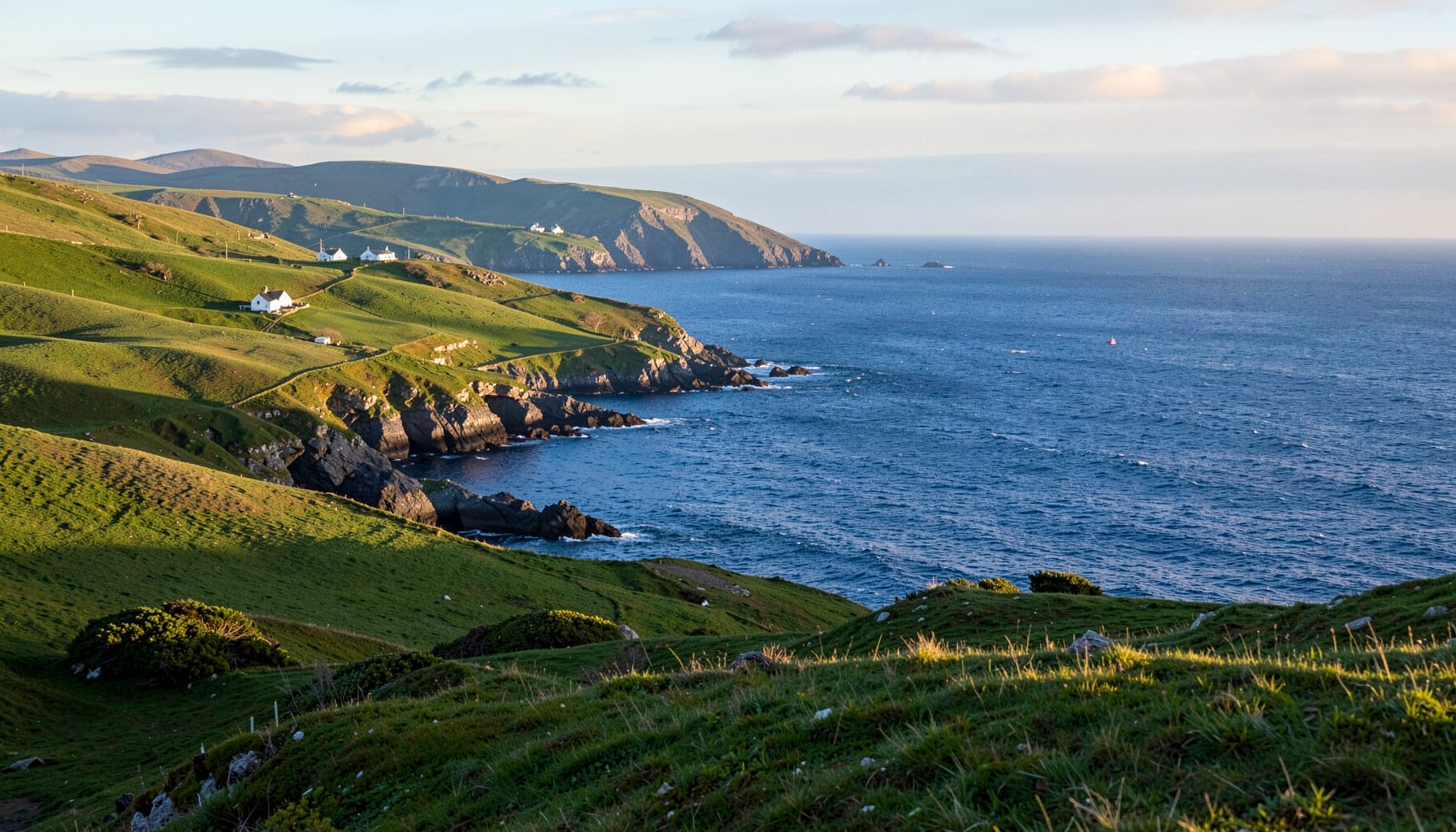
On Ireland’s Iveragh Peninsula, water shapes more than weather. Springs, streams and wells have guided travellers, marked boundaries and gathered communities for centuries. St. Michael’s Well belongs to this landscape, where routes between Kells and Castlecove cross coast, bog, farmland and mountain. Its story shows how a small water source can carry devotion, social history and local memory.
St. Michael’s Well forms part of a wider group of sacred places across the Iveragh Peninsula and Ring of Kerry. Some stand in churchyards; others occupy field walls or old tracks. Their present appearance may reflect restoration, while their names and customs preserve older traditions. Together, they record a Christian geography shaped along routes used long before modern roads.
A holy well is more than a water source. It may be a place of prayer, healing, pilgrimage, seasonal assembly or local landmark. Water was associated with purification, and visits often involved prayers, gestures, offerings and rounds. Customs varied considerably, so local evidence matters more than a generic account of Irish holy wells.
For Australian readers, an old public water source may evoke a park fountain or rural bore rather than a devotional place. Both traditions can attach intense memory to a small patch of ground. Australian cities such as Sydney, Melbourne and Brisbane also hold wells, springs and watercourses within Indigenous, colonial and municipal heritage, offering a parallel without making the histories interchangeable.
A sacred landscape takes shape
Sacred springs often began with practical geography. A dependable flow supplied people and animals, and its position beside a path or settlement made it a natural meeting point. People might pause before a journey, negotiate boundaries or exchange news. That usefulness gave a spring social importance that later devotional practices could inherit.
Many peninsula holy wells have medieval or early modern origins, although an exact first dedication is not always recoverable. Stonework is rebuilt, paths move, and oral memory can preserve several versions of a foundation story. Nineteenth-century maps and antiquarian notes are valuable records, but they show a site as it appeared in their time rather than at its creation.
The landscape also complicates dating. A prehistoric place may later become a Christian well, but location alone does not prove continuity. It is useful to distinguish archaeological evidence, a surviving dedication and later folklore. This approach keeps the past open while recognising that communities can attach deep significance to a place after its earliest meaning is lost.
St Michael and the well's enduring appeal
Saint Michael has a distinctive role in this story. As the archangel who resists evil and protects the faithful, he represents spiritual defence, judgement and guardianship. A well dedicated to him could suggest more than a prayer for healing. Its water marked a threshold between ordinary journeys and a place approached with care.
Christian dedications often settled on places already valued for unusual natural features. A spring might have been respected before Christianity and later reinterpreted through a saint’s story. This does not prove that every older custom survived, nor does it diminish the Christian meaning created around the well. It shows how a landscape can accumulate layers.
At St. Michael’s Well, physical details sustain that identity. A built wellhead, shelter, niche or inscribed stone gives memory a focus and offers a place for prayer. Repairs using local materials can keep the structure legible in its setting. Even when the water is low, the architecture and approach preserve the sense of a special place.
Holy water, healing and community memory
Water has long been associated with healing. At some Irish holy wells, people drank it, washed part of the body or touched it while praying; elsewhere, prayer was the central act. These practices belonged to a devotional understanding of illness and recovery. They are not modern medical treatment, and untreated well water should never be assumed safe.
Offerings made the relationship visible. Coins, pins, beads, ribbons and flowers might collect at a well or nearby stones. They can be votive gifts, left in hope of a favour, in thanks for one received, or markers of devotion. Their meanings change over generations, so historians read them alongside local stories rather than simply as rubbish.
The well is also an archive of community relationships. Maintaining the structure and path required work, and nearby households often supplied leadership for feasts or pilgrimages. Family names, sayings and local versions of legends preserved its significance when official records were sparse. A modest feature can therefore remain central to a village’s identity.
Feasts, stations and old routes
A Pattern Day, a feast associated with a saint’s holy well, could turn a secluded place into a temporary centre of activity. People travelled from surrounding districts to attend Mass, make the rounds and meet neighbours. Michael’s feast falls on 29 September, though a local Pattern may use another date chosen for convenience or custom.
The rounds could include several wells, churches and other stopping places. Pilgrims might kneel, recite prayers, walk barefoot, make a promise or perform a simple act of penance. Practices changed according to clergy, landowners and the wider culture of Irish Catholicism. Written accounts often record official observance, while local memory retains gestures missing from those records.
Travel to Skellig Michael and the coastal pilgrimage landscape add another layer. The island’s UNESCO status and Star Wars fame now draw enormous attention, but older routes reveal a wider sacred geography. Inland holy wells helped connect scattered communities to a shared religious calendar and gave walkers a reason to cross the peninsula.
Wells within village life
Water sources once sat within the practical life of peninsula settlements. A well might serve households, travellers or livestock before becoming chiefly devotional. Its position could influence a path, a meeting place or a local song. Place-names and directions often preserve these associations long after a village’s main source of water or gathering place changes.
To place the wells in context, use the peninsula’s villages and towns as a starting point. From Kells toward Castlecove, church traditions, market days and seasonal gatherings explain why a saint’s well mattered nearby. Exploring these settlements also shows that heritage is carried by streets, shops, schools and festivals as well as monuments.
That wider view matters for responsible tourism. The fame of Skellig Michael and Castlecove can encourage interest in smaller sites that have sustained local identity. Community heritage days, guided walks and school projects often give better context than a quick roadside stop. They also keep the stories connected to people whose families have cared for the wells across generations.
Seeing the wells from an Australian perspective
Australian cities offer a modern comparison. In Sydney and Melbourne, old water points and convict-era infrastructure sit within walking routes through historic precincts; Brisbane’s riverside paths connect springs, parks and older townships. Regional Australian towns often feature wells and fountains on civic walks. The scale differs, but the practice of linking water to public memory is recognisable.
Everyday habits can make the comparison immediate. Many Australians walk for exercise, take a dog out or stop for coffee before work, then visit a local market at the weekend. Melbourne’s Victoria Market and smaller growers’ markets are social spaces as well as shopping destinations, much as Pattern Day fairs brought people together around a parish well.
Heritage protection follows different legal paths. Australian state heritage acts, including Victoria’s Heritage Act 2017 and New South Wales Heritage Act 1976, operate alongside council inventories and planning overlays. In Ireland, archaeological remains may fall under national monuments law, while local authorities also use conservation and planning controls. Neither system guarantees that every sacred place is visibly marked.
For Australian visitors, the strongest connection is thematic rather than visual. Both countries show how communities turn modest water places into repositories of memory. Iveragh examples retain the dimensions of pilgrimage and saintly patronage, while Australian sites often reflect Indigenous sacred geography, colonial infrastructure, civic development or industry. Recognising those differences protects the peninsula’s specificity.
| Feature | Iveragh holy-well tradition | Australian heritage parallel |
|---|---|---|
| Sacred focus | Devotion to Michael and other saints | Indigenous sacred geography, Christian memorials and mission sites |
| Setting | Roads, fields, coast and village edges | City streets, riversides, parks and regional towns |
| Community role | Pattern days, pilgrimages and local care | Historical societies, volunteer walks and school heritage days |
| Local economy | Parish fairs, crafts and village businesses | Growers’ markets and neighbourhood businesses |
| Protection | Archaeology plus local planning controls | State heritage laws and council overlays |
| Visitor conduct | Respect access and leave authorised offerings | Follow signs, leave artefacts and honour restricted areas |
Visit the wells with care
Before setting out, plan with care. Start from Kells or Castlecove, consult local maps and parish information, and check whether a well is on private land, beside a road or reached by an uneven track. Wear suitable footwear, carry water and a charged phone, and leave any flower, ribbon or coin that is not part of an authorised custom. Do not remove objects, damage stonework or drink untreated water.
Support the communities that keep this heritage alive. Join a locally arranged heritage day, listen to residents’ accounts, buy from nearby makers and use the Skellig Coast site to understand the area before travelling farther. Share photographs responsibly and report conservation problems rather than intervening yourself. Let St. Michael’s Well and the peninsula’s sacred springs lead you towards a deeper understanding of water, memory and belonging.