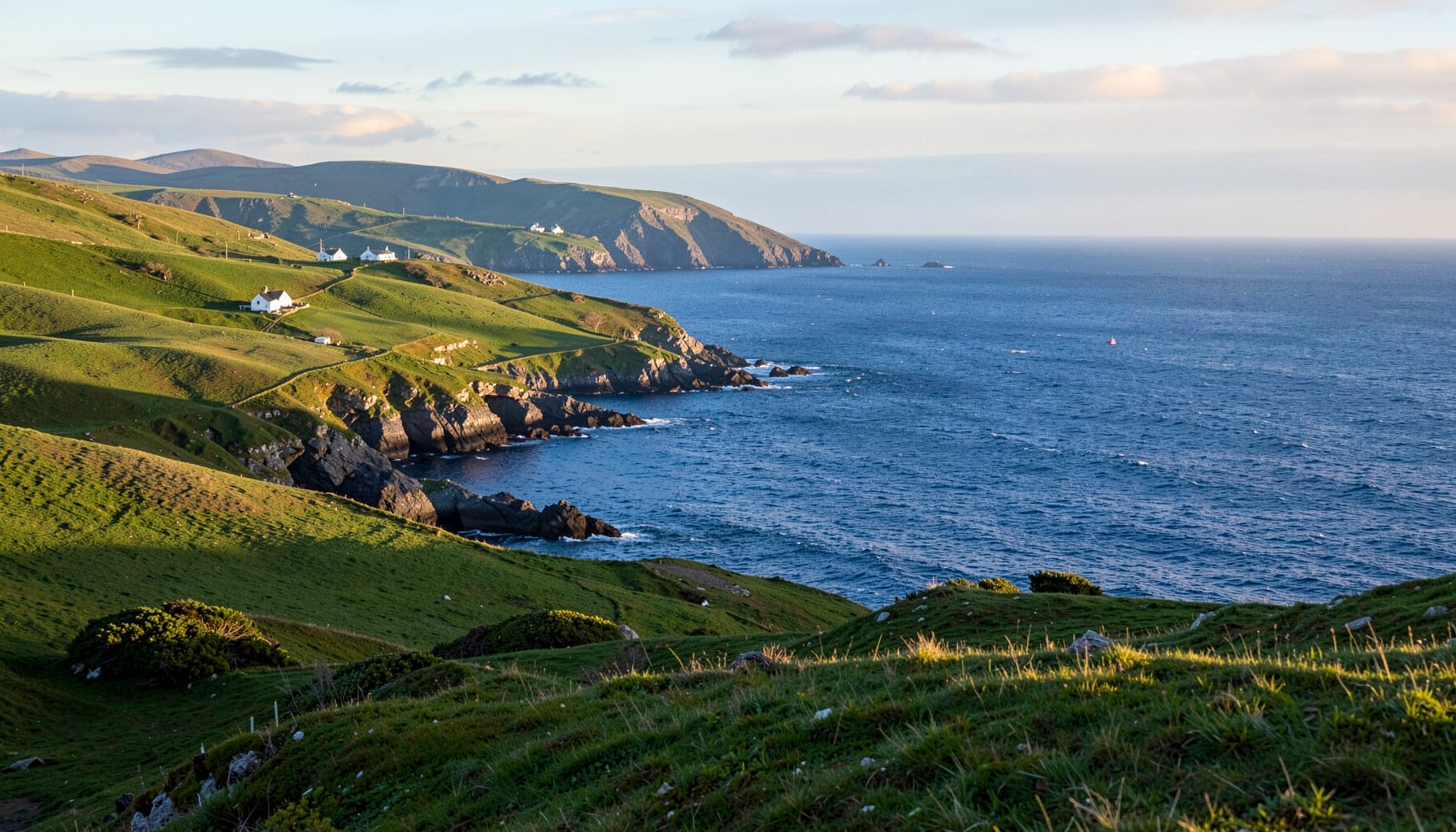
Sheep on the Knocknadobar slopes through the seasons
The life of a local hill farmer managing sheep on the Knocknadobar slopes is shaped by rain, stone and generations of care. These hills form part of County Kerry’s Iveragh Peninsula, where roads and paths connect Kells with the wider communities and coast of the Ring of Kerry.
A hill farmer’s work involves more than moving a flock between fields. It means judging grass and weather, protecting thin soils, tending animals at the right moment and making decisions that may not show in the landscape for years.
For Australian visitors, the scene can feel both unfamiliar and recognisable. Sheep country is part of everyday life across Australia; the rhythms differ, but care of animals, distance, weather and the economics of selling produce create shared lessons.
A farmer’s year begins before the weather clears
A hill farmer’s day often starts with an assessment of the sky, ground and livestock, sometimes before breakfast. Checking a ewe that is lame, a lamb that looks dull and a patch of grass that has not recovered from previous grazing can matter. The farmer reads these small signs against recent weather, looking for patterns that could become problems if left unattended.
On steep or wet ground, even routine tasks demand careful choices. A four-wheel-drive vehicle may replace the family car on rough tracks, but access depends on the soil. The farmer checks ditches, gateways and fences, watches for animals in danger or illness, and adjusts plans when rain turns a workable track into a slippery slope. Planning saves effort, but weather has the final say.
Grazing the hills without wearing them out
Much of the higher ground around Knocknadobar consists of blanket bog, exposed heath and thin soils over peat. Heather, bilberry and gorse can persist where deeper-rooted plants struggle, yet the ground remains vulnerable to damage from vehicles, heavy grazing and poorly drained routes. Sheep may look comfortable on ground that is far from harmless, especially during wet weather.
Good grazing management balances available forage with the land’s capacity to recover. A farmer may divide fields, move stock before grass becomes scarce and retain tougher vegetation on the most exposed slopes. Timing matters: close grazing at the wrong moment can weaken plant cover, while leaving coarse growth unchecked can reduce habitat quality. Water troughs, sheds and gateways need particular attention because repeated use creates nutrient-rich patches that invite overgrowth.
Conservation, farming and the appearance of an open hill landscape are closely connected. Sheep can maintain the familiar mosaic of grass, heather and rushes, but the aim is not simply to graze everything short. Responsible stocking protects nesting birds, reduces soil exposure and preserves the mountain character that draws people to Kerry in the first place.
The work behind every healthy flock
Lambing brings the clearest test of a farmer’s planning. Ewes need suitable feed and shelter, and some require help during difficult deliveries. A newborn must receive colostrum promptly, while the farmer checks whether the ewe has enough milk and whether the lamb is strong enough to keep pace. Cold, wet weather can turn an ordinary farm routine into hours of close attention.
Once the lambs are growing, the work continues through identification, vaccination where advised, shearing, hoof care and the prevention of flystrike. Worms and parasites also require attention, with treatment decisions informed by veterinary advice rather than applied mechanically. Healthy animals grow evenly, and that visible result depends on many small decisions made across the year.
Much of the labour is physical, but judgment matters as much as strength. A calm dog can prevent a chase across unstable ground, while an anxious dog can push a flock into a ditch or onto dangerous bog. Farmers work with veterinary services, shearers and advisers, and often rely on family or neighbours when lambing or bad weather creates an extra burden. The individual flock may be the farmer’s responsibility, but its survival is a shared rural enterprise.
Wool, lamb and the local market
Some hill farms sell lambs through co-operatives or merchants, with finished animals entering local food markets through butchers and other traders. Prices reflect supply, quality, transport costs and demand, so the sale day can bring an income that depends on decisions made months earlier. Direct sales and farm-gate arrangements may provide a closer connection with customers, although they also require time, transport and careful food-safety procedures.
Wool follows a different route. Fleeces are clipped, graded and usually sold through a merchant or pooled for marketing, with fibre strength, condition and weight affecting their value. A farm’s wool may become part of a larger batch, making its individual contribution difficult to trace. Producers often seek a premium for clear provenance, careful production and the conservation value of hill grazing, but such markets require dependable standards and an established chain from farm to buyer.
Farm income can also be shaped by the EU Common Agricultural Policy, Irish schemes and changing market conditions. Records, sheep identification, movement controls, food-safety requirements and animal-welfare rules all affect how stock can be managed and sold. Decisions that appear mainly practical at the gate have commercial consequences across the year. Tourist spending can support the wider local economy, but it remains separate from the core business of producing sheep and wool.
When visitors enter a working landscape
The Kerry Way and mountain routes around Gougane Barra bring walkers close to working farms, while roads around Kells and the Ring of Kerry carry visitors through an active rural economy. A quiet hillside may be part of a grazing system, with fences marking boundaries and gateways controlling stock movement. The useful visitor habit is to observe the working signs: livestock grazing in a particular field, machinery parked near a gate, or a farmer moving animals along a track.
Access remains possible, but it carries responsibilities. Gates should be left as they were found, with no livestock accidentally trapped in a field. Dogs need effective control near sheep, and a lead is the safest choice around livestock. Visitors should remain on established paths where ground is fragile, avoid muddied gateways and keep away from feed, water troughs and handling areas. Permission should be sought before photographing people, working dogs or private property.
Nearby, Skellig Michael brings an international dimension to the area. The island’s early medieval monastery has UNESCO World Heritage status, and it was used as a filming location for Star Wars: The Force Awakens in 2015. Its cliffs and seabird colonies require careful protection, and access is governed by site rules and seasonal conditions. The attraction has brought enormous interest to Kerry, yet the conservation of the island and the daily work of nearby hill farms are separate responsibilities.
What the slopes reveal to Australian readers
Australian readers may recognise the experience of moving between lambing paddocks, shearing sheds and distant grazing country. The scale is different, but so are the pressures: feed costs, weather uncertainty, wild dogs, fencing and fluctuating sale prices. Kerry’s wet Atlantic climate produces a very different landscape from the dry sheep stations of inland Australia, yet both require close observation of the ground beneath the flock.
Several Australian details make the comparison practical. Livestock auctions serving Sydney and Melbourne assess weight, condition and presentation in a familiar sales-ring environment. Small butcher shops and weekend produce stalls offer familiar points of comparison for Ireland’s co-operatives, food markets and farm-gate sales. In rural districts, the ute, the farm gate and contractors delivering fuel, feed or equipment are part of everyday logistics. State and territory legislation differs, with New South Wales protecting native vegetation through the Local Land Management Act 2012 and other jurisdictions applying their own rules for stock, water and land. CASA’s recreational drone rules include a 120-metre height limit and require permission before flying over people. Inland Australia’s road trains dominate freight on major routes, a sharp contrast with the narrow roads that shape farming on the Iveragh Peninsula.
The differences deserve attention rather than simple equivalence. Ireland’s peat, saturated soils and small pastoral holdings require different decisions from those faced on an Australian station. CAP support, European market rules and the influence of nearby Skellig tourism also belong to a distinct economic setting. The common ground lies in skilled observation: a farmer who understands grass, stock and weather can often identify a developing problem before it becomes an obvious loss.
Ways to support a working hill farm
Hill farming is both a livelihood and the maintenance of a distinctive landscape. Visitors who understand that a mountain can be a workplace are more likely to avoid disturbing animals, damage fragile ground or treating private land as an open recreation area. Small actions preserve access for other walkers while respecting the routines of the people who own and manage it.
- Check every gate sign and leave each gate exactly as you found it.
- Keep dogs under effective control and use a lead near sheep.
- Stay on established paths and avoid peat, stream banks and muddy gateways.
- Ask permission before photographing farm workers, animals, buildings or private land.
- Buy lamb or wool with a traceable County Kerry source whenever practical.
- Check official access, weather and trail notices before visiting mountain routes.
These actions support farming indirectly, but the connection can become more direct. Local purchases create demand for Kerry produce, while community organisations often depend on visitors and local spending to maintain events, amenities and information services. A hill farmer gains time and certainty when the market values a careful flock and a protected landscape.
Support hill farming today by choosing traceable local produce, sharing accurate information about the people who work on these slopes and respecting working land at every visit. That support helps keep the flock, the community and the mountain environment connected for the seasons ahead.