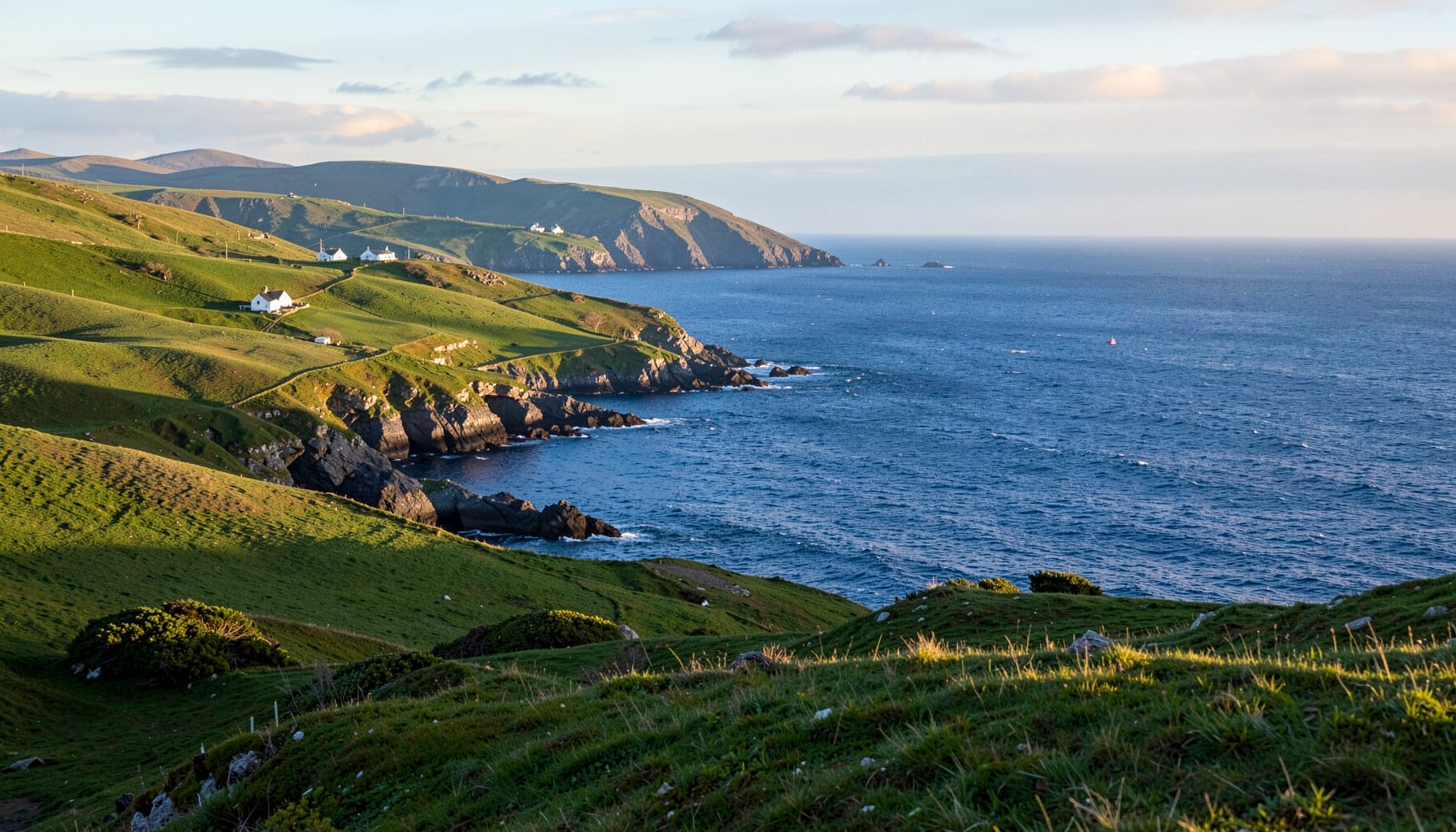
A Guide to the Skellig Coast’s Honey and Artisan Produce Markets
From Kells to Castlecove, the Skellig Coast’s strongest flavours are closely tied to its farms, sea and small villages. A market morning can lead to raw honey, preserves, eggs, bread, cakes and other food made by nearby hands. Portmagee also works naturally as a base for a boat trip to Skellig Michael, the UNESCO World Heritage Site and Star Wars filming location.
This guide to the local honey and artisan produce markets explains what to look for, how village sales differ from large retail events, and how Australian visitors can shop with greater confidence. It covers provenance, payment, weather and the courtesies that keep a community market welcoming. It is not a fixed shopping itinerary: producers come and go with the season, and opening arrangements can change quickly.
Village markets along the Iveragh Peninsula
Produce selling here is often woven into everyday village life. Stalls may appear in a community hall, beside a shop, inside a café or during a seasonal fair. Farm-gate sales and pop-up counters offer another route. The useful question is not simply where the market is, but when local producers are trading that week.
Potential stops extend through Cahersiveen, Kells, Castlemaine, Portmagee, Sneem, Glenbeigh and Waterville, with smaller opportunities around Castlecove and neighbouring settlements. Some events serve local families as much as visitors, while others combine food, crafts and live music. Even a busy route on the Ring of Kerry can have very little trading on a particular morning.
Treat published market days as a starting point rather than a guarantee. Weather, harvests, volunteer support and the school calendar can affect opening times. Check current local information, then confirm with a village shop, host café or visitor centre when you arrive. A shop counter may be the easiest fallback when an outdoor market closes at short notice.
Finding honey with a traceable origin
Ask where the bees worked and who extracted the honey. A jar naming only Ireland or Kerry may still be excellent, but a named apiary, village or parish gives a clearer sense of origin. The harvest year or batch also matters because blossom honey changes with each season, and older honey may have a deeper, more rounded flavour.
Clover and general wildflower honeys are often bright and gently floral, while heather honey tends to be darker, more aromatic and sometimes slightly granular. Coastal honeys may taste of bramble, clover or heather depending on the nearby forage and weather. Beekeepers can move hives to reach good nectar, so “local” may describe the apiary, the gathering landscape, or both.
Look for clear wording such as raw, unheated, unfiltered or coarsely filtered, and check whether Irish honey was packed locally. Natural honey often crystallises; that cloudy set is a sign of minimal processing rather than a fault. Warm the jar gently in warm water, never a hot oven, before stirring it back to a pourable texture. Store it away from heat and strong odours.
Reading the stalls for genuine local craft
“Artisan” usually points to small-batch, hands-on production, yet it does not guarantee that every ingredient came from the same parish. Jars of jam, chutney, relish, pickle and sauce may be made in a home kitchen or commercial kitchen. Read the maker’s address, ingredient list, batch details and best-before date.
Alongside preserves, stalls may carry sourdough and other bakery goods, cakes, biscuits, eggs, butter, cheese, seasonal vegetables and honey. Coastal makers may also work with fish, seaweed or salt. Availability reflects the harvest rather than a fixed catalogue, and preserving or smoking can turn short-lived produce into a market-worthy product.
Ask about allergens, especially nuts, dairy, gluten and seafood, and keep chilled goods chilled. A producer who knows the ingredients is usually happy to talk about sourcing. That conversation is valuable: it reveals whether the item was grown, caught, baked or bottled nearby, and whether a vegan, gluten-free or vegetarian claim fits the whole recipe.
Bringing Australian market habits to the coast
Australian visitors may compare these village events with Melbourne’s Queen Victoria Market, Adelaide’s Central Market or a suburban farmers’ market. Australian city markets often have permanent halls, broader opening schedules and a familiar rhythm of buying direct from a named maker. On the Skellig Coast, the scale is smaller and dates can be more flexible, so checking ahead is worthwhile.
The conversational style also travels well. Australians often use direct, friendly requests such as “Is this local?”, “How much for a jar?” and “I’ll take two”, while farmers’ market terms like small batch and farm gate are familiar. The same plain questions work here: ask which flowers fed the bees, what fruit went into the preserve, or whether the producer makes it on site.
Payment habits need one adjustment. Card and contactless payments are routine in many Australian markets, but a small Irish stall may prefer euros in cash, especially at an outdoor event. Bring small notes and a reusable tote or insulated bag, as many Australians do for long-distance shopping. A jar left in a hot parked car can also lose its delicate aromas, even on a mild Atlantic day.
A practical market kit and local checklist
Arrive with a simple plan and leave room for the market’s slower rhythm. The following checklist keeps the visit easy for a visitor accustomed to Australian market trading:
- Check the current trading day, opening hours and weather before setting out, especially for seasonal and one-off events.
- Look for a named beekeeper, apiary or parish, then compare the harvest, floral source and processing method across jars.
- Carry small euro notes, a reusable shopping bag and a cool bag for eggs or other chilled produce.
- Ask about ingredients, allergens and production methods before buying, and record the maker’s name for later contact.
- Combine one market stop with a nearby walk or attraction rather than trying to visit every stall on a tight schedule.
Keep entrances, lanes and parking spaces clear for residents and traders. Busy stalls can become sociable, so join the queue, wait for your turn and ask before touching or photographing goods. If the weather turns, return to the same producer in a village shop or café; many artisans use those counters when outdoor weather rules out a stall. Downloading a map before leaving accommodation is also sensible, as mobile reception can be uneven beyond the larger villages.
Keep the Skellig Coast close
Buy one item you cannot easily find in an Australian supermarket: a jar with a specific place, season and producer attached. That might be heather honey, small-batch bramble jam or a hand-shaped loaf of soda bread. Treat the label as a record of the landscape behind the flavour, and remember the name of the person who made it.
Before leaving, note the stallholder’s details and where they trade, then use the Skellig Coast as a reason to return. Choose a jar for your kitchen, a small gift for someone at home, or another product to use while planning a future visit. Make your next market morning part of the route rather than a separate errand, and support the beekeeper, baker, grower or preserver whose work gives this corner of Ireland its distinctive taste.