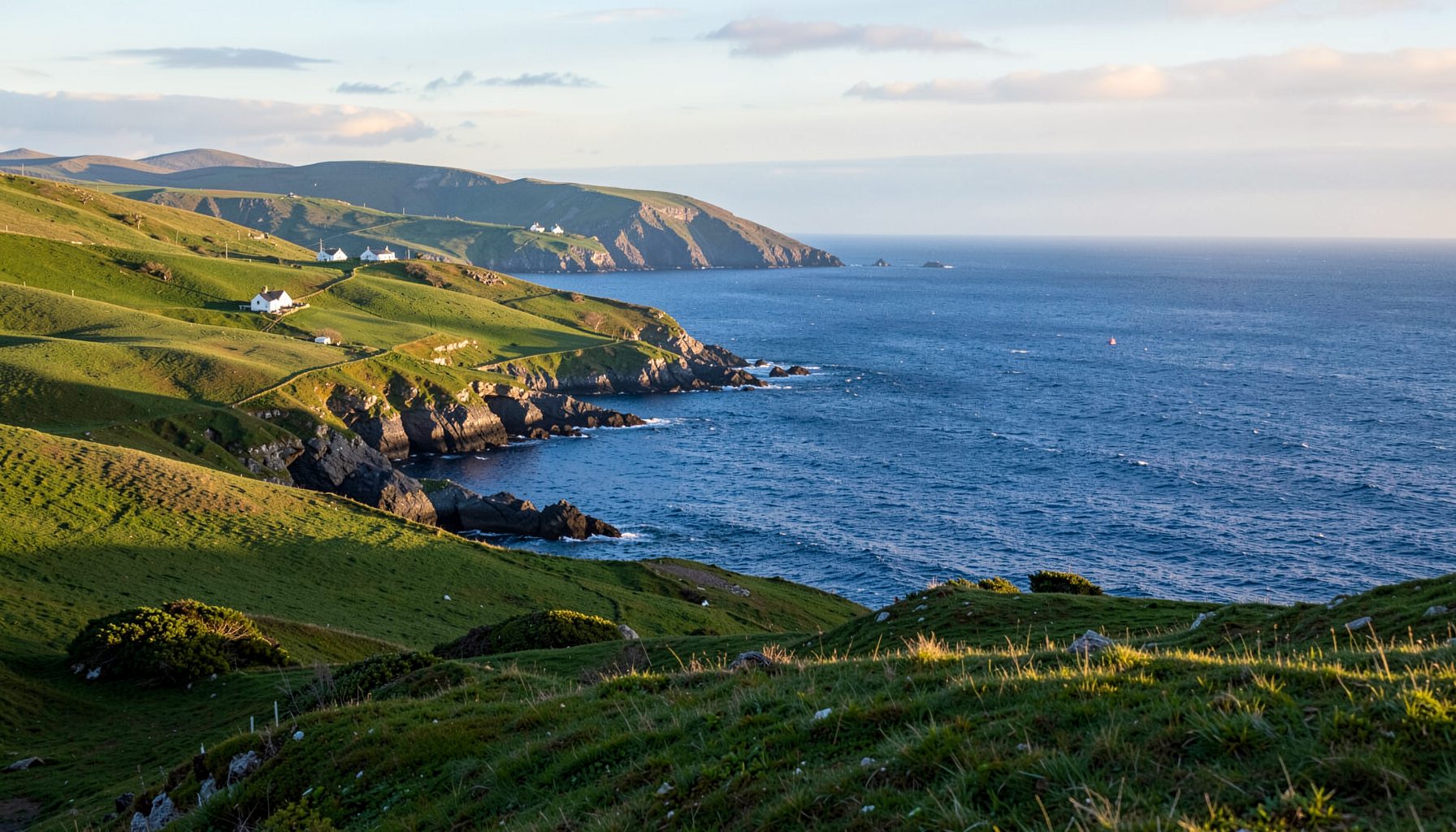
Valentia Island slate and its journey from Kerry to Paris and London
Long before container ships linked Sydney Harbour to the Atlantic, small cargo vessels carried a dark blue-grey stone from a tiny island off the south-west coast of Ireland to some of the most recognised skylines in the world. The Valentia Island slate quarries, perched on the edge of the Iveragh Peninsula in County Kerry, produced a material so durable and so distinctive that architects in London and Paris chose it for cathedrals, civic buildings and private mansions during the nineteenth century. The story of that stone is a thread running through the history of modern construction, colonial trade and the Irish diaspora that scattered across Australia, North America and beyond.
For Australian readers, this tale carries an unexpected resonance. Tens of thousands of Irish emigrants settled in Melbourne, Sydney and Hobart during and after the Great Famine, bringing with them trades, traditions and an appetite for news from the old country. Many of those families came from counties along the Atlantic seaboard, the same waters that carried Valentia slate outward. The stone has even crossed paths with Australian heritage debates, since slate roofing and stone cladding are protected under various state-level conservation acts, including the New South Wales Heritage Act and Victoria's Heritage Register, both of which guide how historic materials are restored or replaced on significant buildings.
The quarry itself sits on the northern shore of Valentia Island, accessible today by a road bridge from the mainland near Cahirciveen. From the 1820s onward, the slate was prized for being fine-grained, non-porous and unusually resistant to weathering in maritime climates. That combination of qualities made it competitive with slate from Wales and from the Lake District, and British merchants soon began exporting it across the Irish Sea, the English Channel and on to the European continent.
What follows is the longer story of how a remote island quarry supplied two imperial capitals with roofing stone, the routes that stone travelled, the buildings it still covers today, and why the quarries themselves remain a worthwhile stop for anyone tracing Irish heritage on the Atlantic coast.
A geological marvel at the edge of Europe
Valentia Island rests on some of the oldest exposed rock in Europe, part of a band of ancient sedimentary layers laid down roughly 360 million years ago during the Carboniferous period. The slate beds at the quarry formed from fine volcanic ash and marine silt compressed under enormous pressure, producing a stone that splits cleanly into thin, even tiles. Geologists who have studied the site note that the slate's dark blue-grey colour, often flecked with a faint purple or green lustre, is unusually attractive for a building material.
The quarry sits at the base of a steep hillside that drops to the sea, which made loading directly onto small coastal schooners straightforward. That geography helped Valentia slate compete with inland quarries, since the same boat that carried the finished stone back to Britain could also bring coal, timber and supplies to the island's small communities. Even today, the cliffs above the quarry show the original working faces, with tool marks, winch points and narrow tracks still visible.
For those who travel the Ring of Kerry today, the geology is part of what makes the drive dramatic. The same ancient rocks that produce the slate also shape the cliffs of the Skellig coast, the famous twin pillars of stone known as Skellig Michael, the UNESCO World Heritage Site where early medieval monks built a monastery clinging to the rock. The landscape, in other words, is a single continuous story of stone and sea.
The nineteenth century slate boom
The commercial story of Valentia slate began in earnest in 1815, when the Knight of Kerry, the local landlord, granted a lease to a group of local investors. Production grew, and during the Victorian era the quarries supplied slate to markets across the United Kingdom and into France. By the 1880s, output had reached several thousand tons a year, with most of the cargo leaving from Valencia Harbour on the south side of the island.
The market for slate in the nineteenth century was buoyant. Cities were expanding, railway terminals needed vast new roofs, workhouse infirmaries were being built under the new Poor Laws, and middle-class suburbs were spreading across the green belts of London and Paris. Valentia slate was particularly sought after for institutional roofing, where its long lifespan justified a higher initial cost compared with cheaper Welsh slate. Exporters on the island developed a reputation for consistent quality and reliable delivery times, which kept orders steady even during trade downturns.
The trade also brought prosperity to the island itself. At its peak, the quarries employed several hundred men, supporting schools, a small harbour fleet and the construction of the slate-roofed houses that still line the lanes of Knightstown and the harbour village of Portmagee. That Victorian prosperity is part of what gives Valentia its distinctive character today, a place where the stone is not just a backdrop but a record of working life.
From Atlantic schooners to two imperial capitals
| Building | City | Year completed | Original use |
|---|---|---|---|
| St Pancras Station roof | London | 1868 | Railway terminus |
| Houses of Parliament repairs | London | 1860s | Government offices |
| Notre-Dame restoration phases | Paris | Various 19th c. | Cathedral roofing |
| Les Halles market buildings | Paris | 1850s | Wholesale market |
The journey from Valentia to Paris or London was not a direct one. The slate was loaded at the island's quarries onto lighters, transferred to deeper-drafted vessels in Valencia Harbour, and then sailed or steamed to Cork, Liverpool or occasionally Bristol. From those ports, the cargo moved by canal barge or early railway to yards in London, or by coastal steamer to Le Havre and onward up the Seine. The logistics were complex, but they had been refined over generations by Irish, English and French merchants who depended on the trade.
Some shipments had more dramatic histories than others. Several cargoes of Valentia slate were lost during winter storms in the Bay of Biscay, and the loss of a single fully loaded schooner could wipe out a season's profit for a small quarrying partnership. Yet enough reached its destination to build a steady reputation. Surviving invoices and shipping records held in the Kerry county archives document the consistency of the trade, with certain London roofing firms placing standing orders year after year.
Roofs that still carry the stone
The most famous survivor of the Valentia slate trade is the roof of St Pancras Station in London, completed in 1868 as part of the Midland Grand Hotel complex designed by George Gilbert Scott. The vast arched span, an early triumph of Victorian engineering, was clad in slate that included consignments from Valentia among other sources. Walk into the station concourse today and the original roofing material can still be seen from the upper levels, although most modern visitors associate the building with its more recent glass and steel additions.
In Paris, the influence is harder to spot but equally real. Several of the city's covered markets built under the Haussmann era relied on slate imported through Brittany and Normandy, with Valentia among the named suppliers listed in surviving contractors' ledgers. Restorers working on Notre-Dame after the 2019 fire drew on samples from quarries across western Europe, including Ireland, to match the colour and texture of the original nineteenth-century roofing during the cathedral's phased reopening.
These connections are not simply trivia. They show how a small island quarry sat inside an industrial network that stretched from the Atlantic edge of Europe to the heart of two great capitals, and how the choices of Victorian architects and engineers still shape the skylines of modern cities. For Australians who admire nineteenth-century buildings in the Rocks district of Sydney or the warehouses of Melbourne's Docklands, the parallels are easy to draw. Both countries inherited European building traditions and adapted them to local conditions.
Across Australia, surviving examples of similar Victorian-era slate work can still be admired in:
- The Rocks heritage buildings in Sydney
- Melbourne's streetscapes around Flinders Lane and the old wharves of the Yarra
- The Richmond and Collingwood townhouse strips
- Salamanca Place in Hobart
The people who cut the stone
The quarries on Valentia were never simply a workplace; they were a community. Most of the cutters, splitters and loaders came from the island itself, with names like O'Connell, O'Shea and Moriarty appearing repeatedly in employment ledgers. Wages were modest, working hours long, and safety standards limited by the standards of the day, yet the trade offered steady employment in a region where alternatives were scarce. Many workers' families were connected by marriage across the small island, and the social fabric of the place remains shaped by that history.
Several of the quarry families emigrated during the difficult decades of the late nineteenth century, with relatives reaching Boston, New York and, in smaller numbers, the goldfields and pastoral stations of Victoria and Western Australia. That diaspora thread is one reason the Valentia story still resonates for Australian readers with Irish ancestry. The same harbours that shipped slate outward carried young men and women in the opposite direction, and the family letters that crossed the Atlantic often mentioned both the quarry and the price of roofing slates.
The quarries today and a walk through history
The working quarries closed for commercial production in the early twentieth century, when cheaper imports and changing building fashions reduced demand. Yet the site has not been abandoned. It is now a heritage attraction managed by the local community, with walking trails, interpretive panels and a small museum housed in one of the original quarry buildings. Visitors can walk along the loading quays, see the cable-operated inclines used to lower stone to the sea, and explore the tunnels driven into the hillside.
A visit pairs naturally with a broader tour of the Skellig Coast website region, which gathers walking routes, community events and information about villages from Kells to Castlecove. The site is a useful starting place for those planning a few days on the Iveragh Peninsula, with notes on ferries to the Skelligs, heritage walks in Valentia and seasonal events in Cahirciveen.
Highlights for a short visit include:
- The quarry trail with its nineteenth-century working faces
- The Tetrapod Trackway, a set of fossil footprints even older than the slate
- Knightstown's Victorian slate-roofed houses and the harbour lighthouse
A stone that bridges two hemispheres
The slate of Valentia Island is more than a building material. It is a record of trade, emigration, craftsmanship and the slow shaping of European cities by a small island on the Atlantic edge of Kerry. For Australian readers, the connections are tangible: through family history, through shared interest in Victorian architecture, and through the parallels between European heritage protection and Australian frameworks like the NSW Heritage Act or the Victorian Heritage Register, both of which govern how historic stone is conserved or replaced.
The quarries remain open, the stone remains in place across two capitals, and the story continues to be written every time a heritage roof is repaired using traditional materials. Valentia slate is a reminder that even the most ordinary materials carry extraordinary stories when we take the time to follow them.
Visit Valentia Island, walk the quarry trails and discover for yourself how a small Atlantic quarry helped shape two great European cities.