The Lives of Sceilg Mhichíl Lighthouse Keepers Through the Centuries
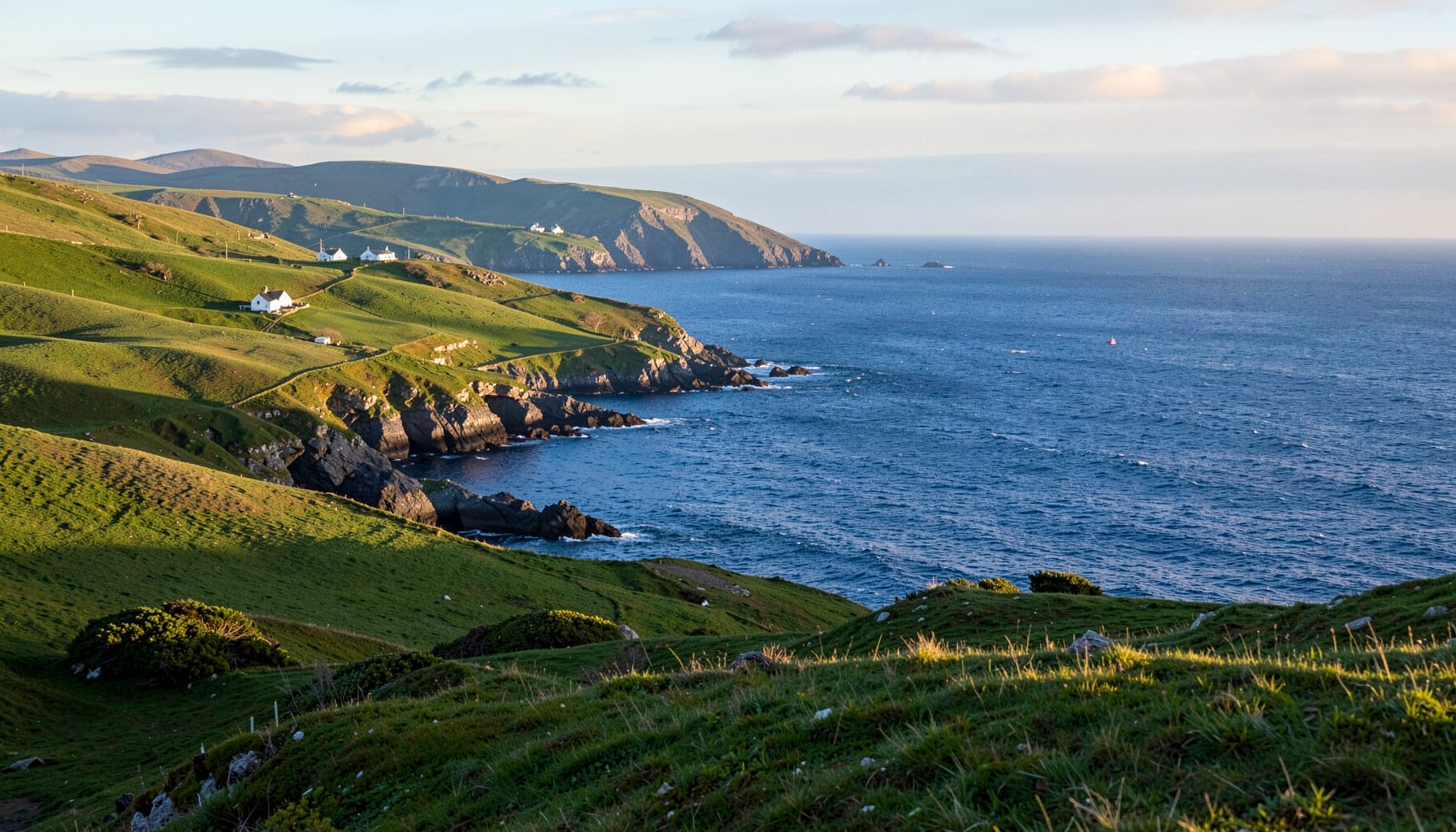
Rising more than two hundred metres out of the North Atlantic, the jagged pyramid of Sceilg Mhichíl has watched over the southwestern approaches to Ireland for over a thousand years. Long before any light shone from its summit, early Christian monks climbed the same flights of stone to carve out a place of prayer in one of the most exposed locations on the European Atlantic seaboard. The arrival of a lighthouse in the nineteenth century transformed the island from a monastic outpost into a working maritime station, and a small community of lightkeepers came to share the rock with the older ruins.
For Australians reading about a remote nineteenth century Irish lighthouse, there is a familiar thread. The coastlines of New South Wales, Victoria and Western Australia carry dozens of similarly heroic towers, from the cliffs of Cape Otway to the beaches of Cape Byron and the windswept headland of Cape Leeuwin. Both nations share a story of isolated keepers braving gales, fog and weeks of solitude to keep vessels safe. Understanding the Sceilg Mhichíl keepers offers a way to understand an entire Atlantic and southern-ocean tradition of lightkeeping that shaped both countries' coastal identities.
The keepers' lives were governed by weather, by fuel, and by the demands of the lamp. The men who tended the light on Sceilg Mhichíl walked the same pathways used by the monks, hauled supplies up hundreds of steps, and looked out over a horizon that could mean salvation or shipwreck for sailors below. Their story is less well known than the monastic one, but it is woven into the same dramatic landscape and reveals how a tiny rock off the Kerry coast once anchored a very particular kind of human community.
Today the lighthouse is automated and the keeper's cottages stand empty, yet the names of the men who served are still preserved in local memory and in the records of the Commissioners of Irish Lights. Visitors walking through the lower monastic terraces pass the keepers' garden walls, their rainwater cisterns and the unmistakable footprint of a working nineteenth century lightstation tucked among the beehive huts.
The first keepers and their Victorian-era station
The first tower on Sceilg Mhichíl was lit in 1826, after sustained lobbying by merchants and naval authorities concerned by the loss of vessels along the western Irish seaboard. The original design used oil lamps and reflectors, and the station was supported by a small group of keepers who rotated between the island and the mainland. Many were drawn from fishing families along the Iveragh Peninsula, while others came from across the British Isles, recruited through the Ballast Board and its successors for their seamanship, sobriety and willingness to endure long postings.
The station grew beyond a simple tower. By the latter half of the century, keepers' dwellings, an engine room, fog signal equipment and stores had been added to the steep terraces, all carried up by hand or on pulleys from boats that could only land in calm weather. The keepers were responsible not only for the light but for the very fabric of the station: whitewashing the walls, repairing slate roofs and keeping the access steps clear of rockfalls. Unlike mainland lighthouses, there was no village below to walk to, no pub on the corner and no chance to step into a shop. The nearest settlement was Portmagee, and even that could only be reached by boat when the sea allowed.
A small but telling comparison helps place these conditions in context. The Australian Bureau of Statistics regularly lists remote-area postings among the most challenging in the country, and the country's remote lighthouses and weather stations were similarly staffed by men and women prepared to accept months away from Sydney, Melbourne or Hobart. The loneliness reported by past keepers on Gabo Island echoes the diaries kept on Sceilg Mhichíl, where an unbroken Atlantic swell could mean weeks without letters.
Daily rhythms on an Atlantic rock
The keepers' day began long before dawn. The lamp had to be trimmed, the wicks cleaned and the reflectors polished, with every task logged in a register that was later inspected by visiting engineers. During darkness the light was never left alone. Watch periods rotated around the clock, and a keeper walking the external parapet in winter needed steady hands and a firm grip, since the wind regularly exceeded storm force on the upper station.
Food shaped the rhythm as much as the lamp did. Without refrigeration, keepers relied on salted meat, oats, ship's biscuit and whatever fresh vegetables could be coaxed from the thin soil of the lower terraces. Potatoes thrived in sheltered pockets, while kale and rhubarb grew stubbornly between stones. Supplies were landed at Christ's Saddle, the only realistic landing point, and then shouldered or hauled up the so-called monastery roadway in repeated trips. A missed landing could leave a station short of bread or paraffin for weeks.
Keeping the mind occupied mattered as much as keeping the body fed. Keepers read, sketched, played fiddles, and sometimes kept small workshops for carpentry or net-making. Some wrote letters home so regularly that their children later published them. A few tended to the small graveyard on the island, including the unmarked resting places of those who died on the rock and were buried close to the station chapel. The Australian parallel is striking: keepers at remote Victorian and Tasmanian stations similarly filled long evenings with reading, music, and the practical craft work that maritime tradition in both hemispheres quietly encouraged.
Tasks that filled a typical watch
- Trimming wicks and topping up oil reservoirs before dusk
- Polishing reflectors and lenses on a set weekly rota
- Logging weather readings, ship sightings and any signals exchanged with passing vessels
- Inspecting fog signal equipment and reporting unusual sounds to visiting engineers
Families and isolation in the lightstation era
For several decades, families lived on the rock alongside the keepers. Wives managed households in the cramped keepers' cottages, while children attended lessons on the island until they were old enough for boarding school on the mainland. The presence of children transformed the atmosphere of the station, with small voices echoing in places that had once known only monks and seamen. Births, illnesses and funerals all took place within sight of the ocean, and in bad weather a sick child could not be taken down to a doctor for days.
Isolation shaped everything from schooling to diet. The schoolroom was a single small room where a visiting teacher or a senior keeper might take lessons when weather allowed, and most of the children's world was the rock itself. Australian families living at isolated stations experienced similar realities, and the federal government's commitment to distance education, formalised through successive acts governing remote-area schooling, was a direct response to communities like these. The Royal Flying Doctor Service, founded in Queensland in 1928, similarly grew from the recognition that families on remote posts, whether on land or sea, needed medical care that could reach them across long distances.
Children who grew up on Sceilg Mhichíl often spoke later of two landscapes: the rock itself, with its steps, gulls and sea-spray, and the village below that they only visited during calmer summer months. The rhythms of life on the rock produced a particular kind of self-reliance, and many former keepers' children carried habits of careful planning, weather-reading and resourcefulness into later careers. Even today, the surnames of several former keepers remain connected to small communities along the Skellig Coast, with descendants still living near villages-towns such as Portmagee, Valentia Island and Knightstown.
The move toward automation and the end of an era
Across the twentieth century, the nature of lightkeeping changed. Oil gave way to acetylene, and acetylene in turn gave way to electric and automated systems. The Commissioners of Irish Lights began a long programme of modernisation, and as each mainland station became unmanned, pressure grew to automate the Skellig light. The rock's remoteness, which had once made automation seem impossible, was eventually overcome by solar power, sealed-beam lamps and remote monitoring.
The last keepers left Sceilg Mhichíl in 1987, ending more than 160 years of continuous human habitation around the lighthouse. The withdrawal was quietly done, and many former keepers returned to mainland Kerry without ceremony. Some settled into village life around the Iveragh Peninsula, while others moved on to postings at stations such as Inishtearaght and the Bull Rock, the latter of which had its own keeper community through the late twentieth century. Australia followed a similar arc: the last keepers at Cape Byron departed as the station became automated in 1989, closing an era that, like the Skellig story, had stretched back to the 1800s.
The buildings were preserved rather than demolished. Keepers' cottages, stores and the engine room remain standing, slowly weathering inside the same walls that housed both monks and mariners. Their artefacts, including logbooks, lens fragments and personal effects, were eventually transferred to local museums and to the Commissioners of Irish Lights archive. For visitors today, the keepers' presence is felt in small details: a rusty hinge, a window frame cut to fit an awkward corner of rock, the line of an old pathway between two terraces.
| Aspect | Sceilg Mhichíl keepers | Australian remote keepers |
|---|---|---|
| Typical length of posting | 4 to 12 weeks at a stretch, weather permitting | 3 to 6 months on isolated towers |
| Main supply challenges | Boat landings at Christ's Saddle, weather dependent | Supply ships or helicopters to exposed stations |
| Living conditions | Stone cottages on terraces, no main village below | Timber quarters often closer to fishing or pastoral settlements |
| Daily key duty | Trimming and refuelling oil or vapour lamps by hand | Cleaning lenses and refuelling vapour systems |
| End of resident era | Last keepers withdrawn in 1987 | Cape Byron automated in 1989, others later |
The keepers' lasting legacy on the Skellig Coast
The story of the Sceilg Mhichíl keepers is more than a footnote in the island's long history. It is a thread that links the monastic past to the working maritime present of the Skellig Coast, and it shaped the communities that still live between Kells and Castlecove today. Local oral history preserves names, anecdotes and family connections that would otherwise be lost, and they sit alongside the records held by Irish Lights and the Office of Public Works.
Australia's parallel story gives the Irish one a wider context. Both countries have grappled with how to remember lighthouse communities whose work once kept trade routes safe between Europe, Asia and the Americas. Heritage listings in both nations now protect former lightstations, and museums at places like the Cape Otway Lightstation interpret the lives of keepers for new audiences. The experience of remote lightkeeping shaped maritime legislation too: Australian Maritime Safety Authority regulations around automated aids to navigation owe a debt to the long-running experiments that began on rocks like Sceilg Mhichíl.
For travellers and readers exploring the Skellig Coast today, the keepers' lives offer a quieter way into the region. Walking the cliff paths above Portmagee, crossing to Valentia by ferry or tracing the lanes near the Kerry Cliffs, one passes through a landscape shaped by generations of men who knew the Atlantic intimately and respected its moods. Their story is an invitation to see the coast not only as scenery but as a working maritime frontier where human ingenuity, endurance and loneliness were quietly tested for over a century and a half.
Where to follow the keepers' story in person
- The Valentia Island heritage centre, with displays on nineteenth century lightkeeping families
- The Skellig Experience visitor centre near Portmagee, with short films about life on the rock
- Walking the lower monastic terraces, where keepers' cottages sit beside the beehive huts
- Public archives in Dublin holding Irish Lights logbooks from the Sceilg station
If this account has stirred your curiosity for the Skellig Coast, consider exploring the region in person, browsing heritage publications from Irish Lights, and sharing these keepers' stories with friends planning a visit to the Iveragh Peninsula.