The Story Of The Great Blasket Island Evacuation And Its Legacy
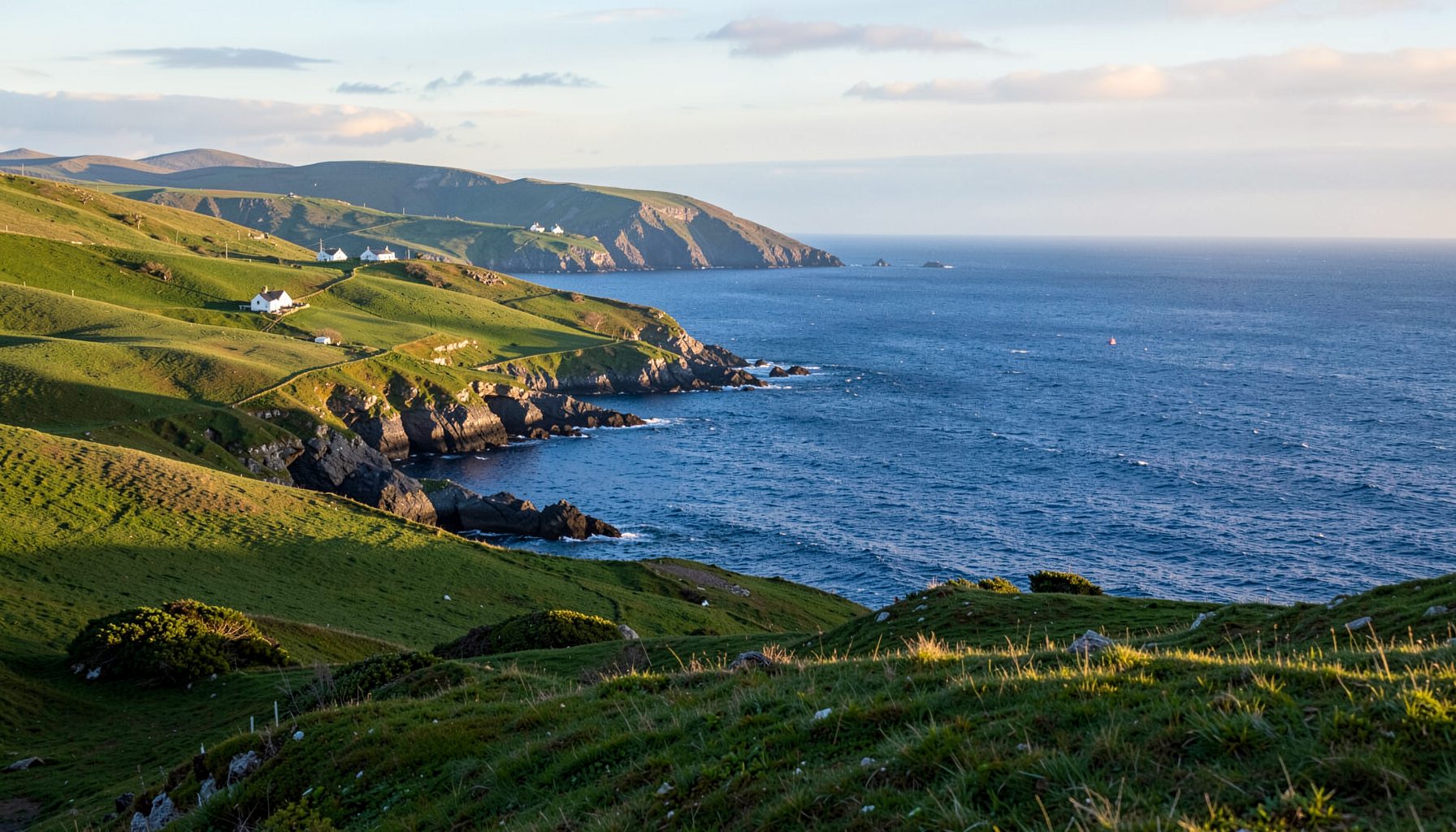
On the western edge of Ireland’s Iveragh Peninsula, the Great Blasket Island sits beyond the beaches and headlands of the Skellig Coast. Its steep slopes, stone cottages and Atlantic-facing fields preserve the memory of a small Irish-speaking community that lived with remarkable independence for generations. The island is now uninhabited, but its cultural presence remains strong.
The evacuation in 1953 was a turning point in the history of the Blasket Islands. It brought an end to permanent island life, while also creating a literary and historical legacy that continues to reach readers, visitors and communities far beyond County Kerry. The story is one of resilience, hardship, language and belonging.
For Australians, the Great Blasket can feel both distant and familiar. Like remote communities across Tasmania, the Torres Strait or the far north-west, the island’s experience raises questions about transport, essential services, cultural continuity and the cost of living in isolated places. Its history also offers a meaningful connection for people with Irish family heritage in Sydney, Melbourne, Brisbane and regional Australia.
A Community Shaped By The Atlantic
The Great Blasket was the largest of the Blasket Islands, lying just off the Dingle Peninsula rather than directly beside the Skellig Coast. Its residents depended on fishing, small-scale farming, livestock and seasonal work. The island’s exposed location meant that every aspect of daily life was shaped by wind, tides and the changing Atlantic.
Families lived in a close community where Irish was the everyday language. Homes were built from local stone and generally clustered near the eastern shore, where landing a currach was possible in suitable weather. The islanders developed detailed knowledge of currents, weather signs, grazing land and marine life, passing this knowledge through generations.
Communication with the mainland was never guaranteed. Boats could not safely cross during storms, and medical emergencies created serious risks. There was no reliable road, electricity supply or modern public service network. These conditions were not simply picturesque features of island life; they affected education, healthcare, employment and the ability of families to remain together.
Why The Evacuation Took Place
By the middle of the twentieth century, the island population had fallen sharply. Younger residents were increasingly drawn to the mainland, where they could find paid work, secondary schooling and improved access to services. The community also faced an ageing population and fewer people available to maintain boats, fields and homes.
The decision to leave was made after a series of practical concerns rather than a single dramatic event. Storms could isolate the island, and the loss of boats or experienced boatmen made ordinary tasks dangerous. Government officials and local representatives recognised that supporting a small population in such a vulnerable setting was becoming increasingly difficult.
In November 1953, the remaining residents were taken from the Great Blasket to the mainland. Accounts describe the departure as emotional and unsettling: people were leaving ancestral homes, burial places, grazing grounds and a language community that had endured for centuries. The evacuation was presented as a move towards safety and better services, but it also meant the end of a living island society.
Life After Leaving The Island
Most former islanders settled in mainland communities around Dunquin, Ballyferriter and the wider Dingle area. Relocation provided access to roads, schools, healthcare and more dependable employment. For families, these changes could bring security that had been difficult to achieve on the island.
Yet a move from an island to the mainland did not erase the habits and memories of the old community. Former residents continued to identify strongly with the Blasket, returning when weather permitted and maintaining family connections. Stories about island work, courtship, funerals, storms and seasonal routines remained central to local identity.
The transition also reflected a wider pattern across Ireland. Rural depopulation, migration and the decline of Irish-speaking communities affected many parts of the country during the twentieth century. The Great Blasket evacuation became an especially powerful example because the whole permanent population departed, leaving the island as a place of memory rather than residence.
The Writers Who Preserved The Blasket
The Blasket Islands are internationally known because several residents recorded their lives in Irish. Tomás Ó Criomhthain’s The Islandman, Peig Sayers’ Peig and Maurice O’Sullivan’s Twenty Years A-Growing offer vivid accounts of island society. These books describe work, family relationships, poverty, humour, belief and the constant presence of the sea.
The books should not be read as simple tourist portraits of an untouched rural paradise. Their value lies in the writers’ ability to express a complete social world from within. They reveal hardship alongside wit, intimacy alongside conflict and strong communal bonds alongside the limits imposed by geography.
For Australian readers, these works may resonate with oral-history projects that document disappearing industries or remote communities. They also show why language matters. When a community loses its daily speakers, place names, sayings and storytelling patterns can disappear with them. Literature can preserve those elements, but it cannot fully replace a living speech community.
Memory, Heritage And The Modern Visitor
Today, the Great Blasket is visited seasonally, weather permitting. Its abandoned houses, stone walls, ruined schoolhouse and open hillsides form a powerful cultural landscape. Visitors encounter a place where the absence of permanent residents is part of the story. The island is not a recreated village or an ordinary day-trip attraction; it is a fragile heritage site shaped by exposure and time.
Access depends on sea conditions, local boat services and responsible behaviour. There are no conventional urban facilities on the island, so visitors need to plan carefully, follow local guidance and respect the physical remains. Walking across uneven ground and exposed terrain requires suitable footwear and awareness of rapidly changing weather.
For people in Australia, the island’s visitor experience may bring to mind seasonal ferry access to places such as Rottnest Island or remote coastal communities in Western Australia. The comparison is useful, but the Great Blasket has its own cultural obligations. Its importance comes from the people who lived there, not simply from dramatic scenery or photographic appeal.
Connections Across The Irish Diaspora
The Blasket story has particular significance for Australians with Irish ancestry. Family histories often include migration from Kerry, Cork, Clare and other western counties, followed by settlement in cities such as Sydney and Melbourne. Some descendants may find links through surnames, parish records, local histories or memories passed down by grandparents.
Irish culture in Australia is also sustained through music, dance, language classes, festivals and community organisations. A family tracing its heritage does not need a direct Blasket connection to recognise the broader themes of displacement, adaptation and cultural survival. The evacuation can help explain why many Irish families left rural and island communities for cities overseas.
Heritage is expressed through objects as well as books and archives. A carefully chosen Irish-made item can support a family celebration, a school project or a conversation about migration, and Irish heritage gifts can provide a practical way to connect personal occasions with cultural memory. The meaning comes from the story attached to the object, rather than from decoration alone.
Learning From An Island Community
The Great Blasket evacuation offers lessons for modern discussions about regional planning. Essential services can determine whether people are able to remain in remote communities, while transport costs and limited employment can accelerate population loss. These issues are recognisable in Australia, where distance affects healthcare, schooling, internet access and supply prices in rural and remote areas.
The story also encourages a careful distinction between preserving buildings and preserving culture. Protecting cottages and archaeological remains matters, but so do recordings, books, Irish-language education, family testimony and community-led interpretation. Heritage work is strongest when local people help decide how their history is represented.
Schools and learning hubs can use the Blasket material to explore geography, migration, language, climate and oral history. A class in Brisbane might compare island evacuation with Australian experiences of remote settlement, while students in Hobart could examine how maritime weather influences transport and community life. Such comparisons should illuminate differences as well as similarities.
Ways To Engage With The Story
The most valuable approach is to treat the Great Blasket as a lived community rather than a romantic backdrop. Reading first-hand accounts, learning about the surrounding Gaeltacht and understanding the circumstances of the evacuation can make a visit or family-history project more respectful and rewarding.
Local heritage organisations, libraries and schools can extend that learning through talks, reading groups, oral-history recordings and exhibitions. Australian community groups can connect the story with Irish language events, diaspora gatherings and regional history programmes without reducing the island’s experience to a symbol of nostalgia.
- Read The Islandman, Peig or Twenty Years A-Growing alongside a reliable historical account.
- Explore maps and photographs of the Blasket Islands before travelling through County Kerry.
- Record family stories about Irish migration, rural life and language before they are lost.
- Support local museums, heritage groups and community-led cultural projects.
- Approach the island environment with care, especially when weather or sea conditions change.
The Great Blasket evacuation remains important because it was both an ending and a continuation. Permanent life on the island ended in 1953, yet the voices of its residents travelled through books, family memories and the landscape itself. Their experience continues to inform conversations about language, migration, public services and the future of remote communities.
Explore the wider heritage of the Skellig Coast through its villages, learning initiatives, cultural events and historic places. Share the story with an Australian school, family-history group or Irish community organisation, and help keep the connection between place, people and memory alive.