The Story of Cill Rialaig Arts Centre and Its Residency Programme
Out on Ireland’s Iveragh Peninsula, Cill Rialaig Arts Centre occupies an old schoolhouse with a remarkably active present life. Its history connects local heritage with contemporary creative practice, while its location places it within the wider landscape of Kerry’s villages, coastal routes and strong artistic communities. For travellers following the Iveragh Peninsula and Ring of Kerry, the centre offers a different perspective on the region: one shaped through residency, exchange and sustained attention to place.
Sculptor Sean Mulholland established the centre in 1995, transforming the former school building into a place where artists could work away from the immediate pressures of their usual surroundings. The project grew from the idea that productive creative work benefits from time, space and contact with a distinctive environment. Cill Rialaig has since become known for its artist-in-residence model, bringing together practitioners from Ireland and overseas.
The centre’s importance lies in the connection between privacy and participation. Residents receive room to develop ideas, while exhibitions, conversations and visits connect that work with people in the surrounding community. This balance gives the residency its distinctive character: protected creative time in rural Kerry, balanced by a meaningful exchange with local life. For Australian artists, writers and musicians, that combination is especially relevant at a moment when studios, funding requirements and commercial opportunities can make sustained creative focus harder to protect.
A schoolhouse with a new artistic life
The centre’s story begins with practical reuse. Rather than replacing the old schoolhouse with a purpose-built gallery, Mulholland recognised the value of adapting an existing local structure. The new use preserved a connection with the building’s educational past while giving it another role in community life.
| Feature | The building’s earlier life | Its role at Cill Rialaig |
|---|---|---|
| Main purpose | Education for local children | Space for creative practice, exhibitions and exchange |
| Daily rhythm | Teaching and school routines | Studio work, residencies, conversations and visits |
| Relationship with place | A familiar landmark in the community | A cultural meeting point shaped by its Kerry setting |
| Heritage value | An old building connected with local history | Former educational spaces supporting contemporary art |
Its scale also contributes to the atmosphere. A former school does not pretend to be a large cultural complex; it offers an intimate environment in which artist and visitor may encounter one another at close range. The contrast between substantial creative ambitions and modest physical surroundings gives the centre a grounded quality.
Mulholland’s background as a sculptor helped establish an emphasis on making, materials and the relationship between a creative practice and its environment. Over time, the residency developed into a broader programme involving visual artists, writers, musicians and other practitioners. The building’s history now serves as a reminder that cultural renewal often begins with an attentive reading of what is already there.
A residency shaped by place
The residency programme offers a defined period for research, making and experimentation. Rather than treating a stay as a short holiday, Cill Rialaig encourages practitioners to use the time to deepen their work, test new directions and encounter the rhythms of rural Kerry. Weather, landscape and the availability of local materials can all shape a project in ways that a brief visit might not reveal.
The rural setting should not be mistaken for complete isolation. The centre is part of a living network of nearby communities, visitors and cultural organisations. Residents can work with the privacy they need while retaining the possibility of conversation, feedback or collaboration. This makes the residency useful for both reflection and creative exchange.
Applicants need to consider practical as well as artistic questions. Current guidance should be checked for residency dates, duration, costs, accommodation, studio access, insurance and expectations around public activity. A clear proposal can explain the intended project, the relevance of the setting and how the work might contribute to the centre’s programme without assuming that every residency follows an identical format.
What artists gain from the exchange
One of the greatest resources offered by Cill Rialaig is uninterrupted attention. Artists working in cities often divide their time between studios, teaching, administration, client work and social commitments. A residency can gather those strands into one period, allowing decisions to be tested through practice rather than discussion alone.
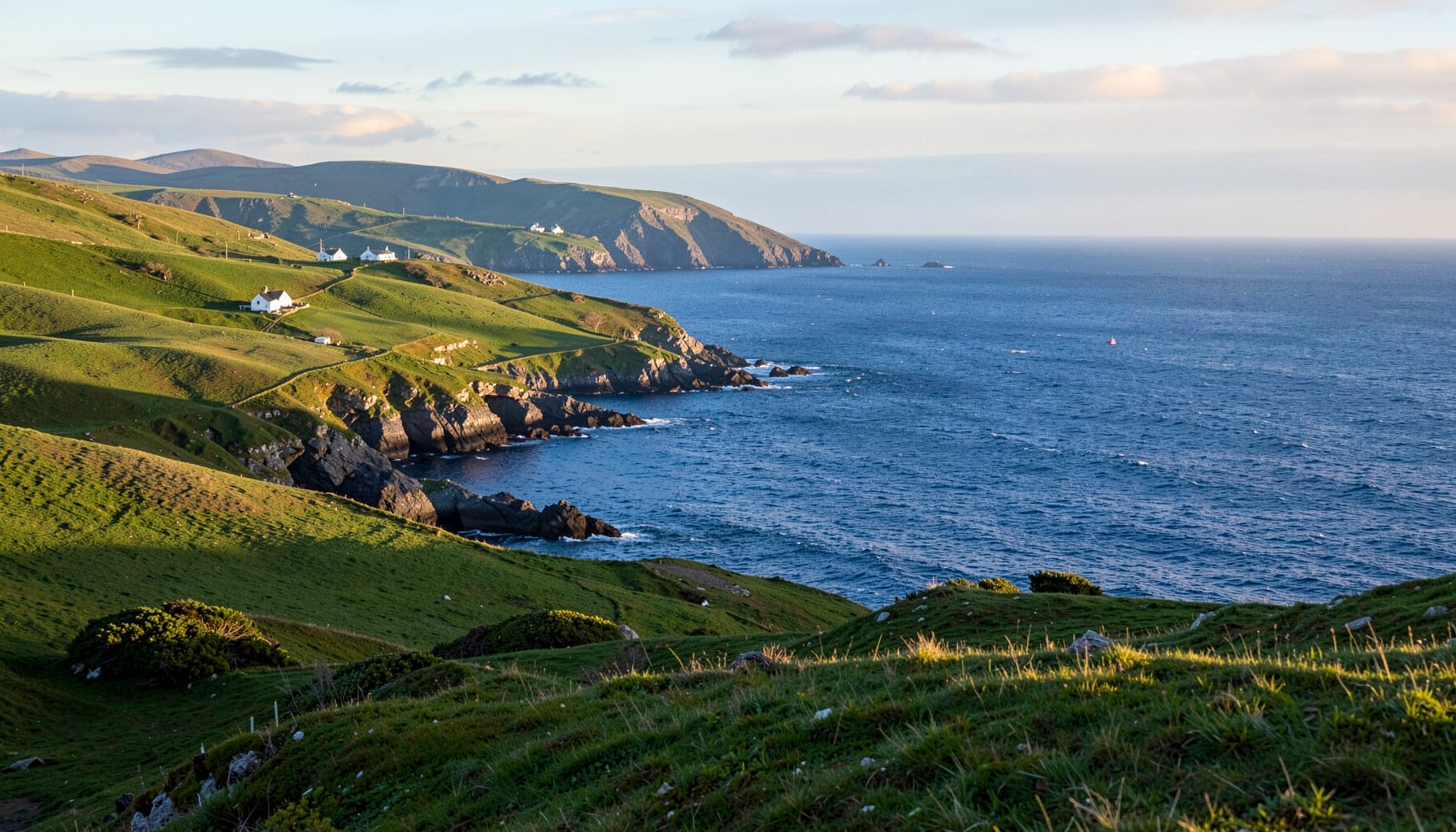
The landscape of the Iveragh Peninsula adds another dimension. Mountain weather, coastal light, stone, timber and the changing colour of the land become more than scenery. They can provide subject matter, but they can also alter the pace and scale of a project. The experience is immersive without requiring artists to turn every local feature into a symbol.
Creative exchange is equally important. A resident working in sound or text may find common ground with a painter or sculptor, while a public talk can introduce visitors to an unfamiliar practice. These encounters enrich the centre’s cultural identity and ensure that residency remains connected to the people who use the building. The result is a supportive environment in which experimentation, critique and finished work can coexist.
The centre within the local community
Cill Rialaig’s public dimension gives the residency a lasting effect beyond the artist’s private working period. Exhibitions and gatherings offer residents an opportunity to meet local people, while visitors gain access to work that might otherwise remain in a studio. These encounters give the centre a role similar to that of a small gallery, workshop and meeting place at once.
That role sits within a wider Kerrian cultural landscape. The Iveragh Peninsula and Ring of Kerry contain ancient sites, traditional music, strong local storytelling traditions and major heritage attractions. Skellig Michael, with its monastic history and UNESCO World Heritage status, attracts visitors from across the world; the island’s later appearance in the Star Wars films adds another layer of international recognition.
Contemporary art practice offers a different kind of engagement with this landscape. At Cill Rialaig, heritage is not presented as a static exhibit. A reused schoolhouse becomes a working place, old pathways acquire fresh purposes and local knowledge informs conversations about change. A visitor moving between Kells, Castlecove and the Ring of Kerry can encounter creative culture as something alive within the communities rather than confined to a separate gallery.
Why the programme resonates in Australia
For an artist based in Sydney, Melbourne or another Australian city, a Kerry residency means leaving familiar networks and travelling to a landscape unlike most of the country. The distance can be part of its appeal. It offers a sharp break from metropolitan routines and an opportunity to work within the smaller communities that characterise rural Ireland.
Studio habits also differ across the distance. Creative routines in Australian cities commonly sit alongside teaching, freelance assignments, grant deadlines and paid employment. A scheduled residency can create protected time within those pressures. For many Australian practitioners, June to August is winter at home but high summer in Kerry, bringing mild evenings, long daylight hours and a welcome reversal of the seasonal rhythm.
The work created during a residency must also make sense within the Australian art market. Australian collectors encounter new practices through commercial galleries, artist-run spaces, art fairs and online marketplaces. A substantial body of work, supported by documentation and a clear exhibition history, can help a participant enter that market after returning home. Creative Australia, a Commonwealth statutory agency, along with state and territory arts bodies, may also support eligible projects, although overseas residencies require careful budgeting and clear evidence of outcomes.
Travel and legal arrangements deserve equal attention. Australian passport holders can generally visit Ireland for up to 90 days within any 180-day period under Schengen visa rules, but a longer residency may require an appropriate Irish permission. Australian tax obligations may continue to apply to fees or income earned abroad. Copyright also differs between Ireland’s Copyright and Related Rights Act 2000 and Australia’s Copyright Act 1968, including the treatment of moral rights. Written agreements covering ownership, attribution, reproduction, sales, insurance and payment can prevent uncertainty for both the resident and the centre.
Make a connection with the centre
Artists and writers interested in the residency should begin with the centre’s current programme details, then contact Cill Rialaig directly with a focused proposal and realistic understanding of the time available. Visitors can follow its exhibition and event calendar, combine a visit with other experiences across the Iveragh Peninsula and attend a public presentation when one is scheduled.
Supporting the centre also means respecting the working rhythm behind its cultural activity. Acknowledge artists, purchase through approved channels, share programme information accurately and recognise the work of local volunteers and hosts. By engaging with Cill Rialaig as a living centre rather than simply a historic building, visitors help sustain an artist-in-residence model rooted in place, creative exchange and community connection.