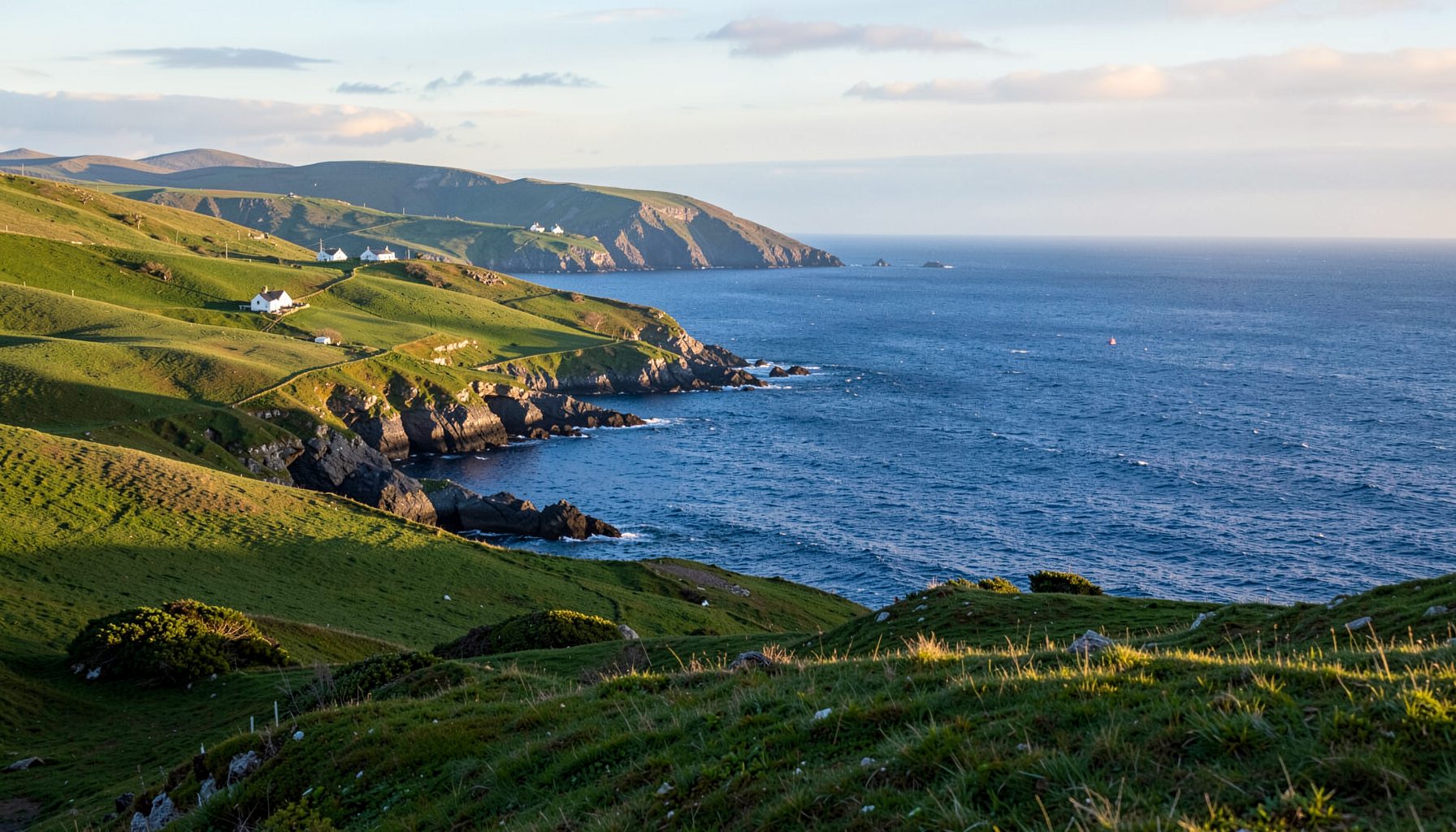
The Life of a Local Fisherman Working the Waters Off Portmagee
Before dawn reaches the Iveragh Peninsula, the harbour at Portmagee is already shaped by work. Lights move across the water, engines start in the darkness, and a small fishing boat prepares for another passage through the channels and open Atlantic around Valentia Island and the Skellig Islands. The routine is demanding, but it is also closely tied to family memory, weather lore and the character of the local community.
A fisherman based in Portmagee reads the sea through practical signs: wind direction, tidal movement, swell height, cloud over the mountains and the behaviour of seabirds. His working waters are beautiful, yet never predictable. For visitors from Australia, the experience may recall the early activity around Sydney Fish Market or a dawn launch from a Victorian coastal town, though the scale and conditions of Ireland’s south-west coast are distinctly their own.
Leaving Portmagee Before Sunrise
A working day often begins with preparation rather than departure. Nets, ropes, lights, fuel, navigation equipment and safety gear must be checked before the boat leaves the pier. The fisherman also considers the tide, the forecast and the catch likely to be available. A delay of an hour can affect the whole trip when a narrow harbour entrance, strong currents or a rising swell is involved.
Portmagee is a compact coastal settlement, and its harbour has long been associated with fishing, island transport and seafaring. The village lies beside Valentia Harbour, close to the route towards Great Skellig and Little Skellig. From the deck, the familiar shoreline quickly changes into a pattern of headlands, cliffs and distant islands. The trip may feel quiet, but the fisherman is constantly making small decisions about speed, direction and sea conditions.
The boat’s equipment depends on the type of fishing being undertaken. Pots may be used for crab or lobster, while other boats work with nets or lines. Each method requires knowledge of the seabed and careful handling of the catch. Local experience matters because a chart can show depth and hazards, but it cannot fully explain how a particular reef behaves after several days of wind.
Reading Tides, Currents and Atlantic Weather
The waters off Portmagee are influenced by the Atlantic, narrow channels and fast-moving tidal streams. Around the Skelligs, conditions can change quickly. A calm-looking surface near the harbour may give way to steep waves around an exposed headland. The fisherman watches the forecast, but he also compares it with what he sees on the water and what he remembers from similar conditions.
This practical knowledge is passed between generations. A parent, uncle or older crew member may teach a younger fisherman how to approach a mark, secure a line or identify a dangerous set of waves. The lessons are physical and repetitive. Hands learn the difference between a rope under tension and one that has gone slack; eyes learn to notice a change in the colour or texture of the sea.
Weather affects more than safety. It determines when gear can be hauled, whether a catch can be landed in good condition and how long the return journey will take. A strong south-westerly wind can make an exposed trip uncomfortable or impossible. In winter, shorter daylight hours reduce the margin for error. The work therefore involves restraint: knowing when not to go is as important as knowing how to work hard once at sea.
The Catch and the Local Working Harbour
When gear is brought aboard, the process is brisk and methodical. The catch must be sorted, measured where regulations require it and kept cool. Unwanted or undersized animals may be returned to the sea. The fisherman works with gloves, knives, crates and a deck that is constantly moving beneath his feet. Even a modest haul represents many hours of travel, waiting and physical effort.
The landing stage is where the sea becomes part of the local economy. Fishers, buyers, processors, boat owners and harbour workers all depend on timing. A catch may move on to a seafood business elsewhere in Ireland, while some local produce reaches restaurants and markets in Kerry. The value of the work is therefore broader than the boat itself: it supports skills, transport, maintenance and community spending.
Australian visitors may recognise the pride attached to fresh seafood from the Sydney Fish Market, Melbourne’s Queen Victoria Market or a coastal farmers’ market in Tasmania. The difference is that Portmagee’s supply begins with a small working fleet facing Atlantic conditions rather than a large urban distribution network. In both places, quality depends on freshness, careful handling and respect for the people who bring food ashore.
A visit to the region can be enriched by exploring wider coastal traditions and maritime places before arriving at the harbour. Resources such as regional travel insights can offer a broader point of comparison, while the Skellig Coast itself provides the local context through its villages, landscapes and living communities.
A Job Shaped by Family and Community
Fishing in Portmagee is an occupation, but it is also part of a social fabric. A boat may represent years of investment and family labour. Repairs, engine checks and gear preparation often happen close to home, with knowledge shared informally between neighbours. When weather prevents a trip, the day is not necessarily idle; there may be nets to mend, equipment to service or accounts to organise.
The harbour also connects fishing with other coastal activities. Boat trips to the Skellig Islands, island services, marine education and tourism all depend on people who understand the water. A fisherman’s knowledge of tides, landing places and changing conditions can support the wider community, even when his primary work is bringing in a catch.
Local customs reflect the sea’s importance. People may pause to discuss the forecast outside a shop, greet a crew returning to the pier or remember relatives who worked on the water. These interactions are easy to miss if a visitor views Portmagee only as a departure point for an attraction. The village is a home first and a visitor destination second.
For Australians, this distinction may feel familiar in places such as Fremantle, Eden or Hobart, where working harbours sit alongside tourism and hospitality. Visitors are generally welcomed, but a busy pier is still a workplace. Giving crews room, following signs and avoiding interruptions during unloading are simple ways to respect the local rhythm.
Seeing the Working Coast Responsibly
The most rewarding way to understand a fisherman’s life is to notice the ordinary details. The sound of a winch, the smell of diesel and salt, crates being moved at the quay and seabirds gathering near a boat all tell part of the story. The dramatic views towards Skellig Michael are important, yet they are connected to daily labour that continues regardless of whether the sky is clear enough for photographs.
The landscape also carries history. Monastic settlement on Skellig Michael, maritime travel between Valentia and the mainland, and centuries of island and coastal life form a layered heritage. The UNESCO World Heritage Site is a remarkable destination, but it should not be separated from the people who work in these waters today. The same sea that draws visitors has always been a source of food, transport, danger and livelihood.
The following comparison shows how a typical working pattern differs from the experience of a visitor observing the harbour:
| Part of coastal life | Local fisherman | Visitor to Portmagee |
|---|---|---|
| Start of day | Begins before sunrise according to tide, weather and gear | Usually arrives later, following a planned itinerary |
| Main concern | Safety, navigation, catch quality and legal requirements | Access, views, local history and wildlife |
| Relationship with weather | Determines whether work can proceed | Shapes clothing, photography and sightseeing plans |
| Use of the harbour | Workplace for landing, repairs and departures | Place to learn, observe and connect with the community |
| Knowledge required | Tides, currents, seabed, gear and seasonal patterns | Routes, visitor guidance and heritage information |
Ways to Respect the Working Harbour
- Keep clear of boats, ropes, vehicles and landing areas when crews are unloading.
- Follow local guidance for boat trips and visits to Skellig Michael, including weather-related changes.
- Buy seafood through legitimate local channels and value the work behind its freshness.
- Ask before photographing fishermen, boats, equipment or private working spaces.
- Learn about the coast through community sources rather than treating the harbour as scenery alone.
A fisherman working off Portmagee lives by a close reading of the sea. His day links the harbour with the wider Skellig Coast, from local food and family traditions to marine knowledge and island heritage. For visitors travelling from Brisbane, Perth, Adelaide or elsewhere in Australia, the journey offers more than a dramatic Atlantic view: it reveals how a small community continues to work with a powerful and changeable environment.
Explore the Skellig Coast to discover its villages, learning hubs, cultural initiatives, outdoor programmes and maritime history, and allow time to see Portmagee as a living community shaped by the water.