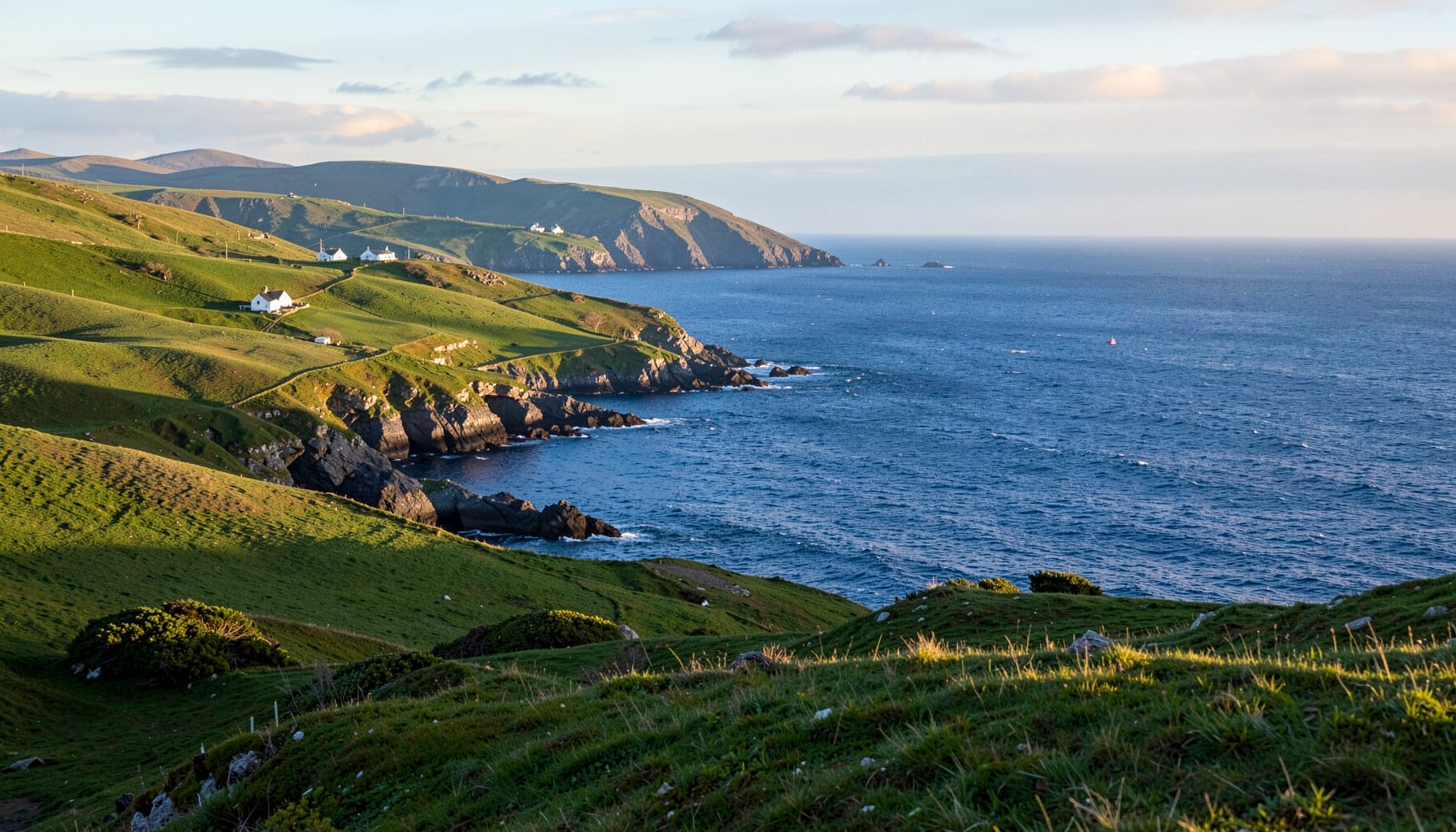
Keeping the currach tradition alive on the Skellig Coast
At first light near Kells, the boat builder lays a length of ash across two low trestles and traces the curve of a rib with a broad pencil. Outside, the Atlantic is silver beneath low cloud; inside, shavings curl around a kettle and a half-finished frame rests on the bench. This is the daily rhythm of a small workshop where timber, tide and inherited skill meet.
A currach is a light, open boat built around a curved wooden frame and covered with treated animal hide or, in modern work, canvas. Keeping the currach tradition alive means more for a local boat builder than producing replica shapes for display. It means reading the coast, teaching younger hands, and deciding which knowledge should remain in use rather than being stored away as decoration.
A day governed by water
Before the first plank or skin is fixed, the builder checks the wind, swell and tide. A launch that looks calm from the shore can turn awkward when it enters a narrow channel, especially with a low freeboard and a broad beam. Work therefore stops when a front arrives, and fittings are adjusted in the shelter of the yard. Weather is not background scenery on the Iveragh Peninsula; it determines the working day and the shape of the finished boat.
Australian readers know a related rhythm at suburban ramps in Sydney, Melbourne, Perth and smaller coastal towns. A common weekend pattern begins with a forecast check, the trailer hitched to the car, fuel topped up, and life jackets counted before anyone leaves the driveway. On Port Phillip Bay or the Swan River, that routine can look leisurely; beside Skellig headlands and Atlantic beaches, the same preparation takes on a sharper edge. Both landscapes reward preparation and punish casual assumptions.
Building a frame that can flex
A currach frame is made from relatively few pieces of wood, but every joint has to balance strength with flexibility. The builder shapes ribs, fastens them to a keelson or stem, and creates a skin tight enough to hold water without making the boat rigid. Traditional coverings were prepared from cow or sheep hides; canvas now offers a workable alternative, sometimes with protective coatings. A working currach is therefore a partnership between an old hull form and materials suited to present-day repair and training.
That partnership can be misunderstood. A display replica may preserve the silhouette while avoiding the movement and splash that define the experience, whereas a robust training boat can look plain but give a learner the feel of a small hull responding to a wave. The builder treats modern safety gear, buoyancy aids and careful passenger limits as additions to the tradition, not apologies for it. The goal is a boat that can be handled responsibly while still teaching the essential skill of staying light and balanced.
History carried in names and harbours
The coastline is an archive, and its place names describe routes, landforms and older settlements. The story of Skellig place names adds another layer to a builder’s daily geography, linking the practical names of bays and headlands with episodes of maritime life. Knowing whether a place is sheltered, rocky or exposed can decide where a currach is launched and which crew member must watch the weather.
That history becomes especially tangible at Skellig Michael, the UNESCO World Heritage Site and a filming location for The Last Jedi and Rise of Skywalker. Currachs once carried people and goods between the island and the mainland, and replicas now help visitors understand that practical relationship. Ordinary visitors do not arrive on the island in a working currach; scheduled boat landings and access rules handle that journey. The craft’s role has shifted from everyday transport to carefully explained heritage, making the builder’s demonstrations and local knowledge all the more valuable.
Materials with a footprint
Ash, oak, canvas, copper fastenings, tar and oil have each shaped currach building, but sourcing them today involves practical and environmental choices. Wood must be straight, properly seasoned and suited to bending, while coatings need to protect the hull without preventing repair. An experienced builder can make a damaged area serviceable instead of discarding a whole boat, extending the useful life of both timber and skin.
The same market logic appears in Australian boatbuilding. Workshops around Sydney, Melbourne and Perth buy marine-grade plywood, epoxy, aluminium, canvas and engine packages from specialist suppliers, while local skiff builders and restorers trade knowledge through clubs and small businesses. Timber is commonly ordered by species, thickness and moisture content, and reclaimed boards may need checking for old chemical treatments. Keeping an old craft in service can therefore support repair skills, nearby suppliers and a community of owners rather than create unnecessary waste.
Travellers also influence the wider footprint of coastal visits. Before booking accommodation or joining an excursion, many now ask how a business protects the landscape that attracted them, and responsible tourism choices offer a useful model for judging those claims. That scrutiny fits the currach workshop: preserving a boat is only one part of caring for the water, shore and community that give the craft meaning.
Small boats in a serious seaway
A currach is small, but the sea around the Skellig Coast is not. Atlantic swell, fast tidal streams and a changeable westerly can overwhelm a light hull very quickly, so local practice has always included caution about when and where to paddle. The builder’s knowledge includes sheltered inlets, landing places, wind shadows and the limits of a craft designed for close-to-shore work. Learning these details is as important as learning the strokes of the paddle.
The legal framework also changes with distance and location. In Australia, maritime requirements are set by state and territory governments rather than by one national boating code. The Marine Safety Act 1998 in New South Wales and the Marine Safety Act 1988 in Victoria, for example, cover different registration, equipment and operating obligations; lifejacket requirements can vary with the vessel, activity and waters. An Australian visitor should follow Irish instructions for a currach and local advice for any Australian craft, never assume one set of rules travels with the boat.
A workshop shared with the community
The strongest chance for a tradition to survive is to give it somewhere to go. A builder can open part of the working week to a village hall, school visit, local learning hub or community event, where people handle a rib, compare frames and hear how the craft was used. These are practical sessions rather than performances: wet hands, sharp tools and controlled splashing explain the work better than a polished talk. Apprentices also learn that repair, respect for weather and care of shared equipment belong beside craftsmanship.
Australian communities offer a useful parallel through sailing clubs, volunteer repair groups and coastal festivals, while also showing why cultural authority must remain with the people who hold it. Where a tradition involves Aboriginal or Torres Strait Islander sea knowledge, consultation and permission are essential; the Aboriginal and Torres Strait Islander Heritage Protection Act 1984 may apply when a place has federal heritage significance. The legal safeguard and genuine relationships are both necessary. The currach builder works within a similar principle, crediting local knowledge and involving the community in how the story is shared.
What the builder hopes to leave behind
The builder’s ambition is not to freeze the currach in a single historical form. A durable tradition can absorb better tools, safer equipment, improved timber treatments and new teaching methods as long as its proportions, purpose and relationship to the coast remain intelligible. Each repaired frame can become a lesson in conservation; each supervised paddle can show how balance affects the hull. Success is measured in confident hands and safe days on the water, not in the number of display pieces produced.
Visitors who meet a currach may notice its modest size, curved outline and careful finish, but the deeper story lies in the workshop around it. Years of observing tides, selecting wood and answering questions from neighbours add value that cannot be pressed into a brochure. The builder’s legacy is a practical one: a craft that can still be handled, a community that understands why it matters, and a coast whose story continues to be used rather than merely displayed.
A visit to the Skellig Coast becomes richer when a currach is treated as part of a living community rather than a photogenic object. Look for demonstrations, heritage talks and local events connected to Kells, Castlecove and the Ring of Kerry, and take time to learn the place-names and seaways that shaped their development. The nearby origins of those names are one good place to begin, while a boatbuilder’s workshop or gathering offers a practical way to see the tradition beyond the shoreline.
Support the people preserving this knowledge: attend a community session, share accurate information, respect landing and safety rules, and choose local businesses that care for the environment. A currach may measure only a few metres across, but the living chain of material, memory, weather and community can carry its message far inland.