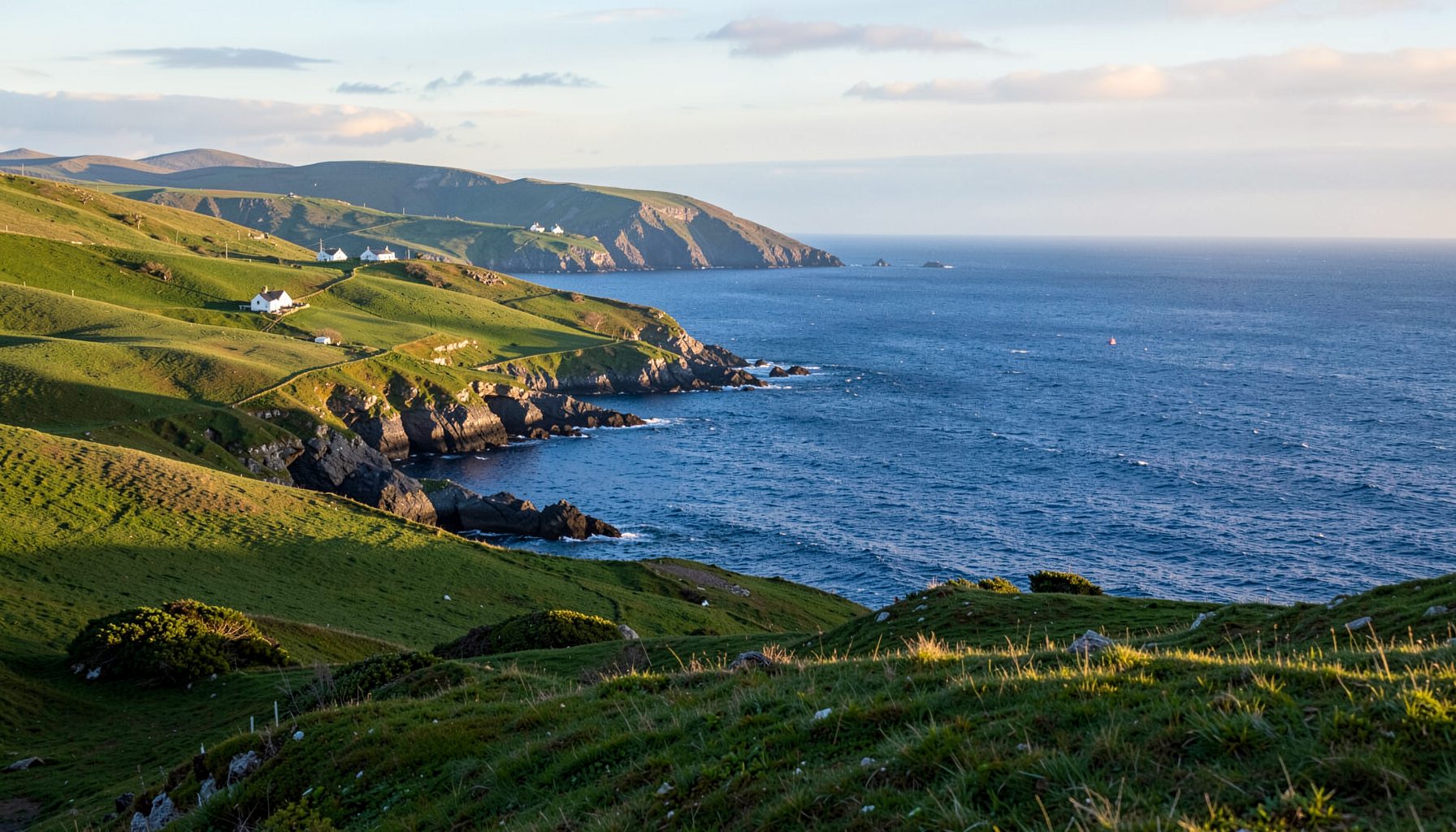
Ancient pilgrimages to Skellig Michael before the monks arrived
Long before the beehive huts rose from the rock and the gospel was chanted above Atlantic swells, Skellig Michael was already a place of arrival, devotion and awe. The jagged pyramid off the Kerry coast draws nearly everything we associate with a sacred island today: monastic ruins, a UNESCO badge, cinematic fame and steady streams of visitors. Yet the pilgrimage route that thousands follow each year is far older than the monastery itself. Its origins lie in a deeper human urge to seek out the edge of the world, and to leave something of ourselves there.
For travellers from Australia, the journey to the Skellig Coast often begins with a long flight into Dublin or Cork, a connection that mirrors the layered crossings of the past. Many Australian visitors arrive carrying a quiet sense of ancestral belonging, since Ireland's diaspora shaped whole suburbs of Sydney and Melbourne. Others come as walkers, having cut their teeth on long-distance trails such as the Bibbulmun in Western Australia or the Great North Walk in New South Wales. Either way, the act of walking toward Skellig is one that echoes a tradition far older than the medieval monastery.
Archaeology now confirms what folklore long suggested: the island drew pilgrims for many centuries before the foundation of the monastic settlement. Stone tools, funerary markers and votive deposits recovered from Skellig and its surrounding waters point to a sequence of ritual activity stretching back to the Bronze Age. Each generation found its own reason to make the difficult crossing, and each left traces that archaeologists can read today.
This pre-monastic history is not a footnote. It is the foundation on which the more familiar Christian pilgrimage was built, and it gives the route from the Iveragh Peninsula to the rock a layered, almost palimpsest quality. To walk that route today is to retrace the steps of pilgrims whose names we will never know, but whose devotion shaped the very paths we follow.
Sacred beginnings: the island before Christianity
The earliest known human interest in Skellig Michael appears in the form of prehistoric stone tools found on the island and along the nearby coastline. Microlithic flints and later Bronze Age implements suggest seasonal visits, possibly tied to seabird harvesting, fishing or ritual activity. For early Irish communities, the peak rising from the sea functioned as a liminal landmark, a place where the world of the living met the world of the spirit, much as Uluru does for visitors from Australia today.
Celtic cosmology reinforced this view. The Atlantic was understood as a realm of mystery, and islands off the western seaboard often appear in early Irish myth as abodes of the otherworld or of particular gods. Skellig was associated with figures such as Irúath, a war goddess said to have haunted the rock, and with legends of the Tuatha Dé Danann. These stories, recorded in the eighth and ninth centuries, almost certainly preserve older oral traditions that long predate the coming of Christianity.
By the early centuries of the first millennium AD, the island had clearly become a destination for those seeking a profound encounter with the divine. Whether these visitors were Iron Age Celts, early Christian hermits or a mix of both remains debated. What is certain is that the rock had acquired a reputation for holiness well before St Fionán's monastery was formally established in the sixth or seventh century.
Bronze Age footprints and ritual offerings
The archaeology of pre-monastic Skellig is fragmentary but suggestive. Stone alignments, possible burial cairns and isolated examples of rock art have been noted along the mainland approach to the island, particularly on the headlands near Valentia and the Skellig Coast. The Skellig Coast itself preserves a remarkable concentration of pre-Christian monuments, including ogham stones, ringforts and standing stones that line the route the early pilgrims would have taken.
The most compelling evidence comes from the seabed and the lower terraces of the island, where divers and archaeologists have recovered stone axes, quernstones and pottery sherds that point to deliberate deposition. Such offerings are typical of Bronze Age ritual practice across Atlantic Europe, from the lakeside deposits of the Alps to the bog offerings of Denmark. To find them on Skellig is to recognise that the rock had sacred status two thousand years before the first monk climbed the steps.
A clearer picture emerges when these finds are read alongside the wider landscape of the Iveragh Peninsula. The Valentia Island tetrapod trackway, dating to around 385 million years ago, reminds us that this coastline was always a place of wonder. For Bronze Age pilgrims, the act of travelling to Skellig would have combined a hazardous sea crossing with a procession past ancient stones, a sequence of sacred encounters that prepared them for the final, dramatic arrival at the rock.
| Era | Likely pilgrims | Main evidence | Spiritual focus |
|---|---|---|---|
| Bronze Age (c. 2500–500 BC) | Coastal farming communities, ritual specialists | Stone tools, votive deposits, possible cairns | Ancestor and nature cults |
| Iron Age / Celtic (c. 500 BC – AD 400) | Celtic elites, druids, storytellers | Mythological references, ogham stones, hilltop monuments | Otherworld, sea gods, heroic cycles |
| Early Christian hermits (c. AD 400–600) | Ascetics, peregrini | Early crosses, small cells, imported Mediterranean pottery | Personal salvation, isolation |
| Monastic era (c. AD 600–1200) | Monks, lay benefactors, later pilgrims | Beehive huts, terraces, oratories, annalistic records | Communal monastic life, relics |
Celtic mariners and the Atlantic crossing
Crossing to Skellig in a hide-covered currach would have tested the resolve of even the most seasoned seafarer. The Atlantic approaches to the Iveragh Peninsula are exposed, and sudden weather changes can transform calm water into a dangerous lee shore. The very difficulty of the journey added to the island's prestige, since only the determined, the devout or the desperate would attempt the final stage.
For Iron Age and early medieval pilgrims, the crossing was itself a rite. Irish sources describe the concept of the peregrinatio, a voluntary exile undertaken for love of God, often to a remote island or sea cliff. Skellig stood among the most celebrated destinations of this practice, alongside Aran, Lindisfarne and the far western bluffs of Connemara. The decision to travel there signalled a willingness to leave the familiar world behind.
The same waters that terrified pilgrims also connected them. Atlantic trade in hide, copper, gold and ideas ran from Iberia to Orkney, and Skellig sat within a wider network of maritime exchange. A pilgrim setting out from the Skellig Coast might have been preceded by merchants and metalworkers who had already carried news of the rock's reputation. By the time the first Christian monks arrived, the route to Skellig was already a well-trodden spiritual highway.
The hermit forerunners of the monastery
Between the pagan past and the formal monastic settlement lies a transitional phase that historians are only beginning to map. Early Irish tradition speaks of hermits who lived on Skellig before the arrival of St Fionán, and references in the Martyrology of Oengus and other medieval sources hint at an established Christian presence by the late fifth century. Archaeological surveys have uncovered small stone structures and imported ceramics that are difficult to date precisely but are consistent with fifth- and sixth-century activity.
These hermits would have followed a far simpler lifestyle than the later monastery. Rather than the orderly terraces and beehive huts associated with Fionán's community, they probably occupied natural rock shelters and small oratories, gathering rainwater and surviving on seabirds, fish and whatever provisions visitors could bring. In many ways, their way of life resembled the rugged isolation sought by contemplative communities in places such as the Flinders Ranges of South Australia, where hermit-like retreat houses still draw those seeking silence.
The hermits also helped prepare the practical infrastructure of the route. They likely established landing points, freshwater sources and the basic paths that would later be formalised by the monastic community. In this sense, the monastery did not invent the pilgrimage route so much as inherit and complete a tradition that was already centuries old.
Tracing the ancient route from Iveragh
The traditional approach to Skellig Michael begins on the Skellig Coast, the stretch of Iveragh running from Kells south to Castlecove. From here, pilgrims historically gathered at places such as Valentia, Portmagee and Beginish before committing to the open water. Each of these stopping points had its own associations with ritual, healing and storytelling, and several preserve early Christian and pre-Christian sites.
Local lore names particular rocks, wells and cliff faces along this stretch as stations of an older pilgrimage, distinct from the medieval devotions centred on the monastery. Travellers who walk the coastline today often notice the way folklore overlays older place names with later Christian ones, a layering that mirrors what archaeologists observe in the soil. To pause at these points is to participate in a route that has been walked for thousands of years, not merely centuries.
For those planning a journey from Australia, the practical steps echo the spiritual ones. Most travellers fly into Cork or Shannon, then travel by rail and road to Cahersiveen or Killarney, and onward to the Skellig Coast. The community that greets them is closely tied to its heritage, and the People of the Skellig Coast remain the most reliable guides to the layered history of the route.
Echoes of the older pilgrimage
- Pre-monastic votive deposits recovered from the seabed near Skellig Michael
- Ogham stones and ringforts along the Skellig Coast approach
- Mythological references to Irúath and the Tuatha Dé Danann associated with the rock
- Imported Mediterranean pottery suggesting fifth- and sixth-century hermit activity
Australian connections to the Skellig pilgrimage
- Strong Irish diaspora communities in Sydney and Melbourne with ancestral ties to Kerry
- University programmes in Celtic studies at the University of Sydney and the University of Melbourne
- Walking culture in Australia, from the Bibbulbun Track to coastal pilgrimages in Tasmania
- Growing interest in UNESCO sites and slow travel among Australian visitors to Ireland
The pilgrimage route to Skellig Michael did not begin with the monks. It began with a much older human impulse to seek out what lies beyond the horizon, to mark the journey with offerings, and to return changed. Every step from the Skellig Coast toward the rock carries that older devotion within it, waiting to be noticed by those who walk slowly enough. Plan your route, learn the names of the headlands, and let the layers of the past guide your own arrival at the edge of the Atlantic.