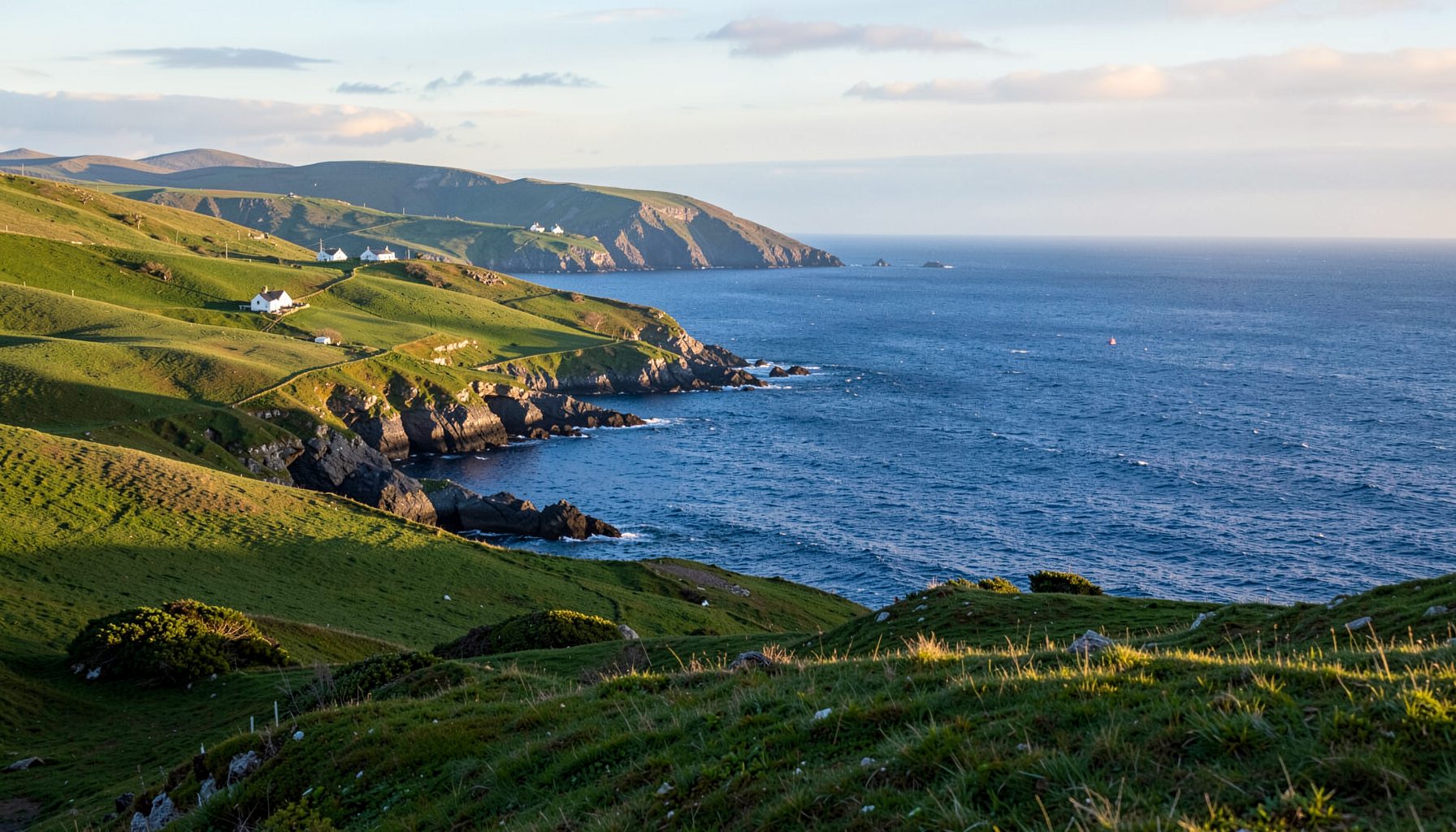
Where trad music lives: pubs with sessions on the Iveragh Peninsula
There's a moment every traveller to Ireland quietly hopes for: the sound of a fiddle, a tin whistle, and an upright bass falling into step inside a small pub while rain taps the window. On the Iveragh Peninsula, that moment arrives more reliably than almost anywhere else. Stretching from Kells in the west around to Castlecove in the south, this wide, wind-shaped finger of county Kerry keeps a tradition alive that has been passed through kitchens, fields, and bar rooms for generations. Learn more about Höhenprofile Erstellen Tools Für Wander Und Bergtouren.
Any pub worth its salt along this stretch of the Ring of Kerry hosts regular sessions, where locals and blow-ins gather around battered tables with whatever instrument happens to be in the boot of the car. For Australians planning a trip of a lifetime, tracing grandparents back to a parish church on the Iveragh, these sessions become more than entertainment. They become a way of recognising the place from which your own family story began.
The roots of trad music on the Iveragh Peninsula
Traditional music in Kerry is not a performance; it is a habit. Walk into a bar in Sneem on a Tuesday evening and you may find three generations of the same family around the fireplace, a grandmother tapping her foot while her grandson squeezes the box. The ballad tradition of the south-west sits alongside the older sean-nós singing style of the Gaeltacht villages, and both spill casually into the pubs whenever someone picks up a guitar.
Australians raised on a steady diet of Irish-Australian crossover, from The Pogues on pub jukeboxes in Melbourne to Celtic-punk nights in Brisbane, often arrive expecting a polished stage show. What they find instead is something rougher and warmer. Musicians sit in a tight circle, leaning toward each other rather than out toward an audience. Visitors are welcome, but the music is not for you; it is for them, and you happen to be in the room. By the second pint you begin to notice chords you have never heard, songs in a soft Kerry accent that sound like your nan used to mumble in the kitchen, and a tempo that swings gently rather than racing for applause.
Sneem: a village of colourful houses and curved bridges
Sneem sits in the belly of the peninsula and makes for an ideal first stop. The village's two squares, linked by a stone footbridge over the Sneem River, are edged by brightly painted houses and a surprising number of welcoming pubs. Sessions tend to gather in whichever spot locals fancy on the night, so it pays to ask at the tourist office or your B&B host which bar is buzzing.
The atmosphere here is famously laid-back, a quality travellers from Sydney and Melbourne warm to quickly. Fiddlers and flute players drift in from Caherdaniel and Castlecove, and passing musicians tend to be drawn into the circle. Order a pint of plain, claim a stool near the door, and settle in. There is no cover charge, no set list, and no obligation to tip. The only expectation is that you stay for at least three more songs than you planned.
Cahersiveen and the spirit of the Liberator
Cahersiveen, the principal town at the foot of the valley, carries the swagger of a place that gave Daniel O'Connell, the Catholic emancipation leader, to nineteenth-century Ireland. His birth-cottage sits just outside the town, but the energy is most alive at night in the pubs along Main Street. Bars here have hosted sessions through every boom and bust the Kerry economy has known, and the players who walk through the doors carry that long memory with them.
A typical night might feature anything from a slow air on the uilleann pipes to a fierce reel that pulls dancers into the centre aisle. Travellers from Perth who have flown thirty hours to reach Kerry often find that Cahersiveen's pubs give them the strongest hit of everything they came for: stories, songs, and the sense that the music belongs to a place rather than a product. Many locals will happily explain the tune names, particularly when asked about the differences between Sliabh Luachra music from the Cork border and the Munster style heard in nearby Waterville.
Portmagee: a pint before the boats to Skellig
At the foot of the bridge that crosses to Valentia Island, Portmagee is best known as the launching point for the boats to Skellig Michael, the UNESCO-listed early-Christian site that also served as a Star Wars filming location. Long before the boats leave in the morning, however, the village pubs are filling with skippers and guides nursing a warming whiskey.
Sessions here lean heavily on sea shanties and ballads about emigration, given the village's long connection to fishing and to the families who once left these shores for Boston and Sydney. It is a particular kind of nostalgia that resonates strongly with Australians in the middle of a heritage pilgrimage, especially those whose families have roots along the Atlantic seaboard. If your boat doesn't leave until the afternoon, walk down the pier and back, soak up the slate-grey view of the Skelligs in the haze, and drift toward whichever pub has its door open.
Ballinskelligs and the bay sessions
Ballinskelligs has the dual gift of a long crescent of beach and a tradition of musicians who travel out from Cahersiveen and Waterville specifically to play. The local pub, set back from the strand, is small enough that the music fills the room without amplification. By the time the second reel begins, visitors who walked in as strangers are usually sharing a sandwich and trading stories with the players.
A useful bit of etiquette to know: don't clap between tunes unless someone else does, don't record more than a song or two without asking, and never put a coin on the stage mid-session. Buy a round instead. The drive out from Cahersiveen to Ballinskelligs crosses some of the most lyrical countryside on the peninsula, a quilt of dry stone walls and Atlantic light, and is well worth doing in daylight before a session.
Valentia Island and the listening coast
Cross the bridge from Portmagee and you reach Valentia Island, a quiet, slate-rich place where the Atlantic pounds the southern cliffs. The pubs here are fewer, but what they lack in number they make up for in concentration: when a session starts on Valentia, the whole island tends to know within the hour.
Before nightfall, most visitors follow the cliff path from the old slate quarry out toward Bray Head, a walk that climbs steadily above the sea. Travellers who want to chart their climbs ahead of a longer walk on the Skellig coast often look up tools that help build elevation profiles before heading back to Portmagee for the evening. The Valentia sessions tend to be the most intimate on the peninsula, more singing than instrumental. Locals will quietly recite the long-form ballads stored in family memory for generations, and you may even hear verses in the local dialect that won't appear in any songbook. Bring a notebook.
How to get the most out of a trad night in Kerry
A few small habits go a long way. Most sessions run from around 9pm to midnight midweek and later on weekends, but the circle usually begins to take shape an hour earlier. Arrive before the music starts if you want a seat, and have at least one round in before you request anything. Dress for the weather rather than the venue; Kerry pubs are often stone-built and lit by firelight, so a proper jumper is more useful than you might think.
Bring small notes and coins, as some of the more rural pubs still prefer cash, particularly in outlying villages like Castlecove. Finally, accept that no two sessions are ever the same. The same bar can be quiet on a Wednesday and electric on a Thursday, and that unpredictability is part of the joy. For Australians in particular, try to tie a session in with at least one daytime heritage stop, such as Derrynane House near Caherdaniel or the O'Connell memorial chapel in Cahersiveen. The music hits differently when you have walked the same roads your forebears walked earlier in the day.
Slip behind the wheel of a hire car in Killarney or Tralee, run south past Killorglin into the heart of the Iveragh, and let the trad find you. Plan a few nights around Sneem, Portmagee, and Valentia, follow the sound of a fiddle on a still evening, and step into one of the oldest and warmest musical traditions in Europe. Once you have tapped your foot under a Kerry table on a wet Wednesday night, you will understand why so many Australians fly home with a Sliabh Luachra reel stuck in their head for years afterward.