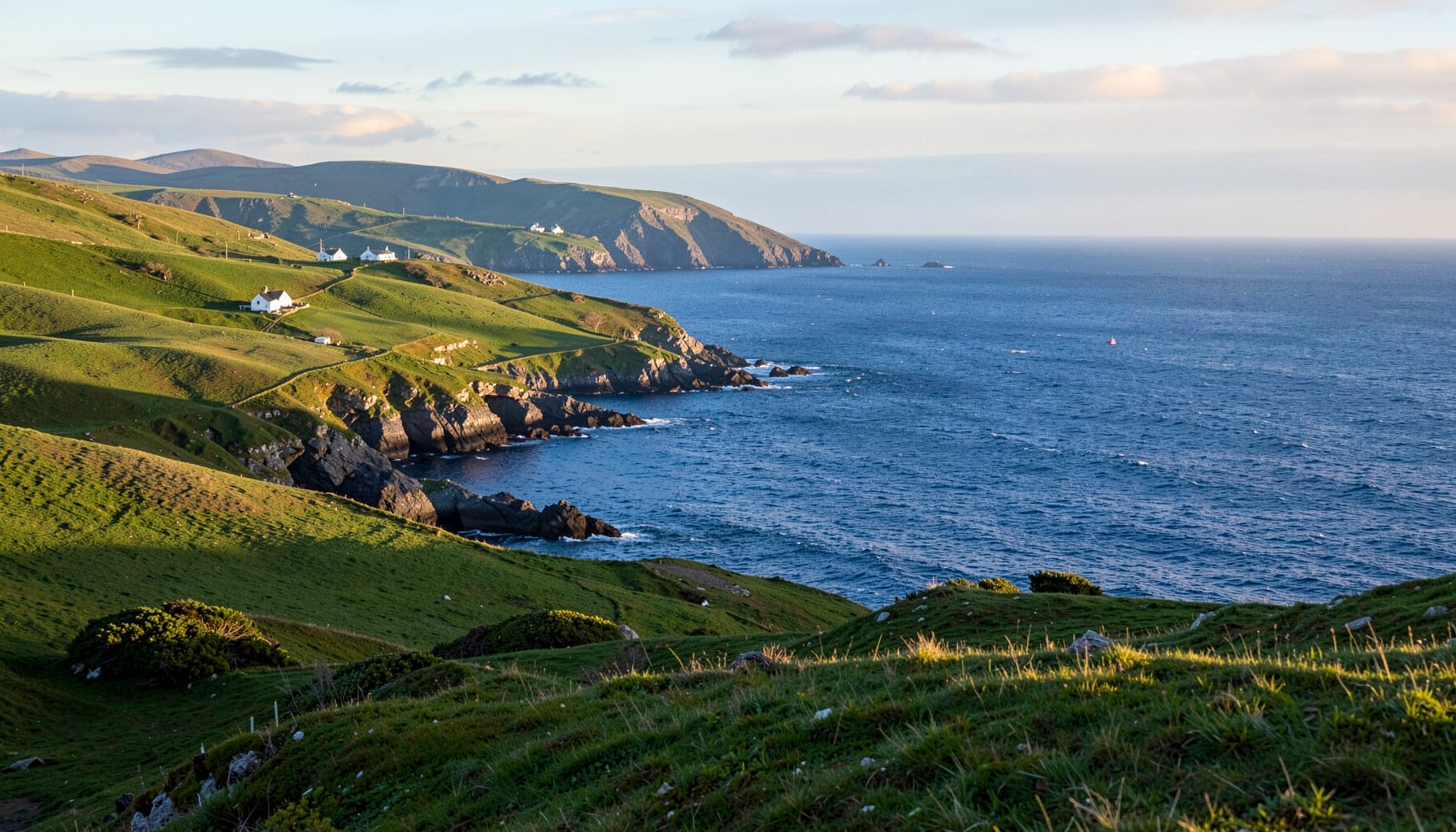
Quiet evening pubs along the Skellig Coast with views of the Atlantic
When the afternoon light softens over the Atlantic and gulls wheel back toward their cliff roosts, a particular kind of stillness settles along the Iveragh Peninsula. The villages between Kells and Castlecove reveal their gentlest faces at this hour, and nowhere is the mood more perfectly matched than in the small pubs that face the water. These are not places of thumping music or packed lounges. They are havens where a quiet pint tastes better for the unobstructed horizon just beyond the window.
Many travellers from Melbourne or Sydney arrive expecting the bright buzz of an Australian hotel bar and find instead something quite different. Where a Sydney pub might be filling up with office workers heading to a counter meal, these Kerry pubs glow softly from a handful of regulars swapping stories with a farmer or two. The tempo is slower, the windows wider, and the conversation drifts between Gaelic and English as naturally as the tide.
The Skellig Coast has earned its quiet reputation precisely because of this contrast with busier tourist circuits. Visitors who travel past Waterville and on toward the western coves often remark on the unhurried welcome. A guide to regional hosts at skelligcoastline.com makes it clear that drinking here is part of everyday life rather than a packaged experience, and that is exactly what gives the evening its weight.
Pubs overlooking Kenmare Bay in Sneem
Sneem sits where the River Sneem meets Kenmare Bay, and the village green is ringed by pubs whose back doors open almost onto the water. At sundown the bay turns to brushed pewter and the air cools enough that even a sheltered courtyard feels alive. Locals tend to gather inside rather than on the street, but a window seat is usually easy to find by six. The pace resembles a country pub anywhere in regional Victoria, with the Caha Mountains across the water taking the place of the Grampians.
For visitors from Adelaide or Brisbane who expect bar service at the table, it helps to know the local custom. You order at the counter, get a number, and carry your own pint back. Tipples lean toward plain stouts, a creamy local red ale, and the occasional whiskey flight. There is often a bowl of plain crisps, sometimes a basket of brown bread, and almost no music beyond the hum of the room itself.
A quiet table near the front window reveals fishing boats returning for the night and the slow drift of cormorants over the inlet. Photographers find that the strongest frames come well after sunset, when the remaining glow catches the bay and the silhouettes of the headlands. Anyone used to the bright boardwalk pubs of Perth's Cottesloe will recognise how much of the appeal here lies in the muted palette.
Valentia Island's Knightstown and the Atlantic horizon
Reaching Knightstown requires a short ferry from Reenard Point, and the village rewards the journey with pubs that look directly onto Valentia Sound and the open Atlantic. By eight in the evening the ferries have stopped, and the place settles into a comfortable hush. Patrons drift in after a day walking the cliffs of Valentia Island or visiting the lighthouse, and the conversations are easy and unhurried.
Those familiar with Australian wine country will recognise something of the same devotion to provenance here. Margaret River and Barossa Valley tasting rooms share that emphasis on regional character, even if the drink in Knightstown is more often a stout than a shiraz. A curiosity about how drink routes connect remote producers with visitors is well served by a look at regional wine trail maps, which show how a quiet regional detour can be planned at any pace.
A corner stool near the window at any of the Knightstown pubs offers one of the purest sea views on the entire coast. When the sky is clear, the lights of Dingle are visible across the water and the dark mass of the Dingle Peninsula beyond. There is little need to do anything other than watch, sip, and be still.
Portmagee and the approach to Skellig Michael
Portmagee feels like the end of the road in the most appealing sense. The single street drops down to a small harbour, and the boats that ferry visitors out to Skellig Michael leave from the very edge of the village. By the time the last Skellig boat returns, the pubs along the waterfront have settled into their evening mood. There is a quiet buzz among those who have just made the crossing, mixed with the regulars who never considered the trip at all.
The pubs here are small and tight, with only a handful of tables near the water. Outside seating is rare, and when it exists it is tucked behind a wall. The trade-off is glass on three sides and an unobstructed look over the channel to Valentia Island. Light at this hour falls across the rooftops in long golden bands before fading entirely.
Locals insist that the best evening for a quiet drink is midweek, when the boat schedules thin out and the tour buses have passed through. Weekends see a livelier mood as groups gather before or after a seafood dinner. Either way, the welcome is warm and the choices include both the expected stouts and a few rotating Irish craft labels from small brewers a county or two away.
Cahersiveen, a working harbour town
Cahersiveen is the largest town on this stretch of coast and yet it retains the unpretentious feel of a working harbour. The River Fertha widens near the town and meets the Valentia River estuary, so sea views come with a backdrop of small industry rather than dramatic cliffs. The pubs along the main street each have their own character, but most share a common front that opens up toward the water.
An Australian visitor might be reminded of a coastal town on the Bellarine Peninsula or the fishing villages outside Hobart, where pub life revolves around a working port and the early start of the next day. Here too the custom of a single shout, where one person buys a round for the table, is a familiar gesture of warmth. Locals do not stand on ceremony, and newcomers who follow the lead tend to find themselves drawn into conversation whether they intended it or not.
The nightcap view from the higher tables looks over the estuary and out toward the open bay. The river mouth is wide and the horizon generous, so even on a grey evening the sea is never far from sight. There is comfort in watching the lighthouse blink near the entrance to the harbour while finishing the last sip of a dark, nutty porter.
Comparisons with a Sydney harbour watering hole
A Sydney harbour pub may pour a perfect beer with the bridge framed outside, but the social rhythm tends to be quick. Patrons gather for a single drink before moving on, and the table turnover is brisk. The Skellig Coast pubs trade that briskness for stillness, and in doing so they allow a different kind of evening to unfold.
There is also a different relationship with the countryside. Australians touring Coonawarra or the Mornington Peninsula tend to plan their wine stops with a marked map in hand. The Iveragh equivalent is less mapped and more serendipitous. You walk into a place because it looks inviting, and the next two hours decide themselves. That unhurried spirit is part of the regional identity, and it is increasingly rare in cities like Brisbane or Perth where the pace pulls everyone along.
Both coasts share a respect for the small producer. Whether the drink is a Yarra Valley pinot or a local Ballinskelligs stout, travellers here and at home appreciate what a single growing region can offer when the ingredients are right. That common ground is one of the quiet pleasures of travelling from the eastern edge of the world to the western one.
Quiet corners from Kells to Castlecove
At the eastern end, the village of Kells looks out over a small bay framed by modest hills. The pubs here are simple, family-run, and unhurried. The view is less dramatic than Portmagee or Valentia, but it carries its own soft appeal, especially on a still evening when the surface of the water turns silvery and the distant hills fade into mist.
Further west toward Castlecove, the coastline narrows and the sea comes closer to the road. Pubs along this stretch tend to be even quieter, sometimes with only a handful of other customers in the entire room. Locals stop in for an evening pint after a long day, and visitors who have walked down from the hills above the cove find a natural pause waiting for them.
The whole route from Kells to Castlecove rewards those who resist the urge to rush. Each pub has its own angle on the water, its own regulars, and its own way of welcoming a stranger. A single week is enough to know only a few of them well, which is reason enough to plan a return visit before the first pint is even poured.
Take your time, choose a single pub each evening, and let the coast reveal itself one quiet table at a time. The Atlantic will be there at sundown, and the welcome is best measured in hours rather than in pints.