The Story of Waterville Golf Links and Its Place in Kerry
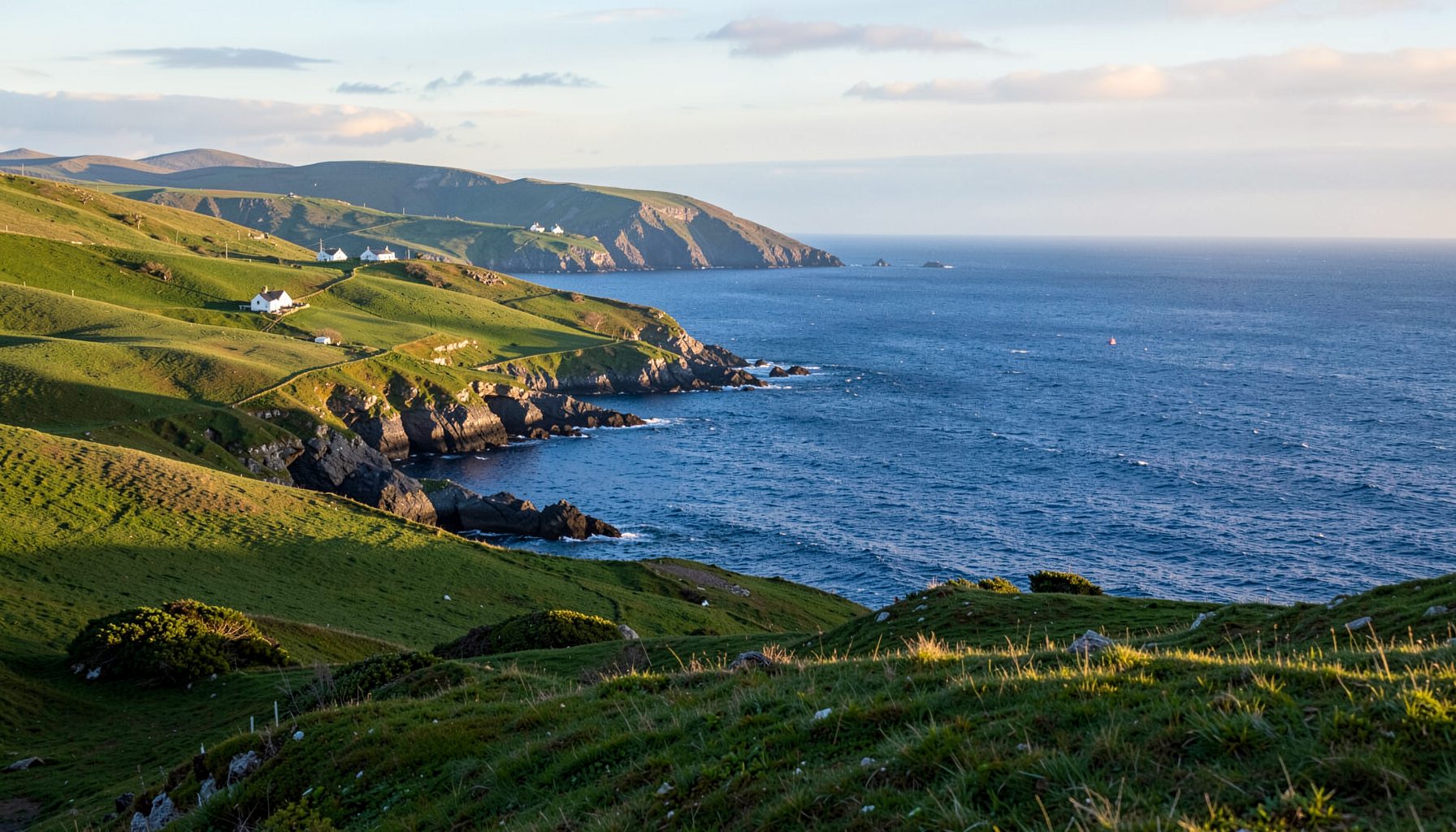
On Ireland’s south-west coast, Waterville Golf Links occupies a remarkable strip of land between the Atlantic Ocean and the mountains of the Iveragh Peninsula. Its fairways run through dunes, coastal grasses and natural hollows, with views towards Ballinskelligs Bay and the distant Skellig Islands. The setting feels wild, yet the links is closely connected with the village, its people and the long story of visitors arriving in Waterville.
The course known today as Waterville Golf Links is a relatively modern creation within an older golfing tradition. It developed from early recreational golf in the area, then took shape in the twentieth century through the vision of local figures, Irish golf architect Eddie Hackett and American-Irish businessman John A. Mulcahy. Its history reflects changing ideas about golf, tourism and rural enterprise along the Ring of Kerry.
For Australian visitors, the appeal is easy to understand. Waterville has the strategic challenge of a championship links, the relaxed character of a small coastal community and a sense of place that cannot be separated from Kerry’s landscape. It is a very different experience from Melbourne’s Sandbelt or the coastal courses around Sydney, but golfers familiar with firm ground, sea winds and fast-running fairways will recognise its special language.
Early Golf In Waterville
Golf reached Waterville in the late nineteenth century, when the village was becoming better connected through the railway and the growth of seaside tourism. Local accounts generally place organised golf in Waterville around 1889. Early play was informal by modern standards, using modest facilities and the natural terrain rather than a fully developed championship course.
The arrival of golf fitted the wider social changes taking place across Ireland. Railway links brought visitors from larger towns, while the Ring of Kerry gradually became known for scenery, fishing, bathing and outdoor recreation. Golf offered another reason to stay in the district and helped establish a sporting identity that the community would later build upon.
The early club was not the same course as the present Waterville Golf Links. Like many Irish clubs, it evolved through changing sites, membership patterns and local ambitions. The important point is that golf became part of Waterville’s community life well before the modern links opened. The later course inherited that tradition rather than appearing without local roots.
The Land And The Links Tradition
The land beside Waterville is particularly suited to links golf. It sits on a coastal peninsula shaped by wind, salt and shifting sand, with dunes providing natural corridors and elevated points. Instead of relying on large earthworks, a links course can use the ground’s existing contours: rumpled fairways, hollows, banks and sandy lies that change with the weather.
That landscape gives Waterville its visual character, but it also explains the course’s strategic demands. Players must consider the direction of the wind, the firmness of the turf and the way a ball may bounce after landing. A shot that appears safe can run into a hollow, while a bold line over a dune may open the best angle to the green.
The course is often described as a classic Irish links because it asks golfers to adapt rather than simply repeat a set of technical movements. Rain can soften the ground, while a dry spell and Atlantic breeze may make it quick and unpredictable. Australians accustomed to planning golf around heat, coastal wind and sudden weather changes will find a familiar need to read conditions, even though Kerry’s cool, changeable climate is a world away from a Queensland summer.
John A Mulcahy And A New Vision
The modern history of Waterville Golf Links is closely associated with John A. Mulcahy, a native of Waterville who built a successful career in the United States. His affection for his home village and belief in the potential of the coastal land helped create the ambition for a major new golf course.
Mulcahy wanted more than a small local club. He saw the possibility of a destination course that could attract serious golfers while supporting the village and strengthening the area’s tourism economy. That vision was significant at a time when rural Ireland was seeking new forms of employment and international recognition.
Irish golf architect Eddie Hackett was brought into the project. Hackett had an instinct for working with natural landscapes, and his approach suited the dunes and coastal ground at Waterville. Rather than forcing the land into a rigid design, the course was shaped around its existing features. John Harris also contributed to the development, particularly through later design work and refinement associated with the course.
The present 18-hole Waterville Golf Links opened in 1973. Its creation marked a new chapter for the village, connecting an old Irish sporting tradition with international golf tourism. The course quickly earned respect for its natural setting and demanding design, while retaining a relationship with the local community.
Famous Visitors And International Recognition
Waterville’s reputation grew through the golfers who travelled to play it. The course attracted professionals, leading amateurs and visitors seeking a genuine seaside links rather than a resort-style imitation. Its place along the Ring of Kerry gave it an additional advantage: a round could be part of a broader journey through one of Ireland’s most celebrated landscapes.
The village also became associated with Charlie Chaplin, who spent holidays in Waterville with his family from the late 1950s. Chaplin was a keen golfer, and the village remembers his connection through the annual Charlie Chaplin Comedy Film Festival and a statue on the seafront. His presence helped give Waterville an international cultural profile beyond golf.
Over time, praise from renowned golfers strengthened the course’s standing. Waterville became known among serious players as a links with distinctive ground and a demanding but fair test. Rankings and visiting professionals brought greater attention, though the course’s appeal has always depended on more than a position on a list. The combination of coastline, village atmosphere and traditional design is what makes a visit memorable.
For Australians, this international story has a familiar pattern. A course may become famous through elite tournaments and overseas visitors, yet its real identity remains local. The same balance can be seen at celebrated Australian clubs, where global recognition exists alongside strong club traditions, volunteer networks and regional pride.
Golf, Community And The Ring Of Kerry
Waterville Golf Links is part of a living community rather than an isolated sporting venue. The course contributes to the local visitor economy, supporting employment and bringing golfers into nearby cafés, shops, pubs and other businesses. Its presence also helps keep Waterville visible on itineraries through the Iveragh Peninsula, alongside the Skellig Coast, Kerry’s walking routes and cultural attractions.
The relationship works in both directions. Visitors arrive for golf, but they encounter a village with its own history, harbour, coastline and community events. The golf course gains meaning from this setting. A round can be followed by a walk along the promenade, a look at the Chaplin statue or a journey towards Ballinskelligs and the wider Skellig region.
This is especially relevant to regional tourism in Ireland, where local businesses often depend on visitors staying longer and exploring beyond a single attraction. Waterville’s links can be part of a wider cultural route that includes heritage sites, outdoor programmes, learning initiatives and the stories of the people who live along the coast.
Australian travellers may recognise the value of that regional connection. In Australia, a trip to a course near a coastal town often combines golf with local food, Aboriginal heritage, beaches or national parks. In Kerry, the distances are smaller but the roads can be narrow and winding. Because Ireland and Australia both drive on the left, the basics feel familiar, although visitors should allow extra time rather than trying to rush between tee times and sightseeing stops.
Experiencing The Course Today
A round at Waterville begins with the environment. The Atlantic is a constant presence, whether visible from a tee, heard beyond the dunes or felt in the changing wind. The mountains behind the course add another layer to the view, while the Skellig Coast gives the round a strong geographical identity.
The challenge comes from variety. Some holes invite a confident drive across open ground; others demand restraint and careful positioning. Greens may be approached through natural run-offs, banks and hollows, making the ground game important. Golfers who rely on a high aerial approach on every hole may need to adjust, especially when the wind is strong.
Weather is part of the course’s history and character. Summer does not guarantee still conditions, and a bright morning can change quickly. Australian visitors planning around school holidays or an extended European trip should pack for layers and rain rather than assuming that July or August will resemble a Sydney or Brisbane winter day. An early tee time can also be useful during busy periods, while allowing room in the itinerary for weather-related changes.
The experience is best understood as a meeting of golf and place. Waterville is a demanding course, yet it is not defined solely by scorecards or championship standards. Its appeal lies in walking through a landscape shaped by the sea, playing over ground that has retained its natural personality and then returning to a village with a long connection to visitors.
Waterville Golf Links stands as a story of local initiative, Irish design and international friendship. From the first golf played in the district to the opening of the modern links in 1973, its development has followed the changing fortunes of Waterville and the Ring of Kerry. The course continues to carry that history across its dunes and fairways.
Explore the wider Skellig Coast to place the links in its full setting: discover Waterville’s village heritage, the communities from Kells to Castlecove, nearby walking and outdoor programmes, and the cultural landscape leading towards Skellig Michael. The story of the golf course is one part of a much larger coastal heritage.