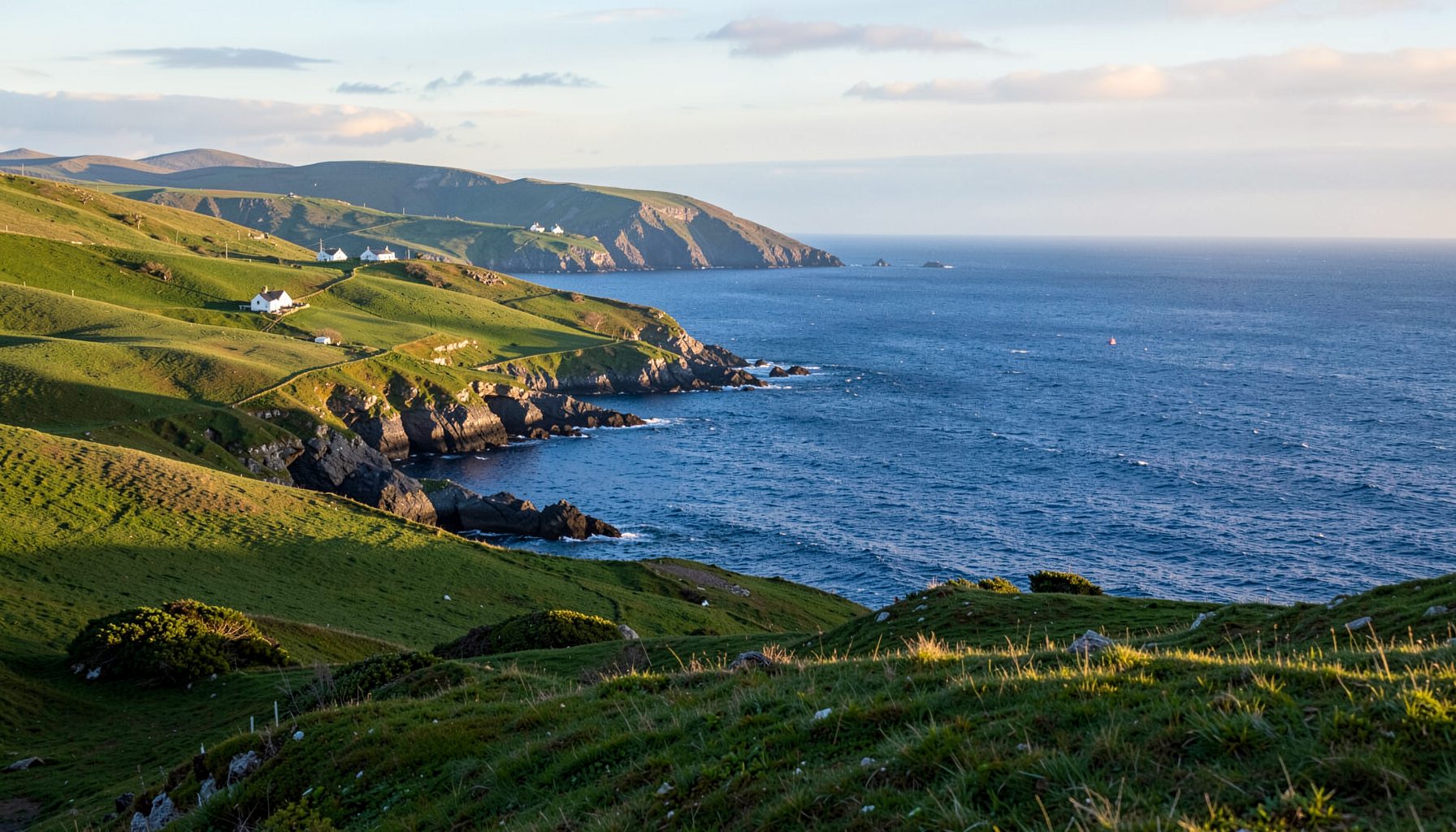
Skellig Michael Boat Trips And Safe Passage
Skellig Michael rises sharply from the Atlantic west of the Iveragh Peninsula, a dark pyramid of rock reached by weather, seamanship and patience. The island’s early monks chose an extraordinary place for prayer and solitude, while modern visitors arrive by small passenger boat from the Skellig Coast, usually leaving Portmagee or nearby harbours.
For Australians, the journey can feel familiar in one respect: it is a coastal outing shaped by conditions rather than a guaranteed timetable, a little like planning a boat trip around Tasmania, Rottnest Island or the Great Ocean Road when the forecast is changeable. The difference is the Atlantic swell, the exposed landing and the need to respect a passage that has always demanded careful local knowledge.
From Open Sea To Sacred Rock
The story of the boat trips begins long before tourism. Skellig Michael, also known as Great Skellig, was a remote monastic settlement occupied from roughly the sixth or seventh century. Its stone beehive huts, or clocháns, were built high above the sea, where access was difficult and supplies had to be carried or hauled across open water.
The monks did not have modern engines, marine radios or weather apps. Their relationship with the sea was practical and constant. Boats connected the island with the mainland, but every crossing depended on wind direction, swell, visibility and the skill of those handling the vessel. Safe passage was never an abstract idea; it determined whether people, food and messages reached the rock.
The Skelligs also formed part of a working maritime landscape. Fishing, lighthouse service, island farming and coastal transport all helped shape local knowledge. The boatmen who now carry visitors towards the UNESCO World Heritage Site operate within that same tradition of reading the water before committing to the journey.
The Harbour Community Behind The Trips
Portmagee is the best-known departure point for Skellig Michael excursions, with Valentia Island, Ballinskelligs and other nearby locations contributing to the wider coastal story. The village is more than a place to board a vessel. It is a community where operators, harbour users, guides, conservation staff and residents share an awareness that the sea sets the pace.
A boat trip begins on shore, often with a briefing about timing, clothing, footwear and landing conditions. Crews check the forecast and sea state, assess the vessel and communicate with the relevant authorities. These decisions may change during the day. A calm morning can become uncomfortable by afternoon, and a forecast that looks acceptable offshore may still produce a difficult approach at the island.
This community-based pattern will make sense to visitors from Australia, where small coastal operators around Eden, Byron Bay or the Whitsundays also rely on local conditions and reputation. Irish operators, however, often use the phrase “weather window” in a particularly literal way. The window may be brief, and a responsible skipper will close it rather than pressure a trip to proceed.
What A Landing Requires
There are two broad ways to experience the Skelligs from the water. A landing trip allows passengers to go ashore on Skellig Michael when permits, weather and sea conditions align. A wildlife or viewing cruise circles the islands without landing, offering views of the cliffs, monastery and seabirds from the boat.
Landing requires several decisions to work in sequence. The vessel must reach the island safely, the sea must be manageable at the steps, passengers must transfer one at a time and the return journey must remain realistic. Even after arriving, the landing can be suspended if surge makes the small access point unsafe. A ticket is therefore a place on a planned attempt, not an absolute promise of shore access.
The stone stairway from the landing area to the monastery includes hundreds of uneven steps, traditionally counted at about 618. There are no handrails along every section, and the surfaces can be wet or worn. Visitors need steady footing, sensible clothing and enough fitness to climb slowly. The boat crossing and the island walk are one connected experience, rather than separate attractions.
Reading Weather And Water
Safety begins with accepting that a cancelled or altered departure is a professional decision. Wind, wave height, swell direction, fog and visibility all matter. The Atlantic can produce a long rolling motion that feels very different from the short chop familiar to someone taking a ferry across Sydney Harbour. Motion sickness is common enough to deserve preparation.
Crews also consider the island’s shape. The exposed western cliffs can receive powerful swell, while the landing area may appear sheltered until a set of waves arrives. A skipper watches the timing between sets, the boat’s angle and the movement of passengers. This is skilled coastal navigation, not simply a matter of following a GPS line.
The phrase “safe passage” includes the return journey. A group may enjoy a clear view of the monastery and still need to leave promptly when conditions change. Guides manage the pace ashore, keep visitors away from unstable edges and explain why certain areas are closed. Conservation and safety overlap: fewer rushed movements mean less damage to fragile archaeology and nesting habitat.
How The Passage Became An Experience
In the early tourism era, visiting the Skelligs was a specialised undertaking. Boats were smaller, communications were limited and the journey appealed mainly to archaeologists, birdwatchers, photographers and determined adventurers. As interest in Irish heritage grew, local boat operators developed more regular services while retaining the essential dependence on weather.
The island’s appearance in Star Wars brought a new international audience. The film connection added visibility, but it sits alongside a much older story of monastic settlement, maritime work and conservation. For communities along the Skellig Coast, the value of the trip is strongest when visitors understand that the cinematic landscape is also a sacred historic site and a living part of regional identity.
The wider area rewards that broader perspective. A journey through Kells, Caherdaniel, Waterville, Ballinskelligs and Portmagee links the offshore monument with villages, walking routes, local history and community initiatives. Even the story of a nearby waterway, recorded in the account of the local salmon leap, shows how the coast’s heritage extends beyond the most famous island.
Details That Shape The Day
A well-run trip usually involves more preparation than visitors first expect:
- Departure times can shift with tide, wind and swell.
- Landing access depends on an official permit and suitable conditions.
- Warm, waterproof layers are useful even during an Irish summer.
- A viewing cruise may replace a landing without being a failed trip.
For Australians planning around annual leave, this flexibility matters. Irish summer days can stay light late into the evening, but light does not guarantee calm water. School holiday periods in New South Wales, Victoria and Queensland often encourage advance bookings, while the Skellig Coast’s short operating season makes early planning just as important.
People, Wildlife And Responsibility
Skellig Michael is a protected heritage site as well as a dramatic destination. The monastic structures are vulnerable to erosion, careless contact and heavy foot traffic. Visitors follow marked routes, listen to guides and avoid removing stones or disturbing archaeological features. The island’s seabirds also need space, particularly during nesting periods.
The surrounding waters support gannets, puffins, razorbills, guillemots, seals and dolphins at different times of year. Wildlife encounters are never guaranteed, and a quiet crossing can still be valuable. A skipper may alter the route to avoid crowding birds or to give animals room, placing responsible observation ahead of a perfect photograph.
This approach is familiar to Australians who visit the Great Barrier Reef, Phillip Island or Kangaroo Island: wildlife tourism works best when the animal, habitat and local community come before the visitor’s checklist. On the Skellig Coast, that principle is applied to both nature and heritage. The island is not a theme park, and the boat is not simply a transfer service.
Comparing The Main Ways To Visit
The right choice depends on mobility, interest, tolerance for sea movement and how much flexibility is available in an itinerary. Landing trips provide the most complete encounter with the monastic site, but they also involve a demanding climb and stricter conditions. Viewing cruises offer a safer alternative when landing is unavailable and can be especially suitable for families or visitors who prefer to stay on the water.
Australians often build a long Irish journey around a few major experiences, travelling from Dublin or Cork before continuing through Kerry. Allowing a spare day near Portmagee is sensible because it gives an operator room to move a departure when the Atlantic turns rough. It also avoids treating the Skelligs like a fixed attraction that can be fitted into a tight coach schedule.
Practical Booking Priorities
Before committing to a departure, keep these points in mind:
- Confirm whether the booking is for a landing or a viewing cruise.
- Check the operator’s cancellation and weather policy.
- Allow extra time in case the sea prevents landing.
- Bring medication or other support for motion sickness.
| Visit style | What it offers | Main limitation | Best suited to |
|---|---|---|---|
| Skellig Michael landing | Access to the monastery and island steps | Weather, permits and mobility requirements | Active visitors with flexible plans |
| Wildlife and viewing cruise | Offshore views, seabirds and dramatic cliffs | No access to the monastic settlement | Families, photographers and cautious travellers |
| Private or small-group trip | A more personal pace and local commentary | Usually higher cost and limited availability | Visitors seeking a quieter experience |
| Shore-based Skelligs viewpoint | No sea crossing and easy schedule | Distant views only | Travellers with limited time or poor conditions |
Safe passage is therefore a shared responsibility. Operators provide vessels, guidance and local judgement; passengers contribute by arriving prepared, following instructions and accepting changes without treating them as inconvenience. The boat trip’s story is carried forward each time a crew chooses caution, protects the island and brings visitors home safely.
For anyone exploring Ireland’s south-west from Kells to Castlecove, the Skellig Michael journey offers more than an offshore landmark. Book through a reputable local operator, allow room for the weather, and approach the crossing with respect for the sea, the island and the communities that have guided people across this water for generations.