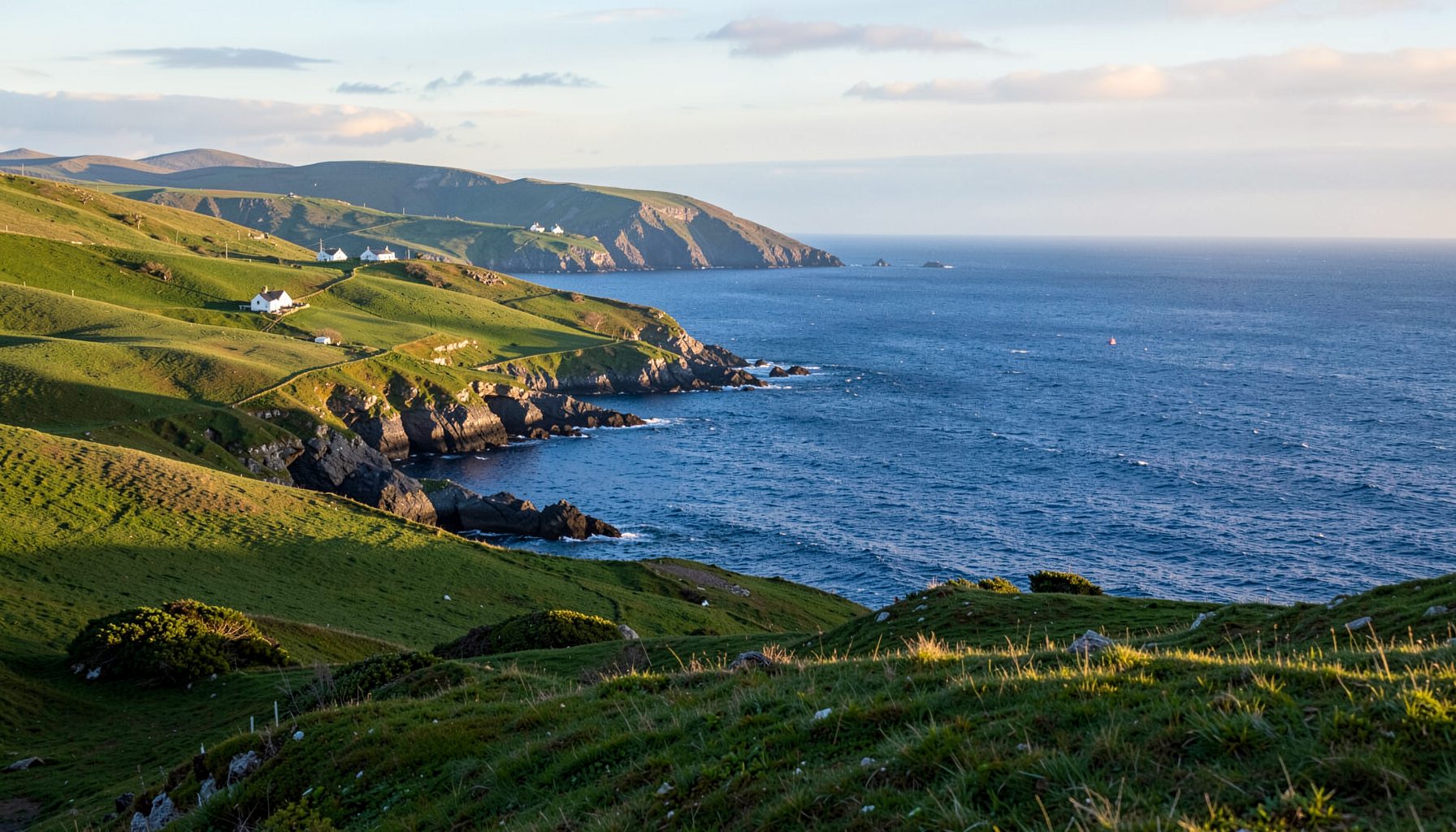
The Story Behind The Skellig Experience Exhibition
On Valentia Island, The Skellig Experience introduces visitors to one of Ireland’s most remarkable coastal landscapes: the Skellig Islands, rising from the Atlantic west of the Iveragh Peninsula. The centre offers a practical way to understand Skellig Michael before seeing it from a boat, or instead of visiting the island when sea conditions, conservation rules or mobility needs make a landing unsuitable.
The exhibition brings together archaeology, maritime history, wildlife, geology and local stories. It explains how monks lived on the remote rock, how generations of islanders worked with the sea, and why the Skelligs now attract heritage visitors, birdwatchers, filmmakers and researchers. For regional background, community information and nearby places to explore, the Skellig Coast information hub provides useful context around this part of County Kerry.
| Exhibition Focus | What Visitors Can Understand | How It Differs From a Boat Trip |
|---|---|---|
| Monastic heritage | The beliefs, routines and engineering of the early Christian monks | Gives background without climbing the island steps |
| Marine environment | Seabirds, seals, ocean conditions and island ecology | Allows a closer look at the wider setting from land |
| Geology and landscape | How the Skellig rocks formed and endured Atlantic weather | Explains the physical character of the islands |
| Film and popular culture | Why Skellig Michael became recognisable to global audiences | Places screen images within a much older heritage story |
| Local identity | The relationship between Valentia, Portmagee and the islands | Shows that the Skelligs belong to a living coastal community |
The Centre’s Place On Valentia Island
The Skellig Experience Visitor Centre is located on Valentia Island, close to the bridge linking the island with the mainland at Portmagee. Its position matters because Valentia is more than a departure point for excursions. It is a community shaped by fishing, farming, communications, tourism and a long history of people making a living at the Atlantic edge.
The centre was created to help visitors interpret the islands in a safe and accessible setting. Skellig Michael is exposed, remote and physically demanding, with steep stone steps and tightly controlled visitor access. The exhibition gives people a meaningful encounter with the site even when a boat trip is unavailable or when a visitor prefers a less strenuous experience.
For Australians, the setting may feel familiar in spirit but different in scale. Someone used to planning a coastal outing from Sydney, Melbourne or Brisbane may recognise the importance of checking weather, transport and seasonal opening times, yet the Atlantic can change quickly and local distances are deceptive. A short-looking journey on a map can involve narrow roads, ferry connections and limited services.
How The Exhibition Tells The Story
The exhibition uses displays, models, images and audio-visual interpretation to turn a distant rock into a comprehensible place. Rather than presenting Skellig Michael as an isolated monument, it connects the island to the sea routes, settlements and working communities around Valentia and the wider Ring of Kerry.
A central strength is the way different kinds of evidence are placed together. Archaeological remains show how the monastic settlement was built. Natural history explains why the islands support important seabird colonies. Personal and local accounts add a human dimension, helping visitors picture the practical knowledge required to navigate, fish and live near such exposed waters.
The result is a layered story rather than a single heroic narrative. The monks’ achievement is extraordinary, yet the exhibition also draws attention to weather, food, stonework, tides and the continuing work of conserving a fragile place. This makes the experience suitable for families, school groups, heritage enthusiasts and visitors who want more substance than a scenic photograph.
Monastic Life On Skellig Michael
Skellig Michael is best known for its early Christian monastery, established on a rocky pinnacle far offshore. The monks selected a location that offered solitude and spiritual separation, then constructed a settlement from local stone. The surviving beehive-shaped huts, terraces, oratories and steps demonstrate careful building in a severe environment.
The exhibition helps explain how the monastery functioned. Water collection, food storage, cultivation and movement around the rock were essential parts of religious life. The stone terraces created small areas where plants could grow, while the construction methods reduced exposure to wind and rain. Every feature reflects adaptation to the island’s limited resources.
That context is especially valuable before a landing visit. Visitors may otherwise focus on the dramatic staircase or the distinctive huts without seeing the daily discipline behind them. The exhibition encourages a slower reading of the site, where architecture, faith and survival are understood together.
Access is regulated because Skellig Michael is both a UNESCO World Heritage Site and a vulnerable archaeological location. Landing places are limited, weather can prevent visits, and the stone surfaces require care. The centre therefore plays an important role in building respect for restrictions that protect the monument for future generations.
Wildlife, Sea And Geology
The Skellig Islands are shaped by the Atlantic as much as by human history. Their cliffs provide nesting habitat for seabirds, while the surrounding waters support a rich marine environment. Depending on the season, visitors may learn about gannets, puffins, fulmars, guillemots, razorbills and other species associated with the islands.
Wildlife interpretation adds movement to the exhibition’s archaeological story. The Skelligs are not empty ruins; they are active habitats where breeding cycles, migration and ocean conditions influence what people see. Seals, dolphins and whales may also be encountered in the surrounding waters, although sightings can never be guaranteed.
Geology supplies another layer. The islands’ steep rock faces and dramatic profiles are the result of ancient geological processes followed by relentless erosion. Looking at the Skelligs through this lens helps explain why the monastery appears so precariously placed and why the approach by sea is so visually powerful.
Visitors from Australia will recognise the need for responsible wildlife viewing. The same principles that apply around seal colonies in Tasmania, seabird sites near Perth or marine parks along the Great Ocean Road apply here: keep distance, follow instructions, avoid disturbing animals and take all rubbish away. Irish conservation rules and site management decisions are part of the visit, not an inconvenience separate from it.
From Film Location To Living Heritage
The worldwide popularity of Star Wars brought a new audience to Skellig Michael. The island appeared as a memorable setting in the sequel trilogy, and many visitors now arrive with images of the rock already formed through cinema. The exhibition acknowledges this connection while placing it within a much longer cultural timeline.
Film is a useful doorway into the story, especially for younger visitors and people who first heard of the island through popular culture. It can prompt questions about how crews worked in a protected landscape, how remote locations are represented on screen and why the visual character of the Skelligs suits a story about isolation and discovery.
The exhibition does not reduce the island to a film set. Its monastic history is centuries older, and its environmental importance extends far beyond any production. This balance matters to the local community, where tourism supports businesses and employment but also brings pressure to manage traffic, waste, access and expectations.
For the Australian market, this is a familiar tourism question. Places such as the Blue Mountains, Uluru and the Great Barrier Reef draw visitors partly through images, television and film, yet their meaning cannot be separated from Indigenous heritage, environmental protection and local custodianship. The Skellig story similarly asks visitors to look beyond the recognisable image.
Planning A Visit From Australia
A visit to the exhibition can fit naturally into a wider journey through the Iveragh Peninsula. Travellers flying from Australia will generally need to allow substantial time for international connections before reaching County Kerry, Cork or Dublin. A self-drive itinerary from Dublin can take several hours, while a shorter regional route may involve flights, car hire and careful coordination with local transport.
The centre is a useful first or alternative stop because it provides orientation before visitors decide whether a boat excursion is appropriate. Sea trips depend on weather and operator schedules, and landing on Skellig Michael is subject to strict conditions. Checking current information directly with the visitor centre and relevant authorities is essential rather than relying on an old itinerary or social media post.
Australian travellers are accustomed to preparing for variable outdoor conditions, but Ireland presents a different pattern of risk. Waterproof layers, sturdy footwear and sun protection can all be useful in one day. Checking Met Éireann forecasts before setting out is as sensible as checking the Bureau of Meteorology before a coastal walk from Adelaide or a road trip along the New South Wales coast.
Practical planning should also account for school holidays and the Australian domestic travel market. Families travelling during December or January may find Irish attractions busier, while Irish summer dates can coincide with strong demand for accommodation and boat places. The centre is an information venue, not a travel agency or accommodation provider, so transport, lodging and activity arrangements should be confirmed separately.
Why The Exhibition Still Matters
The Skellig Experience remains important because it gives visitors a way to encounter a difficult place thoughtfully. It protects the story from becoming a quick photograph, a film reference or a boat-side glimpse. By explaining the monastery, the wildlife and the surrounding communities together, it creates a fuller sense of what the Skelligs represent.
It also supports responsible tourism. Visitors who understand why landing numbers are restricted are more likely to accept cancellations and follow conservation guidance. Clear interpretation can turn disappointment about rough seas into an opportunity to learn about the island from a different perspective.
The exhibition reflects a wider cultural responsibility recognised in Irish heritage legislation and conservation practice: archaeological remains and protected landscapes must be managed for public benefit without treating them as unlimited resources. Comparable responsibilities exist in Australia under state and federal environmental frameworks, where access, development and wildlife protection are balanced around places of national significance.
For communities on Valentia Island and along the Skellig Coast, interpretation helps retain local agency. The islands may be internationally famous, but their story is connected to people who live, work and care for this coast throughout the year. Visiting the centre supports a deeper, more respectful form of regional tourism.
Make The Skellig Experience part of a considered journey through Valentia Island, Portmagee and the wider Skellig Coast. Begin with the exhibition, allow time for local history and weather-aware planning, and approach Skellig Michael as a protected place with a story far older than its latest screen appearance.