The Story Of The Portmagee Lighthouse And Its Keepers
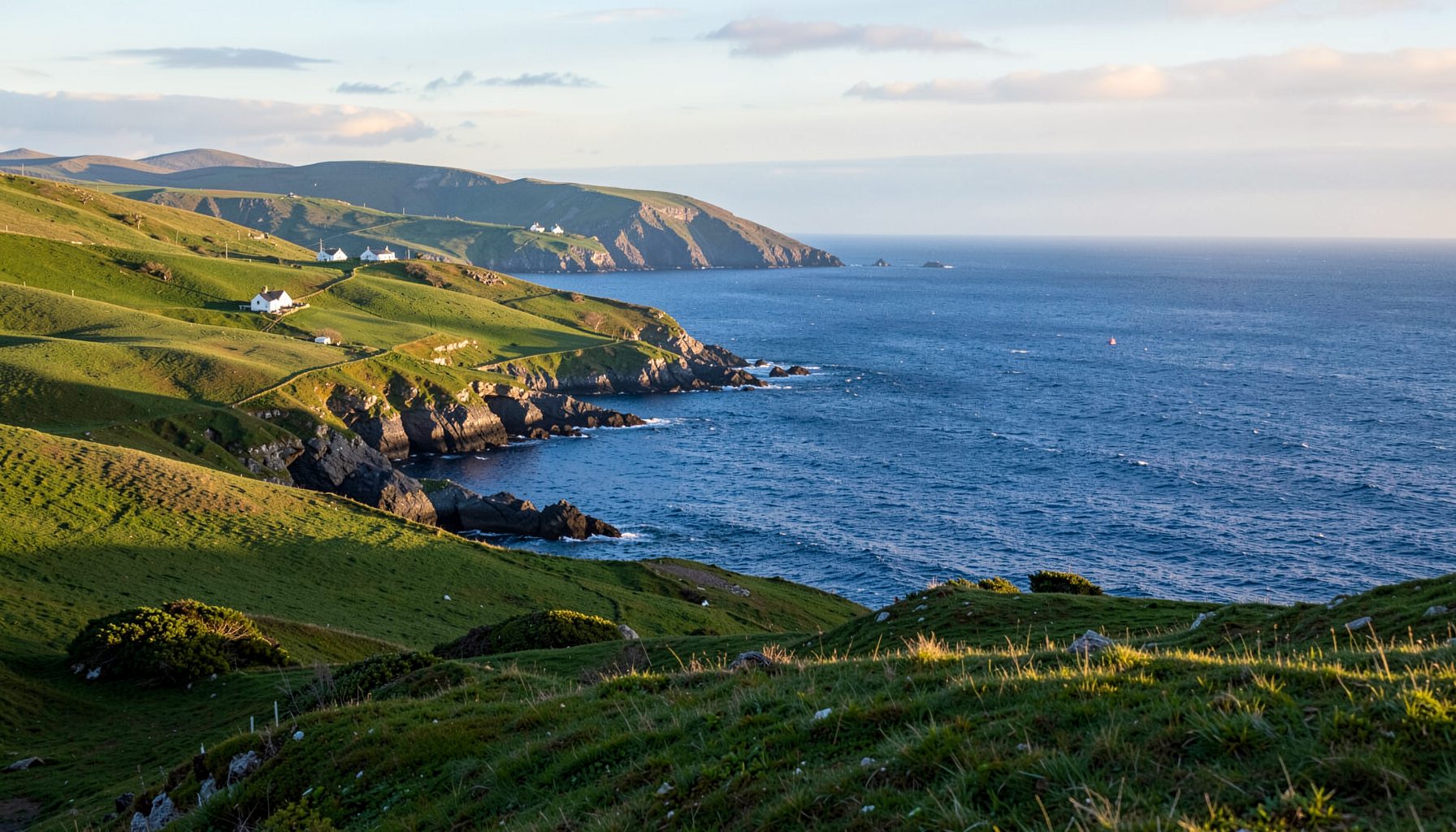
At the mouth of the Portmagee Channel, where the Atlantic presses between Valentia Island and the Iveragh Peninsula, a lighthouse helped turn a difficult stretch of coast into a more legible passage. Its beam belonged to a working maritime landscape of fishing boats, mail boats, sailing vessels and shore communities rather than to a scenic backdrop created for visitors.
The station commonly associated with Portmagee is Cromwell Point Lighthouse on Valentia Island. Although it stands across the channel from the village, its history is closely tied to Portmagee, its harbour and the sea routes around the Skellig Coast. The lighthouse also occupies a site with older military associations, giving the place several layers of history.
The keepers who served there were part of a national network of lighthouse workers. Their duties demanded technical knowledge, discipline and constant attention to weather and machinery. Their lives also connected the station to nearby families, schools, shops, churches and boats, making the lighthouse a small workplace within a much larger community.
A Light At The Portmagee Channel
The Portmagee Channel is narrow, tidal and exposed to Atlantic weather. Vessels approaching from the open sea had to read headlands, reefs, currents and changing conditions before entering safer waters. A fixed light at Cromwell Point offered a dependable reference after dark and during poor visibility.
The lighthouse was established in the nineteenth century under the authority of the Corporation for Preserving and Improving the Port of Dublin, the body that managed Irish lighthouses before the modern Commissioners of Irish Lights. Sources commonly date the station to around 1841, a period when improved navigation was essential to expanding coastal trade.
Its position was practical. The light guarded the approach around Valentia Island and helped vessels identify the channel leading towards Portmagee and other local anchorages. It was one part of a wider system that included shore marks, harbour knowledge, charts, fog signals and the experience of local seafarers.
Cromwell Point And Its Earlier Past
Cromwell Point takes its name from the fortification built there during the Cromwellian period. The lighthouse was placed within or beside this earlier defensive landscape, so the site represents a transition from military surveillance to navigational safety. The thick walls and enclosed character of the station reflect that unusual setting.
The lighthouse tower itself is relatively modest when compared with dramatic offshore towers, but its importance came from position rather than height. A light does not need to dominate the horizon to be useful; it needs to appear at the right bearing and be distinguishable from other coastal lights and settlement lamps.
The station formed part of the nineteenth-century expansion of organised lighthouse provision around Ireland. Engineering, administration and maritime law were becoming increasingly coordinated. For sailors, this meant that familiar coastal signals could be trusted across long passages, even when the people tending them remained largely invisible to the public.
The Working Life Of A Lighthouse Keeper
A keeper’s principal responsibility was to maintain the light. Depending on the period and equipment, this involved cleaning lenses, trimming wicks, managing oil or other fuel, checking clockwork mechanisms and ensuring that the lantern was ready before darkness. Even a small fault could reduce the strength or reliability of the signal.
The work continued in bad weather. Keepers watched for damage after storms, inspected the buildings and stores, and recorded events in station logs. If the light failed, they were expected to respond quickly and explain the cause. Their work required patience because much of it consisted of repetitive preparation followed by long hours of watchfulness.
Lighthouse service was often a family occupation. A keeper’s wife and children might live within the station complex, helping with domestic work and sometimes assisting with routine tasks. The household could be isolated, especially in winter, but it was not entirely separate from local life. Supplies, news, medical help and schooling linked the station to Portmagee and neighbouring communities.
| Aspect of the station | What it meant historically | What visitors can notice today |
|---|---|---|
| Lantern and optical equipment | Concentrated the light and made the signal visible over distance | The tower’s purpose as a navigation aid |
| Keeper’s dwelling | Provided a home beside the workplace for the keeper and family | The domestic scale of lighthouse service |
| Fortified setting | Connected maritime safety with earlier coastal defence | Thick walls, enclosed spaces and layered history |
| Logbooks and records | Documented weather, maintenance and unusual events | The value of archives in recovering ordinary lives |
| Channel position | Guided vessels near Valentia Island and Portmagee | The relationship between the light, sea and headlands |
Weather, Water And Responsibility
The Skellig Coast is shaped by wind and water. Atlantic storms could make the channel hazardous, while mist and rain reduced visibility at the very moment a navigational light mattered most. Keepers had to understand the behaviour of the station as well as the surrounding coast, recognising how salt, damp and vibration affected equipment.
A lightkeeper’s responsibility extended beyond the lantern room. Buildings needed to remain secure, fuel had to be stored safely and communications had to be maintained. In an era before modern transport and instant contact, obtaining replacement parts or reporting a serious breakdown could be slow and difficult.
The job also demanded careful observation. A keeper might note passing vessels, unusual weather, wrecks or signs of trouble at sea. Such entries were functional records, yet they can now reveal the rhythm of coastal life: when storms arrived, how ships moved through the channel and how closely the station was connected to local maritime activity.
From Essential Station To Heritage Place
Technological change gradually altered the work. Better optics, improved communications, electric power and automated systems reduced the need for a resident keeper. Across Ireland, many stations that had once required round-the-clock human attendance were modernised or closed as staffed workplaces during the twentieth century.
The end of keeper service did not erase the importance of the station. It changed the way the site was valued. The lighthouse became evidence of an earlier system of navigation, when safety depended on buildings, machinery and people placed at exposed points around the coast.
That shift is especially meaningful in Portmagee, where the old maritime economy remains part of local identity. The village is associated with fishing, island connections and journeys towards the Skelligs. The lighthouse helps explain the infrastructure behind those journeys, reminding visitors that the coast was shaped by work as much as by scenery.
Reading The Lighthouse Through Local Memory
Official records can establish dates, technical details and changes to the station, but local memory often supplies the human texture. Stories about keeper families, difficult crossings, winter isolation, visiting boats or the sound of a fog signal can make the history easier to understand. They also show how a lighthouse belonged to a community beyond its walls.
Research into the station can draw on the records of the Commissioners of Irish Lights, newspapers, maps, census material, estate papers and family collections. Photographs are particularly valuable because they may show changes to the tower, cottages, access roads and shoreline. Oral history can preserve details that never appeared in formal reports.
Local education has a role in keeping these connections alive. Projects developed through community learning hubs can bring together archival research, geography, storytelling and practical knowledge of the coast. A school or community group might investigate a keeper’s daily routine, map the light’s relationship to Portmagee or compare historic navigation with present-day technology.
Visiting With Care And Curiosity
A visit to the lighthouse is most rewarding when the building is read in relation to its surroundings. Look towards Portmagee, trace the line of the channel and consider what a vessel’s approach would have looked like at night. The view is not simply picturesque; it explains why the station was built at that particular point.
The nearby landscape also contains reminders of different eras. The fortifications point to military history, while the tower and keeper’s accommodation represent organised navigation. Farther across the region, places such as Skellig Michael reveal the long relationship between people, faith, labour and difficult Atlantic landscapes.
Weather remains part of the experience. Wind, rain and changing light help convey the conditions under which keepers worked, though modern visitors should respect access restrictions, private areas, cliff edges and local roads. Heritage is protected most effectively when it is treated as a living place rather than a disposable attraction.
Ways To Explore The Story
A thoughtful exploration can combine the physical site with wider research about Portmagee and Valentia Island. Useful approaches include:
- Compare the lighthouse’s position with historic and modern maps of the Portmagee Channel.
- Look for records about keeper families, local boats and maritime trade in regional archives.
- Study how lighthouse technology changed from oil lamps and clockwork mechanisms to automated systems.
- Record family memories and place names connected with the shore, harbour and channel.
- Visit related heritage sites to place Cromwell Point within the wider history of the Iveragh Peninsula.
The lighthouse’s story becomes richer when technical history and personal experience are considered together. A lens, logbook or keeper’s cottage can seem ordinary in isolation, yet each reflects a network of people who made coastal travel safer.
The Portmagee area continues to invite that kind of discovery. Explore the shoreline, learn about the communities that maintained it and follow the evidence preserved in buildings, archives and memories. By sharing careful local research through Skellig Coast, visitors and residents can help keep the lighthouse keepers’ contribution visible for the next generation.