Whispers in Stone: Ogham Inscriptions of the Iveragh Peninsula
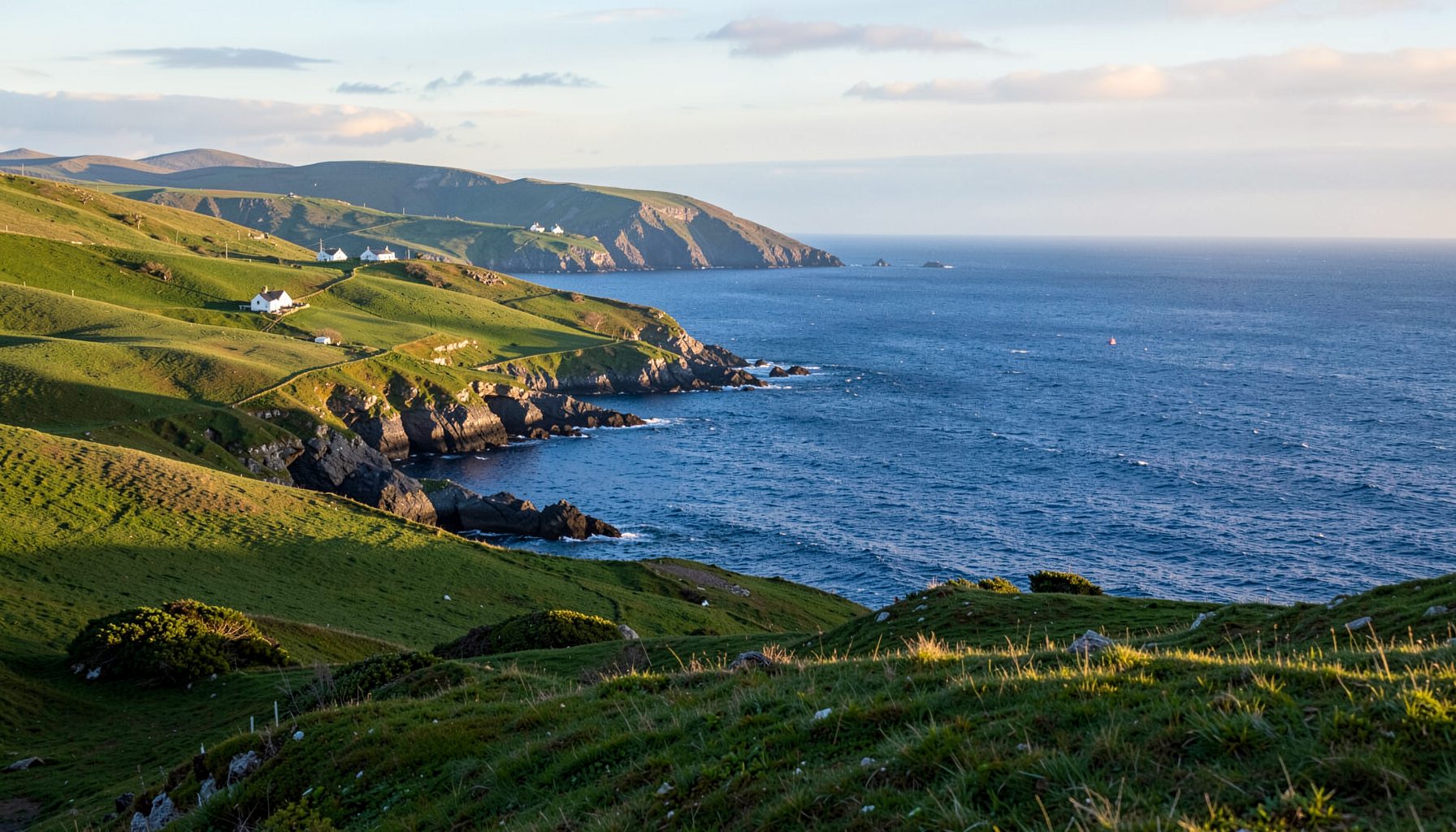
Along the winding roads of Ireland's Iveragh Peninsula, where the land folds into the Atlantic and the Skellig Coast stretches from Kells to Castlecove, a quiet kind of history speaks from the ground itself. Cut into granite and sandstone centuries ago, Ogham stones and other early medieval inscriptions carry the voices of farmers, scholars, monks and kin-groups who shaped this corner of Kerry long before the modern mapmakers arrived.
For visitors accustomed to places like the Great Ocean Road, the Daintree or the Kimberley coastline, the Iveragh landscape feels both familiar and foreign. The gorse, the salt air, the sudden veils of Atlantic mist recall the rugged edges of Tasmania's south-west. Yet the language of the stones belongs entirely to early medieval Europe, where Irish communities were quietly inventing Europe's first written script outside the Roman orbit.
The Origins of Ogham and Its Place in the Celtic World
Ogham is often called the Celtic alphabet, though scholars prefer to describe it as an early medieval script that emerged in Ireland and parts of western Britain, possibly between the first and fourth centuries. Its letters are made up of short straight strokes arranged along or across a central stem, a system that lent itself beautifully to carving along the edges of standing stones. Where Roman writing travelled from the Mediterranean with conquest and bureaucracy, Ogham appears to have grown from local need, perhaps to mark territory, lineage and burial.
What makes the script remarkable is that it appeared in an Ireland still loosely tied to the Romanised world. The Romans never fully conquered Hibernia, so the island kept much of its pre-literate legal culture. When a new script was needed for names, tribal divisions and monuments, communities looked inward. Some academics argue Ogham was partly an act of cultural self-definition, a written marker that said "this land, this family, this memory" in a form unlike anything the empire had imposed.
Stones You Still Carve Along the Skellig Coast
The Iveragh Peninsula holds one of the densest clusters of Ogham stones in Ireland, and many of them remain in their original landscapes, leaning against drystone walls, propped beside field gates or tucked into quiet churchyards. The most famous local example, the Killemlagh Ogham Stone near Waterville, carries the name of an early kinsman whose descendants may still live in the same parish a thousand years later. Further along the coast, near Cahersiveen and Valentia Island, fragmentary inscriptions hint at lost graveyards, eroded shorelines and communities that vanished under later waves of change.
For a traveller from Hobart or Adelaide, used to reading heritage plaques in botanic gardens or museums, these stones can feel startlingly unguarded. There is no glass case, no interpretive panel in twelve languages. The inscription sits in the open, weather-worn, often behind a stile or at the corner of a country lane. Local farmers work fields around them, and parish communities gather near them on pattern days. The stones are part of the working landscape rather than a curated display.
Reading the Script After Centuries of Silence
Deciphering Ogham took patient scholars more than a century after the stones first attracted antiquarian attention in the 1700s. Today the script is well understood, though individual readings remain contested. Most surviving inscriptions are short, sometimes only a name in the genitive case followed by "of the grandson of" or "of the tribe of". A typical memorial might read something close to "NETTA-LAMINACCA SAGRANI" — a way of fixing a person's name to the soil and the kin group in a single act of carving.
What surprises many people, including Australians who grew up hearing about convict records and pioneer gravestones, is how emotional the early medieval stones can be. They are not neutral markers. They carry grief, pride and warning. Some stones seem to commemorate warriors; others mark boundaries between rival septs; a few simply record a person who mattered to a community, much like a headstone in an old Buninyong or Castlemaine cemetery might mark a family whose name still lives on in a country town.
Stones in the Living Landscape of South Kerry
For the people of the Skellig Coast, Ogham stones are not relics sealed off from the present. They appear in school projects, in heritage walks organised by local development groups, and in the work of craftspeople who replicate the script on modern gifts, signage and gravestones. Parish bulletins occasionally mention a stone that has fallen or been damaged by winter storms, and small crowds gather when a fallen piece is righted by a community team.
This living relationship mirrors what one finds in regional Australia when a bush town rallies around its own history. In Ballarat, volunteers keep gold-era machinery turning; in the Clare Valley, winemakers tend nineteenth-century cellars; in Broome, the pearling community maintains a Japanese cemetery that is also an active place of remembrance. In the same way, the Skellig Coast treats its Ogham stones as part of a continuing conversation between past and present generations.
If you are curious to know more about who has carried this tradition forward, the Skellig Coast people page gathers portraits and stories of the contemporary communities who steward these ancient markers.
Early Medieval Inscriptions Beyond Ogham
Ogham is the most visible script on the Iveragh Peninsula, but it is not the only one. Early medieval masons also left fragments of Latin, Irish minuscule, and later medieval carvings in the same stones. Beehive huts, ringforts and the shadow of Skellig Michael itself speak of a monastic culture writing in both stone and vellum. Skellig Michael, the dramatic island monastery that later served as a filming location for the Star Wars saga, was a place where learning, prayer and craft met the sea winds for centuries.
Travellers who arrive in Kerry from Sydney or Perth often comment on how the region's early medieval past feels almost tangible. Where Australian colonial heritage is usually framed around the 1800s and 1900s, Iveragh opens to the 600s and 700s. A single cliff walk here can pass through layers that in an Australian context would require a museum case, a heritage trail and an explanatory podcast to unpack.
Visiting the Stones Today
A respectful visit to the Ogham stones of the Skellig Coast begins with patience. Stones may sit in working farm fields where livestock graze, so visitors should close gates, keep dogs leashed and follow any local guidance. Some are visible from the roadside; others require a short walk along boreens that turn to mud in winter rain. Sturdy footwear, layered clothing and a willingness to talk to a local farmer in a doorway can transform a simple stone-hunt into a memorable encounter.
Practical Notes for Curious Travellers
Before setting out to walk the lanes and byways of the Skellig Coast in search of inscriptions, a little preparation makes the experience richer and gentler on the communities who live there.
- Check local heritage maps published by community councils, which mark accessible stones and note which are on private farmland requiring a courteous knock at the farmhouse.
- Time visits for late spring or early autumn, when soft light flatters the carved edges and the boggy ground has had a chance to dry.
- Bring a small notebook and pencil rather than chalk or rubbing materials, which can damage weathered surfaces over time.
- Pair stone visits with stops in Cahersiveen, Portmagee and Waterville for coffee, conversation and a chance to hear locals talk about the inscriptions in their own words.
- Consider supporting a local heritage walk or guided tour run by community historians, whose fees often fund the very conservation work that keeps the stones upright for the next generation.
Plan your journey along the Ring of Kerry with a sense of curiosity and care, letting the Iveragh Peninsula unfold at the pace of its stones rather than the pace of a bus window. Step off the main road where safe to do so, greet those you meet on country lanes, and let the early medieval inscriptions remind you that the act of carving a name into rock has always been about hoping someone, somewhere, would still be listening.