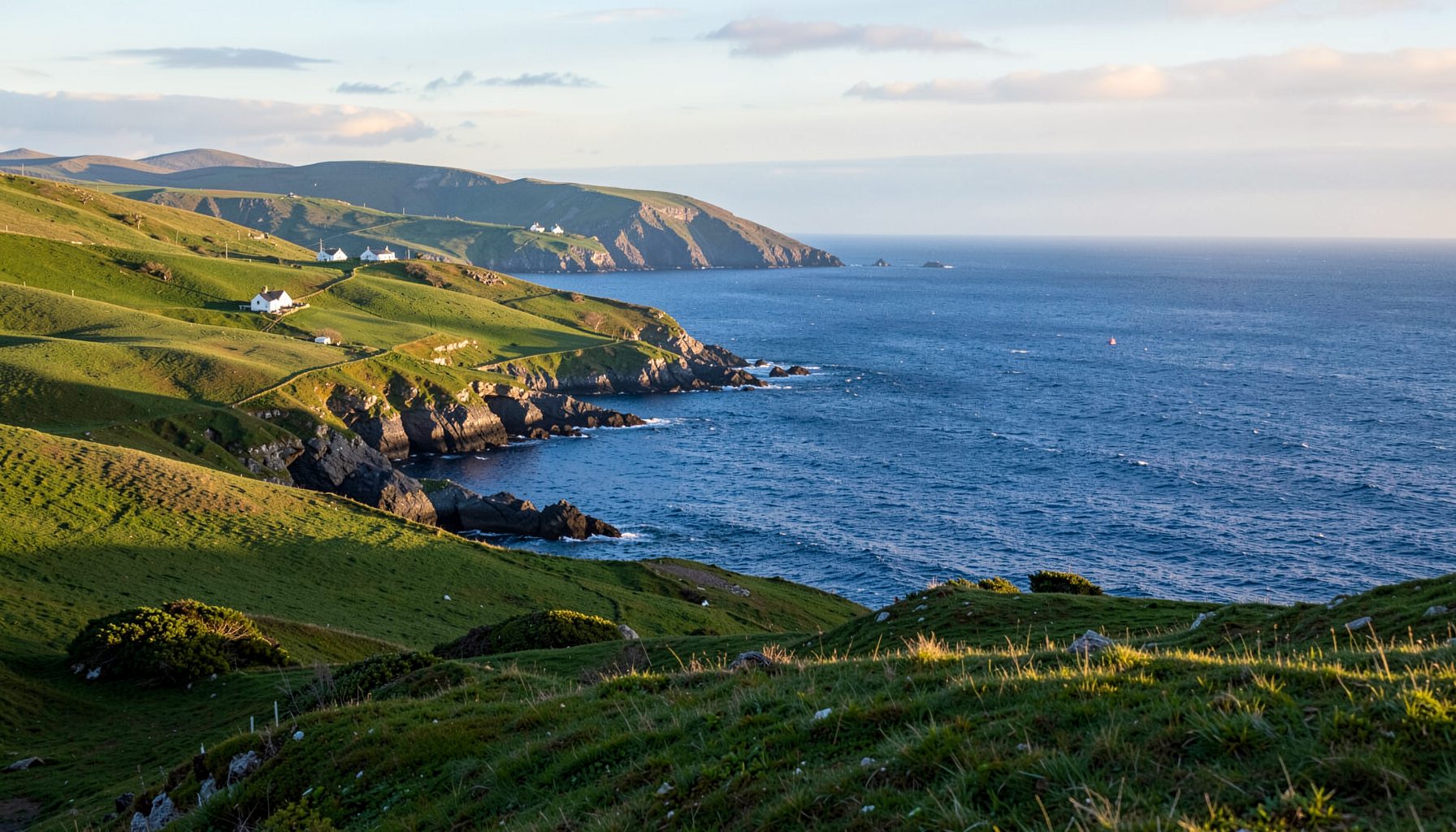
The Story of Irish Language Summer Colleges Along the Skellig Coast
From Kells to Castlecove, the Skellig Coast is shaped by a close relationship between place, memory and language. Irish is heard in family histories, local names, songs, folklore and community life, even where English is now the everyday language for most residents. Along this Atlantic edge of the Iveragh Peninsula, the summer college has helped keep that relationship active for new generations.
Irish language summer colleges, or coláistí samhraidh, are residential learning programmes where students spend several weeks studying Irish while living with host families or staying in organised accommodation. Lessons form only part of the experience. Sport, music, storytelling, excursions and informal conversation bring the language into ordinary daily situations.
The colleges of the wider Kerry region belong to a national revival movement that gathered strength after independence. Their story is also a local one, connected with the Gaeltacht areas of South Kerry, the cultural life of Cahersiveen and Ballinskelligs, and the continuing work of families, teachers and community organisations.
A Revival Rooted In Community
The growth of Irish summer colleges followed decades of concern about the decline of Irish as a spoken community language. After the establishment of the Irish state, education became a major route for restoring the language. Schools taught Irish throughout the country, but many educators believed that classroom study alone could not create confidence or fluency.
Residential colleges offered a different model. Students left their usual surroundings and entered an Irish-speaking environment where simple activities required communication. Ordering food, joining a football game, asking for directions or chatting with a host family could all become language practice. The approach linked formal education with the social world in which a living language functions.
Kerry was well placed for this movement. The peninsula contained communities with strong traditions of Irish speech, as well as a landscape that attracted students from urban and English-speaking parts of the country. The coast, islands, mountains and villages gave the colleges a distinctive identity. Irish was taught as a subject, but also presented as a way of belonging to a particular place.
Coláiste Na Sceilge And The Cahersiveen Connection
Coláiste na Sceilge in Cahersiveen is central to the story of Irish-language education in this part of Kerry. Its name refers to the Skelligs, the dramatic offshore landmarks visible from the wider coast and deeply associated with the region’s religious, maritime and cultural heritage. The college became part of the network of summer schools that brought secondary-school students into Kerry for intensive Irish courses.
Cahersiveen provided a practical and symbolic base. It is a market town, a transport centre and a meeting point for communities across Iveragh. Students attending a course were not isolated in a classroom campus detached from local life. They encountered shops, clubs, playing fields, churches, public spaces and families whose connections to the district extended across generations.
The college tradition also depended on local host families. Staying in a home allowed students to hear Irish in a less formal setting and to experience the routines of rural and small-town life. Meals, evening conversations and visits from neighbours could be as influential as grammar lessons. For many young people, the first sustained experience of using Irish outside school began at the kitchen table.
Learning Beyond The Classroom
A summer college timetable normally combines Irish classes with organised activities. Grammar, pronunciation, reading and oral practice are balanced with céilithe, singing, drama, quizzes, games and outdoor events. This mixture matters because language confidence grows when learners have reasons to speak, rather than simply exercises to complete.
The local landscape supplies an unusually rich setting for this approach. Coastal walks, trips to beaches, visits to heritage sites and excursions through the mountains connect vocabulary with real objects and experiences. A lesson about weather has immediate meaning on an Atlantic shoreline. Place names become more memorable when students travel through the townlands and hear the stories associated with them.
Sport has long been important in the summer-college experience. Gaelic games, athletics and team activities create situations where students must listen quickly and respond naturally. Music and dance perform a similar role. A song, a set dance or a humorous story can make Irish feel expressive and communal, rather than merely academic.
| Feature | Educational Value | Local Connection |
|---|---|---|
| Irish-language classes | Builds grammar, vocabulary, reading and spoken fluency | Links school learning with the region’s language heritage |
| Host-family stays | Creates everyday opportunities to hear and use Irish | Brings students into contact with local households |
| Gaelic games and outdoor activities | Encourages quick, informal communication | Uses pitches, beaches, hills and coastal spaces |
| Music, dance and storytelling | Develops listening skills and cultural confidence | Reflects Kerry’s living traditions and community events |
| Heritage excursions | Gives context to language and place names | Connects learners with forts, islands, churches and landmarks |
| Evening social events | Helps students form friendships through Irish | Strengthens links between visitors and local communities |
The Importance Of The Gaeltacht
The word Gaeltacht describes areas officially recognised for the strength of Irish as a community language. The position of Irish in South Kerry has changed over time, and the boundaries and status of Gaeltacht areas do not always match the wider cultural reach of the language. Irish influence extends beyond formal designations through schools, clubs, local history groups, religious traditions and family memory.
This distinction is important when discussing the Skellig Coast. A summer college may serve students from across Ireland while drawing much of its character from communities where Irish has a long-established presence. Learners can therefore encounter several forms of language use: the carefully taught Irish of the classroom, the conversational Irish of fluent speakers and the local vocabulary preserved in names and stories.
For young people, a stay in Kerry can also change their understanding of where Irish belongs. It is not confined to textbooks, examinations or official ceremonies. It can be heard in a conversation between neighbours, used during a match, sung at an event or connected with a familiar landscape. That shift in perception is one of the lasting achievements of the college system.
A Link Between Generations
The summer colleges have created relationships that continue beyond a single course. Teachers, local organisers, host families and former students form a broad network around the language. Some students return in later years, become leaders or pursue careers in teaching, broadcasting, heritage, tourism and community development.
For host families, the experience can bring new energy into the home. Welcoming students from Dublin, Cork, Limerick or further afield creates an exchange between different parts of Ireland. Families share local knowledge, while students bring stories of their own communities. The result is a form of cultural tourism based on participation rather than passive observation.
Former students often remember details that would never appear in a prospectus: a particular teacher’s encouragement, an evening walk, a first conversation with a host parent or the nerves before speaking in front of a group. These memories help explain why the colleges have survived as more than language courses. They are formative social experiences that give Irish a human and emotional setting.
Challenges In A Changing Language Landscape
The colleges have also had to adapt. Many students arrive with different levels of Irish, ranging from complete beginners to confident speakers. Families are busier, travel patterns have changed and young people have more competing summer activities than earlier generations. Residential education must respond while preserving the intensive quality that makes it distinctive.
The language environment itself has changed too. Digital media, online learning and Irish-language broadcasting offer new opportunities, but they cannot fully replace face-to-face interaction. A student may practise Irish through an app or watch a programme online, yet the pressure and reward of using the language with other people remains different.
Sustainability is another consideration for the future. Colleges depend on skilled teachers, reliable accommodation, local support and strong enrolment. Their continued success is tied to the health of the communities around them. When local schools, cultural groups, families and tourism initiatives work together, the summer college becomes part of a wider language ecosystem rather than an isolated seasonal project.
Why The Tradition Still Matters
The value of Irish summer colleges can be measured in examination results, but that is only one part of their legacy. They create memories of speaking Irish in ordinary situations and give learners a stronger sense of the culture behind the language. They also bring young people into direct contact with the places, people and traditions of the Skellig Coast.
The colleges support the local economy in modest but meaningful ways through host-family income, employment, transport, food, sport and community services. Their wider contribution is cultural. Students leave with a personal connection to Cahersiveen, the Iveragh Peninsula and the Skellig landscape, often returning later with friends or family.
For the region, the tradition affirms that heritage is not limited to monuments. Skellig Michael, ancient churches, forts and pilgrimage routes are important, but so are voices, phrases, songs and local knowledge. Irish-language education keeps the human dimension of the landscape visible.
The story of the Irish language summer colleges in the area is therefore a story of continuity and renewal. It joins the national effort to protect Irish with the particular character of South Kerry: a place where geography, community and memory remain closely connected.
Explore The Language And Heritage Of The Coast
The Skellig Coast website brings together information about local communities, heritage, learning initiatives, cultural activities and places of interest across the Iveragh Peninsula. Explore the stories behind the region’s Irish traditions, follow local events and discover how language continues to shape the identity of communities from Kells to Castlecove.