The story of the horse fair in Cahersiveen
For generations, a horse fair was much more than a place to buy and sell animals. In Cahersiveen, it belonged to the rhythm of rural life, bringing together farmers, dealers, labourers, families and curious spectators from across the Iveragh Peninsula. The sound of hooves, bargaining voices and village conversation turned an ordinary market day into a significant social occasion.
The fair reflected the importance of the horse in south-west Kerry. Before tractors became common, horses carried turf, drew carts, worked fields and helped families manage farms spread across difficult ground. A good animal represented strength, reliability and years of practical value. Choosing one was a serious decision, often shaped by reputation, observation and local knowledge.
The surviving story is made from several strands: memories passed through families, accounts of market life, photographs, local history and the changing appearance of Cahersiveen itself. Exact details may differ between recollections, yet the character of the gathering remains clear. It was a meeting point where commerce and community were closely connected.
A market shaped by landscape
Cahersiveen developed as an important town for the surrounding countryside. Its position on the Iveragh Peninsula made it a natural place for people travelling from coastal villages, mountain farms and smaller settlements. Roads were slower to cross than they are today, so a market in town offered an opportunity to combine several errands in one visit.
A horse fair depended on this network of movement. Farmers needed a practical reason to bring an animal to market, while buyers needed confidence that they could see a varied selection in one place. The journey itself was part of the event. Horses were led or ridden into town, and people arrived with news from home, opinions about local stock and stories gathered along the road.
The wider setting gave the fair its distinctive character. Mountains, bogland, rough pasture and coastal routes all influenced the kinds of horses required. A sturdy animal suited to farm work was valued for different reasons than a lighter horse used for transport. Local conditions made practical judgement more important than fashionable appearance.
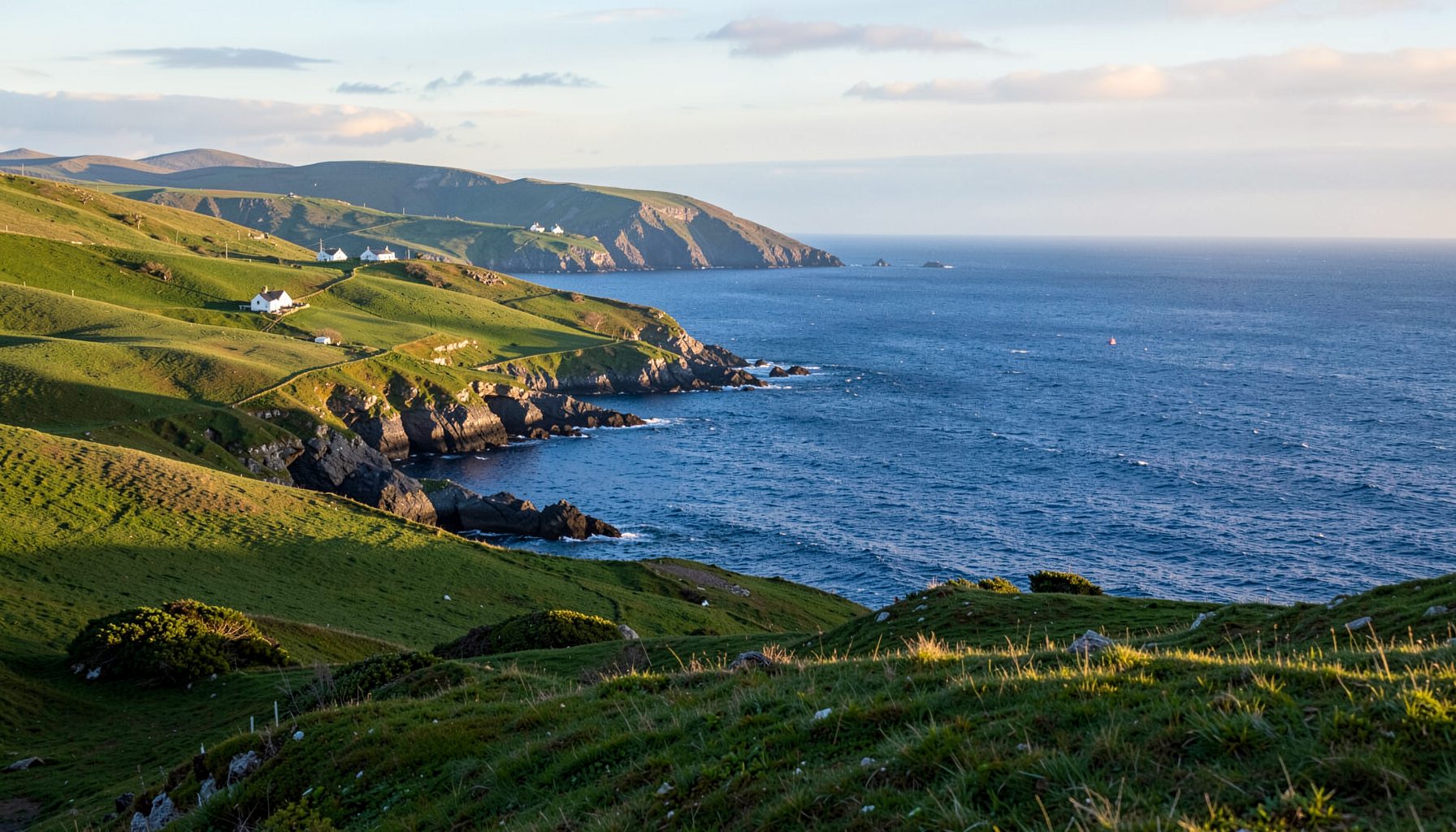
The roads around the peninsula remain part of the region’s identity. A modern journey through the area can follow the Skellig Ring route, linking landscapes and communities that once depended heavily on slower forms of travel. Seen in that context, the horse fair was a meeting place within a living rural system rather than an isolated attraction.
From working animal to valued companion
In earlier rural economies, a horse was often judged first by its usefulness. Buyers looked at the animal’s legs, hooves, shoulders, back and general condition. They watched it walk, examined its temperament and considered whether it could manage the work expected of it. A quiet, sound horse could be more valuable than one that appeared impressive but was difficult to handle.
Knowledge was shared through close observation. Experienced farmers could notice uneven movement, signs of age or indications of poor care. Sellers knew that their reputation mattered, particularly in a community where people might meet again at another market or through ordinary daily life. Trust could influence a deal as much as the animal itself.
Different types of horses passed through Irish fairs over time. Strong working horses were associated with farm and cart work, while lighter animals could serve for riding or transport. Ponies had their own value, especially where hard ground, narrow lanes and modest holdings made a smaller animal suitable. The categories were practical rather than fixed, and local use shaped local preference.
A fair also allowed people to compare their own experience with that of others. One farmer might recommend a certain breeding line, while another would speak about an animal’s behaviour in harness or on steep roads. These conversations formed an informal education, preserving a body of rural expertise that was rarely written down in full.
Fair day in the town
The atmosphere of a horse fair was created by movement and waiting. Animals had to be brought in, positioned where buyers could see them and handled carefully around unfamiliar horses and crowds. Owners watched closely, ready to answer questions or demonstrate an animal’s pace, strength or manners.
The transactions themselves could be quick or prolonged. A buyer might make an offer, receive a counteroffer and walk away before returning later. A handshake could signal agreement, but the path to that agreement often involved inspection, conversation and advice from companions. The final price was only one part of the exchange; the buyer also needed confidence in the horse’s health and suitability.
For people who did not intend to purchase, the fair still offered a reason to come into Cahersiveen. It brought neighbours together and created a lively setting for catching up. Shops, public houses and other businesses benefited from the extra visitors, while families used the occasion to complete shopping and meet relatives.
| Feature | Earlier horse fair | Present-day community memory |
|---|---|---|
| Main purpose | Buying, selling and exchanging working animals | Remembering rural trade and local identity |
| Important knowledge | Soundness, temperament, breeding and suitability for work | Family stories, photographs and personal recollections |
| Travel to town | Horseback, cart or long journeys on foot and by road | Cars, buses and visitors following regional routes |
| Social character | A busy meeting day connected to farming | A heritage story connected to Cahersiveen’s community |
| Meaning of the horse | Essential transport and labour | A symbol of skill, livelihood and changing rural life |
The fair’s social importance should not be underestimated. Rural markets created regular opportunities for people from dispersed homes to meet in person. In a time before instant communication, a gathering in town helped distribute news, arrange business and maintain relationships across the peninsula.
Stories carried through families
Much of the fair’s history survives in spoken memory. Older residents may remember particular dealers, colourful characters, distinctive horses or the way the town looked on a busy day. One story may focus on a successful purchase, while another recalls a difficult journey home with an animal that had proved less manageable than expected.
These accounts are valuable because they reveal the human side of the market. Official descriptions can explain when markets operated or how a town was organised, but personal memories show how the day felt. They capture humour, uncertainty, pride and the small negotiations that made the fair memorable.
Family photographs can add another layer. A horse standing outside a yard, a cart on a street or a group gathered near a market area may preserve details that are easy to overlook: clothing, harness, buildings, road surfaces and the way people held themselves around animals. Even when a photograph cannot be precisely dated, it can prompt further local research.
Memory also changes over time. A story repeated at kitchen tables may become shorter, more dramatic or connected with other events. That does not make it unimportant. It means the history of the fair should be read alongside physical evidence, newspapers, archival material and the knowledge of people who understand the town’s past.
A tradition altered by modernisation
The role of the horse changed rapidly during the twentieth century. Mechanisation reduced the need for horse power on many farms, while improved transport made it easier to travel farther for specialist purchases. Agricultural practices, land use and household finances all influenced the decline of traditional horse markets.
This change did not erase the relationship between people and horses. Horses remained important for breeding, riding, sport, leisure and personal attachment. The animal moved from being an essential part of everyday labour to occupying a more varied place in rural culture.
The transformation can be seen in the changing meaning of a fair. Earlier buyers were often seeking an animal that could complete a particular job. Later generations might value qualities connected with recreation, training or companionship. The skills of handling and judging a horse continued, but the circumstances around them became different.
Cahersiveen’s horse fair therefore belongs to a larger story about rural Ireland. It reflects the movement from an economy based on local work and animal power towards a faster, more mechanised society. Its memory provides a way to understand that transition through ordinary people and familiar places rather than through abstract statistics alone.
Why the fair still matters
The story of the fair helps explain how Cahersiveen functioned as a centre for its surrounding communities. The town was a place where people traded, gathered information, maintained relationships and measured local prosperity. A horse market brought all these roles together in a visible and memorable form.
It also connects heritage with the landscape. The routes used to reach town, the farms that depended on animal labour and the streets where negotiations took place all belong to the same historical picture. Exploring local history becomes richer when buildings and roads are understood as parts of daily life rather than as static scenery.
For visitors, the subject offers a useful way to look beyond headline attractions. The Skellig Coast is known for remarkable coastal landscapes and major heritage sites, yet its identity is also built from markets, schools, clubs, working farms and community memories. The horse fair gives a human scale to that wider regional story.
For local residents, recording these memories can help ensure that the fair is not reduced to a vague reference in the past. Oral histories, photographs and family papers may reveal names, places and connections that deserve to be shared. Even a short recollection can contribute to a clearer account of Cahersiveen’s social history.
Ways to explore the local story
A respectful approach to this heritage begins with attention to both evidence and memory. The following activities can help place the fair within the wider history of the town:
- Speak with older residents and record recollections of market days, horses, dealers and journeys into Cahersiveen.
- Compare family photographs with historic maps, newspaper reports and local archive material.
- Visit the town with attention to old routes, market spaces, yards and buildings connected with rural commerce.
- Share horse-related stories through schools, community groups, local exhibitions or digital heritage projects.
- Link the fair’s history with wider themes such as farming, transport, craftsmanship and the changing role of animals.
These activities should preserve the voices of the people who remember the tradition while distinguishing confirmed details from family lore. That balance makes local history more trustworthy and more engaging. It also gives younger generations a way to understand how quickly everyday life can change.
The horse fair in Cahersiveen remains significant because it brings many histories together: agricultural work, animal knowledge, rural travel, town commerce and community life. Its story belongs to the people who took part, the families who remembered it and the landscape that made the gathering possible.
Explore more stories of the Skellig Coast and help keep its local heritage visible. Share memories, photographs and family accounts with community history projects, and discover how Cahersiveen’s past connects with the villages, roads and landscapes around it.