The Story of Derrynane House in Irish History
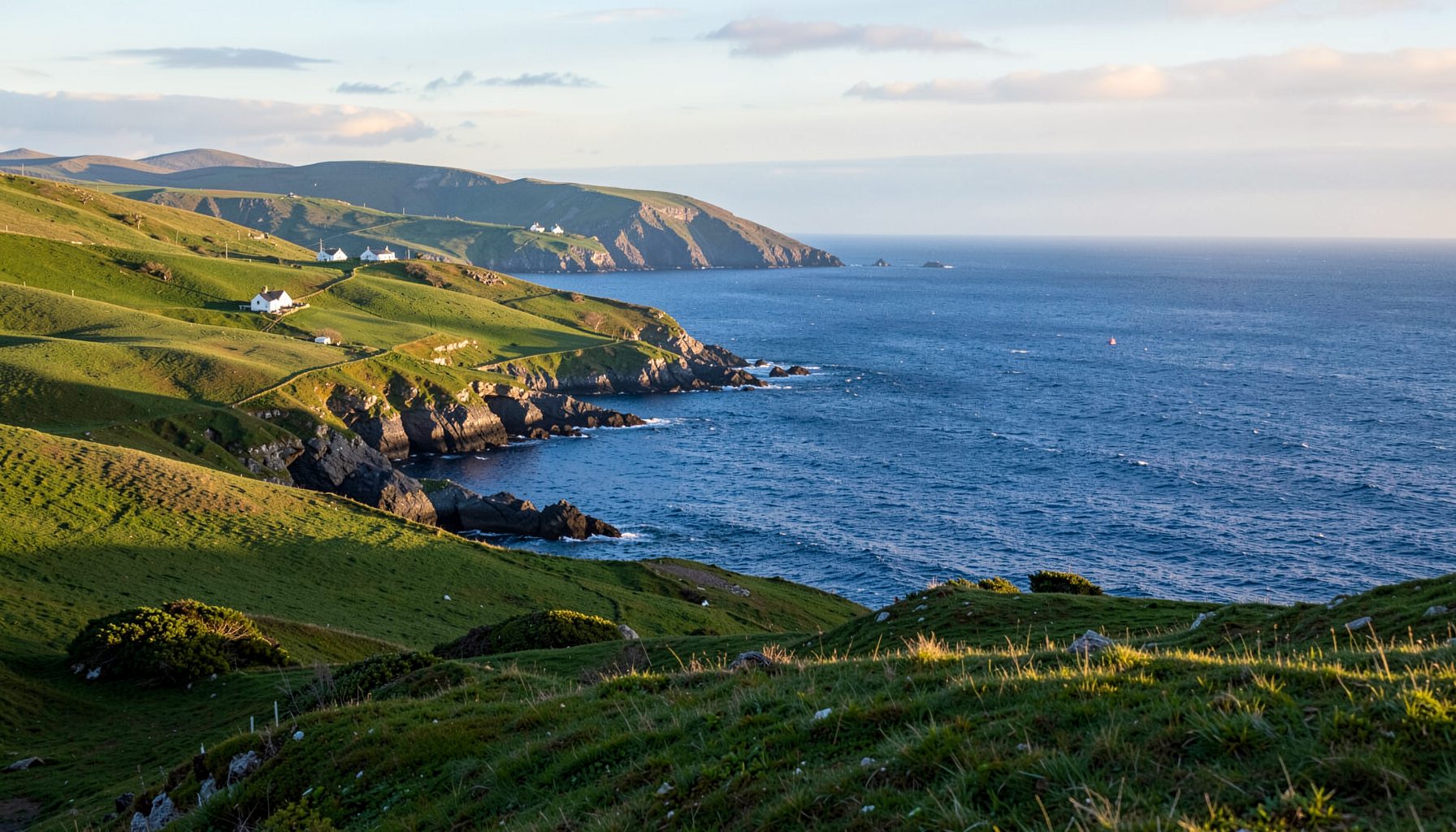
Derrynane House stands on the edge of the Atlantic in County Kerry, within the wider landscape of the Iveragh Peninsula. It is best known as the home of Daniel O’Connell, the nineteenth-century Irish political leader whose campaign for Catholic Emancipation changed the relationship between Ireland and the British Parliament.
The house is part of a larger story involving family, faith, land, language and political reform. Its position near Derrynane Beach and the wild coastline also makes it a valuable place for understanding how Irish history developed through local communities, not only in grand cities and government buildings.
| Place | Main association | What it reveals |
|---|---|---|
| Derrynane House | Home of Daniel O’Connell | Catholic Emancipation, family life and political leadership |
| Derrynane Abbey | O’Connell family burial place | Religious identity and local memory |
| Derrynane Beach | Estate landscape and Atlantic setting | The connection between place, travel and heritage |
| Skellig Michael | Early Christian monastic site | Ireland’s ancient spiritual and maritime history |
Derrynane Before The Liberator
The land around Derrynane was shaped by Gaelic culture, Catholic belief and a strong relationship with the sea. Long before the house became associated with national politics, the coast supported farming, fishing and movement between isolated communities. The landscape could be beautiful and difficult at the same time, with rocky ground, exposed headlands and weather that dictated daily life.
The wider region contains monuments from many periods, including ancient standing stones, ringforts and ogham stones. These traces place O’Connell’s story within a much older human landscape; visitors interested in that earlier heritage can explore the ancient ogham stones found across the region. Derrynane is therefore more than a single historic residence: it is one layer in a long record of settlement and belief.
The O’Connell family had established roots in Kerry and belonged to the Catholic landed class. This group occupied an unusual position after the Penal Laws restricted Catholic political, educational and property rights. The family’s local influence gave Daniel O’Connell opportunities that were unavailable to many of the people whose rights he later defended.
A House Shaped By The Sea
Derrynane House developed as a family home rather than as a formal political monument. Its rooms, furnishings and surrounding grounds reflect the life of a prosperous Catholic family in rural Kerry. The building’s relationship with the coastline is central to its character: the Atlantic is visible and felt, while the estate opens towards beaches, islands and walking routes.
The house is associated with the O’Connell family estate at Caherdaniel, near the village of the same name. Daniel O’Connell spent much of his childhood and later years in the area, and he returned to Derrynane throughout his public career. The estate offered privacy, family company and a physical connection to the county he represented.
Derrynane Abbey, located nearby, became the O’Connell family burial place. Although often referred to as an abbey, the surviving structure belongs to a medieval church site with a long religious history. Together, the house, abbey and coast create a layered setting where domestic memory sits beside medieval and early Christian traditions.
Daniel O’Connell And Catholic Emancipation
Daniel O’Connell was born in 1775 and educated in France before studying law. He became one of the leading advocates for Catholic rights, using legal knowledge, public meetings and organised political campaigning. His central cause was Catholic Emancipation: the removal of restrictions that prevented Catholics from sitting in the Westminster Parliament and holding full political power.
In 1823, O’Connell helped establish the Catholic Association, which developed an unusually effective mass-membership campaign. Small financial contributions from ordinary people, often described as the “Catholic rent”, funded political organisation. This approach gave tenant farmers and working people a direct role in a national movement.
O’Connell’s election as Member of Parliament for County Clare in 1828 created a constitutional crisis. He had won the seat but could not take it while refusing the oath required of Catholic MPs. The British government eventually passed the Roman Catholic Relief Act in 1829. The measure did not end discrimination, and it came with restrictions, but it allowed Catholics to enter Parliament.
The achievement made O’Connell internationally famous. In Ireland, he became known as “The Liberator”, a title reflecting both admiration and the scale of his political success. Derrynane House preserves the personal and regional setting behind that public figure.
From Family Home To National Monument
After O’Connell’s death in 1847, Derrynane remained associated with his descendants and memory. The house gradually became a place where visitors could encounter objects connected with his life, including portraits, furniture and historical documents. Its importance grew as Irish national history increasingly recognised the campaign for Catholic Emancipation.
The property is now managed as a heritage site within Derrynane National Historic Park. Conservation work has helped retain the character of the house while presenting information about the O’Connell family, the political movement and the surrounding estate. The experience is more intimate than a visit to a large urban museum because the rooms remain connected to the landscape in which O’Connell lived.
That setting also helps correct a common impression that Irish political history was made only in Dublin or London. O’Connell’s public campaigns reached national and international audiences, but his identity was rooted in Kerry. His home, family networks and knowledge of local Catholic communities helped shape the way he understood political representation.
Reading The Estate And Landscape
A visit to Derrynane House works best when the estate is treated as part of the story. The gardens, woodland, shoreline and nearby abbey reveal how a historic family used the land. They also show why geography mattered to people living on the Iveragh Peninsula, where travel could be slow and communities were separated by mountains, inlets and poor roads.
The beach and coastline offer a useful counterpoint to the formal political story. From here, visitors can appreciate the maritime character of the region and the practical importance of sheltered bays. The same coastal environment that now attracts walkers and photographers once shaped trade, communication and seasonal work.
Derrynane also belongs to a wider heritage network that includes prehistoric monuments, early Christian sites and the Skellig Islands. Skellig Michael, the UNESCO World Heritage Site offshore, is especially well known for its monastic settlement and later appearance in Star Wars films. Its fame can draw attention away from less spectacular sites, yet Derrynane offers a more grounded account of how religion, landownership and community life changed over time.
Planning A Visit From Australia
For Australians, Derrynane can be understood as part of a broader coastal heritage journey rather than a quick city attraction. Visitors travelling from Sydney, Melbourne, Brisbane or Perth will usually build the site into a longer Ireland itinerary, often after arriving in Dublin or Shannon and hiring a car. The Ring of Kerry is familiar to many Australian travellers through family connections, school history and the popularity of scenic road trips.
The drive has a different rhythm from a coastal outing along the Great Ocean Road. Roads around the Iveragh Peninsula can be narrow, winding and busy in summer, so allowing extra time is sensible. An Australian “arvo” plan that tries to combine Derrynane, Kenmare, Valentia Island and several mountain viewpoints may become rushed, especially when weather changes quickly.
Opening arrangements, guided experiences and access details can vary by season. The Irish tourism market relies heavily on summer visitors, while heritage sites also attract school groups, domestic travellers and people returning to ancestral areas. Australians planning around Christmas and New Year should remember that an Irish winter visit has short daylight hours and a much greater chance of rain and wind.
The local style is generally informal and conversational. A chat with a guide, café owner or community volunteer may add context that is absent from a standard itinerary, especially for visitors who have traced a Kerry family connection. Staying curious and allowing time for a “grand” bit of local storytelling can make the visit feel less like ticking off an attraction.
Why Derrynane Still Matters
Derrynane House matters because it connects a major constitutional achievement with ordinary questions of home and belonging. Catholic Emancipation was debated in Parliament, but its consequences were experienced in parishes, farms, schools and families throughout Ireland. The house gives that national event a human scale.
O’Connell’s legacy also remains complex. He was committed to constitutional politics and mass mobilisation, yet the Ireland of his time was marked by poverty, landlord-tenant tensions and deep religious division. His later campaign for the repeal of the Act of Union did not achieve its aim, and his political methods have continued to attract both praise and criticism.
For communities along the Skellig Coast, Derrynane is part of a living heritage landscape rather than an isolated relic. Local history, outdoor recreation, conservation and tourism overlap here. Presenting the house alongside the beach, abbey, archaeological remains and nearby villages encourages a fuller understanding of the region.
Explore Derrynane House with time for its rooms, grounds and coastline, then place O’Connell’s life alongside the older heritage of the Iveragh Peninsula. Use the site as a starting point for learning about local communities and plan a respectful visit that supports the people and places keeping this history alive.