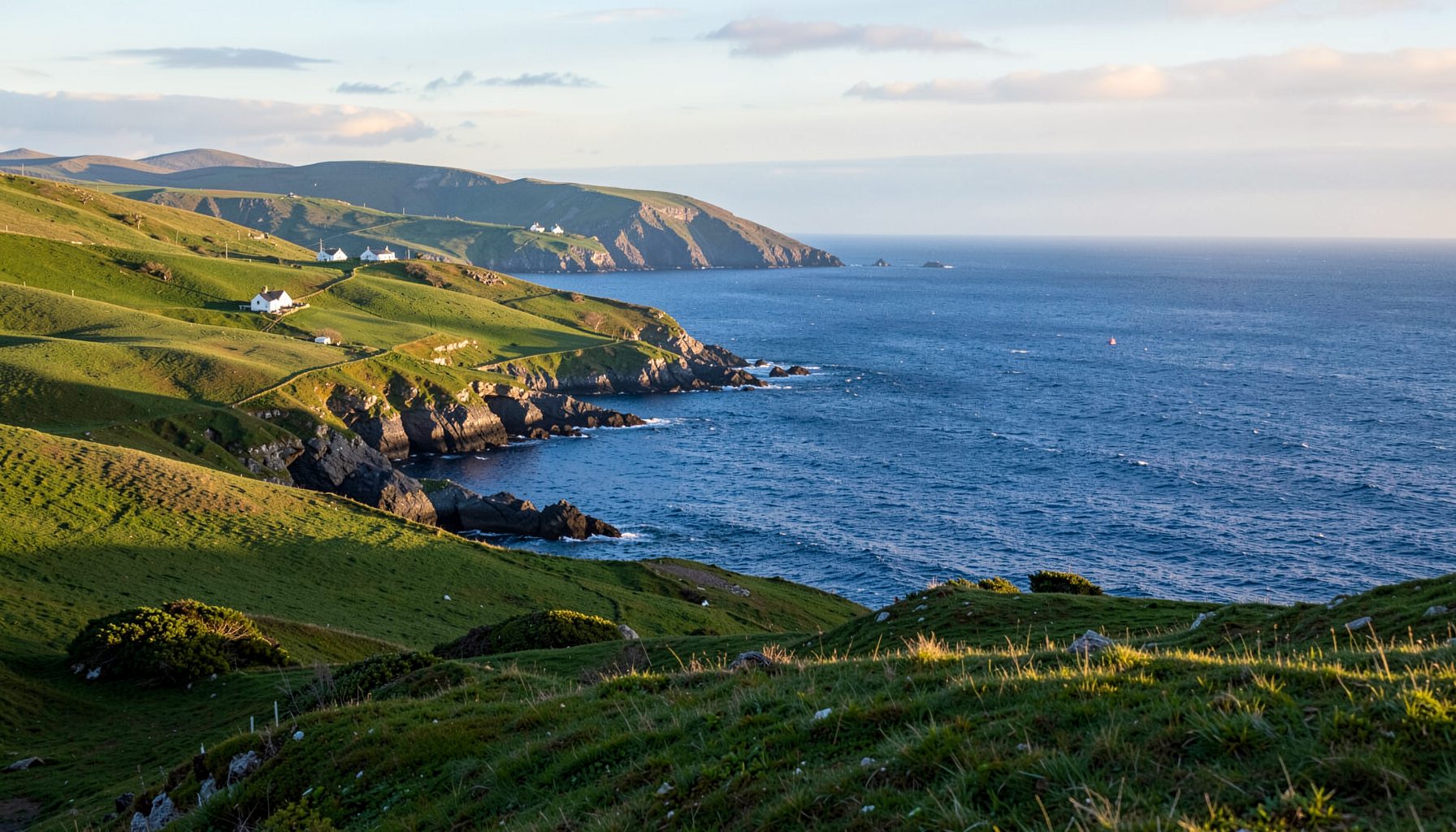
The Story of the Cummeragh River and Its Salmon Run
The Cummeragh River belongs to the living landscape of Kerry’s Iveragh Peninsula, where upland streams, lakes, bogs and coastal waters are closely connected. Its story is shaped by rainfall from the mountains, the movement of Atlantic salmon, and the communities that have watched the river change through the seasons.
A river such as the Cummeragh can seem modest beside the larger landmarks of the Skellig Coast. Yet its importance is measured in more than width or length. It is a route through which fish travel, a habitat for freshwater life, a local reference point, and part of the wider catchment associated with Waterville and Lough Currane.
The salmon’s return gives the river a powerful rhythm. Fish born in gravel beds move downstream to the Atlantic, spend years feeding at sea, and return towards their home waters to reproduce. Their journey connects the mountains of Kerry with the open ocean and links present-day conservation with generations of local knowledge.
A river shaped by the Iveragh landscape
The Cummeragh River is part of a wet, rugged environment where streams respond quickly to weather. Heavy Atlantic rain can raise water levels within hours, sending fresh, oxygen-rich flows over stones and through pools. In drier periods, the river becomes clearer and slower, exposing the gravel and small channels that are essential to young fish.
Its character comes from the surrounding landscape. Peatlands and upland ground store and release water, while rocky slopes influence the river’s speed and shape. Lower sections are affected by farmland, roads, bridges and settlement. Each part of the catchment contributes something different, from shaded banks and riffles to deeper holding pools.
The river should therefore be understood as a connected system rather than an isolated fishing location. Conditions upstream affect the lower reaches, while events near the coast can influence fish moving inland. Water quality, bank vegetation and the condition of spawning gravels all matter within the same ecological story.
The meaning of the river’s name
Place names on the Iveragh Peninsula often preserve traces of the Irish language, local geography and older patterns of settlement. Cummeragh is commonly associated with the Irish word Cumarach, a name linked to a confluence or meeting of waters. As with many regional names, spellings and interpretations can vary across maps, records and spoken tradition.
That uncertainty is part of the interest rather than a problem to be erased. Names were shaped by local pronunciation, anglicisation and the practical needs of surveyors and mapmakers. A river name can carry clues about how people understood the landscape before modern roads, boundaries and administrative divisions were established.
The Cummeragh also sits within a cultural landscape that includes Waterville, Lough Currane, mountain passes and coastal settlements. Its history is not recorded in one single landmark. It survives through maps, oral memory, fishing customs, farming practices and the continued use of the river by people who live nearby.
How Atlantic salmon use the catchment
Atlantic salmon begin life in freshwater. Adult fish reach suitable spawning areas, usually in clean, well-oxygenated gravel. The female creates a shallow nest, or redd, where eggs are deposited and fertilised. After hatching, the young remain among the gravel before emerging as fry and developing into parr with their distinctive vertical markings.
After one or more years in the river, some young salmon become smolts. Their bodies change so they can move from fresh water into salt water, and they travel downstream towards the Atlantic. At sea, they feed and grow before returning as adult salmon or smaller grilse. Their ability to navigate back towards their home river remains one of the most remarkable features of the species.
The return journey depends on suitable water conditions. A rise in river level can encourage fish to move upstream, while low, warm water may delay migration. Pools provide resting places, and riffles and gravel runs offer access to spawning habitat. Barriers, silt, excessive bank disturbance and poor water quality can make the journey harder.
| River stage | Salmon activity | Conditions that matter |
|---|---|---|
| Headwaters and spawning gravels | Adults lay eggs; alevins develop beneath stones | Clean gravel, cool water and stable flows |
| Riffles and shallow runs | Fry and parr feed and grow | Oxygen, aquatic insects, shelter and connected channels |
| Lower river and lake system | Smolts prepare for migration; adults pause during ascent | Passage, suitable water levels and resting pools |
| Estuary and open sea | Salmon adapt to salt water and feed at sea | Unobstructed downstream movement and healthy marine habitat |
| Returning river | Grilse and adult salmon seek spawning areas | Adequate flow, water quality and protection from excessive disturbance |
A fishery woven into local life
Salmon fishing has long been part of the social and economic history of Irish rivers. On the Iveragh Peninsula, angling was connected with estate management, local employment, visiting sportspeople and knowledge passed between generations. Experienced river users learned to read water colour, rainfall, wind direction and the behaviour of fish in particular pools.
These traditions were never separate from the wider community. Rivers supplied water, marked boundaries and influenced where roads and paths could be built. A good run of salmon could bring activity to a village, while a poor season was noticed by anglers, landowners and residents alike. Fishing stories also became part of local memory, preserving names for pools and bends that may not appear on official maps.
Modern angling is governed by conservation requirements and regulations that can change according to annual assessments. Anyone fishing for salmon in Ireland must consult the current rules from Inland Fisheries Ireland, including licensing arrangements, river status, permitted methods and any catch-and-release conditions. Local knowledge is valuable, but it does not replace the current legal guidance.
What has changed in the salmon story
Salmon populations across the North Atlantic have faced sustained pressure. Changes in marine survival, climate patterns, water temperature, habitat quality and barriers to migration all affect the species. A river may have excellent spawning gravel and still experience fewer returning fish if salmon survival at sea declines.
At local level, fine sediment is a significant concern. Loose soil from poorly managed banks, forestry operations, construction or agricultural runoff can settle among gravel and reduce the spaces where eggs and young fish develop. Excessive vegetation removal can raise water temperature, weaken banks and remove cover for juvenile salmon.
The Cummeragh’s future is tied to careful catchment management. Protecting riparian trees and shrubs, keeping livestock from sensitive banks, maintaining fish passage and reducing pollution all support river health. Small tributaries deserve attention too, because they can provide important nursery habitat even when they appear insignificant beside the main channel.
Climate change adds another layer of uncertainty. Warmer summers and irregular rainfall can produce longer periods of low flow followed by sudden floods. Salmon need access to cool water and connected habitat across the year, so resilience depends on the condition of the complete river network rather than a single restoration project.
Reading the river with care
For residents and visitors, the Cummeragh offers a way to understand the Skellig Coast beyond its best-known viewpoints. The river shows how upland weather reaches the coast, how a landscape supports wildlife, and how local heritage is embedded in ordinary places. A walk near a bridge or public access point can reveal changing water levels, bank vegetation, birds and aquatic insects.
Observation should be low-impact. Stay on established paths where available, keep dogs under control near livestock and wildlife, and avoid entering private land without permission. During spawning periods, people should keep away from shallow gravel beds and avoid wading, since disturbed stones can damage redds and dislodge developing eggs.
The river is also a place for learning. Schools, community groups and local environmental initiatives can use it to explore ecology, Irish place names, mapping, weather and the history of rural life. Information from the Skellig Coast helps connect these themes with other local resources, including learning hubs, cultural programmes and outdoor activities.
Ways to support the river’s future
A healthy salmon river depends on many small acts of care as well as long-term planning. Useful approaches include:
- Check current Inland Fisheries Ireland regulations before fishing or handling fish.
- Keep to public access routes and seek permission before crossing private land.
- Protect riverbanks by avoiding unnecessary trampling, vegetation removal and disturbance of gravel.
- Report pollution, blocked fish passage or unusual fish mortality through the appropriate local channels.
- Support community projects that monitor water quality, restore habitat and share local river knowledge.
The most effective conservation work is often collaborative. Landowners, anglers, residents, researchers, local authorities and visitors each see a different part of the river. Bringing those perspectives together can improve decisions about bank management, access, biodiversity and cultural interpretation.
The salmon’s return also gives the Cummeragh a wider significance. It reminds us that a local stream is connected to an ocean journey extending far beyond Kerry. Protecting the river means caring for spawning beds, shaded banks, tributaries, lake connections and coastal waters as parts of one living network.
Explore the Skellig Coast’s community stories, landscape heritage and outdoor resources to place the Cummeragh River within the wider history of Iveragh. By learning its name, observing its seasonal changes and treating its habitat with respect, every visitor can help keep the river’s story visible and its waters welcoming for future generations.